




Seed Technologists in Modern Agriculture
Seed technologists develop and improve seeds for optimal crop production.
They focus on seed quality, viability, and performance.
Additionally, they conduct research and test varieties for agricultural use.
They also work to make high-quality seeds available to farmers.
Research and Quality Control
Their research addresses pests, diseases, and climate change.
However, technical difficulties can complicate seed breeding and production.
They must also maintain seed quality and purity throughout development and production.
Adapting to New Technologies
Seed technologists must continually innovate and adapt their development methods.
Advances in genetic engineering and biotechnology require them to monitor current techniques.
Meanwhile, contamination, cross-breeding, and genetic drift can threaten seed integrity and performance.
Responding to Agricultural Needs
Farmers and consumers have diverse needs and preferences.
Therefore, technologists develop seeds that may resist pests, drought, or diseases.
They also seek high yields and strong nutritional value.
Market demand and regulatory requirements create additional challenges for seed technologists.
Despite these pressures, their research and innovation continue advancing seed technology.
Seed technologists face a major challenge when research funding remains unavailable.
Limited financial support slows research progress and restricts innovation in seed technology.
Consequently, researchers struggle to address important issues affecting seed technology.
Reduced Government Support for Agricultural Research
Government agencies have reduced their financial support for agricultural research in recent years.
This decline limits the funds available for seed technology research projects.
As a result, seed technologists find it harder to sustain necessary investigations.
Limited Resources for Trials and Experiments
Seed technologists need land, equipment, and manpower to conduct trials and experiments.
However, limited access to these resources restricts their ability to complete research effectively.
Therefore, resource shortages can delay or reduce the scope of experimental work.
Challenges in Securing Grants for Innovative Projects
Seed technologists also face difficulty securing grants for innovative projects.
Competitive applications make funding difficult to obtain.
Additionally, stringent grant criteria create another barrier to necessary financial support.
Funding Needs for Continued Seed Research
Financial support remains essential for meaningful progress in seed technology.
Without adequate funding, researchers struggle to advance their work.
Furthermore, limited support makes it harder to address pressing seed technology issues.
Climate Change and Seed Development
Climate change creates significant challenges for seed technologists.
Changing weather patterns directly affect seed development.
Therefore, technologists must address these effects while supporting sustainable agriculture.
Weather Patterns Affecting Crop Growth
Unpredictable weather conditions can disrupt crop germination, growth, and maturity.
Shifts in temperature and rainfall can change how crops develop.
Consequently, seed technologists must develop seeds that perform across varying environmental conditions.
Drought Resistant and Heat Tolerant Seeds
More frequent droughts and heatwaves increase demand for resilient seeds.
Seed technologists breed plants that withstand water scarcity and high temperatures.
This work requires extensive research and genetic engineering to improve seed adaptability.
Innovation for Climate Adaptation
The changing climate continually pressures seed technologists to create effective agricultural solutions.
Transform Your Career Today
Unlock a personalized career strategy that drives real results. Get tailored advice and a roadmap designed just for you.
Start NowThey develop seeds with disease resistance, nutrient efficiency, and climate adaptability.
Moreover, collaboration with researchers, farmers, and policymakers supports sustainable agricultural practices.
Strengthening Agricultural Resilience
Climate change profoundly affects seed development and agricultural sustainability.
Seed technologists help agriculture respond through proactive, adaptable, and innovative approaches.
Their efforts can strengthen crop resilience as environmental conditions continue changing.
Discover More: Seasonal Tasks in a Vineyard Explained
Patent Issues and Intellectual Property Rights
Seed technologists develop improved seed varieties for the agricultural industry.
However, intellectual property requirements create significant challenges during seed development.
Therefore, technologists must protect innovation while following applicable patent laws.
- Seed technologists navigate complex regulations involving seed patents.
- They may face legal disputes with biotech companies over proprietary technologies.
- They must balance innovation with compliance throughout seed development.
Complex Regulations for Seed Patents
Seed technologists must understand complex regulations when they seek patents for new seed varieties.
Moreover, obtaining and maintaining these patents can require substantial time and financial resources.
Because regulations continue evolving, technologists must regularly update their compliance practices.
Legal Disputes Over Proprietary Technologies
Biotech companies compete intensely to develop and market new seed varieties.
As a result, companies sometimes enter legal disputes to defend their intellectual property rights.
During these disputes, seed technologists may need to defend their work and inventions.
Balancing Innovation and Patent Compliance
Seed technologists aim to create groundbreaking varieties that benefit farmers and improve crop yields.
At the same time, they must avoid infringing existing patents during research and development.
Consequently, successful seed development requires patent knowledge, careful planning, and ethical practices.
Continuing Progress in Seed Technology
Patent issues demand expertise and diligence from seed technologists.
Despite these difficulties, they continue advancing seed technology within legal requirements.
Their work supports ongoing innovation across the agricultural industry.
Uncover the Details: Common Challenges Faced by Agricultural Laborers
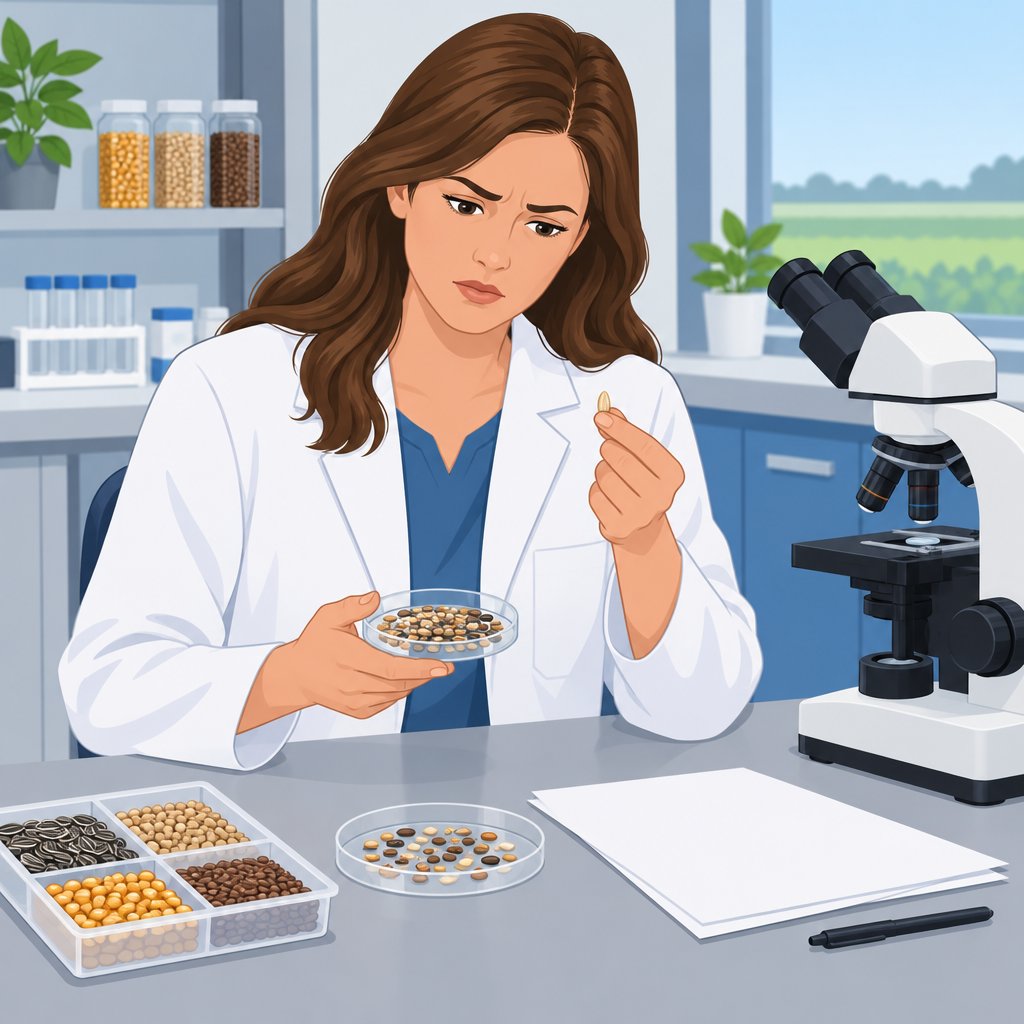
Pesticide Resistance and Pest Management Challenges
Seed technologists face pesticide resistance as a major agricultural challenge.
This challenge threatens crop yields and food security worldwide.
Therefore, effective pest management requires research, evaluation, and farmer support.
Managing Resistance to Chemical Treatments
Pests gradually develop resistance to commonly used chemical treatments.
Consequently, pesticides become less effective at controlling pest populations.
As resistance spreads, crop damage, lower yields, and production costs can increase.
Developing Genetically Modified Seeds for Pest Resistance
To address resistance, technologists develop genetically modified seeds with pest resistance.
These seeds contain genes that make plants toxic to specific pests.
As a result, farmers may reduce their reliance on chemical treatments.
However, these seeds raise concerns about environmental and health risks.
Seed technologists must carefully evaluate their long-term effects on ecosystems and human health.
Educating Farmers About Integrated Pest Management
Integrated pest management combines several techniques to control pest populations.
These techniques include crop rotation, natural predators, and biological controls.
Seed technologists train farmers to apply these methods effectively.
Furthermore, farmer education can reduce reliance on chemical pesticides.
It can also help limit the development of pesticide resistance.
Supporting Sustainable Crop Production
Seed technologists must combine innovative seed development with responsible pest management.
They also need to assess potential risks before promoting new seed technologies.
Transform Your Career Today
Unlock a personalized career strategy that drives real results. Get tailored advice and a roadmap designed just for you.
Start NowBy supporting integrated practices, they can help protect crops and sustain future production.
Discover More: Common Questions for Agricultural Loan Officers
Compliance with Government Regulations on Seed Quality and Labeling
Seed technologists must follow government regulations that protect consumers and support reliable seed distribution.
These regulations address seed purity, germination rates, moisture content, labeling, and treatment information.
Therefore, technologists must maintain accurate records and verify compliance throughout seed production.
- Seed technologists must meet regulatory standards for purity, germination, and moisture content.
- They must label seeds accurately with variety, origin, treatment, and coating information.
- Regulatory violations can cause fines, penalties, or legal action against seed businesses.
Certification Processes for Seed Varieties
Seed technologists must navigate detailed certification processes before distributing certain seed varieties.
Certification requires testing that demonstrates genetic purity, uniformity, and stability.
Furthermore, applicants must show that their varieties differ from existing varieties.
- Technologists must conduct extensive tests to verify genetic purity, uniformity, and stability.
- They must demonstrate distinct traits or qualities that support certification.
- Certification can require years of collaboration with agencies and seed certifying bodies.
International Trade Laws and Agreements
International seed sales require technologists to follow regulations in each target market.
These requirements may involve import laws, export laws, phytosanitary rules, and packaging standards.
Trade agreements can also influence how companies move seeds across national borders.
- Technologists must review import, export, and phytosanitary requirements for each destination.
- They must evaluate requirements involving genetic modification, seed treatments, and packaging.
- NAFTA, the EU Seed Marketing Directive, and the UPOV Convention can affect international operations.
Maintaining Regulatory Readiness in Seed Production
Regulatory requirements can create substantial challenges for seed technologists and their businesses.
However, professionals can improve compliance by monitoring regulations and maintaining accurate production records.
They can also collaborate with regulatory agencies, certifying bodies, and industry partners.
Uncover the Details: Benefits of Precision Agriculture for Modern Farmers
Rapid Technological Advancements in Seed Technology
Seed technologists face rapid technological advancements across the seed industry.
New biotechnologies and genetic engineering techniques continue to influence seed research and development.
Therefore, professionals must update their knowledge to remain competitive and support sustainable agriculture.
Adapting to New Biotechnologies and Genetic Engineering Techniques
Seed technologists must learn about emerging biotechnologies and genetic engineering techniques.
These methods can improve research processes and support the development of better seed varieties.
Additionally, conferences, workshops, and seminars help professionals follow important developments.
Training and Development for Seed Technologists
Continuous learning helps seed technologists remain effective in a rapidly changing field.
However, professionals may face limited access to suitable training and development opportunities.
Seed companies should provide training programs and resources that strengthen employee skills and knowledge.
Digital Tools and Data Analytics in Seed Research
Digital tools and data analytics now play an increasing role in seed research.
Consequently, seed technologists must learn data analysis software, bioinformatics tools, and digital platforms.
Using these technologies can optimize research processes and improve seed quality.
- Rapid technological advancements in seed technology
- New biotechnologies and genetic engineering techniques
- Training and development opportunities for seed technologists
- Digital tools and data analytics in seed research
Global Competition in Seed Production
Globalization has intensified competition throughout the seed industry.
Multinational corporations enter seed production with substantial financial resources and advanced technological expertise.
They use those advantages to develop cutting-edge seed varieties.
Consequently, smaller companies struggle to match their investment and product development capacity.
Market Access Barriers for Smaller Companies
Multinational corporations often dominate distribution channels across the seed market.
They maintain established relationships with farmers, retailers, and government agencies.
Therefore, smaller companies face restricted access to customers and commercial opportunities.
This limitation constrains growth and keeps many businesses operating at a smaller scale.
Resource Constraints and Competitive Pressure
Seed technologists need significant resources to develop, test, and commercialize new varieties.
However, smaller companies often lack the capacity to invest heavily in research and development.
Limited infrastructure further reduces their ability to introduce improved seed products.
As a result, seed technologists working for smaller companies face persistent competitive disadvantages.
Collaborative Strategies for Market Participation
Small-scale seed companies can collaborate to pool resources, knowledge, and technical expertise.
Transform Your Career Today
Unlock a personalized career strategy that drives real results. Get tailored advice and a roadmap designed just for you.
Start NowThrough cooperation, they can develop and market innovative seed varieties collectively.
Additionally, industry associations can help smaller companies build valuable professional networks.
Government agencies may also help them improve market access and negotiate better distribution terms.
Niche Markets and Specialized Seed Varieties
Seed technologists can target niche markets that larger competitors may not prioritize.
Specialized varieties can address specific customer needs or local growing conditions.
This approach allows smaller companies to distinguish their products from those of multinational corporations.
By identifying unique opportunities, these companies can build profitable positions within the wider market.
Adaptive Strategies for Long-Term Viability
Seed technologists must remain flexible while navigating the global seed industry.
They should evaluate changing market conditions and adjust their strategies proactively.
Creative partnerships and focused product development can strengthen smaller companies’ competitive positions.
These strategies can help seed technologists support sustainable growth and long-term industry participation.
Support for Resilient Seed Innovation
Seed technologists face many challenges, including climate change, pest and disease outbreaks, and limited access to resources.
Therefore, agricultural research needs increased support and investment to develop resilient seed varieties.
Addressing these challenges will strengthen sustainable agriculture and protect food security for future generations.
Moreover, leaders must prioritize seed technologists’ needs and provide tools and resources to overcome these obstacles.
By improving funding and research opportunities, stakeholders can build a more sustainable and productive agricultural industry.
Ultimately, empowered seed technologists can create a more resilient and prosperous agricultural sector.
Additional Resources
Google search results for Challenges Faced by Seed Technologists Agricultural
Bing search results for Challenges Faced by Seed Technologists Agricultural


