




Precision Agriculture for Modern Farming
Precision agriculture uses technology to optimize crop yield and farming efficiency.
Furthermore, this approach helps farmers maximize resources, reduce waste, and improve productivity.
Modern farmers can gain numerous benefits by adopting precision agriculture practices.
Decreased Input Costs
Precision agriculture helps farmers use seeds, fertilizer, and water more efficiently.
By targeting applications, farmers reduce unnecessary input use and control operating costs.
As a result, farms can preserve yield potential while using fewer resources.
Increased Crop Yield
Precise planting, irrigation, and harvesting techniques support stronger crop growth and development.
Consequently, farmers can produce higher yields and better quality crops.
These improvements can strengthen farm profits through more productive operations.
Enhanced Sustainability
Precision agriculture helps farmers conserve natural resources, including water and soil.
Moreover, targeted farming practices can reduce the environmental impact of agricultural activities.
Therefore, farmers can support more sustainable operations over the long term.
Improved Decision-Making
Precision agriculture technologies provide data-driven insights for farm management.
By reviewing real-time information, farmers can make more informed operational decisions.
They can then adjust strategies to improve farm results.
Enhanced Farm Management
Precision agriculture tools give farmers detailed information about fields and crops.
This information supports better planning, monitoring, and resource management.
In addition, farmers can coordinate activities more effectively across their operations.
Precision Agriculture’s Lasting Value
Precision agriculture offers modern farmers a broad range of practical benefits.
These benefits include lower input costs, stronger yields, and improved sustainability.
Ultimately, precision agriculture continues to reshape farming through efficient and informed practices.
Increased Efficiency Through Precision Agriculture
- Technology enables precise crop monitoring and management.
- Targeted applications reduce water, fertilizer, and pesticide waste.
- Efficient practices improve farm productivity and profitability.
Precision agriculture gives modern farmers practical tools that can improve daily operations and financial performance.
One major benefit comes from technology that monitors and manages crops precisely.
Traditional monitoring methods often required manual work and created inefficiencies.
Drones, GPS, and sensors now collect real-time information about crop health and growth.
Farmers can use this information to decide when and where to apply water, fertilizers, and pesticides.
Precise resource management reduces waste and helps farmers save time and money.
For example, targeted applications limit chemicals and water to areas that need them.
This approach also reduces environmental impacts.
Furthermore, precision management gives each crop the resources it needs at the right time.
Farmers can therefore achieve higher yields, better produce quality, and stronger profitability.
These improvements help farmers optimize operations and support long-term sustainability.
Cost-effective farming
- Lower input costs through optimized resource usage
- Reduced labor requirements through automation and data-driven decisions
- Higher returns on investment for farmers
Precision agriculture offers modern farmers several benefits that can strengthen their financial results.
One major advantage involves making daily farming operations more cost-effective.
The approach helps farmers save money while supporting stronger profitability.
Optimized resource usage lowers input costs
Traditional farming often applies water, fertilizer, and pesticides uniformly across fields.
That approach can waste resources and increase unnecessary expenses.
By contrast, precision agriculture matches resource use with real-time data and field conditions.
Precision technology improves resource distribution
GPS-guided tractors and drones help farmers distribute inputs more precisely.
Consequently, farmers can reduce waste and lower overall input costs.
Transform Your Career Today
Unlock a personalized career strategy that drives real results. Get tailored advice and a roadmap designed just for you.
Start NowThis targeted approach also supports more efficient resource management.
Automation reduces labor requirements
Precision agriculture automates tasks that farm workers previously performed manually.
Automated irrigation systems and robotic harvesters can reduce manual labor needs.
Additionally, data-driven decisions help farmers determine when and how to apply inputs.
Lower expenses improve investment returns
Lower input costs and reduced labor requirements can improve farmers’ returns on investment.
Although these technologies require an initial investment, long-term savings can outweigh those costs.
Real-time information also helps farmers optimize operations and strengthen profitability.
These financial advantages make precision agriculture valuable for farmers seeking greater efficiency.
Farmers can reduce expenses while improving their overall financial performance.
You Might Also Like: Water Management Strategies for Horticulturists
Environmental Sustainability
Modern farmers gain environmental benefits when they adopt precision agriculture.
These practices support more sustainable agricultural activities.
They also help farmers manage resources while reducing environmental harm.
Minimized Environmental Impact
- Precision agriculture reduces the environmental impact of agricultural activities.
- Farmers apply fertilizers, pesticides, and water more precisely, which reduces waste and runoff.
- Consequently, precise input management supports cleaner farming practices.
Mitigation of Soil Erosion, Water Pollution, and Greenhouse Gas Emissions
- Farmers manage land and resources more carefully with precision agriculture.
- This approach reduces soil erosion and runoff into water sources.
- Accurate input targeting can minimize greenhouse gas releases into the atmosphere.
Preservation of Natural Resources for Future Generations
- Precision agriculture emphasizes sustainability and long-term resource management.
- Farmers optimize resource use through precise techniques.
- These practices help preserve natural resources for future generations.
These environmental benefits help farmers reduce impacts while maintaining productivity and efficiency.
Uncover the Details: Safety Tips for Operating Farm Machinery Efficiently
Improved Crop Quality
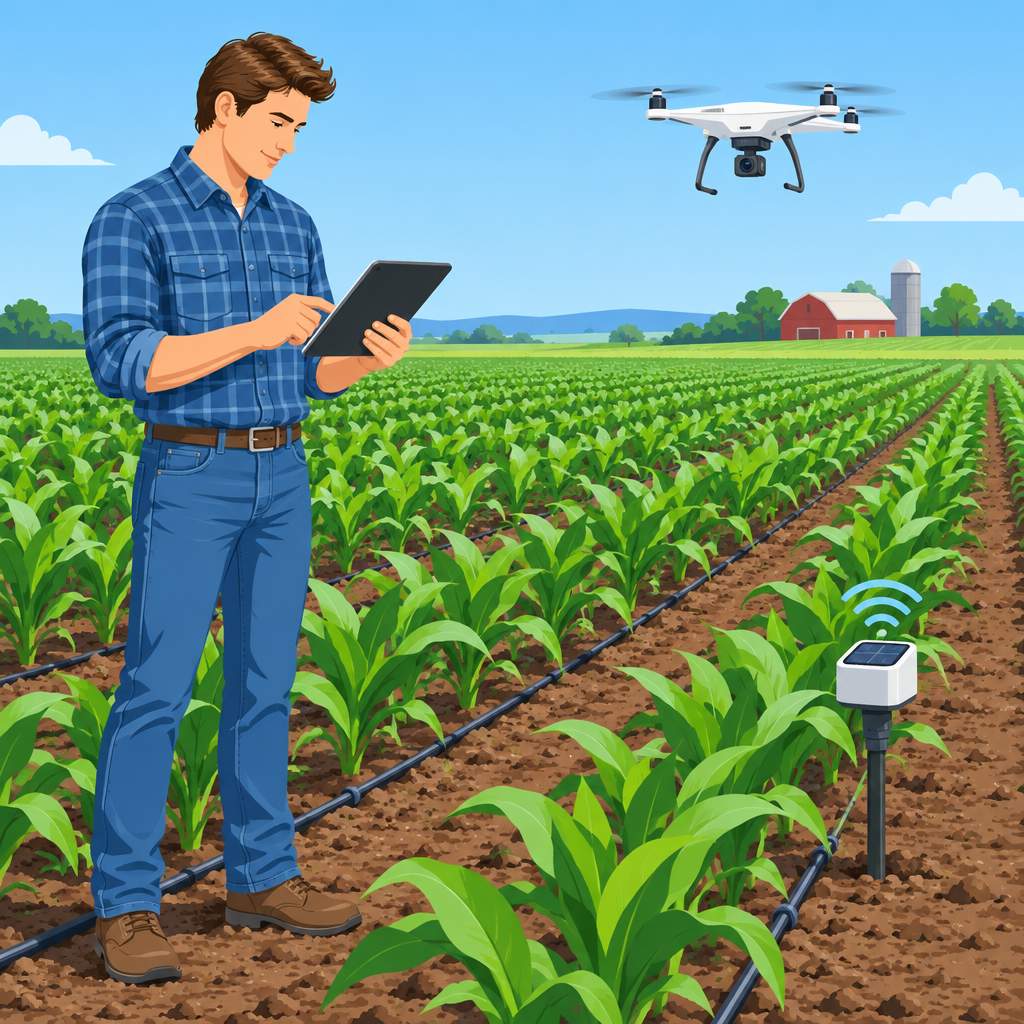
- Precision agriculture helps farmers monitor crop health and growth more closely.
- Sensors and technology help farmers detect diseases and pest infestations early.
- Farmers can achieve stronger harvest yields and higher quality crops for market demand.
Enhanced Monitoring of Crop Health and Growth Parameters
Farmers monitor crop health and growth parameters in real time with sensors and drones.
These tools measure soil moisture, nutrient content, and plant health.
Farmers can then address emerging issues and support consistent crop development.
Early Detection of Diseases and Pest Infestations
Advanced monitoring systems help farmers recognize diseases and pest infestations early.
Early warnings allow farmers to respond before damage spreads across the crop.
Targeted spraying and other interventions can help protect crop quality and yields.
Better Harvest Yields and Quality Produce
Precise planting, irrigation, and nutrient applications can improve harvest performance.
Farmers can also use timely interventions to maintain consistent produce quality.
As a result, growers can offer crops that better meet market demand.
You Might Also Like: How Biotechnology Specialists Combat Plant Diseases
Precision Planting and Harvesting
GPS-guided equipment lets modern farmers plant seeds precisely.
This technology improves planting accuracy and efficiency.
- Adoption of GPS-guided equipment for precise seed planting
- Automated harvesting techniques for optimal crop yields
- Reduced manual labor and fewer human errors during planting and harvesting seasons
GPS-guided equipment helps farmers plant seeds at the right depth, spacing, and time.
This precision planting gives each seed a better chance of germination and growth.
As a result, crops develop more uniform stands and higher yields.
Furthermore, automated harvesting helps farmers maximize yields by collecting crops at the optimal time.
Sensors and GPS technology help farmers identify suitable harvest times.
Farmers consider crop maturity, weather conditions, and market demand when choosing harvest times.
Additionally, precision agriculture reduces manual labor during planting and harvesting seasons.
GPS-guided equipment and automated machinery help farmers complete tasks more efficiently.
These tools also reduce errors during important agricultural operations.
Consequently, farmers save time and improve overall productivity.
Precision planting and harvesting help modern farmers achieve optimal crop yields.
These technologies also reduce manual labor and minimize human errors.
By adopting them, farmers can strengthen efficiency and profitability in today’s competitive agriculture industry.
Transform Your Career Today
Unlock a personalized career strategy that drives real results. Get tailored advice and a roadmap designed just for you.
Start NowDiscover More: Understanding Pest Management Strategies
Data-Driven Decision-Making in Precision Agriculture
Digital tools now help farmers base operational choices on timely farm information.
Precision agriculture connects farm records, field observations, crop conditions, and weather information.
Consequently, farmers can evaluate current conditions and plan farm activities more deliberately.
- Farm management software supports data collection and analysis.
- Real-time monitoring tracks crop conditions and weather forecasts.
- Data insights guide strategic planning and improve farm operations.
Farm Management Software for Data Analysis
Farmers can use advanced software to collect and analyze information across their operations.
This information includes soil health, crop growth, moisture levels, and pest infestations.
By combining these records, farmers can identify conditions that require informed management decisions.
Real-Time Crop and Weather Monitoring
Precision agriculture technologies allow farmers to monitor crop conditions in real time.
They can review crop health, growth patterns, and nutrient levels as conditions change.
Additionally, accurate weather forecasts help farmers schedule activities according to expected conditions.
Strategic Planning Through Data Insights
Farmers can use data analytics to create strategic plans for their operations.
They can examine performance indicators to identify trends, patterns, and areas for improvement.
As a result, data insights support decisions that improve productivity, efficiency, and profitability.
By adopting these practices, modern farmers can respond more effectively to changing agricultural conditions.
- Implementation of conservation tillage methods to reduce soil disturbance
- Adoption of cover crops for soil health and nutrient retention
- Incorporation of precision irrigation systems for water conservation
Precision agriculture supports sustainable farming practices through targeted equipment and resource management.
Farmers can reduce environmental pressure while maintaining productive and responsible operations.
These methods promote soil health, conserve water, and support long-term land management.
Conservation Tillage Methods
Precision planting equipment helps farmers reduce soil disturbance during planting and cultivation.
Consequently, conservation tillage helps minimize erosion and preserve soil structure.
This approach strengthens soil health and supports sustainable land management practices.
Adoption of Cover Crops
Precision equipment enables farmers to plant cover crops more effectively across their fields.
Cover crops reduce erosion, retain nutrients, and improve soil structure.
Additionally, they suppress weeds and increase biodiversity on the farm.
Precision Irrigation Systems
Precision agriculture helps farmers optimize irrigation and conserve valuable water resources.
Drip irrigation and variable rate technologies deliver water according to crop needs.
Therefore, these systems improve crop yields and quality while supporting future water conservation.
Long-Term Sustainability Benefits
These sustainability practices help farmers manage land and water resources responsibly.
Moreover, reduced soil disturbance and improved nutrient retention support healthier growing conditions.
Precision agriculture gives farmers practical tools for environmentally responsible operations.
Future Advancements in Precision Agriculture
Technology continues to advance, creating promising opportunities for precision agriculture.
Modern farmers can adopt new tools that improve management, planning, sustainability, and profitability.
- Emerging technologies: Drones capture aerial images, monitor crops, and apply pesticides.
- Sensors measure soil moisture, temperature, and nutrient levels.
- AI analyzes collected data and supports better farm management decisions.
- Smart farming systems: These systems combine data from several sources.
- They can automate irrigation, fertilization, and pest control.
- Predictive analytics: These tools use historical information to forecast future trends.
- Farmers can plan ahead and optimize their operations with these forecasts.
- Continuous research: Research institutions and agribusinesses continue developing sustainable agricultural technologies and practices.
- Precision irrigation can help farmers manage water more carefully.
- Farmers can use precision plant breeding within sustainable agriculture.
- Farmers can use precision livestock management within sustainable agriculture.
- These tools can reduce waste, increase efficiency, and limit environmental impacts.
Strategic Adoption of Precision Agriculture
Precision agriculture offers modern farmers several practical benefits through advanced technologies and data analytics.
These tools help farmers optimize resources, increase productivity, and reduce environmental impact.
Therefore, farmers should embrace technological advancements to remain competitive in an evolving agricultural industry.
By adopting these practices, they can improve efficiency, save costs, and increase profitability.
Meanwhile, policymakers and stakeholders should support adoption for a sustainable future.
They can invest in research and infrastructure while incentivizing farmers to use these practices.
Such support can strengthen a resilient and environmentally friendly agriculture sector.
Collaboration across agriculture can transform farming while supporting food security for future generations.
Additional Resources
Google search results for Benefits of Precision Agriculture for Modern Farmers Agricultural
Transform Your Career Today
Unlock a personalized career strategy that drives real results. Get tailored advice and a roadmap designed just for you.
Start NowBing search results for Benefits of Precision Agriculture for Modern Farmers Agricultural


