




Vineyard Seasonal Work
A vineyard grows grapevines that supply grapes for wine production.
Seasonal vineyard tasks protect vine health and support a successful harvest.
Careful work throughout the year helps growers produce high-quality grapes.
Pruning for Productive Vines
Pruning removes excess growth from grapevines.
This task controls vine vigor and encourages fruit production.
Growers use pruning to maintain healthier vines and support future yields.
Planting New Vines
Planting introduces new grapevines into the vineyard.
Growers must evaluate location, soil quality, and vine spacing carefully.
These considerations help new vines establish successfully.
Managing the Vine Canopy
Canopy management organizes vine growth around the developing grapes.
Proper management improves sunlight exposure and air circulation.
Better airflow helps prevent disease and supports even grape ripening.
Thinning Grape Clusters
Thinning removes excess grape clusters from the vines.
The remaining fruit receives greater access to the vine’s resources.
As a result, the grapes can develop more concentrated flavors and sugars.
Irrigating During Dry Seasons
Irrigation supplies water that supports vine health and productivity.
It becomes especially important during dry seasons.
Consistent water management supports grape development and ripening.
Harvesting Ripe Grapes
Harvesting marks the completion of the vineyard’s seasonal work.
Growers must choose the right time to pick the grapes.
Picking at peak ripeness supports the production of high-quality wines.
Maintaining Vineyard Health
Seasonal vineyard tasks work together to maintain healthy grapevines.
Pruning, planting, canopy management, thinning, irrigation, and harvesting require careful attention.
By following a diligent routine, growers can support successful harvests for years.
Spring Vineyard Tasks
Pruning in spring shapes vines and removes dead or diseased wood.
This work encourages new growth and supports better fruit production.
Spring also provides a suitable opportunity to plant new vines and expand the vineyard.
Growers can introduce new grape varieties during this process.
They must plan carefully and consider soil conditions before planting.
As temperatures rise, pests and diseases become more active.
Therefore, regular inspections can reveal infestation or disease signs early and help prevent vine damage.
These spring tasks prepare vines for the growing season.
They also support a healthy start to the year.
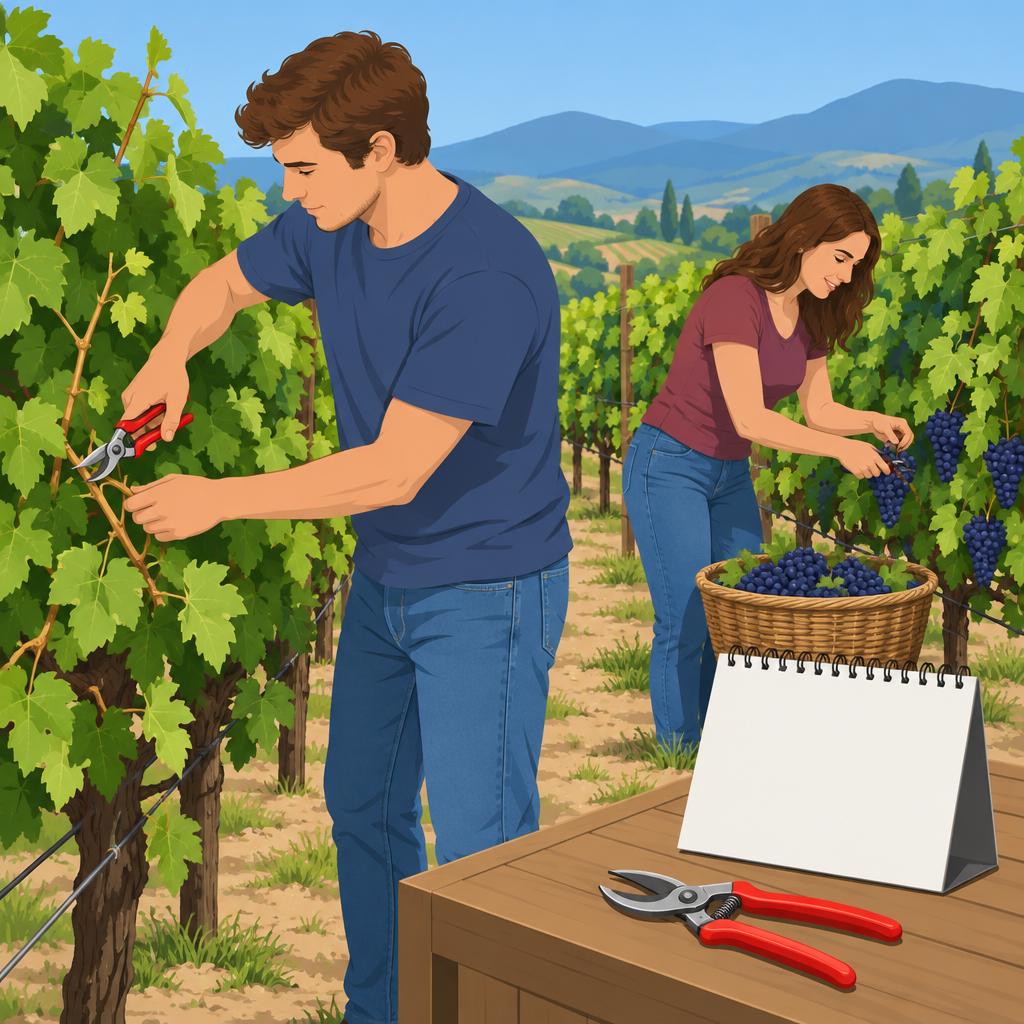
Summer Vineyard Tasks
Summer vineyard work supports healthy vines and prepares grapes for a successful harvest.
During this season, workers manage foliage, monitor soil moisture, and balance grape production.
These practices help grapes receive sufficient sunlight, water, and nutrients as they develop.
- Managing canopy growth for proper sunlight exposure
- Irrigating vines to maintain soil moisture levels
- Thinning clusters to encourage even grape ripening
Managing Canopy Growth
Workers manage canopy growth so grape clusters receive enough sunlight.
They prune and train vines to prevent excessive foliage from creating dense shade.
This approach supports photosynthesis, which helps grapes develop during the growing season.
Additionally, better air movement reduces humid, shaded conditions that can encourage disease.
Transform Your Career Today
Unlock a personalized career strategy that drives real results. Get tailored advice and a roadmap designed just for you.
Start NowMaintaining Soil Moisture Through Irrigation
Vineyard managers monitor soil moisture regularly throughout the summer.
They adjust irrigation schedules when vines need additional water.
Consistent moisture helps prevent vine stress and supports healthy growth.
Drip irrigation delivers water directly to the root zone while minimizing waste.
Thinning Clusters for Even Ripening
Workers thin grape clusters to promote more even ripening across the vine.
By reducing cluster numbers, they help the remaining grapes receive sufficient resources.
Thinning also improves air circulation within the canopy and lowers fungal disease risks.
As a result, the remaining clusters can develop more uniformly before harvest.
Together, these summer practices help grapes develop the characteristics needed for quality wine production.
Explore Further: Common Challenges Faced by Agricultural Laborers
Essential Fall Vineyard and Winery Tasks
- Harvesting grapes at optimal ripeness for wine production
- Fermentation process in the winery
- Preparing the vineyard for the winter season
As fall arrives, vineyard workers begin some of the year’s most important tasks.
Workers harvest grapes, manage fermentation, and prepare the vineyard for winter.
First, workers harvest grapes when they reach the ripeness required for quality wine production.
They monitor sugar levels, acidity, and flavor profiles to identify the ideal harvest time.
Next, workers transport the harvested grapes to the winery for fermentation.
At the winery, yeast converts grape sugars into alcohol during fermentation.
This process can continue for several weeks, depending on the desired wine style.
Meanwhile, vineyard workers prepare the vines for the dormant winter months.
They prune vines to encourage healthy growth during the following year.
Additionally, workers remove excess foliage and dead wood from the vines.
This work improves ventilation and sunlight exposure, supporting vine health.
Finally, workers may plant cover crops to reduce erosion and nourish the soil.
See Related Content: Common Questions for Agricultural Loan Officers
Winter Vineyard Preparation
Winter gives vineyard owners and workers time to prepare for the next growing season.
This period helps them organize work that supports the coming harvest.
Therefore, careful preparation establishes suitable conditions for future vineyard activities.
Pruning Vines
First, workers prune vines by cutting away unnecessary or overgrown branches.
This process encourages new growth and supports optimal fruit production.
Additionally, pruning helps prepare the vines for the next growing season.
Soil Maintenance and Cover Crops
Next, workers maintain the soil and plant cover crops during winter.
These practices help replenish essential nutrients in the soil.
As a result, vines can access resources needed for healthy growth.
Equipment Maintenance and Repairs
Finally, winter provides time for equipment maintenance and repairs.
Workers service tractors, pruning shears, and other tools during this period.
Consequently, properly maintained equipment remains ready for the upcoming season.
By completing these tasks, vineyard owners prepare their operations for the next growing season.
This preparation supports healthy vines and helps create conditions for a bountiful harvest.
Find Out More: Benefits of Precision Agriculture for Modern Farmers
Seasonal vineyard tasks require careful timing to support successful grape production.
Each stage guides vine growth and helps growers protect the developing crop.
Transform Your Career Today
Unlock a personalized career strategy that drives real results. Get tailored advice and a roadmap designed just for you.
Start NowPruning
During winter, growers prune vines to remove unwanted shoots.
This work directs the plant’s resources toward the strongest fruiting growth.
Consequently, timely pruning supports the best possible fruit yield.
Bud Break
In spring, bud break signals the beginning of a new growth cycle.
The emerging buds show that the vines have resumed active development.
Growers can then follow the vineyard’s changing needs throughout the season.
Canopy Management
Throughout the growing season, workers monitor and shape the vines’ foliage.
Canopy management keeps foliage organized as the vines develop.
Additionally, regular attention helps growers track changes across the vineyard.
Pest Control
During summer, growers protect vines from pests and diseases that can damage the crop.
They monitor vine condition and respond to threats affecting grape production.
This protection helps preserve the crop as grapes continue developing.
Harvest
In fall, workers harvest grapes when they reach peak ripeness.
The harvested grapes then move toward wine production.
Therefore, harvest timing influences the quality of grapes available for winemaking.
Following a seasonal schedule helps maintain grape quality and quantity.
A well-maintained vineyard provides higher-quality grapes for wine production.
Those grapes can contribute to better wine production and flavors.
Moreover, aspiring winegrowers benefit from understanding vineyard work.
They should appreciate the detailed tasks that shape each growing season.
Additional Resources
Google search results for Seasonal Tasks in a Vineyard Explained Agricultural
Bing search results for Seasonal Tasks in a Vineyard Explained Agricultural


