




Painting Techniques for High-Traffic Areas
High-traffic areas experience frequent use, making durable painting methods especially important.
These spaces face regular wear and tear from repeated household activity.
Therefore, choose paint and application techniques that support long-term durability.
When selecting paint, consider durability, washability, and resistance to scuffs and stains.
Oil-based paints remain a popular choice because they offer durability and washability.
Additionally, oil-based paints resist scuffs and stains better than water-based paints.
Semi-gloss and high-gloss paints provide another practical option for busy areas.
These finishes simplify cleaning and resist wear more effectively.
Before painting, prepare the surface carefully to promote proper adhesion and lasting results.
Clean the surface, sand rough spots, and apply primer before adding paint.
Color selection also affects how high-traffic areas appear over time.
Lighter colors generally show less wear and tear than darker colors.
Meanwhile, satin finishes offer greater durability and easier cleaning than flat paint.
These techniques help high-traffic areas remain fresh and vibrant for years.
Assessing High-Traffic Areas
Assessing daily activity helps identify which rooms qualify as high-traffic zones.
Start by reviewing each space’s foot traffic, stain risk, and exposure to regular contact.
This review helps match each area with suitable painting materials and maintenance needs.
- Foot traffic
- Potential for stains
- Wear and tear
Hallways, entryways, and living rooms often receive frequent household movement.
Therefore, these spaces benefit from durable finishes that resist visible fading and damage.
Kitchens, dining rooms, and children’s playrooms face greater risks from spills and splashes.
These rooms need paint that supports easy cleaning without damaging the finish.
Furniture friction, frequent touching, and sunlight can also affect painted surfaces.
Choose washable or scrubbable paint for areas that require regular cleaning.
Such finishes help preserve the surface’s color and appearance during routine maintenance.
Choosing the Right Paint for High-Traffic Areas
High-traffic rooms need paint that handles frequent contact, cleaning, and everyday wear.
Choose a finish that balances durability, cleanability, and the appearance you want.
Also, consider stain resistance, drying time, indoor air quality, and color.
- Semi-gloss paint handles frequent cleaning and resists stains in kitchens, hallways, and bathrooms.
- Satin paint provides a subtle sheen and suits kids’ rooms, mudrooms, and other washable spaces.
- Durable, washable paint withstands scrubbing while preserving its color and finish.
- Stain-resistant paint helps repel dirt, grime, spills, and everyday marks.
- Scuff-resistant paint helps walls withstand contact from shoes, furniture, and bags.
- Quick-drying paint lets you apply additional coats or complete touch-ups sooner.
- Low-VOC or zero-VOC paint helps reduce odors and supports healthier indoor air quality.
- Mid-tone and neutral colors can conceal dirt and marks better than very light shades.
Uncover the Details: Preparing for Boilermaker Certification Exams
Surface Preparation for High-Traffic Areas
Surface preparation creates a strong foundation for painting high-traffic areas.
Begin with a smooth, clean surface so the paint adheres properly.
These preparation steps support a longer-lasting finish against everyday wear.
Sanding the Surface
- First, sand the surface to create a smooth, clean canvas for paint adhesion.
- Use medium-grit sandpaper to remove imperfections and rough spots.
- Meanwhile, sand in circular motions to prevent deep scratches from forming.
Filling Holes and Cracks
- After sanding, inspect the surface for holes or cracks that need attention.
- Next, apply spackling compound to fill each imperfection.
- Then, smooth the compound and let it dry completely before continuing.
Cleaning the Surface Thoroughly
- Before painting, clean the surface thoroughly to remove dirt, dust, and grease.
- Use a mild detergent or cleaning solution to wash the surface.
- Pay special attention to high-traffic areas where grime may have accumulated.
- Finally, rinse with clean water and let the surface dry completely.
You Might Also Like: How to Paint High Ceilings and Hard-to-Reach Areas
Applying Paint
Painting high-traffic areas requires careful application to create a durable, long-lasting finish.
Use consistent techniques to support smooth coverage and reduce visible application marks.
Also, allow sufficient drying and curing time before returning the area to regular use.
Using High-Quality Tools
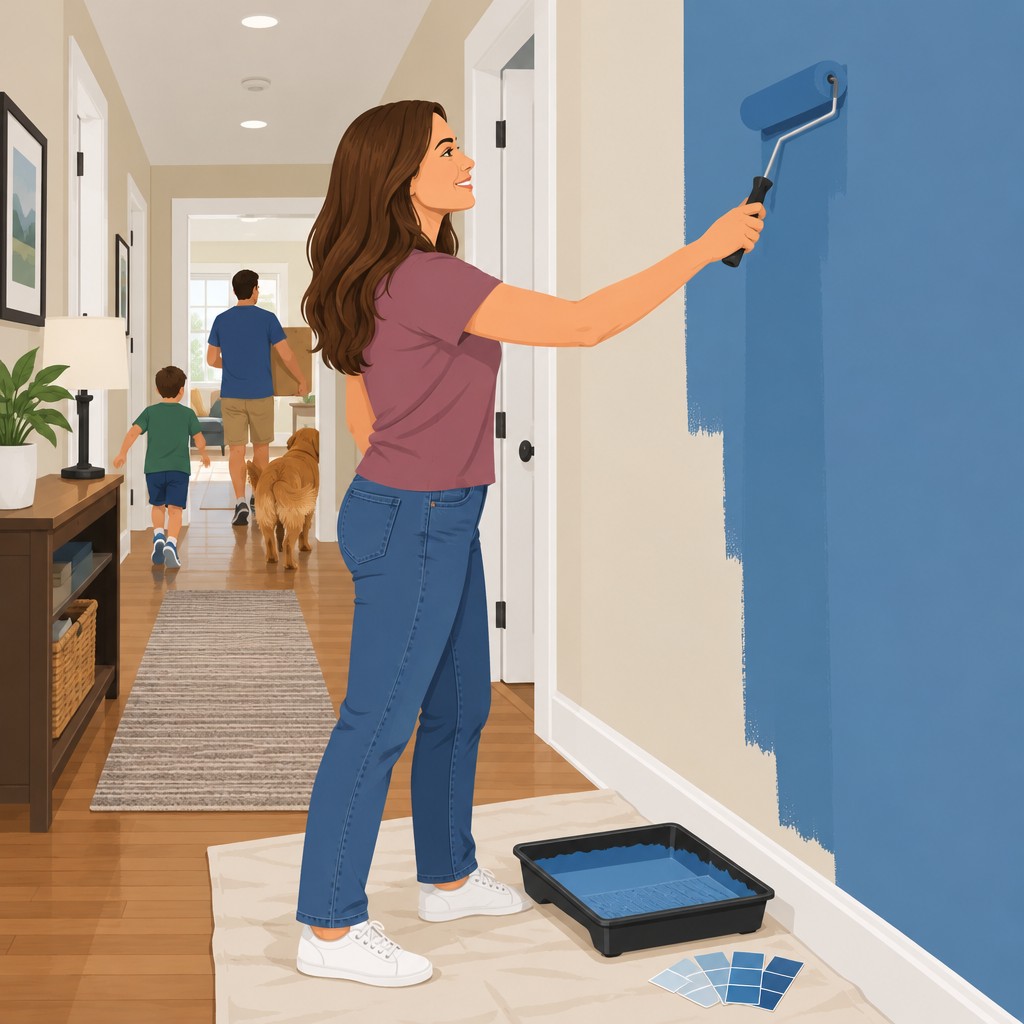
High-quality brushes and rollers help distribute paint smoothly across the surface.
Moreover, reliable tools support even coverage throughout frequently used areas.
Low-quality tools can create streaks and uneven coverage during application.
- Invest in a high-quality brush or roller for smooth and even application.
- Avoid low-quality tools because they can produce streaks and uneven coverage.
Applying Proper Brush Strokes
Begin by cutting in around the wall edges with a brush.
This approach provides precision where a roller cannot easily reach.
Transform Your Career Today
Unlock a personalized career strategy that drives real results. Get tailored advice and a roadmap designed just for you.
Start NowNext, use long, smooth strokes to distribute the paint evenly.
- Cut in around the wall edges with a brush for greater precision.
- Use long, smooth brush strokes to reduce visible brush marks.
Applying Paint with a Roller
Use a roller to cover larger areas efficiently.
Consistent roller movement helps maintain an even finish across the surface.
Additionally, rolling in one direction reduces overlapping roller marks.
- Use a roller to cover larger areas quickly and efficiently.
- Roll in one direction to maintain an even finish and avoid overlapping marks.
Applying Thin Coats
Apply several thin coats instead of one thick coat.
Thin coats help prevent drips and sagging during application.
Allow each coat to dry completely before applying the next one.
- Apply multiple thin coats to help prevent drips and sagging.
- Let each coat dry completely before applying another coat.
Painting in Small Sections
Work on one small section at a time to maintain control.
Controlled application helps keep the coverage consistent across the wall.
Overlap each section slightly to blend the paint into a uniform finish.
- Paint small sections at a time to maintain control over the process.
- Overlap each section slightly to blend the paint seamlessly.
Allowing Proper Drying Time
Follow the manufacturer’s instructions for drying times between coats.
Following those instructions helps prevent tackiness between applications.
Finally, avoid heavy traffic until the paint has fully cured.
- Follow the manufacturer’s instructions for drying times between coats.
- Avoid heavy traffic until the paint has fully cured.
These application practices support a smooth finish that withstands daily wear and tear.
Discover More: The Role of a Machinist in Modern Manufacturing
Drying and Curing Time
Paint needs time to dry to the touch and cure fully.
Proper curing helps the finish reach its maximum durability.
Allowing enough time supports a durable finish in high-traffic areas.
Importance of Allowing Paint to Dry and Cure
Rushing the process can create a subpar finish that chips or peels easily.
Furthermore, proper drying helps prevent tackiness after application.
As the paint cures, it bonds securely to the surface.
- Paint needs time to dry to the touch and cure fully for maximum durability.
- Rushing the process can produce a finish that chips or peels easily.
- Proper drying and curing help prevent tackiness and strengthen surface adhesion.
Ways to Speed Up the Drying Process
Several practical choices can help paint dry faster.
Good ventilation improves airflow and supports faster drying.
Thin coats and reduced moisture also help the paint dry and cure efficiently.
- Choose fast-drying paint designed for high-traffic areas.
- Use fans or open windows to improve ventilation and shorten drying time.
- Avoid thick coats because they require more time to dry and cure.
- Use a dehumidifier to remove excess moisture from the air.
- Use a hairdryer on its cool setting for small areas or touch-ups.
Following these practices supports a professional-quality finish.
The finished surface can then withstand regular use and cleaning.
Patience during drying and curing helps the result stand the test of time.
Find Out More: Lumberjack Camps: A Glimpse into Community Life
Maintaining Painted High-Traffic Areas
High-traffic areas need regular care to preserve a fresh, durable paint finish.
Simple maintenance prevents dirt, damage, and fading from making painted surfaces look worn.
Use the following practices to protect the finish and maintain its appearance.
- Regular Cleaning: Clean painted surfaces with a gentle cleaner and soft cloth to remove dirt and grime.
- Avoid Harsh Chemicals: Use mild soap and water instead of abrasive cleaners to prevent peeling and chipping.
- Inspect for Damage: Check regularly for scratches, scuffs, and chips that may require touch-ups.
- Perform Touch-Ups: Keep leftover paint available and use a small brush to cover imperfections.
- Address Small Repairs: Smooth scratches or chips with fine-grit sandpaper before applying a thin paint layer.
- Protect with Coatings: Apply a clear sealant to help shield high-traffic areas from daily wear.
- Monitor for Fading: Watch for sunlight-related fading and consider repainting when the color changes noticeably.
- Use Protective Pads: Place furniture pads under heavy items to reduce scratches, scuffs, and concentrated pressure.
Additional Considerations
Lighting strongly affects how paint colors appear in high-traffic areas.
Natural light can enhance colors or make them appear washed out.
Consider both natural and artificial light before selecting paint colors.
Lighting and Color Selection
Bright colors may fade faster when exposed to strong light.
Observe paint samples in high-traffic areas throughout the day.
Different lighting conditions can change how each color appears.
Solutions for Common Paint Issues
Semi-gloss and high-gloss finishes help combat scuff marks.
These finishes make painted surfaces easier to clean.
High-quality paint with UV protection helps prevent fading over time.
Transform Your Career Today
Unlock a personalized career strategy that drives real results. Get tailored advice and a roadmap designed just for you.
Start NowDurability and Maintenance Considerations
Durable, washable paint withstands heavy use and frequent cleaning.
Matte and eggshell finishes can hide wall imperfections better than gloss.
Moisture-resistant paint supports longevity in areas exposed to moisture or dirt.
- Use scrubbable paint in hallways and children’s rooms.
- Test paint samples under different lighting conditions before choosing colors.
- Clean and prime surfaces properly before painting.
- Keep touch-up paint available for marks and scratches.
Long-Term Results in High-Traffic Areas
Choosing durable, cleanable paint helps high-traffic areas retain a fresh appearance.
Satin or semi-gloss finishes suit walls, while high-gloss finishes suit trim and baseboards.
Careful preparation and quality tools support a professional-looking finish.
Additionally, prompt cleaning and timely touch-ups help preserve painted surfaces.
These practices can help your home maintain a clean appearance over time.
Therefore, invest time and effort in refreshing and protecting these frequently used spaces.
Your work can produce a durable finish that withstands regular household activity.


