




Lumberjack Camps and Community Life
Lumberjack camps served as essential hubs for workers in logging communities.
These camps shaped community life by fostering camaraderie and togetherness.
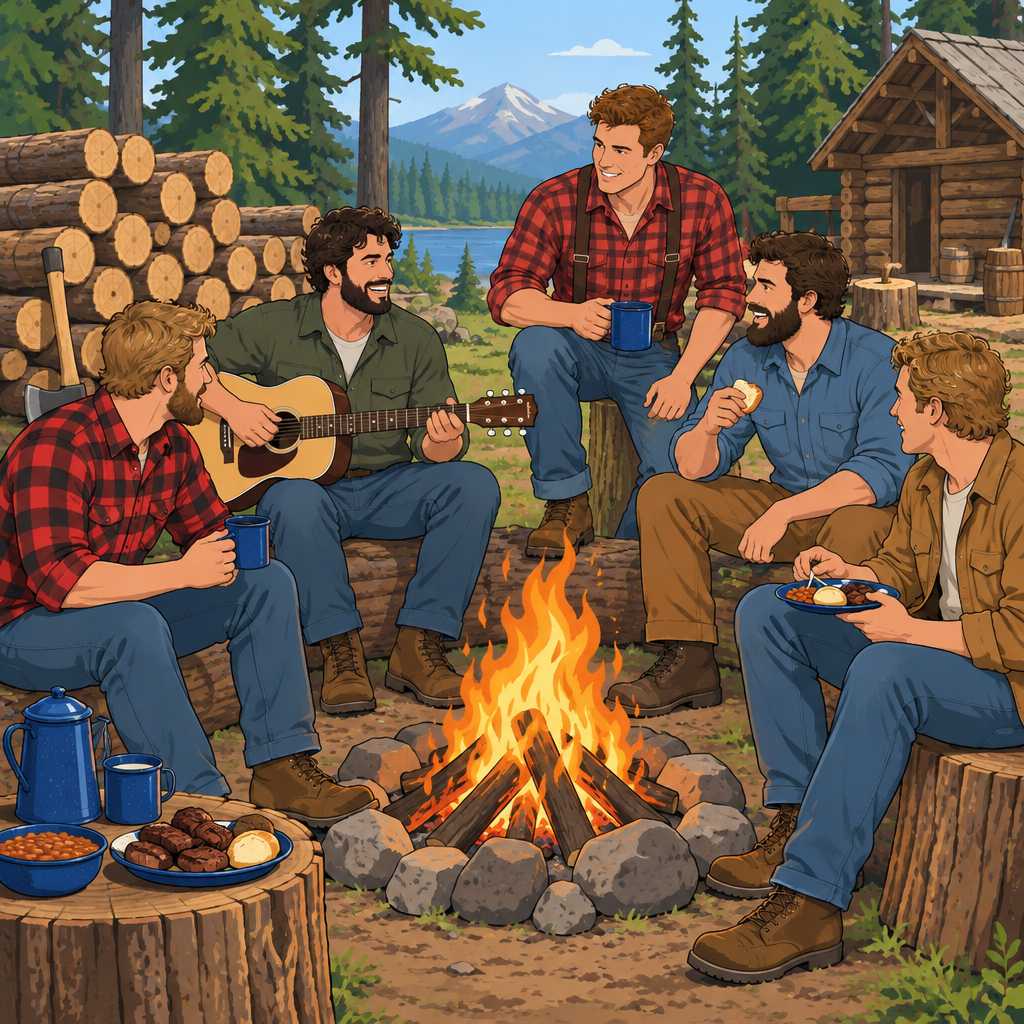
They provided workers with places to gather, eat, rest, and build friendships.
Moreover, lumberjack camps became the heartbeat of logging communities.
Rather than serving as temporary shelters, the camps functioned as active social centers.
Workers formed friendships there while sharing daily routines and common experiences.
This close-knit environment encouraged hard work, dedication, and a strong sense of belonging.
After long days in the forests, lumberjacks returned to camp for meals and downtime.
They spent those days felling trees and hauling logs through the forest.
Meanwhile, hearty communal meals brought everyone together after demanding work.
Beyond food and shelter, the camps offered entertainment and opportunities for relaxation.
During evenings, workers shared stories, played music, and enjoyed games.
These activities strengthened community bonds and created lasting camaraderie among the lumberjacks.
Furthermore, the camps gave workers a place to unwind and recharge for the next day.
Thus, lumberjack camps supported both the labor and social life of logging towns.
History of Lumberjack Camps
Lumberjack camps emerged during North America’s nineteenth-century logging boom.
Logging companies established these camps near forests that offered abundant timber.
Their history reflects changing demands for worker housing, organization, and operational efficiency.
Origins of Lumberjack Camps in North America
During the nineteenth century, logging companies established camps in remote forested areas.
These locations placed workers near abundant timber and active logging sites.
The camps supplied shelter and food for lumberjacks during logging operations.
Early camps used temporary wooden structures for worker housing and shared activities.
At first, crude living quarters and communal eating areas defined camp facilities.
As the industry expanded, companies developed more substantial amenities and infrastructure.
Evolution of Lumberjack Camps Over Time
Over time, lumberjack camps changed from basic shelters into organized facilities.
Early camps offered limited sanitation and hygiene facilities for workers.
Later improvements strengthened cleanliness and made daily operations more efficient.
By the late nineteenth and early twentieth centuries, camps resembled small villages.
Cabins, dining halls, and recreational areas supported the camps’ expanding functions.
Technology eventually introduced electricity, running water, and heating into many camps.
Impact of Lumberjack Camps on the Logging Industry
Lumberjack camps supported the logging industry’s success and operational efficiency.
Centralized facilities reduced downtime by placing workers near their assigned tasks.
Food and shelter helped workers maintain the conditions required for demanding labor.
Shared facilities also encouraged cooperation during logging operations.
Experienced loggers used the camps to train new workers in essential skills.
Consequently, these facilities contributed to the logging industry’s growth and development.
Daily Life in Lumberjack Camps
Life in a lumberjack camp demanded physical endurance and steady attention.
Workers began their demanding days before dawn.
However, the camp offered structure, shared facilities, and dependable support.
Work Schedule and Tasks of Lumberjacks
Lumberjacks typically worked ten to twelve hour shifts.
Transform Your Career Today
Unlock a personalized career strategy that drives real results. Get tailored advice and a roadmap designed just for you.
Start NowThey felled trees, hauled logs, and maintained equipment throughout each shift.
Additionally, workers sharpened tools, cleared debris, and prepared wood for transport.
Housing and Living Conditions in Camps
Lumberjacks lived in simple bunkhouses during their time at camp.
Several men often shared one room.
Meanwhile, communal dining halls, washrooms, and recreation areas provided basic amenities.
Importance of Camaraderie and Teamwork in Camp Life
Camaraderie strengthened camp life because teamwork supported productivity and safety.
Workers relied on one another for assistance, encouragement, and daily support.
Furthermore, shared meals, stories, and laughter helped create a strong community.
During hardship or danger, these bonds supported survival and morale.
You Might Also Like: The Economic Impact of the Fishing Industry
Cultural Aspects of Lumberjack Camps
Lumberjack camps preserve folklore, traditions, music, and storytelling.
These practices strengthen camp identity and connect workers with surrounding communities.
Together, they create a distinctive cultural presence that still captivates people today.
Folklore and Traditions of Lumberjacks
Lumberjacks pass rich folklore and traditions from one generation to another.
Some camps hold ritualistic tree-felling ceremonies that honor the trees workers cut.
Additionally, lumberjacks circulate legends about mythical creatures, including Bigfoot and the Wendigo.
Music, Storytelling, and Entertainment in Camps
Music and storytelling provide entertainment and cultural expression inside lumberjack camps.
In the evenings, lumberjacks gather around campfires and share experiences from the forests.
Traditional songs boost morale and help workers synchronize their movements during forest work.
Influence of Lumberjack Culture on Surrounding Communities
Lumberjack culture strongly influences nearby communities.
Local businesses serve lumberjacks by selling specialized gear and related merchandise.
Furthermore, festivals and events attract visitors while showcasing lumberjack traditions.
These cultural practices shape the identities of camps and surrounding communities.
Folklore, traditions, and entertainment help lumberjacks maintain a vibrant, close-knit community.
Their shared culture continues to inspire interest in lumberjack camps and their communities.
See Related Content: Warehouse Worker Tools and Equipment Overview
Role of Lumberjack Camps in Community Development
- Lumberjack camps provide employment and training opportunities for local residents.
- As a result, these camps create steady income and strengthen local economies.
- Nearby small businesses also grow by serving camp workers and operations.
- Furthermore, the camps support forestry, an important industry for many communities.
Economic Impact of Lumberjack Camps
- Lumberjack camps create jobs that stimulate economic activity throughout the region.
- Meanwhile, the camps purchase supplies and services from nearby businesses.
- Camp employees spend their earnings in local towns, supporting additional commerce.
- In addition, lumberjack camps can attract tourists and generate extra local revenue.
Connections Between Camps and Nearby Towns
- Lumberjack camps depend on nearby towns for supplies and essential services.
- At the same time, local businesses receive valuable support from camp operations.
- Many camp employees live in nearby towns and participate in community life.
- Moreover, exchanges between workers and residents encourage a stronger sense of community.
Legacy of Lumberjack Camps in Community Identity
- Lumberjack camps possess a rich history that communities often celebrate.
- Over time, camp traditions and folklore pass from one generation to another.
- Residents value the heritage and contributions that these camps represent.
- Finally, hard work, camaraderie, and skill influence the community’s shared identity.
See Related Content: Understanding Construction Contracts
Challenges Faced by Lumberjack Camps
Lumberjack camps face environmental, labor, and technological challenges.
These pressures affect ecosystems, workers, and the future of traditional logging operations.
Camp owners must address each challenge while adapting to industry changes.
- Logging creates environmental concerns for surrounding ecosystems.
- Labor disputes and difficult working conditions affect camp workers.
- Mechanization reduces the need for traditional lumberjack camps.
Environmental Concerns Related to Logging
Logging activities can create serious environmental challenges for lumberjack camps.
Cutting trees can cause deforestation, habitat destruction, soil erosion, and disruptions to wildlife ecosystems.
These effects can damage biodiversity and weaken environmental health over time.
Camps can reduce harm by adopting sustainable logging practices.
Such practices help protect surrounding ecosystems and support their long-term health.
Labor Disputes and Working Conditions in Camps
Lumberjack camps also face labor disputes and difficult working conditions.
Camp workers perform demanding jobs that require long hours of physical labor.
Without proper safety measures, fatigue can contribute to injuries and fatalities.
Workers may also dispute wages, benefits, and other employment conditions.
Camp owners should prioritize worker safety and well-being.
Transform Your Career Today
Unlock a personalized career strategy that drives real results. Get tailored advice and a roadmap designed just for you.
Start NowThis approach supports productivity and encourages a more harmonious work environment.
Mechanization and the Decline of Traditional Camps
The logging industry increasingly relies on mechanization.
Modern machinery can make logging operations more efficient and cost-effective.
Consequently, companies may need fewer workers for manual logging tasks.
Many traditional camps must adapt to these changes or close.
This shift affects communities that depend on camps for employment and economic stability.
Camp owners can respond by adopting new technologies and maintaining industry competitiveness.
Gain More Insights: Tips for Efficiently Packing and Unpacking Belongings
Modern-Day Lumberjack Camps
Modern-day lumberjack camps attract visitors who want to experience traditional logging practices.
These camps offer visitors a glimpse into the logging industry’s past.
Visitors can observe how lumberjacks lived and worked during earlier periods.
Renewed Interest in Traditional Logging Practices
Recent years have brought renewed interest in traditional logging practices.
Many people seek stronger connections with nature and the past.
Lumberjack camps help visitors explore simpler lifestyles and regional logging history.
Sustainable Logging Initiatives in Contemporary Camps
Many contemporary lumberjack camps now promote sustainable logging practices.
These camps use modern technology and techniques to reduce environmental damage.
They protect surrounding natural resources while continuing their logging operations.
Heritage Activities at Lumberjack Camps
Lumberjack camps remain relevant by preserving and presenting logging heritage.
They host events that teach visitors about local logging history.
Lumberjack competitions and festivals celebrate traditions connected with the logging industry.
The Lasting Heritage of Lumberjack Camps
Lumberjack camps gave remote workers community, camaraderie, and support.
Moreover, their legacy continues through stories, songs, and traditions passed down through generations.
Therefore, preserving and celebrating this heritage honors the hard work and dedication of those who built these camps.


