




Painting high ceilings and hard-to-reach areas can challenge many homeowners.
These areas present limited access, safety hazards, and potential physical strain.
Therefore, homeowners should prioritize proper preparation and safety measures before starting the project.
Assessing the Area
- Evaluate the ceiling height and size to determine the tools and equipment needed.
- Check for obstacles or furniture that may need moving or covering before painting.
- Consider paint types and finishes suited for high ceilings and hard-to-reach areas.
Properly assess the area before painting high ceilings and hard-to-reach spaces.
First, evaluate the ceiling height and size.
This assessment helps determine the tools and equipment required.
Additionally, check for obstacles or furniture that could hinder the painting process.
Move or cover these items before painting to prevent accidents or damage.
This preparation can save time and effort during the project.
Finally, consider paint types and finishes designed for high ceilings and hard-to-reach areas.
Low-splatter paints and extended-reach rollers can support an easier painting process.
Choosing suitable paint can create a professional-looking finish and improve efficiency.
Choosing the Right Tools and Materials
Proper tools make painting high ceilings more efficient and manageable.
Furthermore, suitable equipment helps reduce physical strain during the project.
Quality materials also support cleaner coverage and more consistent results.
- Invest in a sturdy ladder or scaffolding system.
- Use extension poles and brushes to reach ceilings comfortably.
- Select high-quality paint rollers and trays for efficient coverage.
Sturdy Ladders and Scaffolding Systems
Choose a sturdy ladder or scaffolding system for reliable access.
Additionally, stable equipment helps you work more confidently at height.
Check that the selected system suits the painting area and remains dependable during use.
Extension Poles and Brushes
Extension poles let you reach ceilings without stretching or standing on tiptoes.
Attach a suitable brush or roller to extend your reach.
As a result, you can paint more comfortably while maintaining better control.
High-Quality Rollers and Trays
Select rollers designed for ceilings and walls to improve paint coverage.
Moreover, quality rollers can help create a smoother finish.
Choose sturdy trays to reduce spills and keep the work area tidy.
Using suitable equipment supports a more efficient and professional painting process.
Learn More: The Role of a Machinist in Modern Manufacturing
Preparing the Space
- First, clear furniture and objects that paint splatter could damage.
- Next, cover floors, walls, and furniture with drop cloths or plastic sheets.
- Finally, use painter’s tape around edges and corners for clean lines and easier cleanup.
Gathering the Right Tools
- Begin with a sturdy ladder or scaffolding to reach high ceilings safely.
- Additionally, use an extension pole to cover hard-to-reach areas with your roller.
- Choose high-quality brushes and rollers for smooth, even coverage.
Choosing the Right Paint
- Select flat or matte paint to help hide ceiling imperfections.
- Consider paint with built-in primer to reduce preparation time and effort.
- Choose a color that complements the room for a cohesive appearance.
Applying the Paint
- Start by cutting in the ceiling edges with a brush for precise coverage.
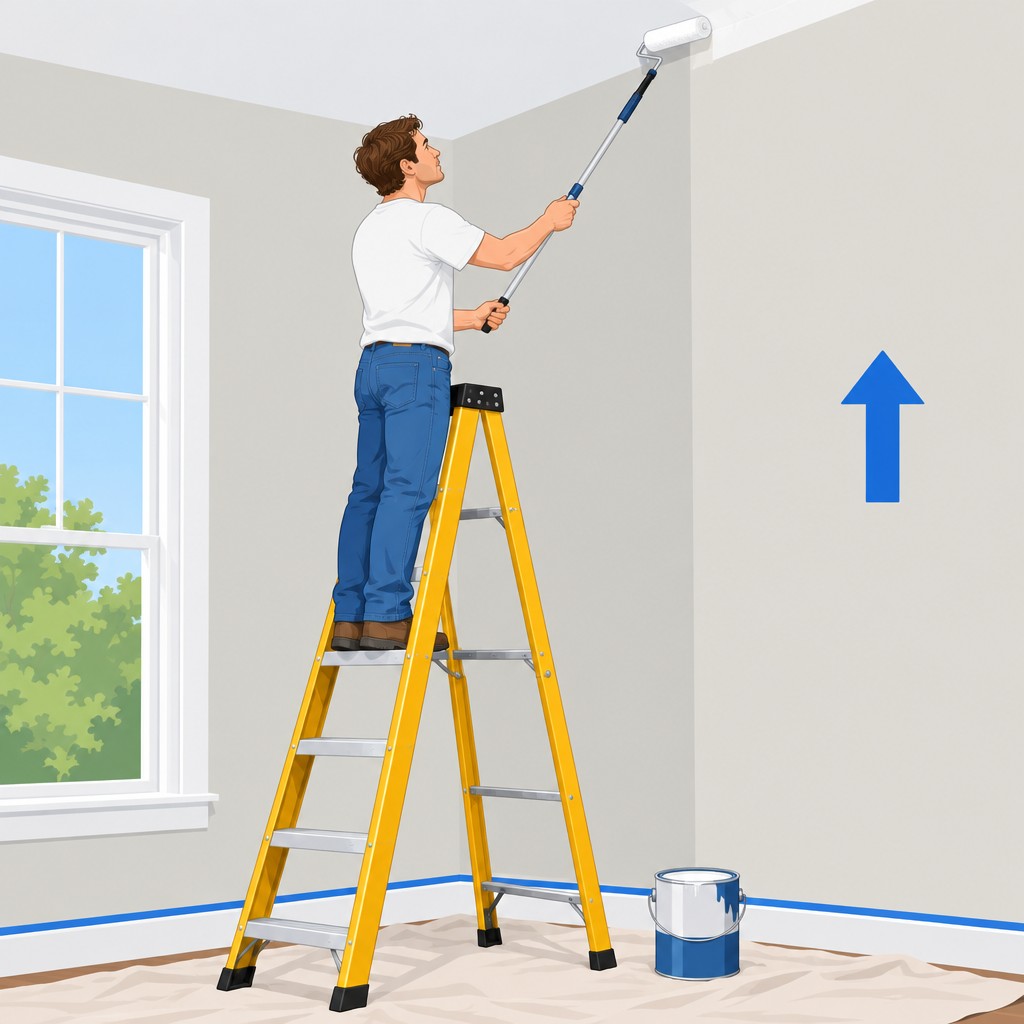
- Then, use a roller on an extension pole to cover large areas evenly.
- Work in small sections so the paint remains blendable during application.
Maintaining Safety
- Wear goggles, gloves, and a mask to reduce exposure to paint fumes.
- Before climbing, confirm that the ladder or scaffolding stands stable and secure.
- Also, work with a partner who can stabilize the ladder and assist nearby.
Cleaning Up and Adding Finishing Touches
- Allow the paint to dry completely before removing drop cloths and painter’s tape.
- Meanwhile, clean brushes, rollers, and other tools with warm, soapy water.
- Inspect the ceiling for missed spots or imperfections, then touch up as needed.
Uncover the Details: Lumberjack Camps: A Glimpse into Community Life
Safety Precautions
Follow these precautions when painting high ceilings and hard-to-reach areas.
- Make sure the ladder or scaffolding remains secure and stable before climbing up.
- Wear goggles, gloves, and a respirator to reduce exposure to fumes and chemicals.
- Work with a partner or assistant to move equipment and maintain safety measures.
Securing the Ladder or Scaffolding
Check that your ladder or scaffolding stays stable before painting hard-to-reach areas.
Double-check the setup to help prevent accidents or falls.
Place ladders on level surfaces with their feet firmly planted.
For scaffolding, confirm that every component connects properly and locks in place.
Wearing Protective Gear
Protect yourself from hazards when working with paint and other chemicals.
Goggles shield your eyes from drips and splashes.
Gloves protect your hands from harsh substances, while a respirator filters harmful fumes.
Use these items to support your health while painting high ceilings and hard-to-reach areas.
Working with a Partner or Assistant
An extra set of hands can make the job easier and safer.
A partner can help move equipment and adjust lighting fixtures.
They can also assist you while you reach distant corners.
Additionally, they can watch for potential dangers during the work.
Transform Your Career Today
Unlock a personalized career strategy that drives real results. Get tailored advice and a roadmap designed just for you.
Start NowYour partner can remind you to take breaks when needed.
Working together improves efficiency and reduces the risk of accidents.
You Might Also Like: The Economic Impact of the Fishing Industry
Starting the Painting Process
Begin by cutting in the ceiling’s edges and corners with a brush.
Next, use a roller with an extension pole to apply paint across small ceiling sections.
Then, work systematically from one side of the room to the other for consistent coverage.
Cutting In the Edges and Corners
Before rolling paint onto the ceiling, cut in the edges and corners with a brush.
This technique creates clean lines and covers areas that may be difficult to reach.
Dip the brush into the paint, then carefully outline each ceiling edge and corner.
Work slowly to avoid getting paint on the walls or nearby surfaces.
Using a Roller With an Extension Pole
After cutting in the edges, use a roller to cover the remaining ceiling surface.
Attach an extension pole to reach high areas and difficult sections more easily.
Load the roller evenly with paint before beginning each pass.
Roll across small sections from one side of the room to the other.
Working Systematically for Consistent Coverage
Start in one corner and move methodically across the ceiling, section by section.
Follow a consistent pattern to reduce patches and streaks in the finished paint.
This approach also helps you track completed areas and avoid missing spots.
Finally, remain patient and attentive while painting high or difficult-to-reach areas.
Uncover the Details: Warehouse Worker Tools and Equipment Overview
Efficient Techniques for Hard-to-Reach Painting Areas
Hard-to-reach areas require deliberate techniques for clean, even paint coverage.
Additionally, the right application method improves control when larger tools cannot fit.
These approaches help painters work accurately while maintaining a steady pace.
Smaller Brushes and Rollers
Smaller brushes and rollers provide better control in corners and narrow spaces.
Use them where larger tools cannot reach the surface evenly.
Consequently, you can apply paint with greater precision and reduce uneven coverage.
Regular Breaks During Demanding Work
Painting overhead or in tight spaces can quickly cause physical fatigue.
Therefore, take regular breaks to rest before accuracy declines.
Short pauses help you maintain consistent application and a smoother finish.
Professional Assistance for Difficult Access
Some areas remain especially difficult to access, including high ceilings and steep stairwells.
For these locations, consider hiring a professional painter with suitable experience and equipment.
This choice can improve access management while saving time and physical effort.
Allowing Proper Drying and Curing Time
- Follow the manufacturer’s instructions for drying times between paint coats.
- Avoid touching or disturbing fresh paint to prevent smudges or streaks.
- Keep the room well-ventilated to support curing and minimize fumes.
Proper drying and curing help create a professional finish on high ceilings and hard-to-reach areas.
Each coat must dry completely before you apply the next one.
This approach helps prevent peeling or cracking.
Additionally, leave freshly painted surfaces undisturbed while they dry.
If you touch wet paint accidentally, wait until it dries before making repairs.
Otherwise, touch-ups may create an uneven finish.
Furthermore, ventilation helps paint cure properly and reduces lingering fumes.
Open windows and doors, or use fans, to circulate air.
These steps also encourage faster, more even drying.
Transform Your Career Today
Unlock a personalized career strategy that drives real results. Get tailored advice and a roadmap designed just for you.
Start NowTherefore, patience helps painted areas look flawless and last longer.
Achieving a Professional Finish
Painting high ceilings and hard-to-reach areas requires patience, preparation, and careful execution.
Always use a stable ladder and wear appropriate protective gear during the project.
Additionally, gather the necessary tools and materials before beginning each painting task.
Proper surface preparation and priming support a smoother and more consistent finish.
Meanwhile, patience helps prevent mistakes that rushing could create.
Take breaks when necessary, and maintain a steady hand for clean, even coverage.
Finally, readers can share their own tips and experiences for painting challenging spaces.
These practices can help you achieve professional-looking results in difficult areas.


