




Importance of Continuing Education
Continuing education keeps DEA agents informed about changing drug enforcement challenges.
It also equips them with current knowledge and practical skills.
As a result, agents can investigate and apprehend drug offenders more effectively.
Evolution of Drug Enforcement
Drug trafficking continues to create new challenges for enforcement agencies.
Therefore, DEA agents must prepare for emerging drugs, tactics, techniques, and technologies.
This preparation helps agents respond as criminals adapt their methods.
Training Programs and Their Contributions
This section examines training programs available to DEA agents.
It highlights the skills and knowledge areas those programs address.
Additionally, it explains how continuous education supports drug enforcement efforts.
The Role of DEA Agents in Combating Drug Trafficking
DEA agents enforce drug laws and investigate crimes involving illegal drugs.
Their work targets trafficking activities and the people involved in them.
Consequently, agents need current knowledge to respond to changing enforcement challenges.
- DEA agents enforce drug laws and investigate drug-related crimes.
- Agents must stay up-to-date with new techniques and trends in drug trafficking.
- Continuing education and training can strengthen their ability to combat drug trafficking.
Responsibilities of DEA Agents in Enforcing Drug Laws
DEA agents examine trafficking organizations and individuals involved in drug distribution.
They coordinate with other law enforcement agencies during intelligence gathering and operations.
They also prepare evidence and seize drugs and assets connected to trafficking.
- Agents investigate drug trafficking organizations and individuals involved in drug distribution.
- They collaborate with other law enforcement agencies to gather intelligence and conduct operations.
- They seize illegal drugs and assets related to drug trafficking activities.
- They build cases against drug traffickers for prosecution in court.
Importance of Staying Current with Trafficking Techniques
Traffickers continually change their methods to avoid detection.
Therefore, agents who understand emerging patterns can anticipate illegal activity.
Awareness of new technologies and communication methods also supports effective investigations.
- Drug traffickers constantly adapt and evolve their methods to avoid detection.
- Knowledge of current trafficking trends helps agents anticipate and prevent illegal activities.
- Agents must understand technologies and communication methods used by drug traffickers.
Practical Training for Drug Enforcement
Training gives DEA agents opportunities to develop updated enforcement skills.
Controlled practice helps agents apply techniques and strategies before operational use.
Specialized programs can build expertise in particular areas of drug enforcement.
- Continuing education provides updated knowledge and skills for combating drug trafficking.
- Training lets agents practice techniques and strategies in controlled environments.
- Specialized programs help agents develop expertise in specific drug enforcement areas.
Continuing Education Programs Available to DEA Agents
DEA agents can access continuing education programs that strengthen their professional capabilities.
These programs address specialized skills, current practices, and evolving enforcement requirements.
Additionally, training helps agents maintain practical knowledge throughout their careers.
Specialized Courses Offered by the DEA
The DEA offers specialized courses that develop essential skills for drug enforcement duties.
These courses give agents practical instruction for handling complex investigative responsibilities.
Moreover, the training covers operational methods that support effective field performance.
- Advanced Tactical Training
- Undercover Operations
- Intelligence Analysis
- Interrogation Techniques
- Surveillance Operations
External Training Opportunities
DEA agents can attend conferences, seminars, and workshops organized by other organizations.
Law enforcement agencies, universities, and professional groups may provide these learning opportunities.
Furthermore, external events help agents exchange practices with professionals in related fields.
- Agents can network with professionals during conferences, seminars, and workshops.
- Participants can exchange best practices through external training opportunities.
- These events help agents stay informed about developments in drug enforcement.
Maintaining Competency Through Regular Training
Regular training helps DEA agents maintain competency and essential enforcement skills.
It also helps agents understand changing laws, regulations, and technologies.
As a result, continuing education supports confident responses to changing drug enforcement demands.
- Training keeps agents current with evolving laws and regulations.
- Instruction introduces technologies relevant to drug enforcement.
- Ongoing development strengthens agents’ ability to perform their duties effectively.
Explore Further: Bomb Squad Technician: Real-Life Case Studies
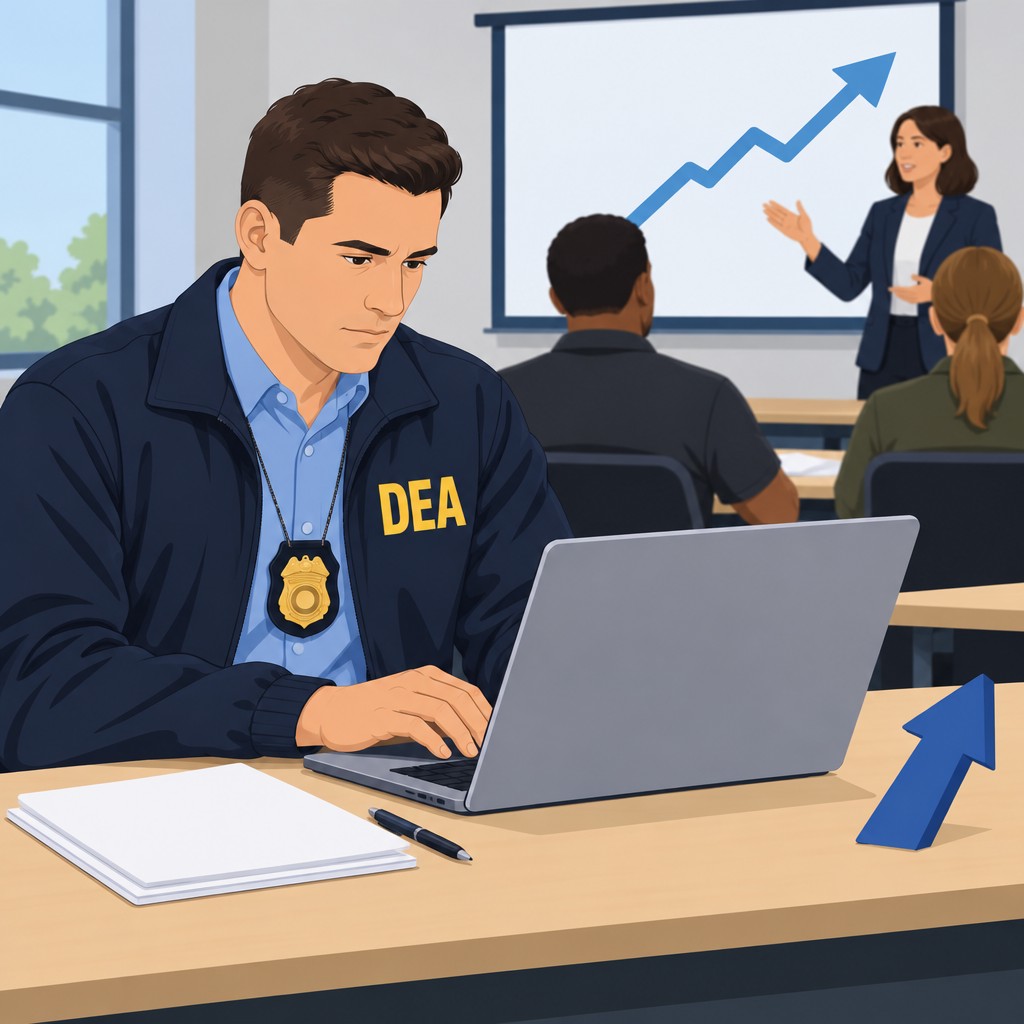
Benefits of Continuing Education for DEA Agents
Continuing education gives DEA agents current knowledge and practical skills for drug enforcement work.
It also helps agents respond to changing trafficking methods and strengthen their investigative performance.
These benefits support more informed decisions during investigations and prosecutions.
- Agents improve their knowledge of drug enforcement strategies.
- Agents adapt more effectively to technologies and methods used by drug traffickers.
- Agents investigate and prosecute drug-related crimes more effectively.
Improved Knowledge of Drug Enforcement Strategies
Training introduces agents to current developments in drug enforcement strategies.
Agents learn about new trafficking trends and emerging drug substances.
They also gain insights into drug traffickers’ behavior and make better-informed enforcement decisions.
Transform Your Career Today
Unlock a personalized career strategy that drives real results. Get tailored advice and a roadmap designed just for you.
Start NowAdaptation to New Trafficking Technologies and Methods
Drug traffickers continually change their methods and use advanced technologies to avoid detection.
Continuing education helps agents recognize these developments and respond to them effectively.
Agents can then develop innovative strategies that address emerging enforcement challenges.
More Effective Investigations and Prosecutions
Continuing education strengthens agents’ investigative skills and legal knowledge.
Agents can conduct thorough investigations and build stronger cases against drug offenders.
Updated knowledge of drug laws and judicial procedures helps agents navigate the legal system effectively.
Find Out More: Technological Tools Used by Sheriffs and Deputies
Challenges Facing DEA Agents in Continuing Education
Continuing education and training help DEA agents stay prepared for drug trafficking and other criminal activities.
However, agents face several obstacles when they pursue further education in their field.
These obstacles involve time, resources, work demands, and logistical difficulties.
- Limited time and resources for training
- Balancing work responsibilities with training requirements
- Managing logistical and scheduling challenges during training sessions
Limited Time and Resources for Training
DEA agents often have limited time and resources for training.
Demanding duties can reduce the time agents dedicate to continuing education.
Budget constraints can also restrict access to high-quality educational opportunities.
Balancing Work Responsibilities and Training
Agents handle investigations, arrests, and other professional responsibilities.
Therefore, they must balance daily duties with training requirements.
This balance can make further education difficult to manage.
Logistical and Scheduling Challenges
Training programs may require agents to travel to different cities or states.
Additionally, scheduling conflicts can prevent agents from attending required sessions.
Consequently, agents may struggle to complete training alongside their regular duties.
Addressing Barriers to Professional Development
Continuing education remains important for strengthening agents’ skills and knowledge.
Addressing time, resource, and scheduling barriers can improve access to training.
Better access can help agents prepare for complex and evolving criminal activities.
Learn More: Top Forensic Science Colleges and Programs
Strategies for Integrating Continuing Education into DEA Work
Three strategies can integrate continuing education into the daily work of DEA agents.
First, leadership can build a workplace culture that supports lifelong learning.
Additionally, agents can pursue personal goals and apply new knowledge during regular assignments.
- Creating a culture of lifelong learning within the DEA
- Setting personal development goals for each agent
- Incorporating training and education into regular job duties and assignments
Creating a Culture of Lifelong Learning within the DEA
DEA leadership can create an environment that encourages agents to seek new knowledge and skills.
Moreover, supervisors can recognize learning as an important part of professional performance.
By supporting ongoing education, the DEA can help agents use current information and tools effectively.
Setting Personal Development Goals for Each Agent
Supervisors can help each agent identify specific areas for improvement and professional growth.
Agents can then choose training and education that support their individual objectives.
Regular reviews allow supervisors and agents to measure progress and adjust goals when necessary.
Incorporating Training and Education into Regular Assignments
Supervisors can include learning activities within agents’ ordinary duties and assignments.
For example, agents can attend workshops, complete online courses, or participate in workplace training.
As a result, agents can apply new information directly while completing their responsibilities.
These strategies help the DEA connect professional development with the organization’s mission and daily operations.
Uncover the Details: Common Myths About Border Patrol Agents Debunked
Collaborative Efforts with Law Enforcement Agencies and Organizations
- Sharing resources and best practices with other agencies
- Participating in joint training exercises and operations
- Leveraging partnerships to improve coordination and communication in drug enforcement efforts
Collaboration with other law enforcement agencies and organizations helps DEA agents address changing trends and tactics in drug enforcement.
Furthermore, shared resources and best practices broaden the expertise available to participating agencies.
Joint training exercises and operations allow DEA agents to strengthen their skills in realistic settings.
Transform Your Career Today
Unlock a personalized career strategy that drives real results. Get tailored advice and a roadmap designed just for you.
Start NowWorking alongside personnel from different agencies exposes agents to additional techniques and strategies.
These experiences can support efforts against drug trafficking and organized crime.
Partnerships also improve coordination and communication during drug enforcement efforts.
For example, collaboration with the Department of Homeland Security and INTERPOL can support intelligence gathering and operational planning.
Consequently, agencies can coordinate missions and execute them more effectively.
Such relationships support ongoing education and training for DEA agents.
By working together, agencies can strengthen collective efforts to combat drug trafficking and protect public safety.
Evaluating Continuing Education for DEA Agents
Continuing education helps DEA agents develop skills and knowledge for changing drug enforcement demands.
Therefore, the DEA should assess training results rather than rely only on course completion.
These evaluations can connect learning activities with workplace performance and agent perspectives.
- Measure training effectiveness against desired outcomes.
- Track performance improvements after training.
- Gather agent feedback about training value and relevance.
Measuring Training Effectiveness
The DEA can measure training effectiveness by comparing program goals with operational results.
For example, evaluators can examine successful drug busts, arrests, and cases solved after training.
These indicators can show whether training strengthens agents’ abilities to address criminal activities.
Tracking Performance Improvements
Evaluators can compare performance data from before and after each training program.
This comparison can reveal changes in investigative efficiency, intelligence analysis, and interagency collaboration.
Furthermore, the DEA can identify which training activities produce the strongest workplace improvements.
Gathering Feedback from Agents
Agent feedback can clarify whether training addresses current responsibilities and operational needs.
Surveys, interviews, and focus groups can capture views about quality, relevance, and satisfaction.
Consequently, the DEA can use this feedback to refine future training initiatives.
Regular assessment helps the DEA align continuing education with evolving drug enforcement challenges.
Professional Development for DEA Agents
Continuing education and training for DEA agents remains crucial as drug trends evolve.
Professional development equips agents to handle complex cases more effectively.
Therefore, DEA agents should prioritize ongoing education to serve and protect their communities.
Additional Resources
Google search results for Continuing Education and Training for DEA Agents Protective Services
Bing search results for Continuing Education and Training for DEA Agents Protective Services


