




Campus Security Officers and Student Safety
Campus security officers help maintain a safe environment for students, staff, and visitors.
They patrol the campus and respond to emergencies.
Additionally, they enforce safety protocols across the institution.
They handle student incidents by de-escalating conflicts and investigating policy violations.
When necessary, they also collaborate with law enforcement.
Consequently, their presence helps students focus on their studies without fear or distraction.
Effective campus security officers maintain a secure and supportive learning environment.
They achieve this goal by handling student incidents professionally and efficiently.
Campus Security Officer Responsibilities
Campus security officers protect students, staff, and visitors throughout the campus.
They patrol campus grounds, monitor security cameras, and respond promptly to suspicious activity or threats.
Additionally, they enforce campus policies and help maintain order during disputes or emergencies.
- Maintaining a safe and secure campus environment
- Enforcing campus rules and regulations
- Responding to emergencies and incidents involving students
Responding to Student Incidents
When an incident occurs, officers first determine its nature and severity.
They then secure the area and protect students from further danger.
If necessary, officers contact law enforcement or medical services for additional assistance.
- Assess the situation and determine the incident’s nature and severity.
- Secure the area and contain the situation when necessary.
- Call law enforcement or medical services when required.
- Interview students and staff who witnessed the incident.
- Document the time, location, events, and individuals involved.
- Submit a formal report to campus administration or law enforcement.
- Follow up and support actions that help prevent future incidents.
Officers must act quickly and decisively during medical emergencies, fights, vandalism, or other incidents.
They also collaborate with campus stakeholders to support campus safety and maintain order.
Training and Qualifications for Campus Security Officers
Campus security officers need focused preparation to respond appropriately during student incidents.
Their qualifications combine formal instruction, institutional knowledge, and interpersonal skills.
These capabilities help officers address situations with clarity and control.
Security Training Courses
Security training courses introduce legal guidelines, emergency response protocols, and conflict resolution strategies.
Through this instruction, officers develop knowledge for handling varied campus situations.
Additionally, training prepares officers to respond according to established procedures.
Knowledge of Campus Policies and Procedures
Officers must understand campus policies and procedures before enforcing institutional rules.
This knowledge clarifies expectations for students, staff, and visitors.
As a result, officers can apply requirements consistently during student incidents.
Conflict Management and De-escalation Skills
Strong communication skills help officers address disagreements with students.
Empathy and composure support de-escalation when situations become tense.
By resolving conflicts calmly, officers can reduce escalation risks and support the campus community.
Discover More: Best Practices for Emergency Management Directors
Communication Skills for Effective Student Interaction
- Active listening helps officers understand student concerns.
- Clear communication explains rules and expectations.
- Adaptable communication supports interaction with diverse students.
Communication skills help campus security officers handle student incidents effectively.
Clear communication can de-escalate situations and build trust with students.
Active listening helps officers understand student concerns and perspectives.
By listening attentively, officers can gather information that helps resolve conflicts or address campus issues.
Officers must also communicate rules and expectations clearly and concisely.
This approach helps students understand their responsibilities and reduces misunderstandings.
Consequently, students may avoid conflicts caused by unclear instructions.
Campus security officers interact with students from diverse backgrounds and cultures.
Therefore, officers should adapt their communication styles to reach different student groups effectively.
Effective engagement with diverse students supports a safe and inclusive campus environment.
These communication skills strengthen officers’ ability to handle student incidents professionally and efficiently.
Transform Your Career Today
Unlock a personalized career strategy that drives real results. Get tailored advice and a roadmap designed just for you.
Start NowGain More Insights: Parole Officer: Supporting Education Initiatives
Professional and Discreet Student Incident Handling
Campus Security Officers must handle student incidents with professionalism and discretion.
This approach protects students and supports a positive learning environment.
Careful incident handling also strengthens trust in campus security personnel.
Confidentiality During Sensitive Situations
- Officers must prioritize confidentiality when handling sensitive student incidents.
- They should protect privacy and avoid disclosing information that could harm safety or reputations.
- Confidentiality encourages students to report incidents and trust security personnel.
Respect for Student Rights and Privacy
- Every student deserves privacy and respect, regardless of the incident.
- Officers should treat each student with dignity throughout the response process.
- Respect also requires awareness of cultural differences and individual needs.
Accurate Documentation and Proper Protocols
- Officers must document student incidents accurately and thoroughly.
- Detailed records provide reliable information for future reference or legal purposes.
- Established protocols promote consistency within the campus security department.
Trust and Accountability in Incident Response
Professional conduct helps officers address student incidents effectively.
Discretion protects student dignity while supporting a secure campus environment.
Accurate records help officers resolve issues while maintaining community confidence.
Learn More: Correctional Officer Role in Rehabilitation
Collaborating With Campus Staff and Administrators
- Officers work closely with academic advisors and counselors.
- They refer students to appropriate resources for support.
- They participate in disciplinary hearings and family meetings.
Campus staff and administrators help officers address student incidents effectively.
This collaboration supports students while maintaining a safe campus environment.
Officers coordinate with appropriate professionals throughout the incident resolution process.
Working With Academic Advisors and Counselors
Academic advisors and counselors help students navigate challenges during their academic journeys.
Therefore, officers coordinate with these professionals when incidents affect students.
This cooperation connects students with guidance and support suited to their needs.
Referring Students to Support Resources
Some incidents require assistance beyond the services campus security officers provide.
In those situations, officers work with staff and administrators to identify suitable resources.
These resources may include mental health services, counseling, or other campus support programs.
Participating in Disciplinary Hearings and Family Meetings
Serious incidents may lead to disciplinary hearings or meetings with students and families.
During these meetings, officers provide relevant information about the incident.
They also support the resolution process as administrators determine appropriate consequences.
Explore Further: Cybersecurity Specialist: How to Manage Security Audits
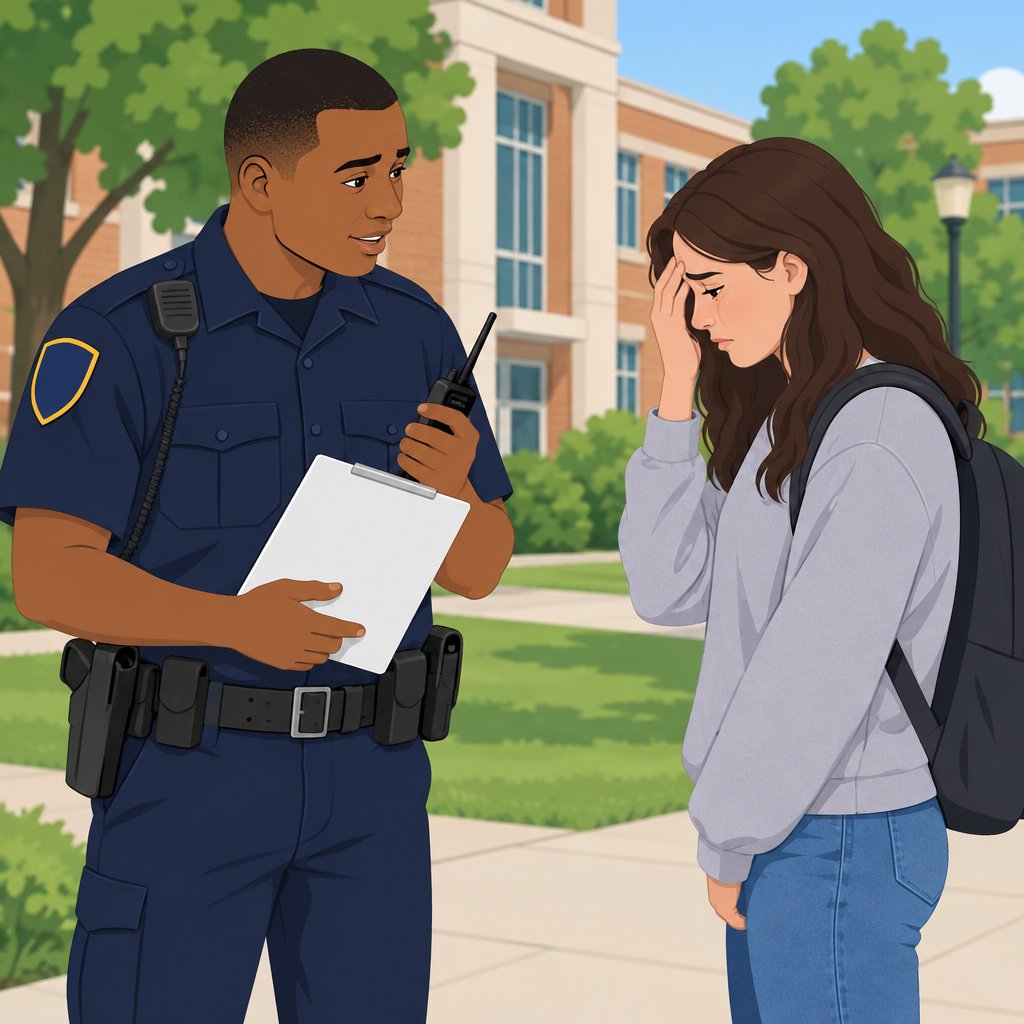
Preventive Measures for Campus Safety
Campus security officers can reduce student incidents through consistent preventive measures.
These measures combine visible security practices, safety education, and positive student relationships.
By working with students and campus stakeholders, officers can support a secure and welcoming environment.
- Conduct regular patrols and security checks.
- Offer safety workshops and training programs for students.
- Build relationships with students to promote a positive campus culture.
Regular Patrols and Security Checks
Regular patrols help officers monitor different areas of the campus.
During these checks, officers can identify potential security risks.
Visible officers can deter criminal activity and respond quickly when incidents occur.
Safety Workshops and Student Training
Safety workshops give students knowledge and skills that support personal safety.
Training programs can address personal safety, emergency response, and conflict resolution.
As a result, students can make informed decisions during challenging situations.
Positive Relationships with Students
Building rapport with students helps security officers gain their trust and cooperation.
Trust can encourage students to report suspicious activities and seek help when necessary.
Furthermore, supportive relationships can increase student participation in campus safety initiatives.
Collaborative Campus Prevention
Effective prevention requires regular patrols, safety training, and community engagement.
Security officers can coordinate these measures with students and campus stakeholders.
This collaborative approach helps create a secure and welcoming campus environment.
Managing Student Emergencies
Campus emergencies involving students require coordinated decisions, timely communication, and compassionate assistance.
Security officers support emergency management by connecting protective actions with broader campus resources.
Their response should address physical safety, clear information, and students’ emotional needs.
Rapid Responses That Protect Students
- Officers should assess immediate risks and take prompt action to protect students.
- Training and preparation help officers make sound decisions under pressure.
- Clear instructions and timely updates help students respond appropriately during emergencies.
Coordination With Emergency Services and Campus Officials
- Officers should contact police, fire, or medical personnel when emergencies require specialized assistance.
- They should maintain clear communication with campus officials throughout the response.
- Meanwhile, administrators and counselors can organize information, services, and student support.
Support for Students and Families During Crises
- Students and families may need reassurance, guidance, and practical assistance during difficult events.
- Officers can respond with empathy while directing people toward counseling and mental health resources.
- Afterward, support services can help students manage the effects of traumatic experiences.
Recognizing the Value of Campus Security Officers
Campus security officers help maintain a safe environment for students.
Transform Your Career Today
Unlock a personalized career strategy that drives real results. Get tailored advice and a roadmap designed just for you.
Start NowThey handle varied incidents with professionalism and care, supporting everyone’s well-being on campus.
Effective communication, conflict resolution, and quick decisions strengthen their response to student incidents.
These qualities help officers fulfill their responsibilities successfully.
Furthermore, readers should recognize the dedication campus security officers bring to their work.
Supporting and acknowledging them can contribute to a safer campus environment for everyone.
These professionals work behind the scenes to protect students, faculty, and staff.
Therefore, expressing gratitude recognizes their important role in daily campus life.
Additional Resources
Google search results for Campus Security Officer: Handling Student Incidents Protective Services
Bing search results for Campus Security Officer: Handling Student Incidents Protective Services


