




Agricultural Carbon Footprint
Agriculture’s carbon footprint measures greenhouse gases produced directly and indirectly by farming operations.
These emissions come from both direct and indirect farming activities.
Reducing agriculture’s carbon footprint helps combat climate change and promote sustainable practices.
Importance of Sustainable Farming Practices
Rising populations increase food demand.
That demand can pressure farmers to intensify production.
Intensive methods may damage environmental conditions.
Sustainable methods help farmers meet food needs while conserving resources, limiting waste, and supporting biodiversity.
How Sustainable Farming Practices Reduce Emissions
These methods can lower emissions by storing atmospheric carbon in soil.
They also strengthen soil health and reduce reliance on chemical inputs.
Crop rotation, cover crops, and reduced tillage can increase soil organic matter.
Consequently, healthier soil can store more carbon and support productive farmland.
Sustainable Farming Practices in Practice
Farmers can apply several practices to protect soil and manage farm emissions.
Each method supports soil quality while addressing environmental pressures.
Together, these approaches encourage more resilient agricultural systems.
- Crop Rotation: Farmers grow different crops sequentially on the same land, improving fertility, reducing pests, and supporting biodiversity.
- Cover Cropping: Cover crops protect soil from erosion, suppress weeds, and improve soil structure between main-crop periods.
- Reduced Tillage: Reduced tillage limits soil disturbance, preserves structure, retains moisture, and lowers carbon emissions.
These practices can help farmers mitigate climate change, protect environmental resources, and support long-term food security.
Adoption of Precision Agriculture Techniques
Precision agriculture uses technology to improve farming decisions and resource efficiency.
It combines field data with targeted actions across crop production.
Farmers can adjust inputs according to conditions within each field.
Definition of Precision Agriculture
Farmers use GPS, GIS, drones, and sensors to gather information.
These tools help them analyze field conditions and crop needs.
Data analysis supports informed decisions about crop management.
Benefits of Precision Agriculture in Reducing Carbon Footprint
Precision agriculture can reduce waste while supporting efficient farm operations.
Targeted decisions help farmers manage inputs, soil conditions, water, and crop productivity.
These practices can also reduce environmental impacts associated with farming.
- Reduced chemical usage: Farmers apply fertilizers and pesticides only where necessary, minimizing excess and chemical runoff.
- Enhanced soil health: Accurate fertility assessments support targeted fertilization and healthier soil.
- Water conservation: Precise irrigation optimizes water use and reduces energy needed for pumping.
- Increased yield: Field-specific inputs can improve productivity while reducing environmental impact.
Examples of Precision Agriculture Techniques
Several technologies help farmers place inputs and equipment more accurately.
These tools use field data or satellite signals to guide farm activities.
Consequently, farmers can reduce overlap, waste, and inefficient applications.
- GPS-guided tractors: Satellite navigation supports accurate planting, spraying, and harvesting.
- Variable rate fertilization: Sensors and data analysis adjust fertilizer rates to soil conditions and crop needs.
Discover More: Best Practices for Efficient Agricultural Labor
Utilization of Renewable Energy Sources
Agriculture faces scrutiny because its activities can contribute to environmental degradation and climate change.
Renewable energy provides farmers with a cleaner option for powering agricultural operations.
Additionally, this approach supports greater sustainability across the agricultural sector.
How Renewable Energy Reduces Agricultural Carbon Emissions
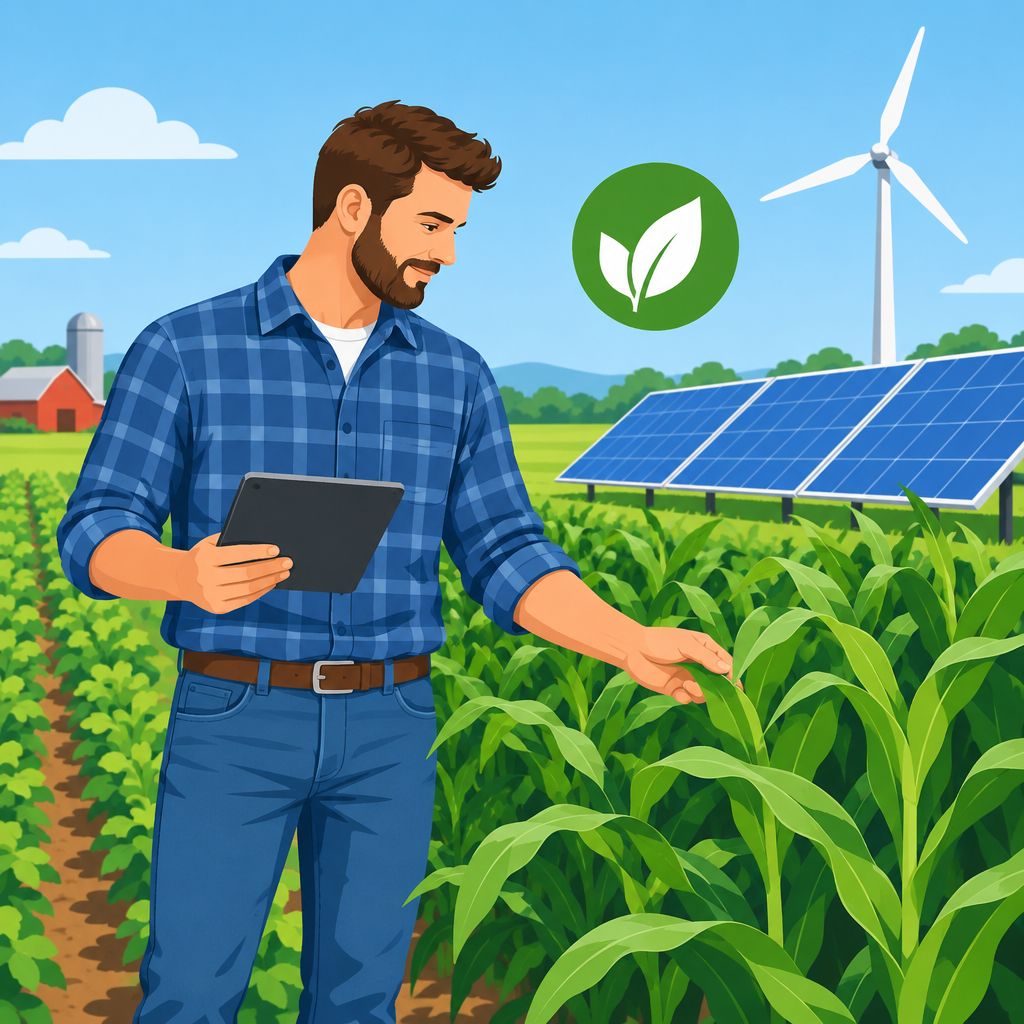
Solar panels and wind turbines generate clean energy without emitting greenhouse gases.
Therefore, farmers can reduce their reliance on fossil fuels, which contribute significantly to carbon emissions.
Renewable energy can also reduce long-term energy costs for agricultural operations.
Consequently, this transition supports both environmental protection and the future of farming.
Renewable Energy Sources for Farms
Solar panels offer farms a practical way to generate electricity from sunlight.
Farmers can use solar electricity to power irrigation systems, lighting, and other operations.
Meanwhile, wind turbines convert wind energy into electricity for agricultural use.
This technology provides farmers with another sustainable and reliable power source.
By adopting these sources, farmers can reduce emissions and support a more sustainable agricultural system.
Transform Your Career Today
Unlock a personalized career strategy that drives real results. Get tailored advice and a roadmap designed just for you.
Start NowYou Might Also Like: Networking Tips for Aspiring Food Safety Specialists
Reducing Food Waste
Food waste is a major contributor to agriculture’s carbon footprint.
It wastes resources and releases greenhouse gases into the atmosphere.
These emissions contribute to climate change.
Impact of Food Waste on Agriculture’s Carbon Footprint
When farmers waste food, they also waste the resources used to produce it.
Those resources include water, energy, and land.
Food production also releases greenhouse gases, including methane and carbon dioxide.
These gases contribute to global warming and climate change.
Strategies to Reduce Food Waste on Farms
- Farmers can improve storage methods to reduce spoilage and extend produce shelf life.
Poor storage practices often cause farm food waste. - Farmers can donate unsold or excess produce to food banks and charities.
These programs reduce waste and help feed people in need.
Farmers can use these strategies to reduce their carbon footprint.
They can also support a more sustainable agricultural system.
Learn More: Essential Tools for Every Horticulturist's Toolkit
Carbon Sequestration Practices
Carbon sequestration practices help address climate change.
These practices capture and store atmospheric carbon dioxide.
Farmers can apply these approaches within sustainable agricultural systems.
Definition of Carbon Sequestration
Carbon sequestration captures atmospheric carbon dioxide.
It stores captured carbon to help mitigate global warming.
This process supports efforts to address climate change.
Importance of Carbon Sequestration in Agriculture
Agricultural carbon sequestration helps reduce greenhouse gas emissions.
It also improves soil health and fertility.
Therefore, farmers can support environmental conservation through these practices.
Practices That Promote Carbon Sequestration
Farmers can use several practices to increase carbon storage.
These approaches store carbon in trees, crops, roots, and soil.
Furthermore, they support more sustainable and resilient agricultural systems.
- Planting trees allows trees to absorb carbon dioxide during photosynthesis and store carbon in their biomass and roots.
- Implementing agroforestry systems combines trees and crops, improves soil health, and increases carbon storage.
Farmers and agri-enthusiasts can adopt these practices to reduce their carbon footprint.
Consequently, these efforts benefit the planet and future generations.
Learn More: The Future of Irrigation: What Specialists Should Know
Government Policies for Carbon Footprint Reduction
Government policies can guide farmers toward practices that reduce carbon emissions.
These policies establish frameworks and regulations for sustainable agricultural methods.
Furthermore, policymakers can support industry-wide progress through standards and guidelines.
- Implement carbon pricing mechanisms to internalize greenhouse gas emission costs.
- Promote agroforestry and organic farming through subsidies and support programs.
- Enforce regulations on livestock methane emissions and manure management.
- Incentivize renewable energy sources on farms, including solar panels and wind turbines.
- Support research and development for low-carbon agricultural technologies.
Government Incentives for Sustainable Farming Practices
Government incentives reward farmers who adopt sustainable farming practices.
These incentives can reduce financial barriers to changing farm operations.
Additionally, governments can provide technical assistance and training for participating farmers.
- Provide grants for transitions to organic farming methods.
- Offer subsidies for renewable energy installations on farms.
- Provide tax credits for conservation practices, including cover cropping.
- Offer crop insurance discounts for climate-smart agriculture practices.
- Provide farmer training programs covering sustainable practices and technologies.
These policies and incentives give farmers stronger support for reducing agricultural emissions.
They also encourage sustainable practices across the food system.
Sustainable Agriculture and Climate Action
Reducing agriculture’s carbon footprint supports environmental sustainability.
Sustainable practices can reduce agriculture’s contribution to climate change.
Farmers can limit emissions through efficient methods and biodiversity protection.
Composting, crop rotation, and reduced tillage offer practical ways to improve farm sustainability.
Farmers should act now to protect the planet for future generations.
Key Sustainable Agriculture Takeaways
These priorities connect climate action with responsible farm management.
Transform Your Career Today
Unlock a personalized career strategy that drives real results. Get tailored advice and a roadmap designed just for you.
Start NowFarmers can combine emission reduction, efficient techniques, and biodiversity protection.
Together, these strategies support sustainable agriculture and long-term environmental care.
- Reduce agriculture’s carbon footprint
- Address agriculture’s impact on climate change
- Implement sustainable farming practices
- Help farmers combat global warming
Farmer Commitments to Sustainable Agriculture
Farmers can commit to sustainability by adopting eco-friendly techniques.
They can also invest in cleaner energy and prioritize soil health.
Joining sustainable agriculture efforts can help preserve the planet for future generations.
Additional Resources
Google search results for Reducing Carbon Footprint in Agriculture Agricultural
Bing search results for Reducing Carbon Footprint in Agriculture Agricultural


