




Highway Patrol and Homeland Security
Highway patrol plays a crucial role in homeland security.
It safeguards roadways from potential threats.
Through this role, highway patrol supports roadway security.
Highway Patrol’s Security Role
Highway patrol officers serve as an early security presence.
They often form the first line of defense.
Their role addresses various security risks on highways and interstates.
Roadway Safety and Security Responsibilities
Highway patrol’s presence deters criminal activities.
Officers enforce traffic laws and respond quickly to emergencies.
These efforts help keep the public safe on roads.
History of Highway Patrol
The concept of highway patrol began in the early twentieth century in the United States.
Initially, highway patrol agencies focused on traffic enforcement and vehicle-related issues.
Over time, these agencies expanded their responsibilities beyond basic roadway enforcement.
Establishment of Highway Patrol Agencies
Pennsylvania established the first official highway patrol agency in 1905.
Other states created similar agencies during subsequent years.
These agencies enforced traffic laws and promoted safer roads.
Evolution of Highway Patrol Responsibilities
Increasing national security threats broadened the responsibilities of highway patrol agencies.
Today, these agencies contribute to homeland security efforts across the nation’s roadways.
Their responsibilities include preventing and responding to potential security threats.
- Increased Surveillance: Agencies use advanced surveillance technology to monitor highways and track suspicious activities.
- Collaboration with Federal Agencies: Agencies share information and resources with the Department of Homeland Security and the FBI.
- Training and Preparedness: Specialized counterterrorism and emergency response training prepares officers to address security threats.
- Emergency Response Coordination: During crises, agencies coordinate emergency responses and protect public safety.
- Public Awareness and Education: Public awareness campaigns encourage vigilance and reporting of suspicious activities.
Highway patrol agencies remain homeland security partners, combining expertise, resources, and federal collaboration to protect public roadways.
Highway Patrol Responsibilities
Highway patrol officers support homeland security through several roadway duties.
They enforce traffic rules, respond to emergencies, and investigate road-related crimes.
Together, these activities help protect the public and maintain order on highways.
Traffic Law Enforcement
First, officers enforce traffic laws and regulations across highways.
They monitor roadways to identify speeding, reckless driving, and drunk driving.
This enforcement promotes safer travel and limits risks created by dangerous drivers.
Emergency Response on Highways
Highway patrol officers also respond to accidents and other emergencies.
Because they often arrive first, they provide immediate assistance to people at risk.
They manage traffic flow, protect the public, and reduce disruption during critical incidents.
Investigations Related to Road Safety
Additionally, officers conduct criminal investigations connected to road safety.
They examine hit-and-run incidents and investigate drug trafficking on highways.
They also investigate human trafficking and work to apprehend suspected perpetrators.
These investigations help prevent illegal activities that threaten public safety.
Security Value of Highway Patrol Duties
By combining enforcement, emergency response, and investigations, officers address several roadway risks.
Their duties help maintain safety and order for people using highways.
Therefore, highway patrol remains an essential public safety resource.
See Related Content: Technological Tools Used by TSA Officers for Security
Collaboration with Other Law Enforcement Agencies
- Working with federal agencies such as the FBI and the Department of Homeland Security
- Sharing intelligence and resources to enhance security measures
- Conducting joint operations to combat threats to national security
Highway Patrol collaborates with federal agencies such as the FBI and the Department of Homeland Security.
This partnership allows Highway Patrol to leverage federal expertise and resources.
Additionally, agencies share intelligence and resources to strengthen security measures.
That exchange helps agencies identify potential security threats.
Transform Your Career Today
Unlock a personalized career strategy that drives real results. Get tailored advice and a roadmap designed just for you.
Start NowConsequently, they can address risks and respond to evolving threats more effectively.
Highway Patrol also conducts joint operations with other agencies.
These coordinated efforts pool resources to combat threats to national security.
Furthermore, joint operations help agencies respond to and neutralize threats.
This cooperation maximizes the impact of enforcement actions.
Through collaboration, these agencies strengthen security measures and protect the homeland.
Together, they support the safety and well-being of the country and its citizens.
Find Out More: The Role of ICE Agents in Border Security
Training and Qualifications for Highway Patrol Officers
- Officers receive specialized training in traffic management and accident investigation.
- Their training covers traffic control, accident reconstruction, and investigation techniques.
- This preparation helps officers manage traffic flow and respond promptly to accidents.
Highway patrol officers complete rigorous training for their specialized responsibilities.
They develop practical skills for controlling traffic and investigating accident scenes.
Therefore, their preparation supports timely responses and effective roadway management.
National Security Protocols and Procedures
- Highway patrol officers learn national security protocols and procedures.
- They recognize their role in safeguarding critical infrastructure and protecting public safety.
- By following established protocols, they contribute to homeland security efforts.
Officers apply established procedures while performing their highway duties.
Moreover, they understand how their work supports infrastructure protection and public safety.
This knowledge helps them follow security requirements during roadway operations.
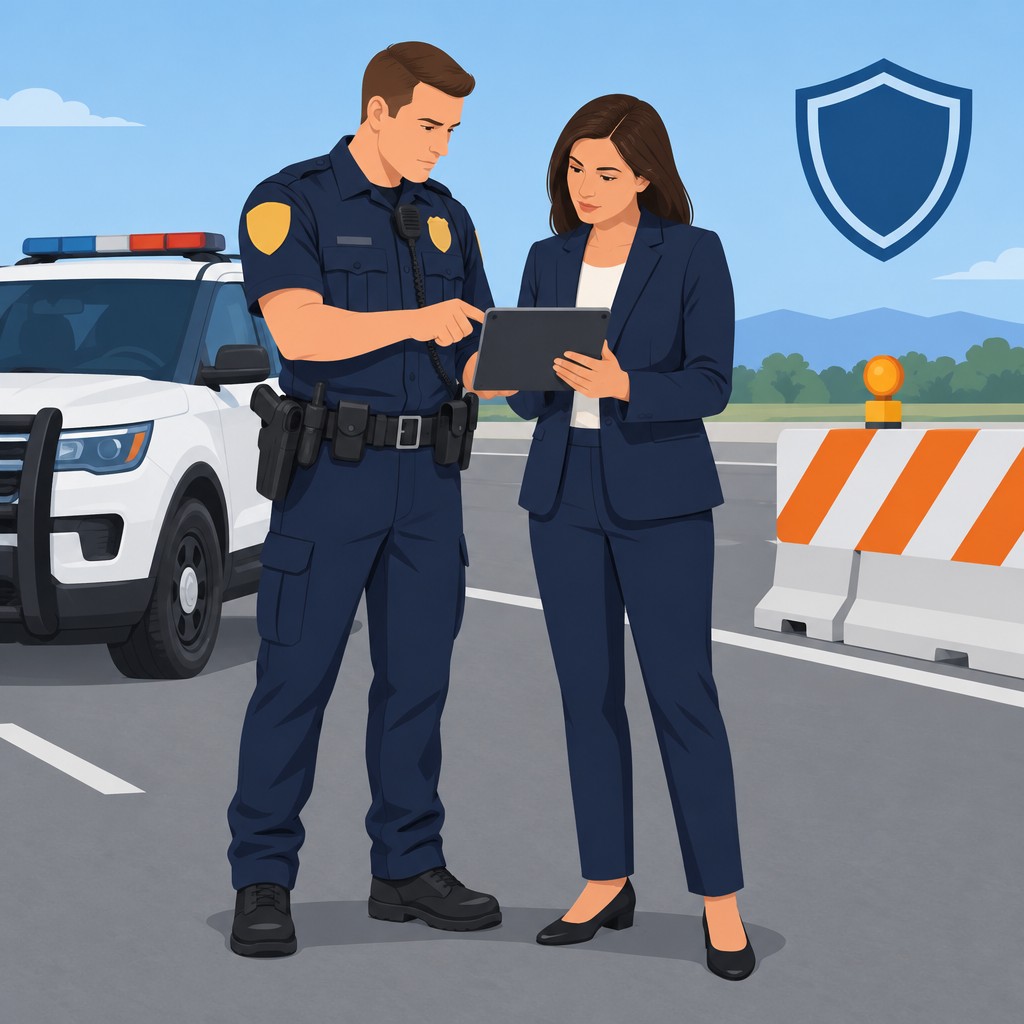
Continuous Education on Threats and Technologies
- Highway patrol officers receive ongoing training about evolving threats and technologies.
- They study advancements in security technology and techniques.
- This education prepares them to address emerging security challenges.
Ongoing education keeps officers informed about changing security conditions.
They update their knowledge as technologies and response techniques develop.
As a result, officers remain prepared to address security challenges that arise.
Their specialized training strengthens traffic management and accident response.
Their protocol knowledge supports infrastructure protection and public safety.
Continuous learning further prepares them to support the nation’s security needs.
Uncover the Details: Campus Security Officer: Crime Prevention Tactics
Drones for Surveillance and Reconnaissance
Drones support surveillance and reconnaissance along highways and major transportation routes.
These unmanned aerial vehicles help officers monitor potential threats and track suspicious activities.
Additionally, drones give patrol officers an aerial view that supports quick emergency responses and intelligence gathering.
Automated License Plate Recognition Systems
Automated license plate recognition systems use cameras mounted on patrol cars or stationary locations.
These cameras scan and record license plate numbers automatically.
By comparing data with law enforcement databases, officers can identify stolen vehicles, wanted suspects, and vehicles linked to criminal activity.
Consequently, patrol officers can intercept suspicious vehicles and apprehend people who may threaten national security.
Communication Systems for Real-Time Information Sharing
Highway patrol agencies use advanced communication systems to share information during security operations.
Radio communications, mobile data terminals, and secure networks connect patrol officers with other law enforcement agencies.
These systems also connect officers with emergency response teams and federal authorities.
Furthermore, these channels help personnel coordinate alerts, updates, and intelligence in real time.
Therefore, officers can improve situational awareness and respond more effectively to emerging threats.
Technology Supporting Transportation Security
Technology strengthens highway patrol support for homeland security operations.
Together, these tools help officers monitor transportation routes and assess potential threats.
Integrated surveillance, recognition, and communication capabilities support safer highways and transportation infrastructure.
You Might Also Like: Inside Look: CBP Officer Academy Training
Challenges Facing Highway Patrol Agencies in Homeland Security
Highway patrol agencies support homeland security by monitoring roadways and participating in security initiatives.
However, agencies face several challenges while carrying out these responsibilities.
These challenges affect how officers divide attention, respond to threats, and use available resources.
Transform Your Career Today
Unlock a personalized career strategy that drives real results. Get tailored advice and a roadmap designed just for you.
Start NowBalancing Traffic Enforcement with National Security
Officers must balance traffic enforcement with attention to national security concerns.
Although roadway safety remains essential, officers must also notice suspicious activities that may threaten homeland security.
Therefore, agencies must divide their efforts without weakening either responsibility.
Responding to Evolving Security Threats
Highway patrol agencies now address evolving threats, including cyber attacks and terrorism.
These threats extend beyond traditional law enforcement duties and require specialized knowledge.
However, patrol officers may lack immediate access to the training and resources needed for these demands.
Managing Limited Security Resources
Limited funding creates another obstacle for highway patrol security initiatives.
Competing priorities and budget constraints can restrict the security measures agencies implement.
As a result, officers may struggle to provide the level of protection that homeland security requires.
Strengthening Support for Highway Patrol Agencies
Providing adequate support can help patrol agencies address these obstacles.
Additional resources can strengthen their ability to manage traffic duties and security concerns.
This support can better equip officers to protect the homeland effectively.
Sustaining Highway Patrol Support
Highway patrol officers strengthen homeland security by protecting road users and supporting roadway safety.
Their visible presence and prompt response help address security concerns on highways.
Continued funding, resources, and recognition will help officers perform these duties effectively.
Highway patrol contributes to homeland security in several important ways.
- Officers identify suspicious activity and respond quickly when emergencies arise.
- They coordinate with law enforcement partners and share intelligence to support unified security efforts.
- Their highway presence discourages criminal activity and provides a visible security measure.
- Traffic enforcement and accident investigation support broader homeland security initiatives.
Public recognition also acknowledges the dedication officers show while keeping roadways safe and secure.
Additional Resources
Google search results for Highway Patrol Contribution to Homeland Security Protective Services
Bing search results for Highway Patrol Contribution to Homeland Security Protective Services


