




Introduction
CBP officers undergo rigorous preparation at the CBP Officer Academy Training.
This training equips officers with skills and knowledge for their border security duties.
This post examines several aspects of CBP Officer Academy Training.
It explores physical fitness routines and advanced simulation exercises.
CBP Officer Academy Training Overview
The CBP Officer Academy training program typically lasts 18 weeks.
Academy training takes place in Glynco, Georgia.
Applicants must pass a background check and physical fitness test.
Core Curriculum and Training Modules
Trainees complete intensive physical fitness training for demanding job requirements.
Classroom instruction covers law enforcement techniques and immigration laws.
Additionally, trainees study cultural sensitivity and firearms skills.
Hands-On Experience and Simulations
Trainees practice realistic scenarios that reflect situations they may encounter.
These exercises strengthen quick decision-making and adaptability under pressure.
Role-playing activities feature actors portraying situations at ports of entry.
Specialized Skills for Inspections
Officers learn methods for detecting drugs, weapons, and counterfeit goods.
They also practice interviewing travelers during inspections.
Furthermore, trainees learn to identify potential security threats.
Cultural sensitivity training supports respectful interactions with diverse individuals.
Physical Fitness and Wellness Support
The academy emphasizes physical fitness throughout the training program.
Daily workouts include cardio, strength training, and agility exercises.
These activities build endurance and strength for job demands.
Wellness initiatives address stress management and mental health awareness.
Evaluations and Performance Assessments
Regular evaluations track trainee progress and identify areas for improvement.
Assessments measure marksmanship, communication, decision-making, and cultural sensitivity.
Instructors and senior officers conduct these performance evaluations.
Their reviews confirm whether trainees meet graduation standards.
Graduation and Deployment Assignments
Successful trainees graduate from the CBP Officer Academy.
After graduation, agencies assign officers to ports of entry nationwide.
Graduates then begin their careers as CBP officers.
They continue receiving on-the-job training and support.
Meanwhile, officers secure borders and facilitate lawful trade and travel.
Curriculum of the Training
- Details of the subjects covered
- Hands-on training exercises
- Role-playing scenarios
The CBP Officer Academy uses a comprehensive curriculum to prepare future CBP officers.
The program covers academic subjects and practical training activities.
These components help officers develop knowledge and skills for their duties.
Hands-on exercises and role-playing scenarios strengthen preparation for field situations.
Subjects Covered
The curriculum includes academic subjects.
It also includes practical subjects that develop essential knowledge and skills.
These subjects support effective performance in officers’ roles.
- Immigration law
- Customs regulations
- Use of force training
- Drug identification
- Emergency response procedures
- Interrogation techniques
- Professional conduct and ethics
- Physical fitness training
Hands-on Training Exercises
Hands-on exercises form an important part of training at the CBP Officer Academy.
These exercises let officers practice skills in realistic situations.
They also provide practical experience with situations officers may encounter in the field.
Transform Your Career Today
Unlock a personalized career strategy that drives real results. Get tailored advice and a roadmap designed just for you.
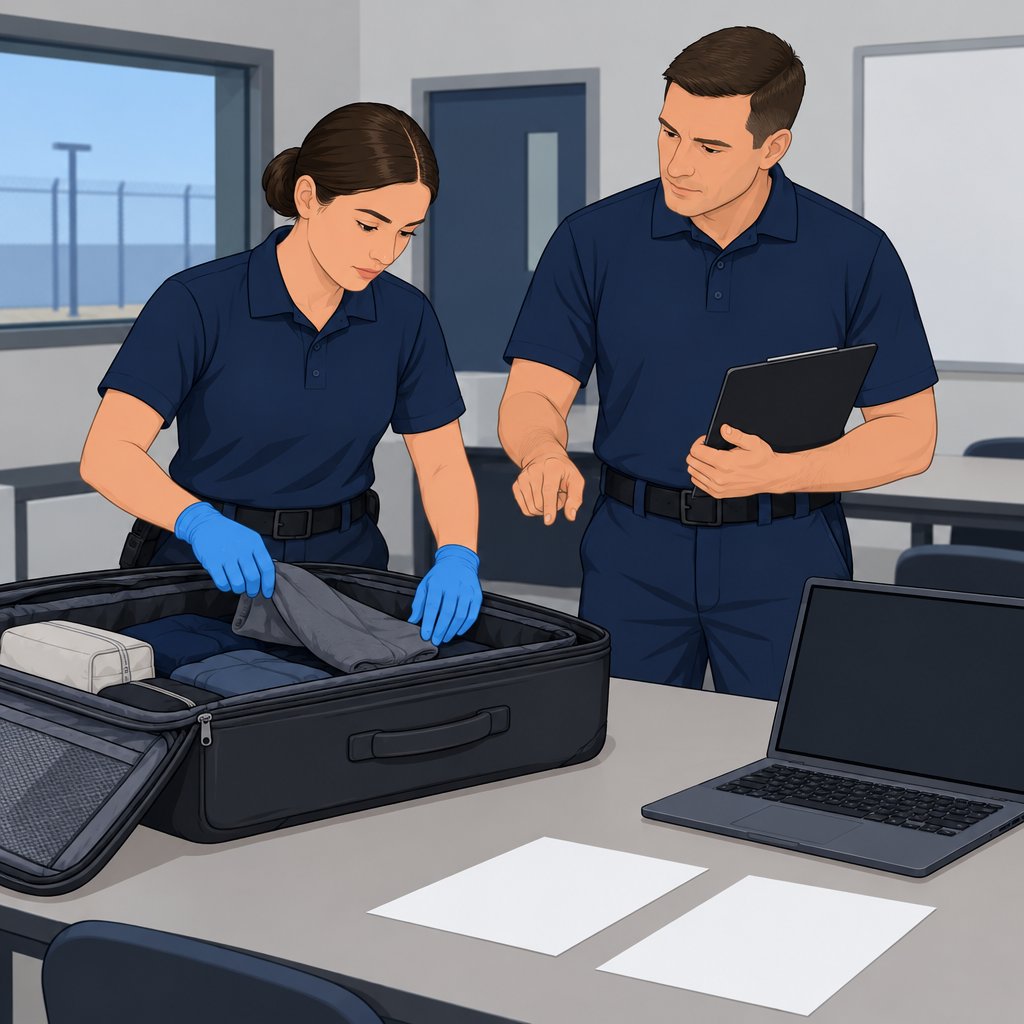
Start NowOfficers practice conducting searches, handling firearms, and using protective gear.
Role-playing Scenarios
Role-playing scenarios provide another important part of the academy’s training.
These scenarios simulate situations officers may encounter during their duties.
Officers practice interacting with individuals, assessing threats, and making quick decisions.
This training develops communication skills, critical thinking abilities, and situational awareness.
The curriculum gives officers a foundation of knowledge and skills for their duties.
Hands-on exercises and role-playing scenarios help officers address field challenges with confidence and competence.
Gain More Insights: TSA Officer's Role in Security Technology Implementation
Physical Conditioning for CBP Officers
Physical fitness plays a crucial role in a CBP officer’s daily responsibilities.
Officers need strength, agility, and endurance to perform physically demanding tasks.
For example, they may chase suspects or lift heavy objects during their duties.
Additionally, strong conditioning helps officers remain composed during high-stress situations.
Fitness Assessments During Training
The CBP Officer Academy Training program includes fitness tests for evaluating trainee capabilities.
These assessments measure strength, endurance, flexibility, and overall physical fitness.
Common tests may include a 1.5-mile run, push-ups, and sit-ups.
Furthermore, trainees may complete flexibility tests and obstacle courses.
Trainees must meet established standards to complete the program successfully.
Physical Fitness Within the Curriculum
Physical fitness forms an integral part of the training curriculum from the beginning.
Trainees participate in regular physical training sessions led by certified fitness instructors.
These instructors tailor workouts to develop strength, endurance, and agility.
Additionally, trainees receive encouragement to maintain healthy lifestyles outside training hours.
Proper nutrition and regular exercise support their preparation for future responsibilities.
Learn More: Tips for Passing the CBP Officer Entrance Exam
Technology in CBP Officer Training
Technology plays a crucial role in preparing future CBP officers for border duties.
The training curriculum introduces officers to equipment, databases, and software used during their responsibilities.
This preparation helps officers develop practical skills before they begin field assignments.
Technological Tools Used in Training
CBP officers learn to use various technological tools during their academy training.
These tools include biometric scanners, X-ray machines, and other security equipment.
In addition, officers study how technology supports threat identification and contraband detection.
Hands-On Experience with Scanning Equipment
Hands-on practice helps officers build confidence with scanning equipment.
Trainees learn to operate and interpret results from different scanning devices.
These devices include luggage X-ray systems and body scanners.
Training on CBP Databases and Software
CBP officers also train on databases and software systems used by the agency.
They learn to enter and retrieve information from these systems.
These skills support background checks, travel document verification, and shipment tracking.
By practicing with these systems, officers prepare to manage technology-based responsibilities in the field.
Discover More: Correctional Officer Job Outlook 2025
Specialized Training for Border Security
Specialized modules complement the academy’s broader preparation for CBP officer duties.
These modules develop practical skills, communication abilities, and professional judgment.
Together, they prepare recruits to address border security responsibilities with integrity and effectiveness.
Transform Your Career Today
Unlock a personalized career strategy that drives real results. Get tailored advice and a roadmap designed just for you.
Start NowWeapons Training and Safety Protocols
CBP officers safeguard United States borders, so firearms proficiency remains an important responsibility.
Recruits learn to handle different firearms properly and maintain them.
They also practice firearm use in various scenarios.
Moreover, instructors emphasize safety protocols for high-pressure situations.
These protocols help officers protect themselves and others.
Interrogation Techniques and Simulations
Effective communication helps officers interact with travelers and identify potential threats.
Recruits study interrogation techniques for gathering information and assessing intentions.
They also learn methods for detecting deception during interactions.
Through simulations, recruits apply these techniques in realistic scenarios.
This practice builds confidence and precision during border security duties.
Cultural Sensitivity for Diverse Populations
CBP officers encounter people from diverse populations during their daily duties.
Cultural sensitivity training helps officers communicate respectfully and effectively.
Recruits study cultural norms, traditions, and practices.
Consequently, they can navigate interactions with greater understanding.
This preparation supports trust and a more inclusive border environment.
Professional Standards in Border Security
These specialized modules shape officers’ skills, knowledge, and professional mindset.
Furthermore, rigorous preparation supports integrity, professionalism, and effective performance.
CBP officers use this preparation to uphold agency values and protect border security.
Thus, the training supports the security and integrity of the nation’s borders.
Find Out More: State Trooper Mental Health: Coping Strategies
Mentorship and Networking Opportunities
Mentorship supports career development by providing guidance, encouragement, and insights from experienced professionals.
Meanwhile, networking helps recruits learn from officers, instructors, and fellow trainees.
These relationships can strengthen teamwork and support throughout academy training and future careers.
Importance of Mentorship in Career Development
Mentors guide recruits through challenges and help them develop professionally.
They also share valuable insights from comparable experiences in the field.
As a result, recruits can navigate academy demands and perform more effectively in their roles.
Networking with Experienced Officers and Instructors
Networking connects trainees with officers and instructors who understand the field firsthand.
Through these relationships, recruits can ask questions and seek practical guidance.
Additionally, experienced professionals may share advice, insights, and potential opportunities within the agency.
Building Relationships with Fellow Trainees
Strong relationships among trainees encourage camaraderie and improve teamwork during the training program.
Peers can share experiences, study together, and provide moral support during rigorous training.
Over time, these connections can become professional networks that offer advice, assistance, and friendship.
Assessment and Evaluations
Assessment and evaluations help instructors monitor trainee development throughout CBP Officer Academy Training.
They also show whether trainees meet the standards required for effective duty performance.
Furthermore, structured reviews identify strengths and guide improvements during training.
Grading Criteria for Trainees
Evaluators review trainee performance during exercises, simulations, and tests.
They consider procedures, decisions, communication, fitness, law enforcement techniques, judgment, and critical thinking.
Written exams, practical assessments, and realistic simulations measure readiness for practical application.
- Trainees must follow established procedures during training activities.
- Decision-making and communication skills influence performance ratings.
- Firearms, defensive tactics, and emergency response exercises provide additional evaluation points.
- Physical fitness remains part of the grading criteria.
- Trainees must demonstrate competence in law enforcement techniques, sound judgment, and critical thinking under pressure.
Feedback Mechanisms for Improvement
Instructors and mentors provide feedback throughout the training program.
They identify successful behaviors while explaining specific areas for improvement.
Transform Your Career Today
Unlock a personalized career strategy that drives real results. Get tailored advice and a roadmap designed just for you.
Start NowAdditionally, trainees can ask questions and raise concerns during feedback discussions.
- Instructors provide constructive criticism and recognize trainee accomplishments.
- Feedback sessions address specific skills, behaviors, and attitudes.
- Instructors tailor guidance to each trainee’s needs, learning style, and personality.
- Trainees can seek clarification when feedback raises questions.
- Regular guidance helps trainees improve their performance and reach their potential.
Repercussions for Failing to Meet Standards
Persistent performance problems can lead to disciplinary action or dismissal.
Depending on the review, trainees may receive remediation, probation, or termination.
However, formal reviews give trainees opportunities to address shortcomings and improve performance.
- Consistent failures can affect a trainee’s continuation in the program.
- Additional training may address identified performance deficiencies.
- Probation provides a formal response to continued performance concerns.
- Termination may follow when trainees do not meet required expectations.
- Trainees should understand how performance affects their career prospects.
These assessment practices shape trainee development and reinforce the standards expected from CBP officers.
They also help ensure officers can perform their duties effectively after completing training.
Professional Preparation for Border Service
After exploring the CBP Officer Academy, aspiring officers clearly face a rigorous and comprehensive training program.
During training, recruits study law enforcement techniques, constitutional rights, and cultural sensitivity.
The Academy also emphasizes practical application through hands-on scenarios.
These exercises prepare recruits for real-world situations after graduation.
Moreover, officers pursue continuous learning and professional development throughout their careers.
Policies, procedures, and threats continue to evolve in the field.
Therefore, Academy training equips officers with skills, knowledge, and a professional mindset.
These capabilities help officers protect the nation’s borders effectively.
Additional Resources
Google search results for Inside Look: CBP Officer Academy Training Protective Services
Bing search results for Inside Look: CBP Officer Academy Training Protective Services


