




Campus Security Officers
Campus security officers play a crucial role in preventing crimes on college campuses.
They ensure the safety of students.
They also ensure the safety of faculty and staff.
Campus Security Officer Duties and Responsibilities
They patrol campus grounds.
They enforce campus policies and respond to emergencies.
They may investigate incidents, write reports, and assist with event security.
Qualifications and Training Requirements
Most positions require a high school diploma or GED.
Some employers prefer education or training in criminal justice or a related field.
Candidates typically complete a background check and drug test.
Training may include first aid, crisis intervention, conflict resolution, and legal procedures.
Additionally, some positions require CPR and basic life support certification.
Communication and Decision-Making Skills
Effective communication helps officers interact with students, faculty, staff, and law enforcement.
They communicate clearly, assertively, calmly, and professionally.
During emergencies, strong decision-making skills support timely responses.
Officers assess risks, evaluate options, and take decisive action.
Campus Crime Prevention Tactics
Campus security officers can combine several tactics to reduce crime risks.
Regular monitoring, controlled access, and community education support safer campus environments.
Additionally, cooperation with local law enforcement can improve responses to reported incidents.
- Conduct regular campus patrols to monitor suspicious activities.
- Build strong relationships with local law enforcement for swift responses.
- Use access controls to restrict unauthorized entry into campus buildings.
- Host safety seminars and workshops for students and staff.
- Install emergency call boxes throughout campus for immediate assistance.
- Collaborate with student organizations to promote safety and vigilance.
- Conduct background checks on individuals entering campus premises.
- Use visitor management systems to track and monitor campus guests.
- Provide adequate lighting in parking lots and walkways.
- Promote zero tolerance for crime and misconduct on campus.
Visible Security Presence on Campus
A visible security presence can discourage potential offenders by increasing their perceived risk of detection.
Moreover, students, faculty, and staff may feel more secure when security personnel remain noticeable.
Visible officers also encourage community members to report suspicious activities or individuals.
- Deter potential offenders by increasing the perceived risk of getting caught.
- Provide reassurance to students, faculty, and staff.
- Enhance the safety and well-being of the campus community.
- Encourage reports about suspicious activities or individuals.
- Help prevent crimes before they occur through proactive monitoring.
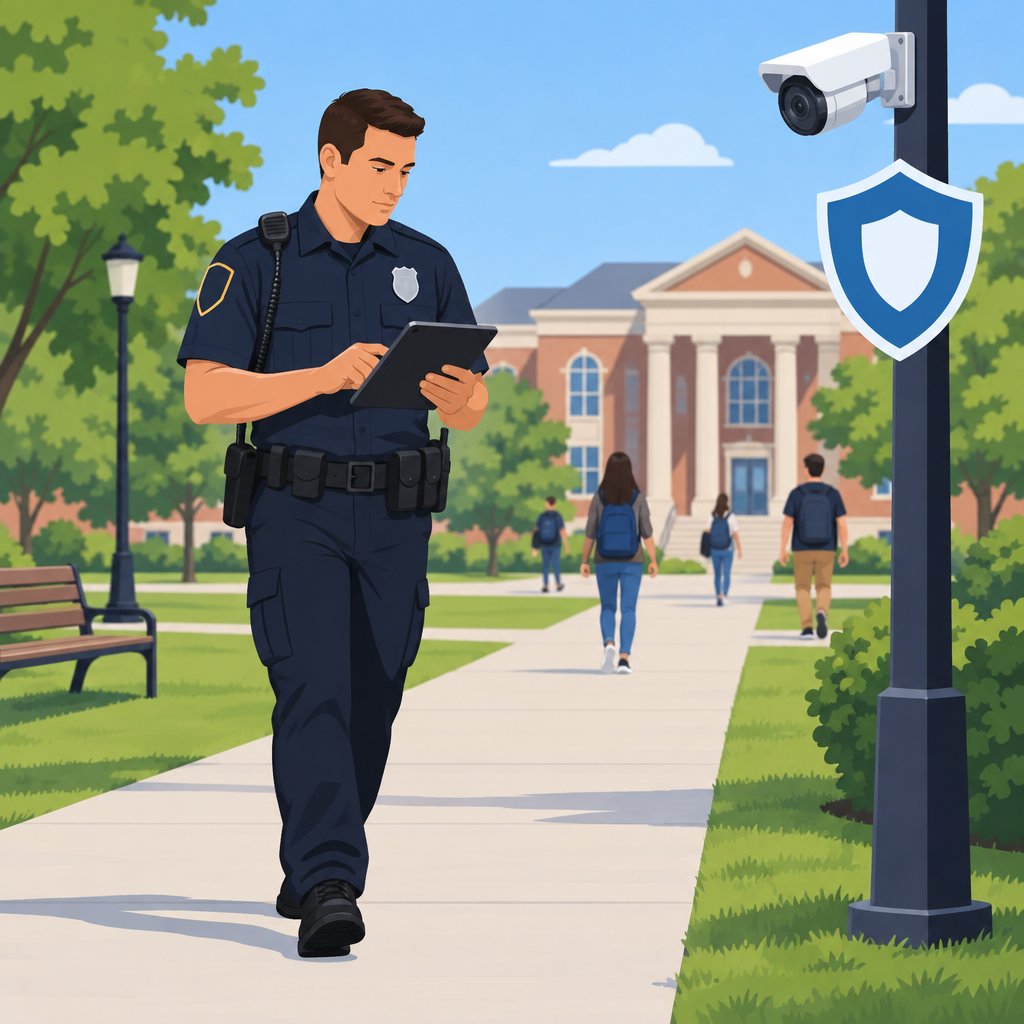
Technology Supporting Crime Prevention
Technology can strengthen campus crime prevention efforts when officers use it alongside established safety practices.
For example, monitoring systems can identify concerns, support access control, and improve emergency communication.
Furthermore, analytical and training tools can help officers recognize patterns and prepare for emergencies.
- Monitor high traffic areas and blind spots with surveillance cameras.
- Use alarm systems to signal unauthorized entry or potential threats.
- Restrict sensitive areas with electronic access control systems.
- Send emergency alerts through campus notification systems.
- Track security patrols and response times with GPS technology.
- Strengthen access control with biometric scanners.
- Conduct aerial surveillance across large campus areas and events with drones.
- Offer incident reporting and assistance requests through mobile applications.
- Simulate emergencies through virtual reality training.
- Analyze crime patterns and trends with data analytics.
Combining these tactics can help campus security officers create a safer environment for everyone on campus.
Gain More Insights: Inside Look: CBP Officer Academy Training
Campus Community Relationships and Collaboration
Positive relationships with students, faculty, and staff strengthen communication and support campus security efforts.
Campus security officers can build trust by participating in campus events and activities.
Open communication also helps faculty and staff raise concerns and share relevant information.
- Participate in campus events and activities to encourage trust and communication.
- Maintain an open-door policy so faculty and staff can discuss security concerns and share information.
Education helps the campus community recognize and apply crime prevention strategies.
- Conduct seminars, workshops, and training sessions to increase awareness of safety measures.
- Create brochures, posters, and other resources that share crime prevention tips.
Collaboration with local law enforcement agencies and campus administrators can address security concerns more effectively.
- Coordinate joint patrols and security drills to improve response capabilities and coordination.
- Share intelligence and information with external partners to monitor potential threats.
Through strong relationships and collaboration, campus security officers help create a safer environment for everyone on campus.
Learn More: TSA Officer's Role in Security Technology Implementation
Responding to Security Threats on Campus
When security threats arise on campus, security officers follow specific procedures to protect everyone.
These procedures help officers assess danger, notify authorities, secure areas, and coordinate response efforts.
Officers also maintain calm, professional conduct throughout each response.
Procedures for Responding to Security Threats
- Officers immediately assess the situation and determine the threat level.
- They notify appropriate authorities, including police or the campus emergency response team.
- They secure the area and evacuate people when necessary.
- Security officers communicate with colleagues to coordinate response efforts.
These procedures minimize harm and protect individuals from potential danger.
Maintaining a Calm and Professional Demeanor
- Remaining calm helps officers prevent panic and respond effectively.
- Professional conduct helps maintain control and build confidence among affected people.
- Composed officers can make quick, rational decisions during stressful situations.
By staying calm and professional, officers can help reduce the impact of security threats.
Coordinating with First Responders
- Officers collaborate with police and fire departments during crisis situations.
- They share information and resources with other response personnel.
- They support first responders by facilitating efforts to resolve threats.
- Response teams develop and execute coordinated plans to address security threats effectively.
Coordination with first responders supports a unified and efficient response to campus security threats.
Through established procedures, calm conduct, and coordination, officers help protect the campus community.
Transform Your Career Today
Unlock a personalized career strategy that drives real results. Get tailored advice and a roadmap designed just for you.
Start NowLearn More: Tips for Passing the CBP Officer Entrance Exam
Support and Resources for Victims
- Campus security officers support victims of campus crimes and connect them with available resources.
- Empathy and understanding help officers build trust and provide comfort during difficult experiences.
- Victims need to feel heard and supported while they address the effects of a crime.
Empathy and Understanding
- Empathy helps security officers connect with victims and show genuine concern for their well-being.
- Understanding the emotional effects of crime helps officers provide appropriate support and resources.
- Furthermore, empathetic officers help victims feel safe and supported throughout the process.
Resources for Reporting Crimes
- Students, faculty, and staff can use campus resources to report crimes and seek assistance.
- Hotlines and emergency contact numbers provide immediate help during crimes or emergency situations.
- Additionally, campus security officers guide victims through reporting and connect them with support services.
Support Services for Victims
- Counseling services help victims cope with the emotional effects of crime.
- Legal support helps victims understand their rights and available options.
- Campus health services provide medical attention for physical injuries and other health concerns.
Campus security officers help create a safe and supportive environment by connecting victims with appropriate services.
They also help victims feel heard, supported, and guided while they address a difficult experience.
Learn More: Correctional Officer Job Outlook 2025
Integrated Security Measures for Campus Safety
Campus security officers combine patrols, prompt incident responses, and law enforcement cooperation to support campus safety.
These coordinated efforts help maintain a secure environment for students, faculty, and staff.
Additionally, video surveillance and access control systems can help officers identify and deter potential criminal activity.
Active shooter training also prepares officers to respond during serious emergencies.
Together, these measures strengthen campus security and help community members feel more secure.
Students can focus on their studies when effective safety measures address potential risks.
Moreover, officers’ dedication and vigilance support a peaceful campus environment.
Recognizing their work can encourage continued attention to campus safety.
Campus safety depends on sustained commitment from officers and the wider campus community.
Supporting these efforts helps protect the well-being of everyone on campus.
Additional Resources
Google search results for Campus Security Officer: Crime Prevention Tactics Protective Services
Bing search results for Campus Security Officer: Crime Prevention Tactics Protective Services


