




Airport Security Responsibilities
TSA officers help maintain airport security.
They monitor passengers and luggage with alert attention.
As a result, they support the safety of passengers and airlines.
Technological Tools for Airport Screening
TSA officers use several technologies during airport screening.
For example, body scanners help detect concealed objects on passengers.
These scanners use advanced imaging to identify items that might threaten flight security.
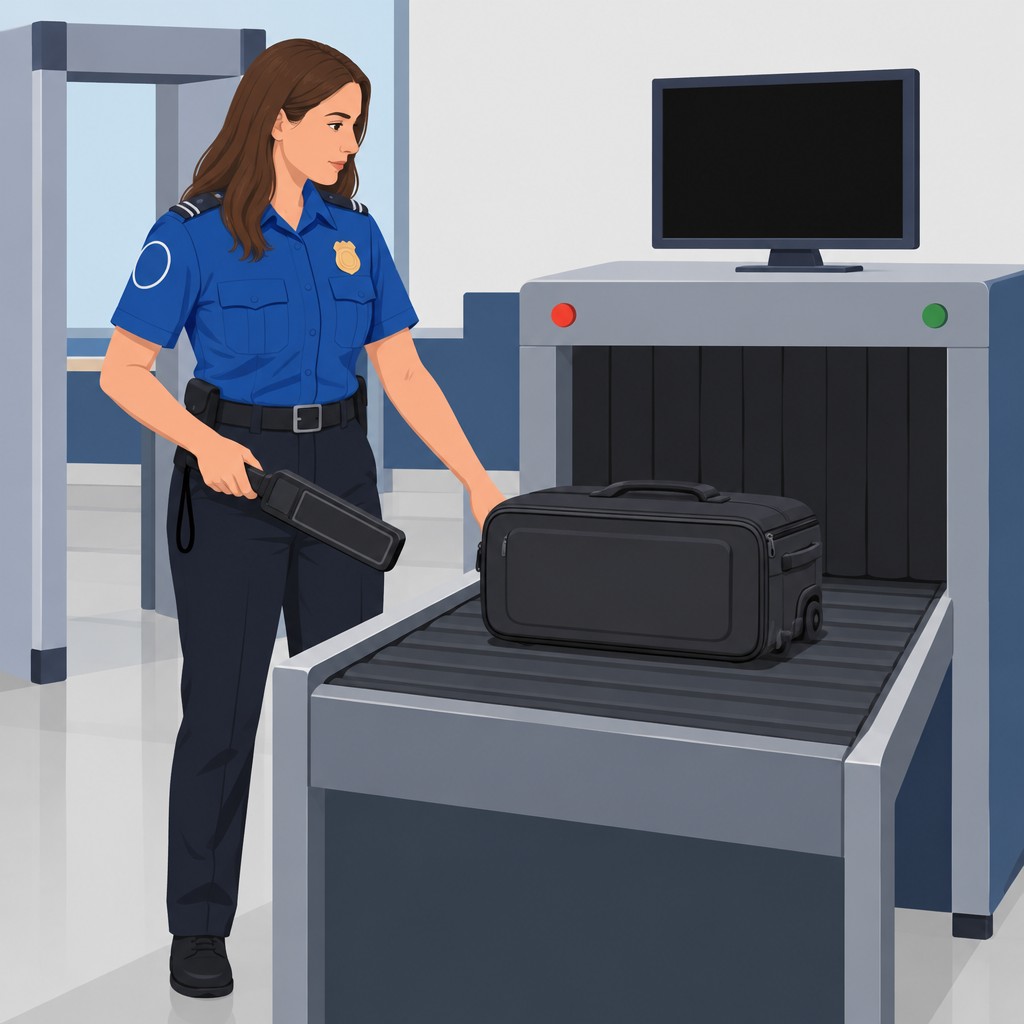
X-ray machines scan carry-on luggage for prohibited items, including weapons or explosives.
They give officers detailed views of each bag’s contents.
Therefore, officers can assess potential threats quickly.
Explosive trace detectors test items or passengers for explosive traces.
These sensitive devices can alert officers to dangerous materials otherwise missed.
Additionally, handheld metal detectors screen passengers for metal objects that could serve as weapons.
They form an essential part of the security screening process.
They also help prevent dangerous items from reaching aircraft.
Together, these tools support airport and flight security.
Body Scanner Technology
Body scanners use millimeter wave technology or backscatter X-rays to create passenger images.
TSA officers use these images to detect concealed items hidden beneath clothing.
Additionally, scanners strengthen security by identifying threats that regular screening may not reveal.
They can detect non-metallic objects, including explosives, that metal detectors may miss.
Consequently, this technology reduces physical pat-downs and offers passengers a less invasive screening process.
Potential Privacy and Effectiveness Concerns
However, critics argue that scanners invade privacy by revealing intimate details about passengers’ bodies.
Some people also question health risks from radiation exposure during backscatter X-ray screening.
Furthermore, critics question whether scanners detect every type of explosive or weapon effectively.
Privacy advocates also examine how scanner images are stored and handled.
Explosive Trace Detection
TSA officers rely on explosive trace detection devices to identify minute traces of explosive materials.
These devices help prevent potential threats and protect passenger safety.
However, officers must manage detection challenges and maintain reliable results.
- Devices must detect masked or odorless explosive substances.
- Accurate results remain essential for effective security decisions.
- Thorough training helps TSA officers operate the devices properly.
- Regular maintenance keeps equipment operating efficiently.
- Technicians must calibrate detection equipment regularly.
- Proper handling protects the devices during use.
- Secure storage also supports reliable equipment performance.
- Collaboration with other agencies strengthens detection efforts.
- Ongoing research improves explosive detection capabilities.
- Continuous development supports future improvements in detection technology.
Explore Further: The Role of ICE Agents in Border Security
Advanced Imaging Technology in Airport Screening
TSA officers use Advanced Imaging Technology during passenger screening at airports.
These scanners use electromagnetic radiation to create images beneath clothing.
Therefore, officers can examine concealed items during the screening process.
Threat Detection Benefits of Advanced Imaging Technology
AIT can detect non-metallic threats, including explosives or weapons.
Consequently, officers can identify risks that conventional metal detectors might miss.
The technology also provides detailed images of a passenger’s body.
This detail helps officers recognize suspicious items concealed on a person.
Privacy Protections During AIT Screening
However, detailed scans can raise privacy concerns among passengers and civil liberties groups.
The images may appear invasive because they represent a virtual view beneath clothing.
To address concerns, TSA uses Automated Target Recognition software.
ATR creates a generic image instead of showing the actual scan to the screening officer.
Passengers can also request a pat-down instead of using AIT.
Transform Your Career Today
Unlock a personalized career strategy that drives real results. Get tailored advice and a roadmap designed just for you.
Start NowAdditionally, TSA does not store, share, or save generated images.
These measures help balance security needs with passenger privacy.
Explore Further: Campus Security Officer: Crime Prevention Tactics
Automated Target Recognition
TSA officers use automated target recognition software during security screening.
This technology helps them identify potential threats.
Specifically, algorithms analyze images captured by screening equipment.
Then, the software automatically detects suspicious items or unusual features.
Consequently, it improves screening efficiency.
Machine learning and artificial intelligence continually improve its accuracy.
Additionally, TSA officers use it to quickly identify potential threats in carry-on luggage.
You Might Also Like: Inside Look: CBP Officer Academy Training
Baggage Screening Systems
Baggage screening systems use X-ray machines and other equipment.
These systems help officers examine luggage before passengers board airplanes.
Thorough screening strengthens airport security and supports passenger safety.
X-ray Machines and Screening Equipment
X-ray machines form the primary technology used to scan baggage contents.
These machines produce detailed images that help TSA officers examine each bag.
Officers use these images to identify potential threats and prohibited items.
Other equipment can supplement X-ray machines during the screening process.
Importance of Thorough Baggage Screening
Thorough baggage screening helps prevent dangerous items from reaching airplanes.
Officers screen luggage for explosives, weapons, and other prohibited items.
Consequently, effective screening supports the safety of passengers and crew members.
Additionally, careful inspections discourage people from smuggling illegal items through airports.
Challenges and Limitations
Baggage screening systems still present challenges for TSA officers.
Explosive detection remains difficult because devices can contain many different materials.
Furthermore, advanced screening technologies can create privacy concerns.
Airport security personnel must balance effective protection with individual privacy rights.
Learn More: TSA Officer's Role in Security Technology Implementation
Behavior Detection Technology
Behavior detection technology helps TSA officers enhance security measures at airports.
It involves observing passenger behavior and body language for potential threats.
TSA officers use these techniques to identify suspicious activity during screening.
- Introduction to Behavior Detection Technology: TSA officers observe passengers to detect signs of suspicious activity.
- Role in Identifying Suspicious Individuals: Officers analyze passenger behavior to identify potential security risks.
- Effectiveness and Reliability Concerns: Experts debate the technology’s effectiveness and reliability in identifying potential threats.
Despite these debates, behavior detection remains an essential airport security tool.
Radio Frequency Identification Technology
RFID technology uses radio waves to track luggage and passengers.
Airports attach RFID tags to luggage tags or boarding passes.
Scanners read stored data from a distance, improving luggage handling efficiency.
RFID Applications in Airport Security
RFID technology uses electromagnetic fields to transfer data between tags and scanners.
Each tag contains a unique identifier for its assigned item.
Consequently, airport staff can monitor luggage and passenger movement through scanner readings.
- RFID tags store identifying data for luggage and boarding passes.
- RFID scanners read tag information without requiring direct contact.
- Airport staff use scanner data to track luggage movement.
Benefits for Luggage and Passenger Tracking
RFID tracking improves efficiency during luggage handling.
Furthermore, distance-based scanning saves time during tracking operations.
Passengers can use RFID data to monitor luggage movement in real time.
Transform Your Career Today
Unlock a personalized career strategy that drives real results. Get tailored advice and a roadmap designed just for you.
Start Now- RFID tracking reduces the chances of luggage becoming lost or misplaced.
- Airport staff can locate and retrieve misplaced luggage more quickly.
- Faster scanning supports more accurate luggage tracking.
Security Risks and Data Protection
RFID tags may expose data to hacking or unauthorized cloning.
Hackers could intercept transmitted information and obtain personal details.
Therefore, airports must protect RFID systems with suitable security measures.
- Unauthorized individuals could use RFID signals to track passengers.
- Encryption helps secure data during RFID transmission.
- Regular security updates help prevent RFID data breaches.
Future Improvements in Airport Security Technology
TSA officers use several technological tools to strengthen airport security.
These tools include millimeter wave scanners, advanced imaging technology, and explosive trace detection systems.
They help officers detect prohibited items and improve passenger safety.
As technology evolves, airports should continue improving security systems to address emerging threats.
Airports can strengthen protection by investing in updated equipment and ongoing officer training.
Furthermore, airport personnel can maintain strong security by adapting to changes in security technology.
Additional Resources
Google search results for Technological Tools Used by TSA Officers for Security Protective Services
Bing search results for Technological Tools Used by TSA Officers for Security Protective Services


