




Introduction
CSIs play a crucial role in solving major criminal cases.
Their expertise helps investigators examine evidence carefully.
Furthermore, specialized skills support efforts to establish what happened.
Definition of Crime Scene Investigators
CSIs are trained professionals who collect physical evidence at crime scenes.
They also analyze that evidence to help solve criminal cases.
Their work connects crime scene findings with investigative needs.
Roles in Major Criminal Cases
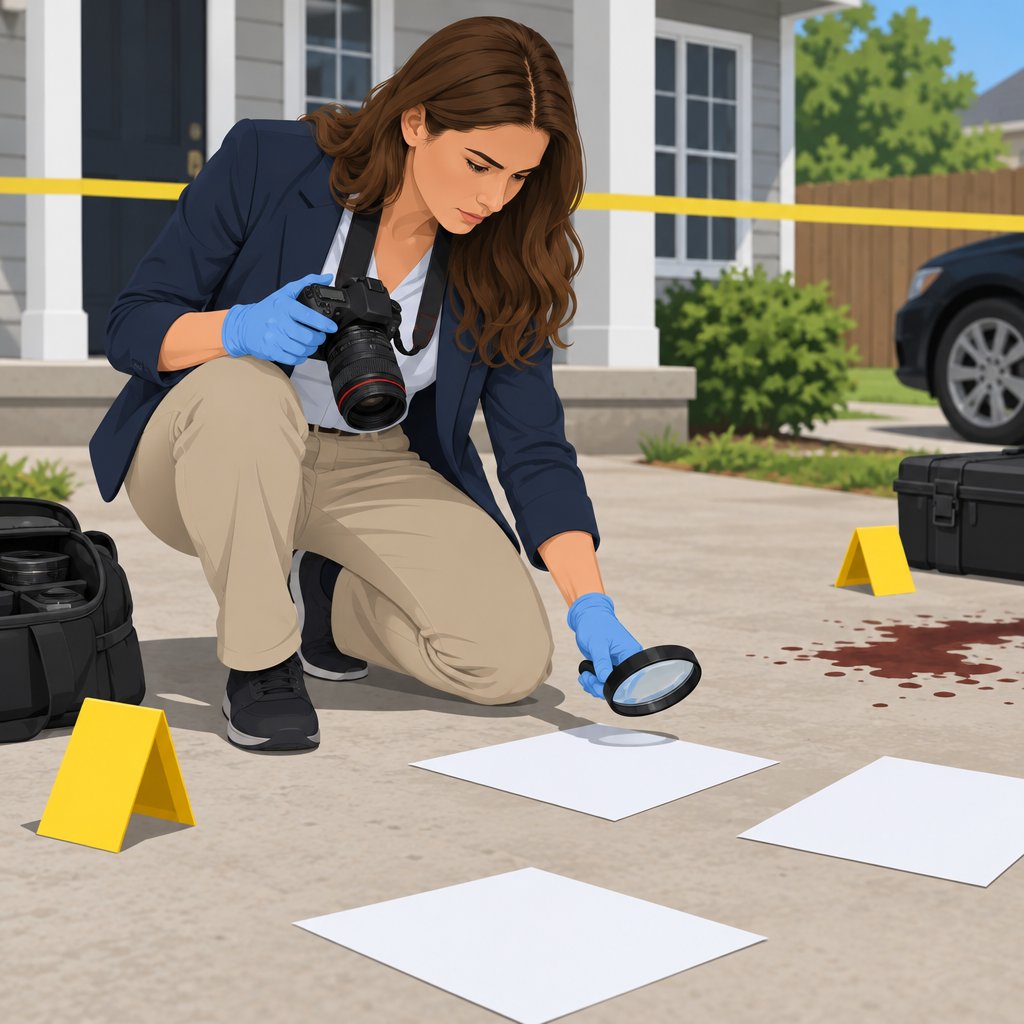
First, CSIs document and preserve each crime scene.
They collect evidence, including fingerprints, blood samples, and fibers.
Next, they analyze this evidence in laboratory settings.
They work closely with law enforcement agencies during evidence processing.
Moreover, strict protocols help them maintain evidence integrity.
CSIs also provide expert testimony during court proceedings.
Their testimony helps establish suspects’ guilt or innocence based on analyzed evidence.
Their work supports justice and accountability for major crimes.
Evidence Collection and Preservation
Crime scene investigators collect fingerprints, hair, fibers, DNA samples, and other physical evidence.
They use specialized tools and techniques to document, package, and preserve each item carefully.
Proper collection and storage protect evidence from contamination, damage, or tampering.
Investigators maintain the chain of custody by recording every person who handles the evidence.
This record follows each item from collection through courtroom presentation.
Crime Scene Documentation Methods
Investigators create detailed records that describe the crime scene, its location, and its surroundings.
They write notes, sketch the area, and record measurements with precision.
These records help investigators reconstruct events and determine the sequence of actions.
They also help corroborate witness statements and connect separate pieces of evidence.
Photographs capture the scene’s layout, condition, and relationships between objects.
Investigators photograph the scene from multiple angles using digital cameras and specialized software.
They take photographs with scales to show object size and distance accurately.
They also photograph objects without scales to preserve the scene’s natural appearance.
Infrared and ultraviolet photography can reveal evidence that ordinary vision cannot detect.
Sketches provide detailed maps that show objects, landmarks, distances, and spatial relationships.
These measurements can clarify movement patterns and possible actions within the scene.
Investigative Reports and Courtroom Value
Investigators compile evidence, photographs, sketches, and notes into a comprehensive report.
The report preserves the investigation’s details and supports later courtroom review.
Judges, prosecutors, investigators, and jurors can use visual records to understand the scene.
Accurate documentation gives the prosecution a reliable record of relevant events.
Carefully preserved evidence can strengthen arguments and support convictions when the facts establish guilt.
Investigators’ attention to detail helps prevent overlooked or compromised evidence.
Forensic experts and law enforcement agencies rely on coordinated work during complex investigations.
Their collaboration can clarify evidence, support accountability, and help victims pursue justice.
By protecting evidence integrity, investigators support a fair and transparent criminal justice system.
Evidence Processing in Major Criminal Cases
Crime scene investigators process evidence with meticulous attention to detail.
Transform Your Career Today
Unlock a personalized career strategy that drives real results. Get tailored advice and a roadmap designed just for you.
Start NowCareful procedures help preserve findings that investigators may later present in court.
Moreover, accurate records allow investigators to connect physical evidence with witness accounts.
- Photograph the crime scene before moving any items.
- Sketch the scene to create an accurate visual record.
- Package and label each item to maintain its chain of custody.
- Gather witness statements that may corroborate investigative findings.
DNA Collection and Forensic Identification
DNA collection can provide valuable leads during major criminal investigations.
Investigators swab blood, saliva, and other bodily fluids for laboratory analysis.
They also retrieve hair and fiber samples for additional forensic testing.
- Swab bodily fluids using procedures that support reliable DNA analysis.
- Retrieve hair samples for further examination.
- Collect fiber samples that may support investigative findings.
- Use advanced technology to extract and analyze DNA profiles.
Evidence Submission and Laboratory Analysis
Investigators submit collected evidence to the crime laboratory for detailed analysis.
Proper packaging and documentation protect the chain of custody during transfer.
Timely submission helps forensic scientists complete their work without unnecessary delays.
- Package evidence securely before submitting it to the laboratory.
- Complete documentation that records each transfer.
- Submit evidence promptly to support efficient case progress.
- Collaborate with forensic scientists when interpreting laboratory results.
Evidence Presentation in Court
Crime scene investigators explain their evidence collection methods during court proceedings.
They provide expert testimony about the significance of forensic findings.
Additionally, investigators assist prosecutors as they build cases against alleged perpetrators.
- Testify about the procedures used during evidence collection.
- Explain how forensic findings relate to the investigation.
- Describe evidence handling practices that support courtroom reliability.
- Help prosecutors present a clear and well-supported case.
Gain More Insights: Educational Pathways to Becoming a Sheriff
Crime scene investigators play a crucial role in major criminal cases.
Their expertise and attention to detail support complex investigations.
Conducting Interviews and Interrogations
Investigators interview witnesses, victims, and suspects during major criminal cases.
These conversations provide firsthand accounts of events surrounding a crime.
They use those statements to piece together events and identify information that may help solve the case.
Working Closely with Law Enforcement
Investigators coordinate with law enforcement agencies while handling case evidence.
They help ensure that collection and preservation protocols receive proper attention.
Furthermore, coordination with detectives and other officials supports efficient processing of critical evidence.
Collaborating with Forensic Experts
Investigators collaborate with forensic scientists and pathologists to analyze evidence.
These experts help interpret findings that may connect suspects with crimes.
They also examine whether evidence supports witness testimony and strengthens the case.
Through these responsibilities, investigators contribute to resolving complex criminal cases.
Their detailed work supports efforts to establish what happened.
Their dedication helps investigators develop stronger cases against perpetrators.
Discover More: Challenges Faced by Park Rangers in National Parks
Courtroom Testimony
Crime scene investigators often testify as expert witnesses during major criminal trials.
They explain collected evidence and clarify its significance for the jury.
Additionally, they provide detailed information about their examination of the crime scene.
Trial Evidence Presentation
During trial, investigators present physical evidence collected from the crime scene.
Such evidence may include DNA samples, fingerprints, weapons, and other materials.
These items can help link a suspect to the crime.
Forensic Expert Opinions
Crime scene investigators analyze evidence using their forensic science expertise.
They can reconstruct the sequence of events surrounding the crime.
Furthermore, they can determine the cause of death and identify potential suspects.
They base these opinions on evidence discovered at the crime scene.
Gain More Insights: Parole Officer: Developing Case Plans
Advanced Technologies in Crime Scene Investigations
Crime scene investigators use new technologies to examine evidence during major criminal cases.
These advancements help investigators gather and analyze evidence more effectively.
Transform Your Career Today
Unlock a personalized career strategy that drives real results. Get tailored advice and a roadmap designed just for you.
Start NowFor example, 3D laser scanning creates accurate virtual representations of crime scenes.
Investigators can use these representations for further analysis and crime scene reconstruction.
Additionally, forensic drones capture aerial footage and provide valuable perspectives of crime scenes.
This aerial information helps investigators identify evidence and map each scene effectively.
Forensic Tools and Analytical Techniques
Crime scene investigators use various forensic tools and techniques to examine scenes thoroughly.
These methods help investigators uncover clues and connect evidence within complex criminal cases.
Forensic light sources reveal trace evidence that investigators cannot see with unaided eyes.
They can detect fingerprints, bodily fluids, and fibers at crime scenes.
This evidence may help investigators identify suspects and connect them to crime scenes.
Moreover, DNA analysis allows investigators to compare biological evidence with suspects or victims.
These comparisons can provide information that supports efforts to solve criminal cases.
Advancements in Forensic Science
Crime scene investigators must follow developments in forensic science to improve their investigative skills.
Continuous training helps investigators apply new methodologies and technologies effectively.
Forensic imaging technology enhances crime scene photographs and clarifies evidence details.
As a result, investigators may recognize evidence that earlier images did not clearly show.
Furthermore, forensic entomology examines insect activity at crime scenes.
This research helps investigators estimate the time of death in criminal cases.
The resulting information can help establish timelines and identify suspects.
Find Out More: Challenges Faced by Crime Scene Investigators on the Job
Challenges Faced by Crime Scene Investigators
Crime scene investigators face demanding conditions while examining scenes connected to serious criminal cases.
They must protect evidence, manage pressure, and maintain accuracy throughout each investigation.
These responsibilities require careful judgment, physical stamina, and consistent professional focus.
- CSIs must preserve evidence carefully to prevent contamination during collection.
- Investigators often work quickly before evidence becomes compromised or disappears.
- High-pressure conditions require CSIs to support investigations while pursuing accurate results.
- Even a small oversight can affect an investigation’s outcome.
- Physical conditions may require investigators to work in demanding environments.
Stressful Nature of the Job
Several pressures make crime scene investigation an inherently stressful occupation.
Investigators encounter disturbing scenes while managing workloads, deadlines, and accuracy requirements.
Public and media scrutiny can further intensify the pressure surrounding their responsibilities.
- CSIs regularly encounter traumatic events that may affect their psychological well-being.
- Heavy workloads and tight deadlines can increase investigators’ stress levels.
- The need for precise evidence collection places significant pressure on CSIs.
- Crime scenes may create an emotional toll that investigators must manage carefully.
- Public scrutiny and media attention can add further stress to their duties.
Emotional Toll of Dealing with Crime Scenes
Crime scenes can affect investigators emotionally, especially when violence and tragedy appear directly before them.
Interactions with victims and families may add another layer of emotional strain.
Therefore, investigators need healthy coping methods while maintaining professional standards.
- Witnessing violence and tragedy can emotionally drain crime scene investigators.
- Supporting victims and their families may increase investigators’ emotional burden.
- Handling human remains can create distressing experiences for investigators.
- CSIs must balance emotional reactions with the need for professional conduct.
- Healthy coping mechanisms can help investigators manage their emotional responses.
Crime Scene Investigators in Major Criminal Cases
Crime scene investigators reconstruct events by arranging observations into a coherent account of what happened.
This reconstruction helps law enforcement identify possible suspects and pursue appropriate investigative leads.
Meanwhile, investigators work alongside law enforcement to connect separate details within a broader criminal inquiry.
Support for Victims and Communities
Families may gain closure when investigators clarify events surrounding a serious crime.
That clarity can provide victims’ families with a stronger sense of justice and peace.
Furthermore, careful investigative work supports public confidence in the criminal justice system.
Professional Dedication Behind Major Investigations
Crime scene investigators often work long hours while managing disturbing and demanding assignments.
Despite these pressures, they maintain dedication to accurate and responsible investigative work.
Although their contributions often receive little attention, their expertise remains essential to major criminal cases.
Recognizing their service highlights the value of their role in the fight against crime.
Additional Resources
Transform Your Career Today
Unlock a personalized career strategy that drives real results. Get tailored advice and a roadmap designed just for you.
Start Now


