




In fast-paced wildland firefighting, team dynamics and strong leadership support successful operations.
Wildland firefighter teams face extreme weather conditions and rugged terrain.
This discussion explores effective team dynamics and leadership in wildland firefighting.
It examines factors that strengthen firefighting teams and strategies for effective leadership.
Additionally, it addresses wildland firefighting risks and teamwork strategies for mitigating them.
Understanding team dynamics and leadership helps ensure safer, more successful firefighting operations.
Understanding Team Dynamics
Team dynamics describe how individuals communicate, collaborate, and work together.
In high-stress wildfire firefighting, team dynamics strongly influence mission success.
Clear communication keeps everyone focused on shared objectives.
Furthermore, trust creates unity and supports sound decisions under pressure.
Cooperation helps firefighters coordinate operations smoothly.
Healthy teams share responsibilities, solve problems, and support one another.
Importance of Clear Communication
Clear communication defines each person’s role, responsibility, and mission objective.
It also coordinates efforts, distributes information, and prevents dangerous misunderstandings.
Moreover, effective communication builds unity and strengthens trust among team members.
During firefighting operations, precise messages can protect team members’ lives.
Regular updates reduce confusion and improve situational awareness on the ground.
Building Trust and Cooperation
Trust forms the foundation of teams that depend on shared skills and support.
Trusted relationships create a positive environment where individuals can take thoughtful risks.
Cooperation combines individual strengths while helping members address weaknesses.
As trust grows, team members remain focused, motivated, and resilient during adversity.
Although trust requires time and effort, it produces a cohesive and capable team.
Effective Team Dynamics in Firefighting
When members communicate clearly, firefighting operations become more efficient.
Meanwhile, mutual trust supports quick decisions during changing emergencies.
Coordinated actions help teams contain wildfires and protect lives.
Cohesive teams respond swiftly while maintaining strong operational cooperation.
Effective teamwork also strengthens morale and resilience during challenging assignments.
By prioritizing teamwork and leadership, wildland firefighters can improve safety and performance.
Leadership Roles and Responsibilities
Leadership guides and coordinates wildland firefighter teams during fire suppression operations.
Effective leaders establish direction while supporting safe and successful firefighting efforts.
They also help teams respond effectively during demanding and high-stress situations.
Leadership in Team Guidance and Coordination
- Leaders set clear goals and objectives for firefighting operations.
- They coordinate team efforts toward shared operational goals.
- Furthermore, leaders provide guidance and support during stressful situations.
Leadership Styles During Fire Suppression
- Authoritative leaders make decisions independently and communicate them clearly.
- Democratic leaders involve team members and value their input.
- Transformational leaders inspire members to achieve their strongest performance.
Decisive Decisions and Team Morale
- Quick, informed decisions protect team safety during high-pressure operations.
- Additionally, positive support strengthens morale and team cohesion.
- Effective leaders help members feel valued, respected, and motivated.
Strong leadership therefore helps teams coordinate their work during fire suppression efforts.
Decisive guidance and sustained morale support the team’s overall performance.
Discover More: Physical Fitness Standards for CBP Officers
Building Trust and Camaraderie in Wildland Firefighter Teams
Trust and camaraderie help wildland firefighter teams communicate, cooperate, and respond effectively during emergencies.
Strong relationships also support team unity during challenging firefighting operations.
Leaders can build these qualities through consistent communication, respect, collaboration, and support.
Open Communication: Encourage team members to share their thoughts, ideas, and concerns freely.
Create regular opportunities for open dialogue, especially when team members need to resolve conflicts.
Mutual Respect: Promote a culture that values every team member’s opinions and contributions.
Transform Your Career Today
Unlock a personalized career strategy that drives real results. Get tailored advice and a roadmap designed just for you.
Start NowAdditionally, recognize each individual’s strengths, experience, and expertise within the team.
Team Building Activities: Organize activities that strengthen relationships among team members.
Plan casual outings or events that encourage positive interactions outside regular work responsibilities.
Leading by Example: Demonstrate trustworthiness, integrity, and professionalism through daily actions.
Leaders should model positive behavior that inspires trust and respect throughout the team.
Collaboration: Emphasize teamwork while pursuing shared goals and operational objectives.
Furthermore, create opportunities for members to collaborate on projects, tasks, and problem-solving activities.
Support and Encouragement: Offer encouragement when team members face challenging situations or demanding tasks.
Celebrate successes and milestones together to strengthen relationships and maintain team morale.
Positive Team Culture: Create an inclusive environment where every member feels valued and supported.
Encourage belonging and unity so team members cooperate effectively during demanding operations.
Proactive Conflict Management: Address team conflicts promptly, respectfully, and constructively.
Use open communication and mediation to resolve disagreements before they damage team harmony.
Recognition and Rewards: Acknowledge team members’ hard work and contributions regularly.
Offer appropriate recognition or incentives for exceptional teamwork and effective collaboration.
Continuous Learning and Growth: Support professional development and meaningful growth opportunities.
Provide training, mentorship, and resources that help members improve their skills and expertise.
These practices cultivate supportive team relationships and improve cooperation during wildfire response efforts.
Moreover, mutual respect and shared support help teams remain cohesive while facing field challenges.
Strong trust ultimately helps wildland firefighter teams work more efficiently and respond more successfully.
Learn More: Public Safety Officer: Salary and Benefits Insights
Conflict Resolution in Wildland Firefighter Teams
- Stress, communication breakdowns, and differing opinions can create conflict within a wildland firefighter team.
- Team members can use active listening, compromise, and respectful discussion to resolve disagreements.
- Moreover, a win-win approach helps the team address individual concerns while supporting shared objectives.
- Prompt resolution prevents conflicts from damaging team morale and operational performance.
Sources of Conflict During Wildland Firefighting
- High-pressure situations and long work hours can increase stress and heighten emotions among team members.
- Additionally, fast-paced fire suppression operations can create misunderstandings or communication gaps.
- Team members may disagree because they prefer different tactics, strategies, or decision-making approaches.
Effective Methods for Resolving Disagreements
- Active listening encourages team members to consider each perspective without judgment.
- Through compromise, both parties can find middle ground and contribute to the solution.
- A win-win solution prioritizes outcomes that benefit the entire team rather than one individual.
- Direct communication allows team members to address concerns before disagreements become more serious.
- Respectful communication helps everyone maintain professionalism and mutual respect during difficult discussions.
Practices That Preserve Team Cohesion
- Open communication creates a culture where team members can express thoughts and concerns comfortably.
- Team-building exercises strengthen cooperation, trust, and camaraderie among team members.
- Regular reminders about shared goals help team members focus on working together.
- A reliable support system gives team members resources for addressing conflicts and seeking assistance.
Benefits of Addressing Conflict Promptly
- Lingering conflicts can reduce morale, productivity, and overall team effectiveness.
- Timely resolution prevents workflow disruptions and supports a cohesive team dynamic.
- Addressing concerns quickly demonstrates a commitment to trust, respect, and inclusion.
- Professional conflict management establishes a standard for mature and respectful interactions.
Find Out More: Campus Security Officer: Ensuring Dormitory Safety
Training and Skill Development
Training plays a crucial role in preparing wildland firefighter teams for emergency situations.
It ensures that team members have the knowledge and skills needed to respond effectively.
Without proper training, teams may struggle to make quick decisions or apply critical firefighting tactics.
Additionally, continuous skill development strengthens readiness for challenging wildland firefighting conditions.
Continuous Skill Development
Wildland firefighters must constantly improve their skills and remain ready for changing fire conditions.
This effort includes learning current fire suppression techniques and reviewing safety protocols.
By honing their skills regularly, firefighters better protect themselves, teammates, and the environment.
They also prepare for sudden wind shifts and difficult terrain.
Training Exercises and Simulations
Regular training exercises and simulations improve team effectiveness.
These activities let firefighters practice responses to different fire emergencies in controlled settings.
For example, simulations can portray rapidly spreading wildfires or unexpected obstacles.
As teams review performance, they identify improvements and refine their strategies.
Therefore, training and skill development remain critical to wildland firefighting team dynamics and leadership.
Continuous practice improves preparedness and helps teams respond more effectively to emergencies.
This commitment helps firefighters protect themselves and others during challenging conditions.
Discover More: Parole Officer: Building Trust with Clients
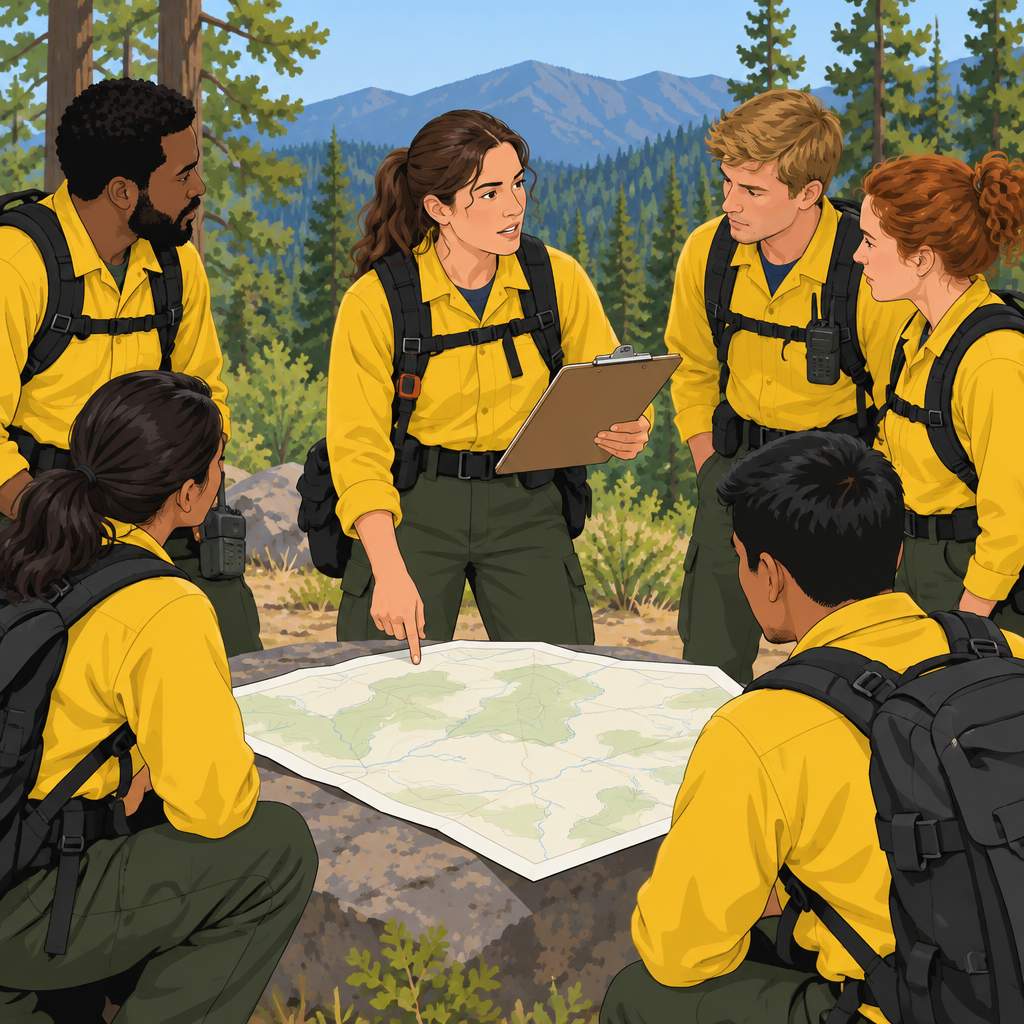
Adapting to Changing Wildfire Conditions
- Flexibility and adaptability support safe wildland firefighting operations.
- Unpredictable fire behavior and changing weather create significant operational challenges.
- Teams need strategies that adjust tactics and communication as conditions evolve.
Wildland firefighters must adapt quickly to protect teams and support successful operations.
Wildfire conditions can shift rapidly, so crews must remain flexible throughout each operation.
Transform Your Career Today
Unlock a personalized career strategy that drives real results. Get tailored advice and a roadmap designed just for you.
Start NowTherefore, teams need plans that adjust tactics and communication as circumstances evolve.
Understanding the Need for Flexibility
- Wildfires remain unpredictable because several factors influence their behavior.
- Wind speed and humidity can significantly affect how quickly fires spread.
- Slopes and valleys influence fire movement across changing terrain.
These variables require firefighters to adjust tactics and strategies during operations.
Meanwhile, shifting weather patterns can change the most effective response approach.
By recognizing these demands, teams can respond more effectively to evolving circumstances.
Managing Unpredictable Fire Behavior
- Fuel, weather, and topography can quickly change fire behavior.
- Spot fires, flare-ups, and wind shifts can create immediate safety threats.
- Fire behavior indicators help crews anticipate possible changes in conditions.
Unpredictable fire behavior remains one of the greatest challenges for wildland firefighters.
Rapid changes in intensity and direction can challenge even experienced teams.
Consequently, firefighters should reassess conditions constantly and adjust their tactics promptly.
Responding to Changing Weather Conditions
- High winds and low humidity can fuel faster fire spread.
- Forecasts and on-the-ground observations inform effective firefighting decisions.
- Preparation for sudden weather changes helps crews anticipate fire behavior shifts.
Weather conditions can dramatically influence wildfire dynamics.
For example, strong winds can spread embers quickly across the affected area.
Similarly, humidity changes can alter fire intensity and require revised operational strategies.
Adjusting Tactics and Communication Strategies
- Regular communication helps team members coordinate their response efforts.
- Clear objectives and contingency plans support quick tactical adjustments.
- Situational awareness training helps firefighters recognize and respond to evolving threats.
Firefighting teams must adjust tactics and communication methods as conditions shift.
Clear communication keeps team members aligned and supports rapid responses to new threats.
Finally, situational awareness and flexibility help crews navigate challenging conditions effectively.
Communication Strategies
Communication plays a crucial role in successful wildland firefighting operations.
Team members must communicate effectively so everyone understands the shared objective.
Clear, timely communication supports coordinated action during demanding fire suppression efforts.
Importance of Effective Communication
First, clear communication prevents confusion and reduces errors during firefighting tasks.
Timely updates help teams make quick decisions during changing fire situations.
Additionally, effective communication strengthens unity and collaboration among team members.
- Clear communication prevents confusion and reduces the risk of errors during firefighting tasks.
- Timely updates and information exchange help teams make quick decisions during dynamic fire situations.
- Effective communication fosters unity and collaboration among team members, enhancing overall performance.
- Communication with incident command supports efficient resource deployment and consistent safety protocols.
Improving Communication Skills
Active listening helps firefighters understand instructions and feedback from teammates and incident command.
Meanwhile, clear language communicates information accurately and limits misunderstandings.
Established communication protocols streamline information flow and maintain order during operations.
- Practice active listening to understand instructions and feedback from team members and incident command.
- Use clear and concise language to convey information accurately and avoid misunderstandings.
- Establish communication protocols within the team to streamline information flow during operations.
- Use radios, hand signals, and visual cues to strengthen communication in challenging environments.
These strategies help wildland firefighting teams improve effectiveness and safety during fire suppression efforts.
Therefore, clear, concise, and timely communication strengthens teamwork during high-pressure situations.
Team Dynamics and Leadership
Effective communication helps wildland firefighters coordinate smooth operations.
Team members should trust one another and work cohesively toward common goals.
Meanwhile, leaders guide teams, make decisions, and support their members.
Wildland firefighting requires quick thinking, adaptability, and strong leadership during challenging operations.
During high-stress situations, leaders must remain calm, prioritize safety, and provide clear direction.
Furthermore, team dynamics influence morale, productivity, and overall performance during firefighting missions.
Collaboration, mutual respect, and a positive attitude strengthen successful firefighting teams.
Finally, conflict resolution skills help leaders address issues promptly and maintain team harmony.
Sustaining Firefighting Team Success
Teamwork, leadership, and effective communication support successful wildland firefighting operations.
Additionally, ongoing training and skill development enhance performance within firefighting teams.
By fostering collaboration and continuous improvement, firefighters can strengthen safety and operational success.
Additional Resources
Google search results for Wildland Firefighter Team Dynamics and Leadership Protective Services
Bing search results for Wildland Firefighter Team Dynamics and Leadership Protective Services


