




Campus Security and Dormitory Safety
Campus security officers help maintain safety and security across college campuses.
They patrol campus areas, enforce rules, respond to emergencies, and support students, faculty, and staff.
They also focus on dormitory safety, where students live and interact daily.
Responsibilities of Campus Security Officers
A campus security officer performs several duties that protect the campus community.
They prevent crime, respond to incidents, conduct investigations, and maintain a visible presence.
Additionally, they work with local law enforcement during emergencies and support a safe learning environment.
Importance of Dormitory Safety
Dormitory safety directly affects student well-being and academic success.
Because many students share these residences, security officers must address theft, vandalism, sexual assault, and other crimes.
Therefore, dedicated attention to residence halls helps colleges create secure living environments.
A secure residence also strengthens community trust and improves the campus experience.
Furthermore, safety can influence students and families when they choose and remain at a college.
Campus Security Officer Responsibilities
Campus security officers carry significant responsibility for maintaining dormitory safety.
They monitor campus areas, assist residents, and address safety concerns.
Their work supports a secure and respectful living environment for dormitory occupants.
Patrolling Campus Grounds and Dormitories
Officers regularly patrol campus grounds and dormitories.
They conduct routine checks to identify potential threats and maintain secure facilities.
A visible security presence can discourage criminal activity and reassure residents.
Officers can also address safety concerns promptly when they discover them.
Responding to Emergencies and Assistance Requests
Security officers respond to emergencies and assistance requests from dormitory residents.
They may address medical emergencies, fire alarms, or disturbances.
Quick action helps officers prevent situations from escalating further.
Residents can then receive the assistance they need during urgent situations.
Enforcing Campus Safety Policies
Officers enforce campus safety policies and regulations within dormitories.
These rules may address guest access, curfew hours, and prohibited items.
Consistent enforcement helps maintain order and security for all residents.
Fair enforcement can also prevent conflicts and encourage mutual respect.
Through patrols, emergency response, and policy enforcement, officers support dormitory safety.
Their dedication helps create a secure living environment for residents.
Training and Qualifications for Campus Security Officers
Campus security officers need specific training and qualifications before serving in dormitory settings.
These requirements prepare them to protect the campus community.
Training also helps officers respond appropriately during safety-related situations.
Completion of a Training Program
A structured training program introduces essential security and safety practices.
Participants learn emergency procedures, conflict resolution, and campus policies.
These topics help officers handle their duties with consistency.
Knowledge of Emergency Procedures
Officers must understand how to respond to different emergencies.
Training covers medical emergencies, fires, and security threats.
Consequently, this knowledge supports timely and appropriate responses.
Communication and Interpersonal Skills
Strong communication skills help officers interact clearly with students, faculty, and staff.
Officers may need to communicate effectively during emergencies.
Interpersonal skills also help them build trust and rapport with the campus community.
Transform Your Career Today
Unlock a personalized career strategy that drives real results. Get tailored advice and a roadmap designed just for you.
Start NowTogether, these qualifications equip officers to support safety in dormitory settings.
Meeting these requirements strengthens their ability to perform security duties.
Prepared officers contribute to a safer and more secure campus environment.
Explore Further: Parole Officer: Building Trust with Clients
Common Security Threats on College Campuses
College campuses face several security threats that can affect students and dormitory residents.
These threats include theft, assaults, harassment, and drug or alcohol-related incidents.
Therefore, campus security officers must recognize risks and respond when student safety becomes compromised.
- Theft and break-ins
- Assaults and harassment
- Drug and alcohol-related incidents
Theft and Break-ins
First, theft and break-ins can occur on college campuses.
Dormitories may attract thieves because students keep laptops, phones, and cash there.
Regular patrols can deter potential thieves and help officers notice suspicious activity.
Assaults and Harassment
Additionally, physical assaults and sexual harassment can put students at risk.
Security officers can monitor suspicious activities around dormitory areas.
Quick responses to assault or harassment reports can support resident safety.
Drug and Alcohol-Related Incidents
Drug and alcohol abuse also creates dangerous situations on many college campuses.
These situations can include overdoses and violent behaviors.
Routine dormitory checks can help prevent illegal substance use and distribution.
Moreover, officers can intervene when intoxication compromises student safety.
Find Out More: Balancing Work and Life as a Wildland Firefighter
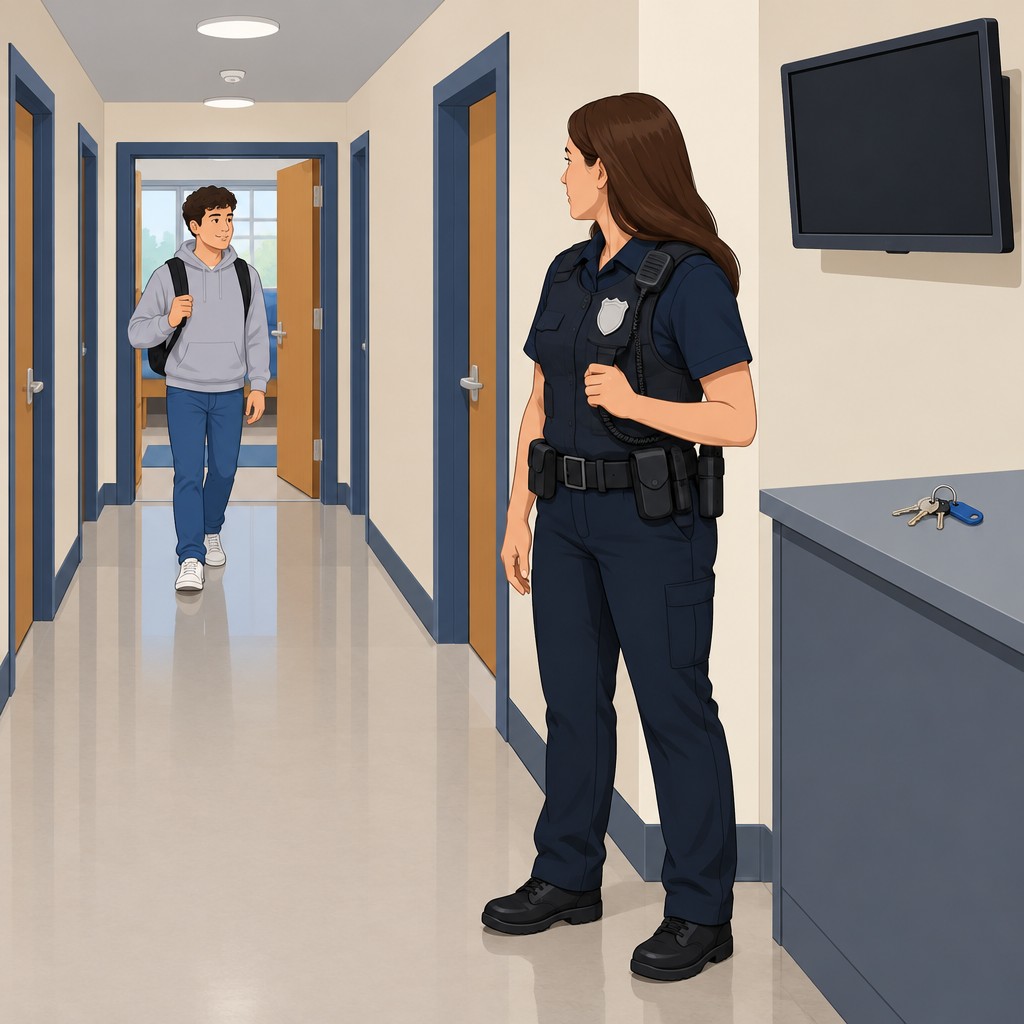
Strategies for Improving Dormitory Safety
Dormitory safety requires consistent attention from campus security officers.
Security teams can combine monitoring, controlled access, and regular patrols.
These measures help create a safer environment for students who live on campus.
Installation of Security Cameras
Security cameras help monitor dormitory premises and discourage potential criminal activity.
Strategic placement improves visibility across important areas of the dormitory.
High-resolution cameras with night vision provide clearer footage in low-light conditions.
- Place cameras near entry points, corridors, common areas, and parking lots.
- Use high-resolution equipment to capture clearer images.
- Select cameras with night vision for low-light monitoring.
Access Control Measures
Access control systems restrict dormitory entry to authorized individuals.
Key cards, PIN codes, and biometric scanners can strengthen building security.
Regular updates and audits help ensure that current residents retain access.
- Use key card access, PIN codes, or biometric scanners to control entry.
- Update access codes regularly to support secure building access.
- Audit access records to confirm that only current residents enter.
Regular Security Patrols and Checks
Scheduled patrols allow security officers to monitor dormitory premises throughout the day.
Random checks can identify concerns in hallways, stairwells, and other vulnerable areas.
Training helps security personnel respond quickly and effectively during emergencies.
- Establish patrol schedules covering different times of the day.
- Conduct random checks in hallways, stairwells, and vulnerable areas.
- Train security personnel to address threats and emergencies effectively.
Security officers should continuously evaluate these measures as dormitory needs change.
Regular improvements help security teams address potential risks more effectively.
These efforts support the safety and well-being of dormitory residents.
Discover More: Emergency Management Director: Career Path and Education
Collaboration with Campus Departments and Law Enforcement
Campus security officers collaborate with campus departments and law enforcement agencies.
This cooperation supports a comprehensive approach to dormitory security.
It also helps officers address potential threats and risks effectively.
- Officers share information and coordinate responses to security threats.
- They work with other stakeholders to manage incidents efficiently.
Clear communication channels support timely responses to security threats.
Established protocols help departments exchange important information effectively.
Furthermore, collaboration allows officers to use available expertise and resources.
Transform Your Career Today
Unlock a personalized career strategy that drives real results. Get tailored advice and a roadmap designed just for you.
Start NowJoint Training with External Partners
Campus security officers conduct joint training exercises with external partners.
These partners may include local law enforcement agencies or security organizations.
Joint exercises help officers practice response strategies and strengthen their skills.
- Officers use external resources and expertise during training exercises.
- Training helps participants prepare for potential security threats.
External partners provide valuable insights that can improve security procedures.
Additionally, exercises test security measures and reveal areas needing improvement.
These efforts support a coordinated response during emergencies.
Explore Further: TSA Officer Recruitment Events and Career Fairs
Student Confidence and Well-Being
A visible security officer can reassure students inside their dormitory.
Regular monitoring can reduce fears and anxieties about personal safety.
Students can approach officers for assistance, guidance, and support during uncertain situations.
Furthermore, respectful interactions can help officers build trust with dormitory residents.
Security Incident Prevention and Response
Security officers can deter unauthorized access through patrols and surveillance monitoring.
They can also support safety protocols throughout dormitory buildings.
When an incident occurs, trained officers can respond quickly and effectively.
Consequently, prompt intervention can reduce risks and protect dormitory residents.
A Positive Environment for Learning and Growth
A secure dormitory environment allows students to focus more fully on academic goals.
Students can also pursue personal growth with greater confidence in their living spaces.
Moreover, officers can encourage respect, inclusivity, and compliance with campus rules.
Their presence reinforces accountability, responsibility, and mutual respect among residents and staff.
Ultimately, their work supports trust, stability, and belonging within the campus community.
Campus Security Investment and Student Well-Being
Campus security officers play a crucial role in ensuring dormitory safety.
Their presence deters crime and promotes a sense of security among students.
Therefore, colleges and universities must invest in comprehensive security measures that prioritize student well-being.
These investments create a conducive environment for learning and living on campus.
Additional Resources
Google search results for Campus Security Officer: Ensuring Dormitory Safety Protective Services
Bing search results for Campus Security Officer: Ensuring Dormitory Safety Protective Services


