




Introduction
Food scientists play a crucial role in beverage development, which supports the food industry.
Beverage development involves creating innovative drinks that meet consumer demands.
Food scientists formulate recipes, conduct research, and ensure beverage safety and quality.
When developing beverages, food scientists must understand consumer preferences.
Understanding Consumer Preferences
Market research helps food scientists identify consumer trends and preferences.
Scientists use surveys, focus groups, and sales data to study beverage preferences.
Together, these methods reveal emerging trends within the beverage market.
- They conduct market research to identify trends and consumer preferences.
- Next, they analyze data to understand their target audience and its needs.
- Finally, they use these insights to guide new beverage development.
Once researchers collect data, food scientists examine it closely to understand their target audience.
They study demographics, taste preferences, purchasing behaviors, and lifestyle choices.
This analysis helps them match beverage development strategies with consumer needs.
Afterward, food scientists brainstorm ideas and experiment with different ingredients.
They also conduct taste tests to align finished products with consumer preferences.
For instance, research may show growing interest in plant-based beverages among health-conscious consumers.
Consequently, scientists may test almond milk or oat milk as alternative beverage ingredients.
These ingredients can support a dairy-free beverage that meets this consumer demand.
By tracking changing preferences, food scientists can create products that suit evolving market tastes.
Therefore, consumer insight remains essential for success in the competitive beverage industry.
Recipe Development
Food scientists play a critical role in beverage development through their expertise in creating innovative and delicious recipes.
- Experimenting with Different Ingredients and Flavors
- Testing Various Combinations
- Adjusting Recipes Based on Feedback
Food scientists spend countless hours experimenting with ingredients and flavors to create unique beverage recipes.
They combine various elements to achieve a balanced taste and aroma.
They meticulously test ingredient combinations to determine each beverage’s ideal flavor profile.
This process involves precise measurements and careful documentation to ensure consistency and quality.
Through sensory evaluation and taste testing, food scientists gather feedback from consumers and industry experts.
Based on this feedback, they adjust recipes to meet consumer preferences and market demands.
Furthermore, food scientists do more than simply mix ingredients during recipe development.
Their work requires creativity, precision, and a deep understanding of flavor profiles.
These skills help them create beverages that stand out in the market.
See Related Content: Extension Agents: Promoting Food Security
Food Safety and Quality Assurance
- Food scientists ensure compliance with food safety regulations during beverage production.
- They conduct quality control tests to maintain consistent beverage quality.
- They implement protocols that prevent contamination and preserve product integrity.
Food scientists protect consumers by applying rigorous safety practices throughout beverage development.
They follow food safety regulations to ensure beverages meet required standards before reaching consumers.
These regulations help prevent harm caused by contaminated beverages.
Additionally, food scientists monitor production processes to identify potential safety risks.
They perform quality control tests throughout production to preserve consistency between beverage batches.
These tests examine beverage composition and characteristics against established quality standards.
When scientists detect deviations, they take corrective measures to restore the desired quality.
Furthermore, food scientists establish protocols that reduce contamination risks during beverage production.
Contamination can occur during raw material sourcing, processing, packaging, or distribution.
Therefore, scientists use cleaning and sanitation practices to protect product integrity.
They also conduct regular inspections and monitor production activities carefully.
These measures help maintain safe beverages that satisfy regulatory requirements and consumer expectations.
Transform Your Career Today
Unlock a personalized career strategy that drives real results. Get tailored advice and a roadmap designed just for you.
Start NowTheir attention to detail supports reliable beverage production and consistent product quality.
Discover More: Climate Change Mitigation: Role of Conservationists
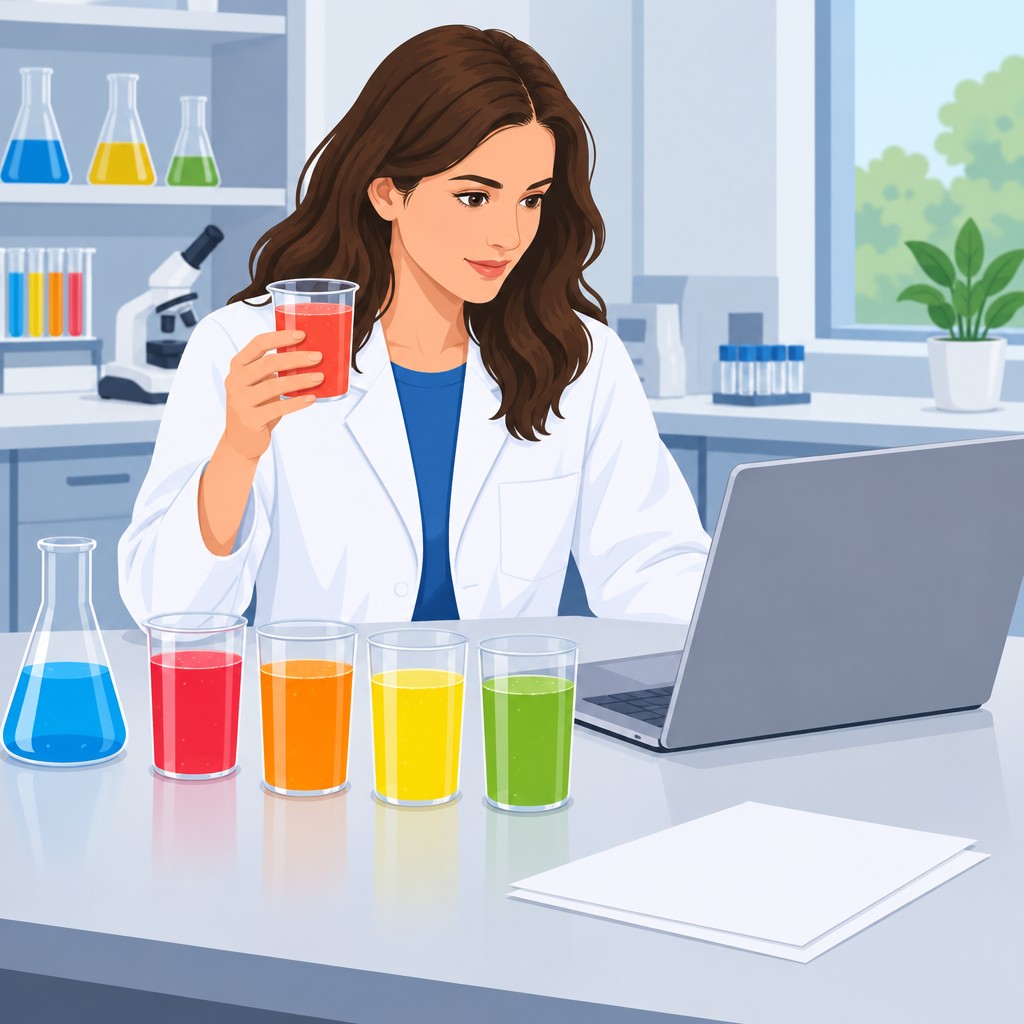
Collaboration Across Beverage Development Teams
Food scientists coordinate with several departments during beverage development.
This teamwork connects product concepts with practical business and manufacturing requirements.
As a result, departments support beverage launches that meet consumer demands and industry standards.
- Marketing teams help create packaging and branding for new products.
- Production staff help scale recipes for mass production.
- Supply chain professionals help source high-quality ingredients.
Working with Marketing Teams
Food scientists collaborate with marketing teams to develop appealing beverage packaging.
They study consumer preferences, market trends, and competitor products with marketing professionals.
Together, they create branding that communicates the beverage’s quality and innovation.
This partnership helps beverage products attract attention on store shelves.
Partnering with Production Staff
Food scientists work with production staff to prepare recipes for large-scale manufacturing.
They adjust ingredient proportions and processing methods for efficient production.
They also establish quality control measures that support consistent results.
Consequently, production teams can maintain beverage quality across multiple batches.
Communicating with Supply Chain Professionals
Food scientists communicate with supply chain professionals about ingredient requirements.
They identify ingredients that meet specifications for flavor, texture, and nutritional content.
They also consider quality standards and delivery timelines during sourcing.
This coordination supports the integrity and authenticity of the finished beverage.
Through these partnerships, food scientists connect scientific expertise with organizational needs.
Effective communication helps teams coordinate product development and manufacturing activities.
Therefore, cross-department collaboration supports innovative beverages that align with company requirements.
Explore Further: Marketing Organic vs. Conventional Farm Products
Innovating and Staying Current in Beverage Development
Food scientists sustain beverage innovation by tracking technological progress and testing emerging possibilities.
They also use professional events to exchange knowledge and discover practical approaches.
These activities help them respond thoughtfully to changing expectations in beverage development.
- Track technological advancements in the food and beverage industry.
- Experiment with new techniques and ingredients for innovative products.
- Attend conferences and workshops to network and learn from professionals.
Technological awareness helps scientists evaluate packaging technologies, processing techniques, and equipment.
These tools can improve beverage quality and production efficiency.
By reviewing such developments, scientists select suitable resources for high-quality beverage work.
Meanwhile, experimentation allows scientists to explore unfamiliar flavor profiles, textures, and ingredients.
They conduct research and development to distinguish products from competing offerings.
Furthermore, conferences and workshops reveal current trends, techniques, and industry practices.
Participants can exchange ideas with experts and strengthen professional relationships.
Such engagement expands knowledge and sustains inspiration for beverage development.
Consequently, continuous learning supports innovative, high-quality products that reflect consumer needs and preferences.
Discover More: 4-H Youth Agents: Promoting Sustainable Agriculture
Sensory Evaluation
Sensory evaluation examines how beverages taste, smell, and feel during consumption.
Food scientists organize structured tastings to measure these qualities against consumer expectations.
They use trained panelists and consumer responses to guide sensory decisions.
- Conduct sensory tests for flavor, aroma, and texture.
- Use consumer feedback to refine beverage recipes.
- Train tasting panels for consistent evaluations.
During a tasting, panelists assess flavor profiles, aroma, mouthfeel, and overall satisfaction.
Meanwhile, consumer participation reveals preferences and perceptions that trained panels may not capture.
Food scientists analyze evaluation data to identify patterns and areas needing improvement.
Transform Your Career Today
Unlock a personalized career strategy that drives real results. Get tailored advice and a roadmap designed just for you.
Start NowThey then adjust recipes to achieve the intended sensory profile.
Additionally, scientists select panelists according to their sensitivity to specific sensory attributes.
Training strengthens panelists’ sensory skills and supports reliable comparisons among beverages.
Consequently, consistent sensory data helps teams align beverages with consumer expectations and market demands.
Career Impact in Beverage Development
Food scientists help beverage companies turn research, creativity, and technical knowledge into products consumers want.
They evaluate ingredients, refine processes, and develop techniques that support reliable product development.
Meanwhile, their work connects scientific expertise with practical goals across beverage companies.
These responsibilities create a challenging and rewarding career path for aspiring food scientists.
By applying creativity and expertise, professionals can support beverage company growth and industry progress.
Rising demand for unique, high-quality beverages increases the importance of their contribution.
Therefore, food scientists will remain essential to shaping beverage products that meet changing consumer expectations.
Additional Resources
Google search results for The Role of Food Scientists in Beverage Development Agricultural
Bing search results for The Role of Food Scientists in Beverage Development Agricultural


