




Introduction
A rail yard engineer operates locomotives.
The engineer moves cars within a rail yard.
These skills help ensure safety and efficiency in rail operations.
Education and Training
Candidates need a high school diploma or GED to become rail yard engineers.
This credential provides the basic educational foundation required for the position.
Additionally, mechanical or electrical training can strengthen a candidate’s understanding of the job’s technical aspects.
Most employers provide on-the-job training to new hires.
This training teaches the specific skills required for safe and effective rail yard work.
Practical experience therefore becomes an important part of professional preparation.
Technical Knowledge
Technical knowledge supports safe and efficient locomotive operations within a rail yard.
It also helps rail yard engineers respond effectively to operational challenges.
Furthermore, strong technical skills support reliable maintenance and informed decision-making.
Understanding Locomotive Operation
Rail yard engineers must understand how locomotives operate.
This knowledge includes starting, stopping, and controlling locomotive speed.
Consequently, operational understanding helps engineers manage locomotive movements safely.
Familiarity with Safety Procedures and Regulations
Safety remains essential throughout rail yard operations.
Therefore, rail yard engineers must understand applicable safety procedures and regulations.
They must also know how to handle emergencies and protect everyone nearby.
Reading Technical Manuals and Schematics
Rail yard engineers often consult technical manuals and schematics.
These documents help them troubleshoot issues and complete maintenance tasks.
Accordingly, accurate interpretation of technical information remains highly valuable.
Strong technical knowledge prepares aspiring rail yard engineers for this demanding career.
By developing these abilities, candidates can approach locomotive operations with greater confidence.
They can also support safe, dependable, and effective work within the rail yard.
Discover More: Advocacy and Support for Transportation Security Screeners
Communication Skills for Rail Yard Engineers
- Effective communication with team members and supervisors supports rail yard operations.
- Clear radio communication helps engineers and yard workers coordinate movements safely.
- Accurate directions help workers move trains safely and efficiently.
Communication plays an important role in every workplace.
However, rail yards require especially clear communication because workers manage fast-paced operations.
As a rail yard engineer, you must communicate clearly with team members and supervisors.
This approach helps operations run smoothly and safely.
Clear radio communication remains one of the most important skills for this role.
You must communicate concisely with engineers and yard workers during coordinated movements.
Consequently, everyone can understand current instructions and respond appropriately.
You must also follow directions accurately throughout the workday.
Likewise, you must give clear instructions when directing team members.
These communication skills help workers move trains safely and efficiently throughout the yard.
Strong communication skills can support your success as a rail yard engineer.
Discover More: Warehouse Associate vs. Material Handler: Key Differences
Problem-Solving Abilities
Strong problem-solving abilities help rail yard engineers handle challenging situations effectively.
These abilities include quick decisions, locomotive troubleshooting, and efficient conflict resolution.
In fast-paced yards, engineers often have little time to analyze every detail before deciding.
Transform Your Career Today
Unlock a personalized career strategy that drives real results. Get tailored advice and a roadmap designed just for you.
Start NowThey must think quickly and choose sound actions that protect safety and support efficient operations.
Additionally, locomotives can develop mechanical problems without warning.
Engineers need knowledge and skills to diagnose and address these issues efficiently.
Prompt repairs can help prevent delays in train schedules.
Meanwhile, conflicts between team members or operational issues can disrupt yard activities.
Engineers should address these concerns promptly to maintain a smooth workflow.
They can navigate interpersonal conflicts and identify effective solutions for ongoing operations.
Key problem-solving abilities include the following:
- Quick thinking and decision-making in high-pressure situations.
- Troubleshooting mechanical issues with locomotives.
- Resolving conflicts or issues within the yard efficiently.
You Might Also Like: Understanding Railroad Engineer Job Duties
Physical Fitness
The role demands strong physical fitness.
Rail yard engineers often work long shifts and perform manual tasks.
Therefore, physical readiness supports safe and effective performance.
Physical Stamina for Long Hours and Manual Labor
- Rail yard engineers may work shifts lasting more than 12 hours.
- Manual labor includes coupling and uncoupling cars and operating switches.
- Consequently, physical stamina helps engineers meet demanding job requirements.
Ability to Work in Various Weather Conditions
- Rail yard engineers work outdoors during many different weather conditions.
- They may work through extreme heat, freezing cold, rain, snow, or wind.
- Moreover, engineers must adapt while continuing to perform their duties.
Agility and Strength for Climbing on and off Locomotives
- Engineers must climb onto and off locomotives during their work.
- This task requires agility in tight spaces and strength for pulling upward.
- Additionally, balance and coordination help engineers move safely around equipment.
You Might Also Like: Interview Tips for Aspiring Logistics Technicians
Attention to Detail
Rail yard engineers need a keen eye for detail.
They use this skill to support safe and efficient train operations.
Moreover, careful work helps engineers manage equipment, movements, and yard activities effectively.
Checking Equipment for Safety and Maintenance Issues
Engineers must thoroughly inspect locomotives, railcars, and other equipment.
These inspections confirm that equipment remains in good working order.
Consequently, regular checks reduce the risk of malfunctions or accidents during operations.
They look for worn-out parts, leaks, loose connections, and other potential problems.
Prompt maintenance prevents train schedule delays and supports smooth yard operations.
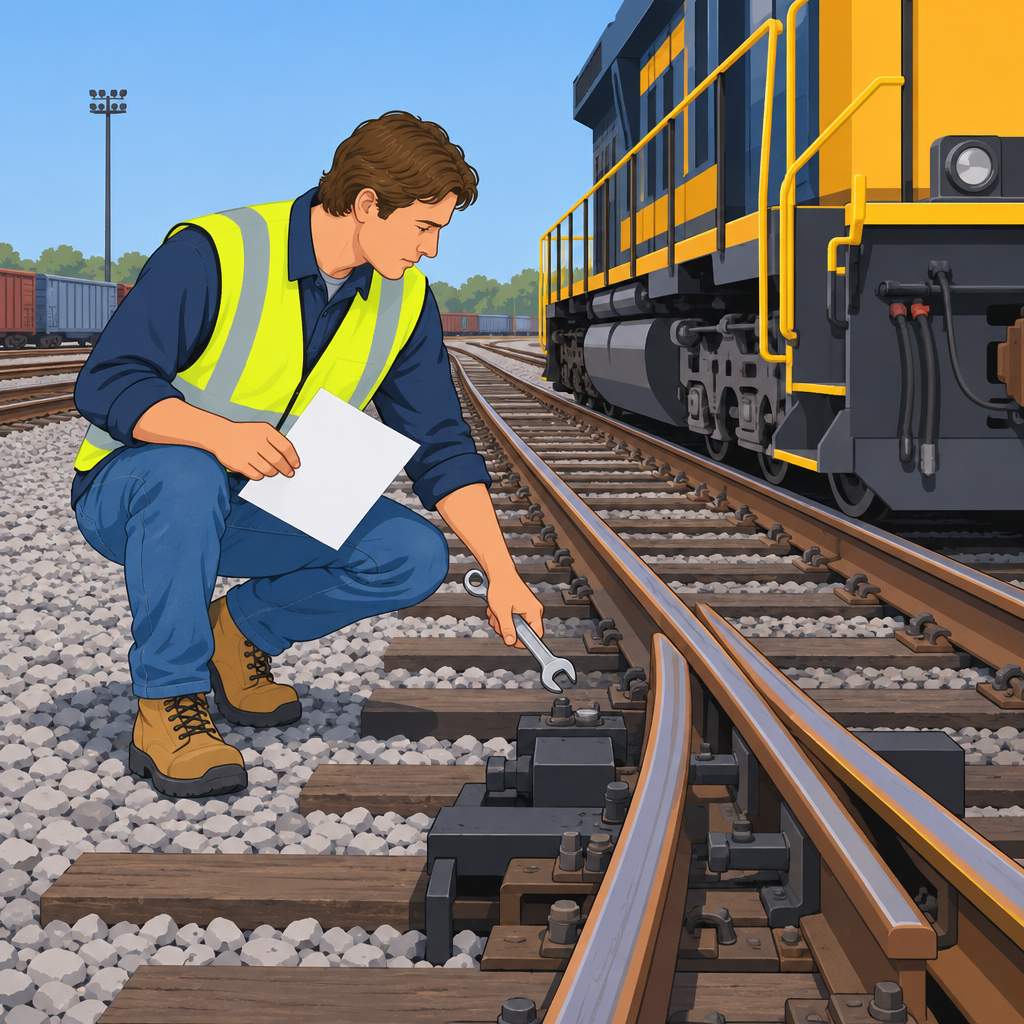
Monitoring Track Switches and Signals
Engineers also monitor track switches and signals for proper operation.
They double-check switch positions because incorrect settings can cause derailments or collisions.
Additionally, engineers ensure that lights and flags remain visible and work correctly.
These signals communicate important information to train operators.
Close monitoring helps engineers anticipate issues and take preventive measures.
Keeping Accurate Movement and Cargo Records
Accurate records help engineers track cargo and locomotive movements.
They document cargo types, quantities, destinations, and departure times.
Furthermore, complete records show cargo locations and statuses during yard operations.
These records also support planning and compliance with safety protocols.
Errors can cause confusion, delays, or safety hazards.
Therefore, attention to detail supports safe, efficient, and smooth train operations.
Engineers apply this skill across inspections, signaling, and movement records.
Building a Career as a Rail Yard Engineer
Successful Rail Yard Engineers need communication, problem-solving, attention to detail, physical stamina, and mechanical aptitude.
Continuous learning remains essential because technological advancements and industry changes affect rail transportation.
Rail Yard Engineers should stay updated on current trends and best practices.
People who enjoy trains, outdoor work, and efficient transportation may find this career rewarding.
This role lets them support the efficient movement of goods and passengers.
Developing the necessary skills and qualifications can begin an exciting career in rail transportation.
Additional Resources
Transform Your Career Today
Unlock a personalized career strategy that drives real results. Get tailored advice and a roadmap designed just for you.
Start NowBing search results for Becoming a Rail Yard Engineer: Skills You Need Transportation and Logistics


