




Introduction
Warehouse associates and material handlers support efficient warehouse operations.
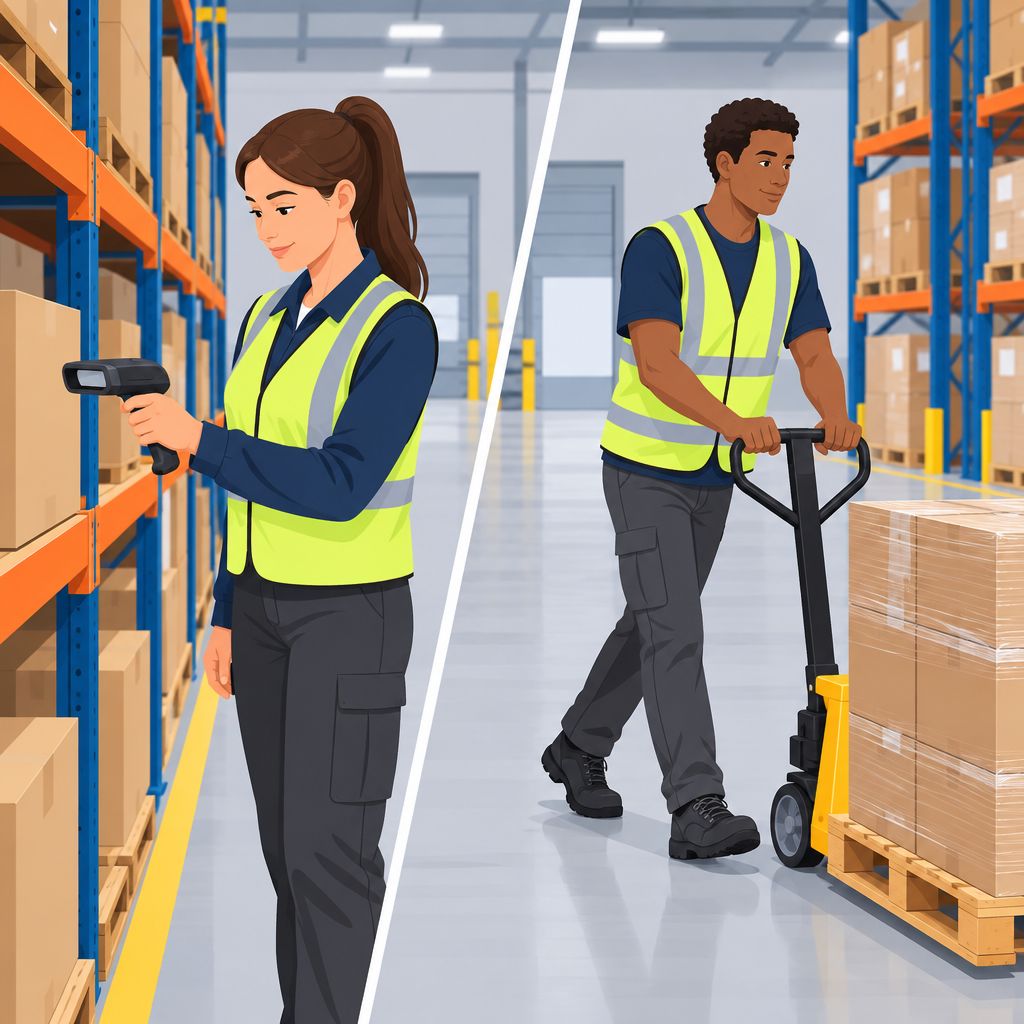
Warehouse associates manage inventory, fulfill orders, and maintain clean work environments.
Material handlers physically load, unload, and transport goods.
Warehouse Associate Responsibilities
Warehouse associates manage inventory throughout warehouse operations.
They fulfill orders and help maintain an organized work environment.
Additionally, they typically handle paperwork and computer-based tasks.
Material Handler Responsibilities
Material handlers focus on physically handling goods.
They load and unload items during warehouse operations.
They also transport goods between necessary locations.
Importance of Understanding These Roles
Businesses should recognize the distinctions between warehouse associates and material handlers.
Understanding each role helps businesses assign tasks appropriately.
Consequently, businesses can optimize productivity through clearer task assignments.
Job Responsibilities of Warehouse Associates
Warehouse Associates play a crucial role in warehouse operations.
They complete tasks that support inventory control, order fulfillment, and workplace safety.
Additionally, their work helps warehouses deliver goods to customers on time.
- Receiving, storing, and organizing inventory
- Processing orders and shipments
- Maintaining a clean and safe work environment
- Operating basic warehouse equipment
Receiving, Storing, and Organizing Inventory
Warehouse Associates receive incoming shipments and check the accuracy of delivered items.
They carefully store inventory in designated warehouse areas.
Furthermore, they use inventory management systems to monitor stock levels and improve item accessibility.
Processing Orders and Shipments
Warehouse Associates process customer orders accurately and efficiently.
They pick items from inventory, pack them securely, and prepare shipments.
As a result, careful attention to detail helps prevent errors and support prompt delivery.
Maintaining a Clean and Safe Work Environment
Warehouse Associates keep the facility clean and organized throughout their shifts.
They follow safety protocols to help prevent workplace accidents and injuries.
They also store hazardous materials properly and wear protective gear when required.
Operating Basic Warehouse Equipment
Warehouse Associates operate basic equipment, including forklifts, pallet jacks, and conveyors.
They use these tools to move pallets, load trucks, and transport goods internally.
Therefore, proper training and certification remain essential for safe equipment operation.
Job Responsibilities of Material Handlers
Material handlers support warehouse operations by moving and managing materials throughout the facility.
They use equipment, follow procedures, and maintain accurate material records.
Their work helps warehouses handle materials safely and efficiently.
- Move materials within the warehouse using forklifts or pallet jacks.
- Load and unload trucks.
- Track inventory levels and conduct inventory counts.
- Follow safety protocols when handling materials.
Moving Materials Within the Warehouse
Material handlers move items from one warehouse location to another.
They may use forklifts or pallet jacks to transport materials efficiently.
Careful loading and unloading helps minimize the risk of material damage.
Loading and Unloading Trucks
Material handlers load materials onto trucks and unload incoming shipments.
They stack items carefully to use available space effectively.
They also secure materials and account for every item during transportation.
Tracking Inventory Levels
Material handlers track inventory levels within the warehouse.
They conduct regular counts to verify the number of items in stock.
Accurate counts help maintain records and prevent shortages or overstock situations.
Following Safety Protocols
Material handlers follow safety protocols while working with equipment and materials.
Transform Your Career Today
Unlock a personalized career strategy that drives real results. Get tailored advice and a roadmap designed just for you.
Start NowThey wear appropriate personal protective equipment and follow established handling procedures.
They report safety concerns to management to help prevent accidents and injuries.
Uncover the Details: Understanding Railroad Engineer Job Duties
Skills Required for Warehouse Associates
Warehouse associates support warehouse efficiency and productivity.
They receive, store, and distribute goods while maintaining organized inventory.
To excel, they need specific technical, physical, and cognitive skills.
- Attention to detail: Associates examine products, labels, and orders carefully to maintain inventory accuracy.
- Basic computer skills for inventory management: Associates use computer systems to track inventory and process orders.
- Physical stamina for lifting and moving heavy items: Associates lift boxes, crates, and pallets safely and efficiently.
- Ability to work in a fast-paced environment: Associates prioritize tasks, work efficiently, and meet tight deadlines.
These skills help warehouse associates perform their work effectively.
By improving these abilities, associates can support efficient and successful warehouse operations.
Gain More Insights: Interview Tips for Aspiring Logistics Technicians
Skill Requirements for Material Handlers
Material handlers need specific skills to move materials safely and efficiently through warehouses and distribution centers.
They support supply chain and logistics operations by helping materials and products move through these facilities.
Therefore, employers value equipment knowledge, spatial awareness, communication, and adaptability in this role.
- Certification or training for operating equipment like forklifts
- Strong spatial awareness for moving materials safely
- Communication skills for coordinating with other team members
- Ability to prioritize tasks and adapt to changing priorities
Forklift certification or training helps handlers operate lifting equipment safely and effectively.
Because forklifts move heavy materials, handlers must demonstrate precision and careful equipment control.
Strong spatial awareness helps handlers navigate tight spaces and maneuver around obstacles.
They must protect materials while making quick decisions that reduce accidents and mishaps.
Clear communication helps handlers coordinate with team members, supervisors, and vendors.
They provide inventory updates, request supplies, and coordinate processing schedules.
In addition, handlers must prioritize tasks in fast-paced warehouse environments.
They may shift attention quickly when warehouse needs or priorities change.
By adapting to changing demands, handlers remain organized and productive during unexpected challenges.
These skills help material handlers contribute to safe, efficient warehouse and distribution center operations.
Explore Further: Key Responsibilities of an Inventory Control Specialist
Career Growth Opportunities for Warehouse Associates
Warehouse associates can pursue several paths to advance their careers.
These paths include leadership, specialized work, and supply chain management.
Furthermore, each option can help associates pursue more challenging responsibilities.
Supervisor and Team Lead Roles
Associates may move into supervisor or team lead roles within warehouse operations.
In these positions, they oversee daily activities for warehouse teams.
They also help ensure that operations run smoothly and efficiently.
Specialization in Inventory Management and Logistics
Another path involves specializing in inventory management or logistics.
By developing expertise, associates can become valuable assets to their organizations.
This specialization can also prepare them for more challenging roles.
Advancement in Supply Chain Management
Warehouse associates may also advance into supply chain management roles.
These positions involve overseeing processes from sourcing materials through customer delivery.
Consequently, experience in supply chain management can create new advancement opportunities.
Discover More: Understanding Dock Worker Union Membership
Career Growth Opportunities for Material Handlers
Material handlers can pursue several career paths within warehouses and distribution centers.
These paths can increase responsibility, broaden skills, and support advancement into more challenging roles.
Training and leadership experience can help workers prepare for future opportunities.
Senior Material Handler and Lead Positions
Senior material handlers may oversee daily activities and support other team members.
Transform Your Career Today
Unlock a personalized career strategy that drives real results. Get tailored advice and a roadmap designed just for you.
Start NowLead workers can coordinate workflows and help teams handle materials efficiently.
These positions also provide opportunities to develop leadership and organizational skills.
Forklift and Specialized Equipment Training
Material handlers can pursue forklift operator training to expand their workplace qualifications.
They may also learn to operate other specialized equipment within warehouses or distribution centers.
These credentials can create additional job opportunities and may increase earning potential.
Logistics and Warehouse Management Roles
Experienced material handlers may transition into logistics roles or warehouse management positions.
These roles can involve overseeing inventory management, shipping, and receiving activities.
They also require strong leadership and organizational skills to coordinate warehouse operations.
Choosing Between Warehouse Associate and Material Handler Roles
Warehouse associates typically manage inventory and fulfill orders, while material handlers specialize in transporting and storing goods efficiently.
Therefore, each role emphasizes different responsibilities within warehouse operations.
Warehouse associates may excel in roles requiring attention to detail and organizational skills.
Meanwhile, material handlers often thrive in positions demanding physical strength and efficiency.
As warehouse and logistics work evolves, professionals can explore growth opportunities across these sectors.
Upskilling, earning certifications, and pursuing advancement can support fulfilling careers in this dynamic field.


