




Material Handlers in Industrial Operations
Material handlers serve as essential employees in various industries.
They move, store, and control materials within warehouses or distribution centers.
Additionally, they support smooth operations and logistics across different sectors.
Material Handling in Manufacturing
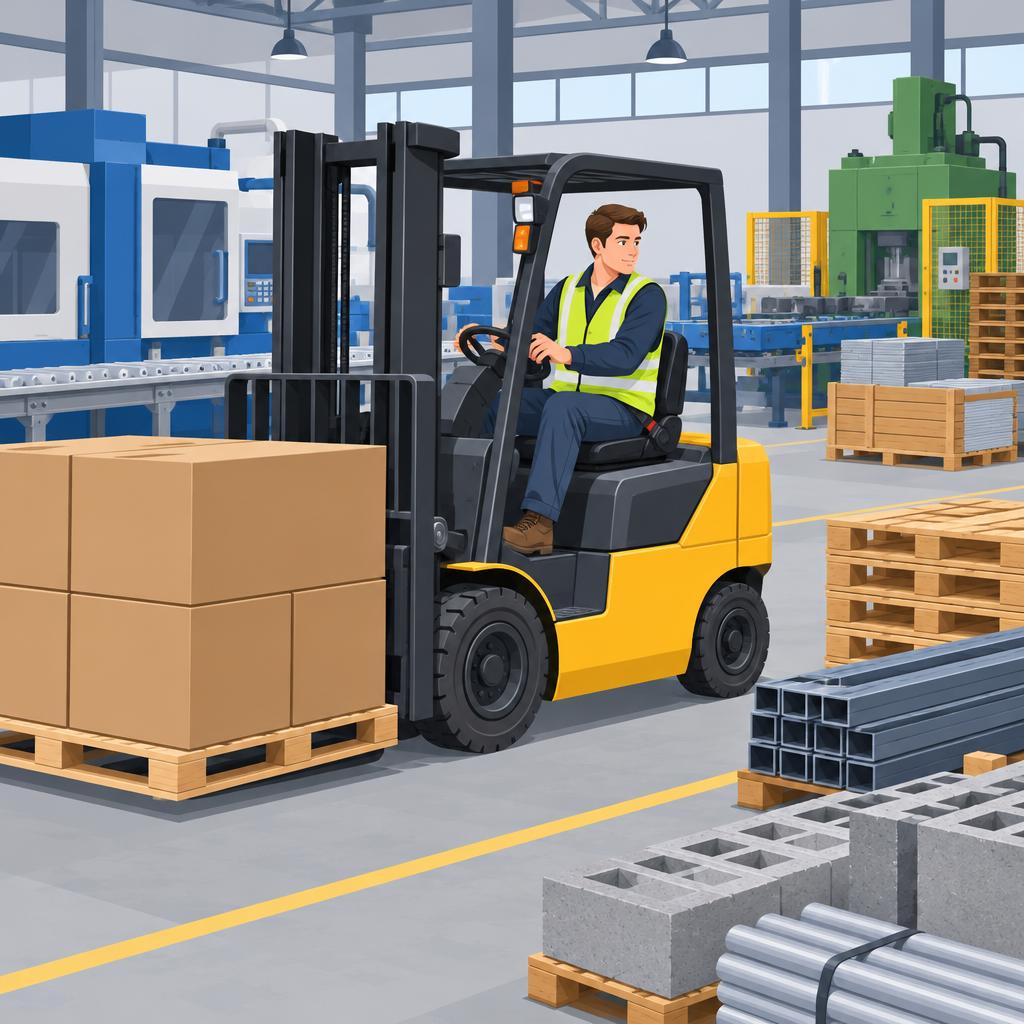
Material handlers support the steady movement of materials throughout manufacturing plants.
They transport raw materials, components, and finished products between important plant areas.
As a result, their work helps production processes operate efficiently and safely.
Core Manufacturing Duties
Material handlers perform several duties that support production and inventory accuracy.
They follow established procedures while moving, inspecting, storing, and recording materials.
Additionally, they help maintain safe conditions for themselves and their coworkers.
- Material handlers operate forklifts to move heavy materials and products within manufacturing plants.
- They complete proper training and certification before operating forklifts safely.
- Material handlers organize inventory and monitor available materials for production needs.
- They store excess inventory properly and help maintain accurate records.
- Material handlers load and unload materials from trucks, storage areas, and production lines.
- They follow handling procedures to prevent material damage and protect coworkers.
- Material handlers inspect materials for quality, accuracy, damage, and defects.
- They report damaged or defective materials to the appropriate personnel.
- Material handlers follow plant safety procedures and applicable safety regulations.
- They help prevent accidents and injuries throughout the manufacturing plant.
Logistics and Warehousing Sector
- Material handlers support efficient operations across logistics and warehousing facilities.
- They manage inventory, maintain accurate stock levels, and track shipments.
- Additionally, they pick and pack orders to fulfill customer requests efficiently.
- They coordinate goods movement within warehouses to improve storage and accessibility.
- Consequently, efficient handling practices support smooth workflows and reduce errors.
Importance of Material Handlers in Logistics and Warehousing
- First, material handlers manage inventory accurately throughout warehouse operations.
- By monitoring stock levels, they help prevent stockouts and excessive inventory.
- Moreover, they organize warehouse space for better storage and accessibility.
- They also coordinate with shipping departments to support timely customer deliveries.
- As a result, effective handling reduces lead times and improves customer satisfaction.
Gain More Insights: Career Growth for Transportation Security Screeners
Material Movement on Construction Sites
Material handlers keep construction and demolition operations moving smoothly.
They transport heavy machinery, construction materials, and debris around active sites.
They use forklifts, cranes, and skid steers to move large items safely.
For example, they transport cranes, excavators, and bulldozers between site locations.
They also deliver steel beams, lumber, concrete blocks, and piping where workers need them.
Site Safety and Equipment Operations
Safety remains a central responsibility for material handlers on construction sites.
Proper training helps them operate lifting and transportation equipment efficiently.
Additionally, workers wear hard hats, gloves, and safety vests to reduce injury risks.
Specialized tools support the site’s heavy lifting and transportation requirements.
Common equipment includes dump trucks and conveyor belts, alongside forklifts and cranes.
Material handlers also remove rubble, wood scraps, and other waste from work areas.
Productivity, Teamwork, and Environmental Care
Efficient material movement helps construction projects stay on schedule and within budget.
By reducing delays, material handlers help crews maintain productivity throughout each project.
They coordinate closely with equipment operators, crane operators, and laborers.
Effective communication helps teams deliver materials to the correct locations.
Meanwhile, proper waste disposal helps maintain organized and safer work environments.
Material handlers follow environmental regulations to limit construction and demolition impacts.
Gain More Insights: Becoming a Rail Yard Engineer: Skills You Need
Retail and Distribution Centers
Retail and distribution centers depend on material handlers to support daily operations.
These employees organize products and support customer orders throughout the facility.
As a result, their work connects store activity with broader supply chain movement.
Role of Material Handlers
Material handlers move products between storage areas, shelves, and order preparation stations.
They also monitor product quantities and update inventory records.
Additionally, they prepare customer purchases for accurate and timely shipment.
- Material handlers stock shelves by moving products from storage areas to accessible store locations.
- They manage inventory records to help prevent stockouts and excessive product quantities.
- They fulfill online and in-store orders by picking, packing, and preparing products for shipment.
Contribution to Supply Chain Operations
Material handlers help goods move efficiently from manufacturers through retailers to consumers.
They streamline logistics activities and help products reach their destinations on time.
Furthermore, their accuracy supports dependable service and helps businesses meet customer expectations.
- Prompt stocking and order fulfillment reduce delays throughout retail operations.
- Accurate picking and packing help customers receive the correct products on time.
- Cycle counting compares physical inventory with records and identifies discrepancies.
Through these responsibilities, material handlers strengthen operational efficiency in retail and distribution centers.
Their efforts also help businesses maintain inventory accuracy and respond effectively to customer demand.
Explore Further: Advocacy and Support for Transportation Security Screeners
Transform Your Career Today
Unlock a personalized career strategy that drives real results. Get tailored advice and a roadmap designed just for you.
Start NowAgriculture and Farming
Material handlers play a crucial role in agriculture and farming operations.
They transport crops, livestock feed, and farming equipment with care and efficiency.
As a result, their work supports smooth and productive agricultural activities.
Material Handlers’ Significance in Agriculture
Material handlers load and unload crops and livestock feed onto trucks for distribution.
They also move heavy farming equipment around farms, helping farmers complete essential tasks.
Additionally, they organize farming supplies and help maintain access to necessary resources.
- Material handlers load and unload crops and livestock feed for distribution.
- They move heavy farming equipment within farms to support daily agricultural tasks.
- Efficient material transportation improves productivity throughout the agricultural sector.
- They deliver perishable crops and feed promptly to help maintain freshness.
- Material handlers organize farming supplies and help manage agricultural inventory.
Specialized Skills for Rural Material Handling
Rural material handlers need knowledge of farm machinery and agricultural equipment.
They must understand the handling needs of different crops and livestock feed.
Furthermore, they work outdoors and adapt to changing weather and rural terrain.
- Knowledge of farm machinery helps handlers work effectively in rural environments.
- Understanding crop and feed requirements supports careful material handling.
- Handlers need skills operating forklifts, tractors, and other agricultural machinery.
- Rural navigation skills support safe and timely material deliveries.
- Outdoor workers must adapt to various weather conditions during agricultural tasks.
These skills help farms move essential materials efficiently and support productive agricultural operations.
Gain More Insights: Warehouse Associate vs. Material Handler: Key Differences
Delivery of Medical Supplies, Equipment, and Medications
In healthcare and pharmaceuticals, material handlers support hospitals, clinics, pharmacies, and pharmaceutical companies.
They deliver medical supplies, equipment, and medications to various healthcare facilities.
They help healthcare providers meet patient needs by delivering these items on time.
Handling Sensitive and Critical Materials
Material handlers handle sensitive and critical materials with appropriate care.
These materials include medications, lab samples, and medical equipment.
Many of these items require special care during handling.
Importance of Accuracy and Organization
Material handlers must organize their work accurately.
They deliver the right supplies to the right locations.
Therefore, delivery mistakes can have serious consequences for patients.
Adherence to Regulations
Material handlers must follow strict regulations and guidelines.
They use specific handling and storage protocols for different materials.
These practices support the safety and efficacy of medical supplies and medications.
Through these responsibilities, material handlers support healthcare and pharmaceutical operations.
Industry Demand for Material Handlers
Material handlers support product and material movement across many industries.
Manufacturing companies use them to move raw materials, parts, and finished goods throughout their facilities.
Warehousing, construction, retail, e-commerce, transportation, and logistics companies also depend on their work.
Different Workplace Responsibilities
Material handlers help manufacturing facilities maintain smooth production activities.
They organize inventory, prepare orders, and manage freight movement within various workplace environments.
Additionally, they move construction materials, equipment, tools, products, and supplies where needed.
Operational Value Across Sectors
Their responsibilities help organizations maintain efficient material flow.
Each sector assigns material handlers tasks that support productivity and timely operations.
Consequently, material handlers remain essential contributors across diverse industries and workplace settings.
Additional Resources
Google search results for Top Industries Employing Material Handlers Transportation and Logistics
Bing search results for Top Industries Employing Material Handlers Transportation and Logistics


