




Surveyor Licensing and Specializations
Adequate licensing requirements help ensure surveyor competency and professionalism in the United States.
Surveyors specialize in different areas of professional practice.
These areas include land, construction, geomatics, and cadastral surveying.
What Is a Surveyor?
A surveyor measures and maps land, air, and sea.
These professionals support construction, mining, environmental conservation, and urban planning.
They provide measurements and maps that help organizations plan and complete projects.
Surveying Responsibilities
Surveyors conduct surveys and collect information about physical environments.
They analyze collected data and create maps for practical applications.
Additionally, surveyors define boundaries and support accurate construction work.
Surveying Environments and Roles
Surveyors work across land, water, and construction environments.
Each role gathers information for a particular purpose.
For example, some surveyors establish boundaries, while others support navigation or construction.
- Land surveyors measure the earth’s surface to determine property boundaries and create legal descriptions.
- Hydrographic surveyors examine rivers, lakes, and oceans for nautical charts and marine navigation.
- Construction surveyors provide measurements and layout information for buildings and infrastructure.
Accuracy and Precision in Surveying
Accurate and precise measurements make surveying data reliable for decision-making.
Reliable data helps teams plan projects and evaluate physical boundaries correctly.
However, incorrect measurements can cause construction errors, boundary disputes, and marine navigation hazards.
Public Protection Through Surveyor Licensing
Licensing requirements establish standards for surveyors who perform professional work.
They help confirm that practitioners possess relevant knowledge and practical expertise.
They also protect the public from fraudulent or inaccurate surveying practices.
- Authorities can use licensing standards to restrict surveying work by unqualified individuals.
- Accurate surveying supports decisions that may carry serious consequences.
Surveyor Licensing Levels and Professional Duties
Jurisdictions may recognize several licensing stages and related professional requirements.
These designations reflect education, supervised experience, technical assistance, or specialized work.
Boards may also require continuing education and ethical conduct.
- A Professional Surveyor typically completes a surveying degree, standardized examination, and relevant work experience.
- A Land Surveyor in Training gains practical experience under a licensed surveyor’s supervision.
- A Surveyor Technician may assist licensed surveyors with data collection and technical tasks.
- A Limited Scope Surveyor may focus on boundary surveys, construction layout, or other defined tasks.
- Continuing education helps surveyors stay current with technologies, trends, and professional practices.
- A professional code of ethics defines responsibilities to clients, the public, and the surveying profession.
- Reciprocity agreements may allow licensed surveyors to practice in another jurisdiction with fewer additional requirements.
Find Out More: How to Stay Organized as a Construction Manager
Education and Experience Requirements for Surveyors
Aspiring surveyors in the USA must meet specific academic and training requirements.
These requirements support professional preparation before candidates seek surveyor licensure.
Additionally, ongoing education helps licensed surveyors maintain current professional knowledge.
Academic Qualifications for Licensed Surveyors
First, candidates typically need a bachelor’s degree in surveying or a related field.
The coursework commonly covers mathematics, geomatics, physics, and land surveying.
However, some states may require a master’s degree for certain specialized roles.
Training and Internship Requirements
In addition to academic credentials, candidates must complete supervised practical training.
A licensed surveyor must supervise this work during the required training period.
This hands-on experience develops practical skills needed for surveying work.
Furthermore, each state may establish guidelines for internship duration and responsibilities.
Continuing Education for Professional Development
After receiving a license, surveyors should continue learning throughout their careers.
Continuing education helps professionals follow updated technologies, regulations, and industry practices.
Many states require annual or biennial continuing education credits.
These credits may include workshops, seminars, or surveying-related courses.
Find Out More: Career Path: From Apprentice to Master Mason
Examination Process for Surveyors
Aspiring surveyors in the USA must pass a licensure exam to practice professionally.
The examination process covers broad surveying knowledge and practical skills.
Candidates must demonstrate their knowledge and skills before pursuing professional practice.
Transform Your Career Today
Unlock a personalized career strategy that drives real results. Get tailored advice and a roadmap designed just for you.
Start NowOverview of the Licensure Exam for Surveyors
- The licensure exam assesses fundamental surveying principles and practices.
- Candidates apply surveying techniques to real-world scenarios and projects during the examination process.
- Passing the exam moves candidates toward surveyor licensure and professional practice.
Types of Surveyor Licensure Exams
- The licensure process typically includes the Fundamentals of Surveying exam and the Principles and Practice of Surveying exam.
- The Fundamentals of Surveying exam tests basic surveying principles, mathematics, and techniques.
- The Principles and Practice of Surveying exam tests boundary surveying, legal aspects, and professional ethics.
Preparation Tips for Passing the Exam
- Candidates should start early and create a study schedule covering all required topics.
- They can use textbooks, practice exams, and online resources to review key concepts.
- Review courses and study groups help candidates discuss challenging topics with peers.
- Practice questions help candidates understand the exam format and strengthen problem-solving skills.
- During the exam, candidates should manage their time and read each question carefully.
Uncover the Details: Common Challenges Faced by Heavy Equipment Operators
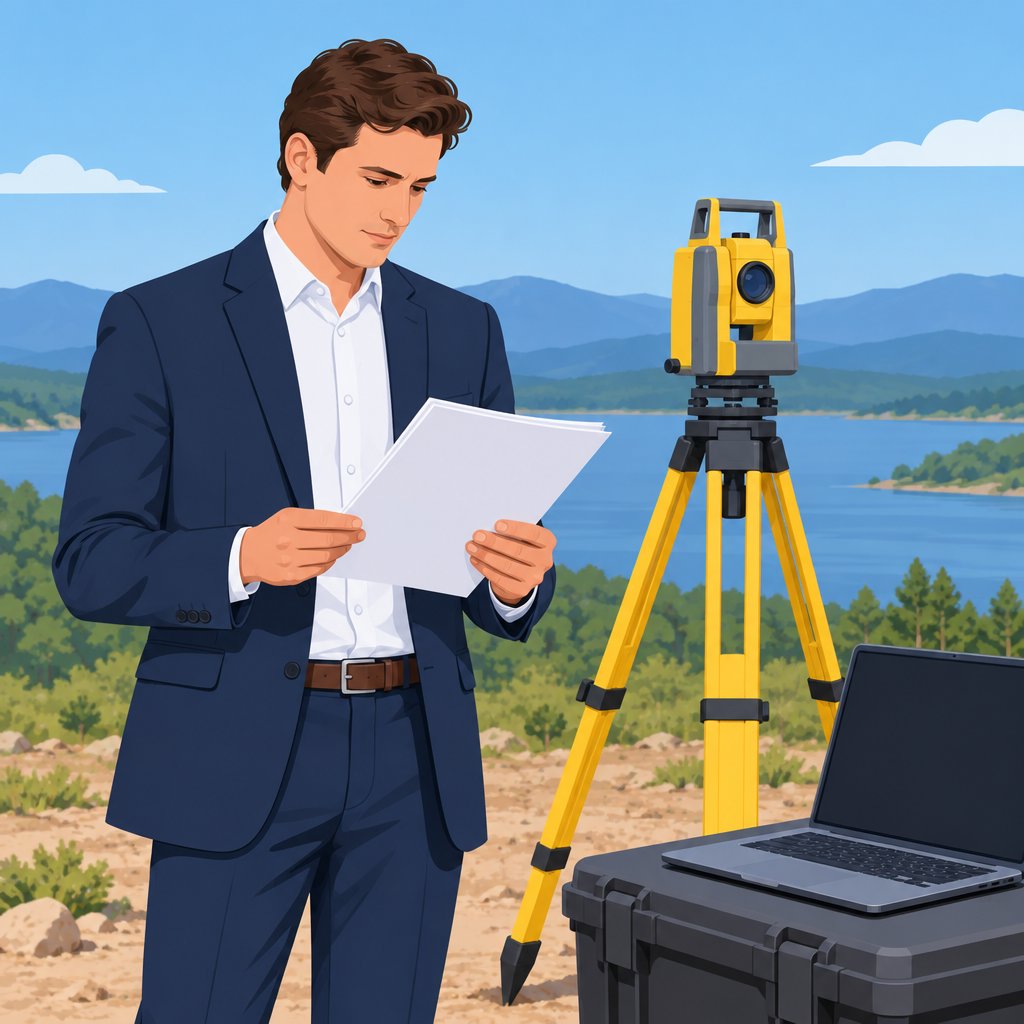
Ethical Considerations for Surveyors
Surveyors play crucial roles in construction, infrastructure development, and land planning.
They produce information that supports decisions across these industries.
Therefore, they must uphold high ethical standards throughout their work.
Importance of Ethical Practices in Surveying
Ethical practices help surveyors build trust and credibility with clients and the public.
Moreover, ethical standards support accurate and reliable survey data.
Professional integrity also protects the reputation of the surveying profession.
- Ethical practices build trust and credibility with clients and the public.
- Ethical standards support accurate and reliable survey data.
- Professional integrity maintains the reputation of the surveying profession.
- Ethical guidelines promote fair competition and help prevent conflicts of interest.
Code of Conduct for Surveyors
A professional code of ethics outlines the standards and conduct expected from surveyors.
It guides surveyors when they collect data, analyze information, and serve clients.
Additionally, these principles encourage honest and responsible professional decisions.
- Surveyors should collect and analyze data accurately and precisely.
- Surveyors should protect confidential client information.
- Surveyors should avoid conflicts of interest during their duties.
- Surveyors should maintain professional competence through continuing development.
- Surveyors should communicate honestly and transparently with clients and stakeholders.
Consequences of Unethical Surveying Practices
Unethical conduct can create serious professional and legal consequences for surveyors.
Errors or misconduct may harm professional relationships and public confidence.
Regulatory authorities may also respond when surveyors violate ethical guidelines.
- Unethical behavior can damage a surveyor’s reputation and credibility.
- Errors or misconduct can lead to lawsuits and legal action.
- Authorities may suspend or revoke a surveyor’s license.
- Violations may result in fines and other penalties.
- Unethical conduct can damage relationships with clients and stakeholders.
Surveyors should prioritize ethical considerations to maintain professionalism and integrity in their field.
Uncover the Details: The Economic Importance of the Mining Industry
Reciprocity Agreements for Surveyors
Reciprocity agreements between states can simplify surveyor licensure across state borders.
These agreements may allow licensed surveyors to practice in another state without securing an entirely separate license.
However, each state establishes the terms that govern reciprocal licensure.
How Reciprocity Agreements Support Surveyor Licensure
Reciprocity agreements formally recognize surveyor licenses issued by participating states.
Therefore, participating states accept certain qualifications and credentials from licensed surveyors elsewhere.
This arrangement streamlines the licensing process for surveyors seeking practice opportunities across state lines.
- States use formal agreements to recognize eligible surveyor licenses.
- Participating states accept specified qualifications and professional credentials.
- Reciprocity reduces repeated licensing steps for qualified surveyors.
Benefits of Reciprocity for Surveyors
Reciprocity can help surveyors expand their practices into additional states.
Moreover, surveyors may avoid repeating education, examination, or experience requirements in every participating state.
As a result, reciprocal licensing can reduce the time and expense involved in professional expansion.
- Licensed surveyors can pursue work across state borders more easily.
- Reciprocity may reduce duplicate licensing requirements.
- These agreements encourage professional mobility between participating states.
Process for Obtaining Licensure Through Reciprocity
First, surveyors should confirm that their home state has an agreement with the destination state.
Next, they must apply through the licensing board in the state where they plan to practice.
The board may require proof of a current license, qualifications, and professional experience.
- Surveyors should verify the applicable reciprocity agreement.
- Applicants must submit the required application to the destination state’s licensing board.
- Applicants must provide documents supporting their eligibility.
- The licensing board grants approval under the agreement’s terms.
Once approved, the surveyor receives authorization to practice in the new state.
Accordingly, surveyors should review each state’s requirements before pursuing work across state borders.
Understanding these agreements helps surveyors use available licensing pathways efficiently.
Continuing Education for Licensed Surveyors
Licensed surveyors in the USA must complete continuing education to maintain their professional licenses.
These requirements help surveyors stay current with technology, regulations, and industry practices.
Each state establishes specific continuing education standards for licensed surveyors.
Continuing Education Renewal Requirements
Surveyors typically complete a required number of education hours during each renewal period.
However, requirements vary among states and may change as licensing boards update their guidelines.
Surveyors should review their state board’s current rules before completing renewal activities.
- State licensing boards establish continuing education requirements.
- Renewal periods determine when surveyors must complete their education hours.
- Failure to meet requirements can result in license suspension or revocation.
Importance of Current Professional Knowledge
Continuing education helps surveyors remain relevant as technology and professional practices evolve.
Furthermore, updated knowledge supports accurate and efficient surveying services.
Surveyors can strengthen their skills by actively participating in approved educational activities.
Ways to Complete Continuing Education
Surveyors can choose from several options when completing their continuing education requirements.
Transform Your Career Today
Unlock a personalized career strategy that drives real results. Get tailored advice and a roadmap designed just for you.
Start NowThese options allow professionals to select learning formats that suit their schedules and development goals.
Additionally, educational events can help surveyors learn about emerging tools and professional practices.
- Seminars and workshops introduce new technologies, best practices, and industry trends.
- Online courses let surveyors complete approved education at their own pace.
- Professional development conferences encourage knowledge exchange among surveying professionals.
By pursuing continuing education, surveyors maintain their licenses and improve their professional capabilities.
This ongoing effort helps them remain competent and informed practitioners.
State Licensing Steps for Surveyors
Surveyors in the United States must satisfy state licensing requirements before practicing professionally.
Typically, candidates complete a bachelor’s degree in surveying or a related field.
Next, they pass the Fundamentals of Surveying exam.
Afterward, candidates gain required experience while working under a licensed surveyor.
Then, they pass the Principles and Practice of Surveying exam.
Finally, candidates apply for a license in the state where they plan to practice.
Professional Responsibilities After Licensure
Licensed surveyors must complete continuing education to maintain their licenses.
These activities help them remain current with industry standards.
Additionally, compliance demonstrates professionalism and supports reliable surveying services.
Meeting these requirements also reflects a commitment to professional quality.


