




Economic Significance of Mining
The mining industry supports the economy by providing essential raw materials for various sectors.
This post explores mining’s economic significance and its impact on global development.
It examines mining’s role in creating jobs, generating revenue, and developing infrastructure.
Overview of the Mining Industry
The mining industry extracts valuable minerals and geological materials from the earth.
It includes exploration, extraction, processing, and marketing activities.
Mining operations cover coal, metal ores, minerals, and quarrying activities.
- Mining activities provide materials for construction, manufacturing, and energy production.
- The industry includes both surface and underground extraction processes.
- According to the World Bank, global mining output exceeded $500 billion in 2019.
Operational Contributions of Mining Projects
Mining projects support industries that depend on consistent supplies of essential raw materials.
They also create employment for miners, geologists, engineers, and support staff.
Furthermore, mining companies contribute public revenue through taxes, royalties, and fees.
- Mining supplies materials for construction and manufacturing activities.
- Energy producers also rely on resources obtained through mining operations.
- Mining projects can support roads, railways, and port development.
- These infrastructure improvements can benefit nearby communities and regions.
Environmental and Social Challenges
Mining activities can disturb ecosystems and create lasting environmental pressures.
Operations may also affect communities through displacement, conflict, or Indigenous rights concerns.
Meanwhile, complex regulations require companies to manage environmental, labor, and community responsibilities.
- Mining can contribute to deforestation, water pollution, and habitat destruction.
- Communities may experience disruption or displacement near mining sites.
- Regulatory requirements cover environmental protection and labor rights.
- Limited infrastructure can complicate mining operations and transportation.
Responsible Practices for Long-Term Benefits
The mining industry can address its challenges through sustainable and responsible operating methods.
Companies should consider environmental protection, labor rights, and community engagement throughout their activities.
Responsible practices can help stakeholders pursue lasting benefits from mineral development.
Mining’s Contribution to National GDP
Mining operations add measurable value to national production through mineral and metal extraction.
Processing activities further increase this contribution by turning resources into usable materials.
Consequently, expanding operations can strengthen GDP growth in regions with active mining.
Employment Opportunities in Mining Communities
Mining expansion creates employment for local communities and supports surrounding economies.
These positions include miners, geologists, engineers, environmental specialists, and support staff.
Moreover, stable, well-paying work can help reduce unemployment in developing countries.
Mining companies employ diverse workforces that support families and local economic activity.
Public Revenue and Community Investment
Mining companies strengthen public finances through corporate taxes, royalties, and other fees.
Governments can use these revenues to support essential services and infrastructure projects.
Therefore, mining-related payments contribute to national development.
Companies additionally support communities through social responsibility programs.
These programs fund education, healthcare, infrastructure, and other development initiatives.
Together, public payments and community investments support broader social and economic progress.
See Related Content: Understanding OSHA Regulations for Equipment Operators
Mining’s Supply Chain Connections
Mining’s supply chain links exploration, extraction, processing, and transportation.
These activities move minerals and metals toward industries that use them as raw materials.
This connected flow allows downstream businesses to obtain materials for manufacturing, construction, and technology.
Downstream Industries Dependent on Mining Products
Manufacturing, construction, and technology depend heavily on mining products as essential raw materials.
These industries transform raw materials into consumer goods, buildings, and technological products.
Consequently, disruptions in mineral supplies can hinder production across connected sectors.
- Manufacturing uses mining products as raw materials for producing goods.
- Construction uses sand, gravel, and minerals in building materials.
- Technology relies on mining products for its manufacturing processes.
Mining Inputs for Manufacturing and Construction
Manufacturing requires steel, aluminum, and copper for automotive production.
Without these materials, car and vehicle production would stop.
Such interruptions would also affect transportation and logistics.
Construction depends on sand, gravel, and minerals for cement and concrete.
A stable supply supports building material production and project continuity.
Transform Your Career Today
Unlock a personalized career strategy that drives real results. Get tailored advice and a roadmap designed just for you.
Start NowSupply shortages could delay or cancel construction projects.
Those delays could create economic losses for developers, contractors, and other stakeholders.
Mining products therefore support connected production networks across multiple downstream industries.
Delve into the Subject: Mining Equipment Maintenance and Care Tips
Mining Materials for Infrastructure Development
Mining supplies raw materials that infrastructure projects require.
These materials support construction across transport systems, utilities, and buildings.
Therefore, mining connects mineral extraction with physical development.
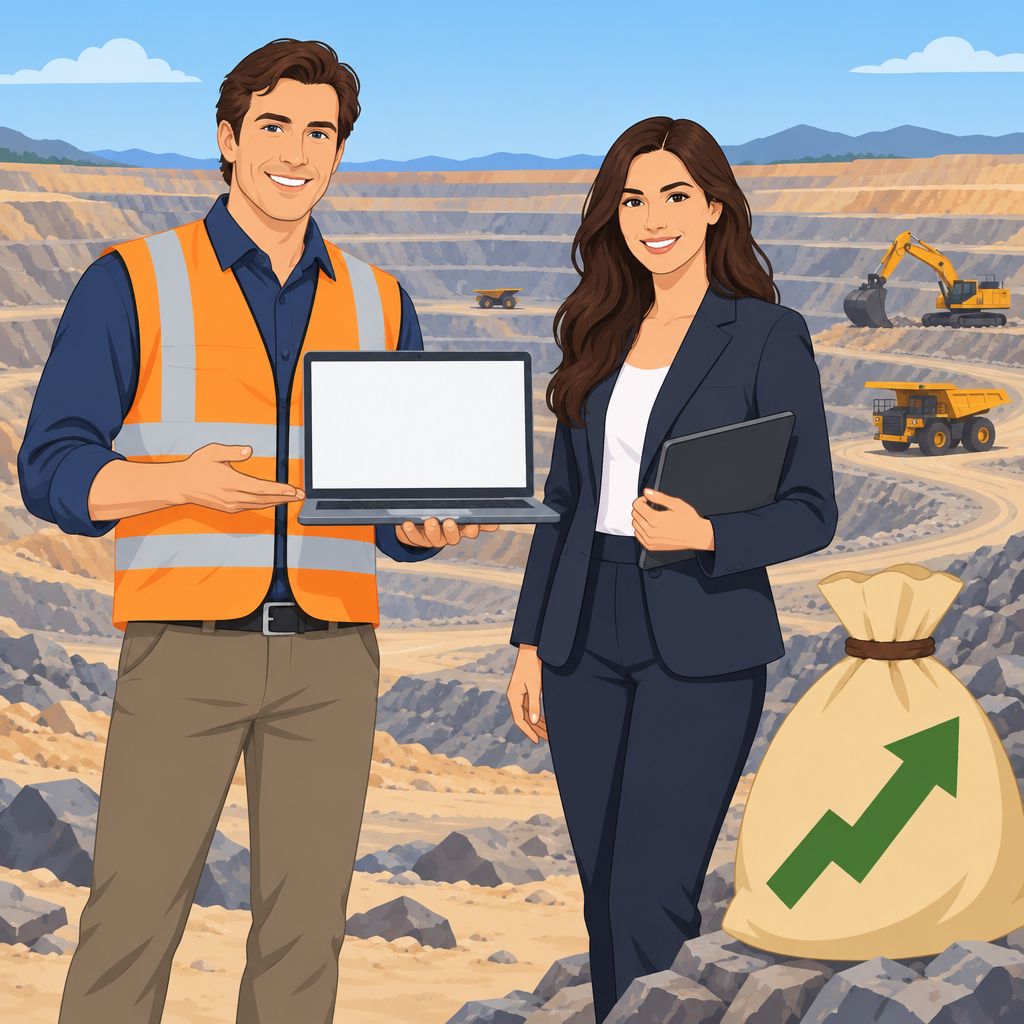
Essential Minerals Used in Construction
Copper supports electrical wiring, plumbing systems, and roofing materials.
Its conductivity and durability make copper valuable for infrastructure projects.
Iron ore provides the primary source of iron for steel production.
Steel gives buildings, bridges, roads, and other structures essential strength.
Limestone supplies a key ingredient for cement manufacturing.
Cement helps construction teams create durable foundations, walls, roads, and bridges.
- Copper enables electrical, plumbing, and roofing applications.
- Iron ore supports steel production for structural construction.
- Limestone helps produce cement for durable infrastructure.
Mining Support for Essential Infrastructure
The mining industry supplies materials for roads, bridges, buildings, and other critical structures.
Construction teams use these materials to create stable structures and reliable transportation networks.
As a result, mining materials help communities support economic activities and societal needs.
- Gravel, crushed stone, and asphalt create road foundations and surfaces.
- Steel, concrete, and aggregates provide bridges with strength and stability.
- Steel, cement, and glass support building frames, foundations, walls, windows, and facades.
These applications demonstrate how mining directly supports infrastructure construction.
Furthermore, dependable mineral supplies help construction projects develop essential public and commercial structures.
Gain More Insights: Common Drywall Installation Mistakes to Avoid
Mining’s Impact on International Trade
Mining strongly influences international trade through mineral exports and foreign currency earnings.
These sales connect resource-producing countries with buyers in global markets.
Consequently, mining revenues can affect trade balances and the ability to finance imports.
- Mining’s role in export earnings.
- Mining products’ effect on trade balances.
- Countries’ dependence on mining exports for foreign exchange.
Mining’s Role in Export Earnings
Mining products can provide a large share of a country’s export earnings.
International buyers purchase minerals, metals, and other extracted resources.
As a result, mining sales can strengthen export performance and support global market participation.
Mining Products and the Trade Balance
Exports of gold, copper, coal, and diamonds can bring substantial trade revenue.
That revenue helps countries pay for imported goods and services.
In some economies, mining receipts can support a favorable trade balance.
Dependence on Mining Exports for Foreign Exchange
Some countries rely heavily on mining exports to obtain foreign exchange.
Those earnings help finance imports, repay external debt, and support development projects.
However, mining disruptions can reduce foreign exchange reserves and weaken economic stability.
Therefore, mining export performance can influence a country’s wider international trade position.
You Might Also Like: Essential Skills for Aspiring Landscape Architects
Environmental and Social Considerations
Mining activities can significantly affect the environment.
Mineral extraction often causes deforestation and soil erosion.
It can also pollute air and water.
Importance of Sustainable Mining Practices
Sustainable mining practices can minimize environmental damage.
Mining companies can adopt technologies that reduce waste and emissions.
They can also recycle and reuse materials to conserve resources.
- Companies can implement sustainable practices to reduce environmental harm.
- Technologies that reduce waste and emissions can support eco-friendly operations.
- Recycling and reusing materials can reduce mining’s environmental footprint.
Social Responsibility of Mining Companies
Mining companies have responsibilities toward the communities where they operate.
Transform Your Career Today
Unlock a personalized career strategy that drives real results. Get tailored advice and a roadmap designed just for you.
Start NowThey should engage community members and listen to their concerns.
They can also support improvements in local quality of life.
- Companies should engage with community members and address their concerns.
- Supporting local infrastructure projects can benefit nearby communities.
- Employment, education, and healthcare support can help communities.
Mining companies can pursue environmental protection and community support together.
Sustainable practices can guide more ethical mining operations.
Social responsibility can support a more sustainable approach to mining.
Transforming the Mining Sector
Technology has played a crucial role in mining.
It has revolutionized traditional mining practices.
Additionally, it has introduced cutting-edge solutions for mining operations.
Automation and Robotics in Mining Operations
Automation and robotics now support mining operations.
These technologies increase productivity and cost-efficiency.
They also improve safety measures for workers.
Technology for Efficiency and Safety
Real-time monitoring enhances efficiency in mining operations.
Predictive maintenance helps companies manage equipment more effectively.
Optimized resource utilization also improves operational performance.
Drones and remote-controlled machinery reduce risks associated with manual labor.
Furthermore, advanced data analytics support informed decisions.
Artificial intelligence can streamline processes and reduce downtime.
Remote Monitoring and Control Systems
Remote monitoring systems help companies oversee mining operations from a distance.
These systems cover activities ranging from exploration to extraction.
They provide real-time data about equipment performance and environmental conditions.
The systems also track worker safety during operations.
Consequently, companies can respond proactively when anomalies occur.
Virtual Reality and Simulation Technologies
Virtual reality and simulation technologies have changed miner training.
They let miners practice complex scenarios in safe, controlled environments.
This approach develops skills and strengthens decision-making abilities.
It also prepares miners to handle challenging situations effectively.
Smart Sensors and Internet of Things Devices
Smart sensors and Internet of Things devices collect real-time operational data.
This data covers equipment performance, environmental conditions, and worker health.
Mining companies can analyze the information to optimize their operations.
They can also mitigate risks and improve overall productivity.
These technologies support worker well-being during mining activities.
As technology evolves, mining operations are expected to become more sustainable.
They are also expected to become more environmentally friendly.
These changes can support the industry’s long-term viability.
Policy Considerations for Mining’s Economic Role
Mining creates employment opportunities and stimulates local business growth.
It also increases government revenues through taxes and royalties.
These financial effects can strengthen economic development within a nation.
Moreover, mining provides raw materials for construction, manufacturing, and technology.
Those materials help maintain stable supply chains across these sectors.
Consequently, reliable material access can support continued economic activity.
Transform Your Career Today
Unlock a personalized career strategy that drives real results. Get tailored advice and a roadmap designed just for you.
Start NowUnderstanding these contributions helps policymakers assess the industry’s wider economic effects.
Policymakers can then design informed measures that support and regulate mining effectively.
Further study can clarify mining’s broader effects on the economy and society.
Additional Resources
Bing search results for The Economic Importance of the Mining Industry Construction and Manual Labor


