



Role of Private Investigators in Fraud Investigations
Private investigators play a crucial role in fraud investigations.
They conduct thorough and discreet inquiries.
These professionals are skilled in gathering evidence.
They analyze data and uncover fraudulent activities.
Private investigators often collaborate closely with law enforcement agencies.
They also work alongside legal teams to build strong cases.
Their expertise in surveillance helps detect various types of fraud.
They perform background checks and forensic accounting.
Private investigators play a key role in interviewing witnesses and suspects.
These interviews help gather valuable information.
By conducting thorough research, they follow leads effectively.
This approach helps uncover complex schemes and financial misappropriations.
Private investigators are trained to assess risks carefully.
They identify vulnerabilities and recommend preventive measures.
These actions help mitigate fraud risks.
Throughout the investigative process, private investigators adhere to ethical standards.
They ensure confidentiality for their clients at all times.
This blog post will explore methods used by private investigators.
It will also examine challenges and successes in fraud investigations.
Definition of private investigators
- Private investigators are professionals who are hired to conduct investigative work for individuals, organizations, or businesses.
Explanation of who private investigators are
- Private investigators are experts in gathering information, conducting surveillance, and uncovering evidence in various types of investigations.
Different types of private investigators
- There are various types of private investigators, such as corporate investigators, financial investigators, and legal investigators.
- Other types include insurance investigators, cybercrime investigators, and background check investigators.
Qualifications and skills needed to become a private investigator
- Typically, private investigators need to have a background in law enforcement, military, or a related field to start their career.
- They should possess strong analytical skills, attention to detail, excellent communication skills, and the ability to think critically.
- Additionally, private investigators often need to be licensed and undergo specific training to ensure they adhere to legal and ethical standards.
Gathering evidence to prove fraudulent activities
Private investigators play a crucial role in fraud investigations by gathering evidence to prove fraudulent activities.
They use various investigative techniques such as surveillance, background checks, and interviews to collect evidence.
Surveillance
One of the key roles of private investigators in fraud investigations is conducting surveillance.
They monitor suspicious individuals to gather evidence of fraudulent activities.
This may involve observing the activities of the suspect discreetly to gather crucial information.
Background checks
Private investigators also conduct background checks to uncover any past fraudulent activities or criminal records of the suspects.
This information can be vital in proving the involvement of the individual in fraudulent activities.
Interviews
Private investigators interview witnesses and suspects to gather information that can help in proving fraudulent activities.
They ask relevant questions to get detailed accounts of events and gather evidence to support their findings.
Conducting surveillance to monitor suspicious individuals
Private investigators are trained to conduct surveillance to monitor suspicious individuals in fraud investigations.
Surveillance may involve following suspects, observing their activities, and documenting any evidence of fraudulent behavior.
Covert surveillance
Private investigators may use covert surveillance techniques to monitor suspicious individuals without their knowledge.
This allows them to gather evidence discreetly and ensure that the suspect does not alter their behavior when under observation.
GPS tracking
In some cases, private investigators use GPS tracking devices to monitor the movements of suspicious individuals.
This technology allows investigators to gather accurate information about the suspect’s whereabouts and activities.
Video surveillance
Private investigators may also use video surveillance equipment to capture footage of suspicious individuals engaging in fraudulent activities.
This visual evidence can be crucial in proving the involvement of the suspect in fraudulent behavior.
Interviewing witnesses and suspects to gather information
Private investigators play a vital role in fraud investigations by interviewing witnesses and suspects to gather information.
Interviews help investigators to understand the circumstances of the fraud and gather evidence to support their findings.
Witness interviews
Private investigators interview witnesses to gather firsthand accounts of events related to the fraud.
Witness interviews help investigators to corroborate evidence and establish a timeline of events to prove fraudulent activities.
Transform Your Career Today
Unlock a personalized career strategy that drives real results. Get tailored advice and a roadmap designed just for you.
Start NowSuspect interviews
Private investigators also interview suspects to gather information about their involvement in fraudulent activities.
Suspect interviews are conducted carefully to elicit truthful responses and gather evidence that can be used to prove the suspect’s guilt.
Statement analysis
Private investigators analyze statements provided by witnesses and suspects to identify inconsistencies or patterns that may indicate fraudulent activities.
Statement analysis helps investigators to piece together information and gather evidence to support their findings.
Find Out More: Community Involvement of School Resource Officers
Private investigators play a crucial role in fraud investigations.
They use a variety of techniques to uncover evidence and gather information.
This section explores the techniques used by private investigators in fraud investigations.
Use of Technology
- Surveillance cameras and GPS tracking are commonly used by private investigators to monitor individuals suspected of fraudulent activities.
- The use of technology allows investigators to track movements, gather evidence, and provide concrete proof of fraudulent behavior.
Researching Public Records and Databases
- Private investigators have access to a vast array of public records and databases, which can provide valuable information about individuals involved in fraudulent activities.
- By delving into these records, investigators can uncover financial transactions, property ownership, and other pertinent details that may aid in their investigation.
Covert Operations Used to Gather Evidence
- Private investigators often engage in covert operations to gather evidence discreetly without alerting suspects to their activities.
- These operations may involve undercover work, surveillance, and other tactics to observe and document fraudulent behavior.
Private investigators play a critical role in fraud investigations by combining technology, research, and covert operations.
They uncover evidence and help bring perpetrators to justice effectively.
See Related Content: Private Investigator Networking Tips and Resources
Legal considerations for private investigators in fraud investigations
- Importance of following laws and regulations
Private investigators must adhere to federal and state laws while conducting fraud investigations.
Failure to comply can lead to legal consequences.
- Obtaining necessary licenses and permits
Private investigators need to obtain the appropriate licenses and permits to operate legally.
This ensures they have the authority to conduct investigations.
- Adhering to ethical standards in investigations
Ethical standards are crucial for private investigators to maintain integrity and credibility.
It is essential to conduct investigations ethically and responsibly.
Private investigators must follow legal guidelines to protect themselves and the individuals involved in fraud investigations.
By obtaining necessary licenses and permits, they can operate within the boundaries of the law and ensure their investigations are conducted legally.
Ethical standards are a critical aspect of fraud investigations.
Private investigators must avoid unethical practices that could compromise the integrity of their work.
By adhering to ethical guidelines, they can build trust with clients and ensure the accuracy and legality of their findings.
Legal considerations play a significant role in the work of private investigators during fraud investigations.
By following laws and regulations, obtaining the required licenses and permits, and adhering to ethical standards, private investigators can conduct thorough and lawful investigations.
Such investigations benefit both their clients and society as a whole.
Find Out More: Campus Security Officer: Managing Lost and Found
Private investigators play a crucial role in fraud investigations.
They utilize their expertise to uncover and gather evidence necessary to prove fraudulent activities.
They work diligently to help clients identify and stop fraudulent behavior.
This ultimately prevents financial losses and reputational damage.
Challenges faced by private investigators in fraud investigations
- Dealing with uncooperative witnesses and suspects
- Handling sensitive information confidentially
- Managing time and resources effectively
Private investigators often encounter challenges when dealing with uncooperative witnesses and suspects.
These individuals may refuse to provide information or may actively try to obstruct the investigation.
This can make it difficult for investigators to gather evidence and build a strong case against the fraudulent party.
Privacy and confidentiality are paramount in fraud investigations.
Private investigators must handle sensitive information with the utmost care and ensure that it is not compromised or leaked.
This can be challenging, especially when dealing with complex cases that involve multiple parties and stakeholders.
Time and resources are limited in fraud investigations.
Private investigators must manage them effectively.
They must prioritize tasks, allocate resources wisely, and meet deadlines to ensure smooth progress.
This can be particularly challenging when working on high-pressure cases with tight timelines.
Transform Your Career Today
Unlock a personalized career strategy that drives real results. Get tailored advice and a roadmap designed just for you.
Start NowPrivate investigators face various challenges in fraud investigations.
They deal with uncooperative witnesses and suspects, handle sensitive information confidentially, and manage time and resources effectively.
Despite these challenges, private investigators play a critical role in uncovering fraudulent activities.
They help clients mitigate risks and reduce losses.
Find Out More: DEA Agent’s Role in Preventing Prescription Drug Abuse
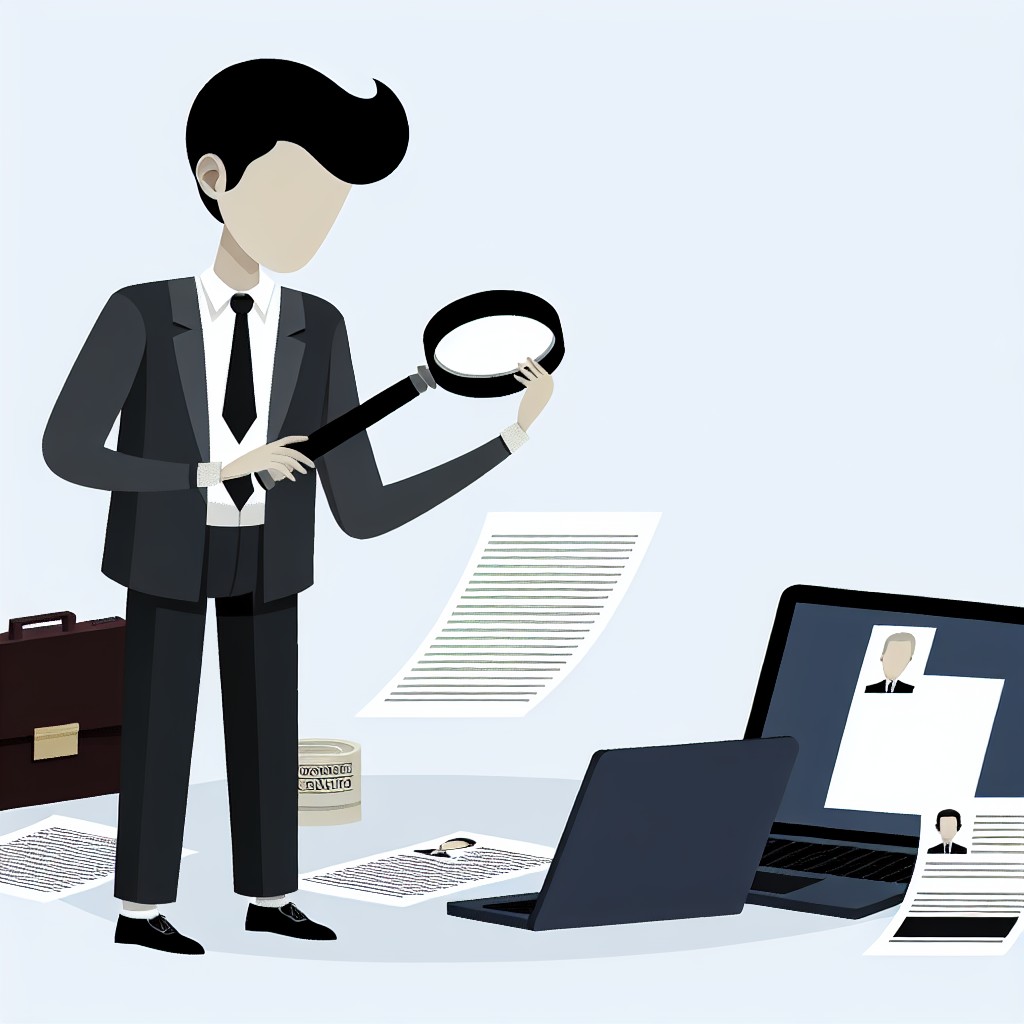
Case studies of successful fraud investigations by private investigators
- Private investigators have been instrumental in uncovering fraudulent activities in various high-profile cases.
- One such example is the Enron scandal, where private investigators helped reveal accounting irregularities.
- As a result, several executives were charged with fraud and the company ultimately filed for bankruptcy.
- Private investigators also played a crucial role in the Bernie Madoff Ponzi scheme investigation.
- They uncovered the massive fraud, leading to Madoff’s arrest and the recovery of stolen funds for investors.
Examples of high-profile cases where private investigators played a crucial role
- In the case of Theranos, private investigators were key in exposing the company’s fraudulent claims about its blood-testing technology.
- Investigators gathered evidence of deceptive practices, leading to criminal charges against the founder, Elizabeth Holmes.
- Another notable case is the Wirecard scandal, where private investigators helped reveal accounting fraud amounting to billions of dollars.
- Their findings led to the collapse of the company and legal repercussions for executives involved in the scheme.
Effects of investigations on victims and perpetrators
- The successful outcomes of these investigations have brought justice to victims of fraud and financial crimes.
- Perpetrators have faced legal consequences, including criminal charges, fines, and imprisonment for their actions.
- Investors and stakeholders affected by these fraudulent activities have seen some level of restitution and compensation.
- Overall, the work of private investigators has been crucial in holding individuals and companies accountable for fraudulent behavior.
Collaboration with Law Enforcement Agencies and Other Professionals
- Working together with police and other authorities in fraud investigations.
- Private investigators often collaborate with law enforcement agencies to provide support and gather additional evidence in fraud cases.
- By working together, they can leverage their expertise and resources to build a stronger case against perpetrators.
- This collaboration allows private investigators to access confidential information and databases unavailable to the public.
- They can also obtain warrants and conduct searches with law enforcement support, ensuring all legal procedures are followed.
- Furthermore, private investigators assist in preparing court documents and testify as expert witnesses.
- Their knowledge and experience in gathering evidence and conducting interviews help prove the guilt of fraud suspects.
Consulting with Experts in Finance, Cybersecurity, and Other Relevant Fields
- Private investigators work closely with experts in various fields to gain insights and specialized knowledge in fraud cases.
- Consulting financial analysts, accountants, and forensic experts uncovers complex financial schemes and tracks illegal transactions.
- These specialists analyze financial records, identify discrepancies, and provide expert opinions on the legality of financial activities.
- In cyber fraud cases, private investigators collaborate with cybersecurity professionals to trace digital footprints and identify hackers.
- They also secure compromised systems to prevent further attacks and strengthen cases against cyber criminals.
- Moreover, private investigators consult legal experts to understand laws and regulations related to fraud investigations.
- Working with lawyers ensures that investigative methods comply with legal standards and regulations.
Sharing Information and Resources to Solve Complex Cases
- Collaboration between private investigators, law enforcement agencies, and other professionals involves sharing information and resources.
- Pooling collective expertise uncovers critical leads, identifies suspects, and tracks illicit activities.
- Sharing information on suspects, witnesses, and evidence expedites investigations and leads to quicker resolutions.
- Sharing resources such as surveillance equipment, forensic tools, and databases enhances the efficiency of fraud investigations.
- Private investigators leverage these resources to gather evidence, conduct covert operations, and build solid cases against fraud perpetrators.
- Collaboration and resource sharing improve investigative capabilities and achieve better outcomes in fraud cases.
Role of Private Investigators in Fraud Investigations
Private investigators play a crucial role in fraud investigations.
They gather evidence and uncover fraudulent activities effectively.
Their work helps identify culprits and verify claims efficiently.
They protect businesses from potential financial losses through their efforts.
It is important to acknowledge their expertise and dedication in fighting fraud.
For those needing investigative services for fraud detection, consulting a private investigator is advised.
Leverage the skills of private investigators now to safeguard your business and assets.
Additional Resources
United States Postal Inspection Service – Protecting you and …
Private Detectives and Investigators : Occupational Outlook Handbook