




Introduction
Power line workers play a critical role in maintaining electricity infrastructure.
Meanwhile, demand for power line workers should grow substantially.
The industry needs skilled professionals to maintain efficient power distribution systems.
Therefore, training programs prepare aspiring power line workers for success.
Without proper training, workers may face risks and lack necessary skills.
These programs provide hands-on experience and technical knowledge.
They also develop safe work practices and troubleshooting techniques.
Additionally, aspiring professionals study electrical systems and equipment operation.
Through training, individuals gain confidence while handling complex tasks.
Consequently, training programs strengthen the power line industry.
Investing in education helps build a skilled workforce for the future.
Power Line Work and Its Essential Functions
- Power line workers maintain and repair electrical systems.
- They help transmit electricity safely from power plants to homes and businesses.
- These professionals work with high-voltage lines at significant heights.
Installation and Maintenance Responsibilities
- Power line workers install and maintain power lines and electrical equipment.
- They service both overhead and underground power lines.
- Strict safety protocols help them protect themselves and the public.
Workplace Risks and Physical Challenges
- Power line work demands physical strength and endurance.
- Workers often perform tasks in difficult weather conditions.
- Electric shocks, falls, and heavy equipment can cause serious injuries.
- Therefore, workers must remain alert and monitor their surroundings.
Training Programs for Aspiring Power Line Workers
- Aspiring power line workers can complete specialized training programs.
- These programs teach installation, maintenance, and repair techniques.
- Students study electrical theory, safety procedures, and practical field skills.
- Programs also develop fitness and agility for elevated work.
- Participants practice using personal protective equipment correctly.
- Some programs include apprenticeships or on-the-job training.
Core Subjects in Training Programs
- Training programs cover electrical theory and basic operating principles.
- Participants learn power line construction and maintenance procedures.
- They practice troubleshooting simulated electrical systems and field equipment.
- Students also learn first aid, CPR, and emergency response procedures.
Certifications and Licensing Requirements
- After training, aspiring workers may pursue relevant industry certifications.
- Many states require a valid commercial driver’s license for vehicle operation.
- The Certified Electrical Safety Worker certification can improve job prospects.
- Licenses and certifications demonstrate safety knowledge and professional commitment.
Benefits of Formal Power Line Training
- Training programs provide a structured path toward power line work.
- Experienced instructors share practical knowledge and established work practices.
- Program completion can create opportunities in electrical infrastructure.
- Employers often value candidates with formal training and certifications.
Employment Outlook and Salary Information
- Demand for power line workers should grow as electricity infrastructure needs increase.
- The Bureau of Labor Statistics reports a median annual wage of $70,910.
- Experienced workers may earn more through overtime, bonuses, and specialized skills.
Types of Training Programs Available
Several training paths can prepare aspiring power line workers for their careers.
Each option offers different benefits, requirements, and learning experiences.
Consider your goals, preferences, and circumstances before selecting a program.
- Apprenticeships
- Vocational schools
- Community college programs
Apprenticeships
Apprenticeships provide a common entry route for people pursuing power line work.
These programs combine on-the-job training with classroom instruction.
Apprentices gain practical experience while learning essential technical skills.
Pros:
- Hands-on training
- Opportunity to learn from experienced professionals
- Structured learning environment
Cons:
- Longer duration compared to other programs
- May require additional commitment outside regular working hours
- Limited availability depending on location
Vocational Schools
Vocational schools offer specialized programs in electrical or utility line work.
These programs usually provide focused instruction within a shorter timeframe.
Students also practice skills in a controlled training environment.
- Specialized training in a shorter period
- Hands-on experience in a controlled environment
- May lead to industry certifications upon completion
- May provide less real-world experience than apprenticeships
- Offers fewer opportunities for industry networking
- Requires tuition and materials
Community College Programs
Community colleges often provide programs in electrical technology or utility line work.
These programs combine classroom instruction with practical training.
They can also establish a foundation for related career paths.
- Affordable option for higher education
- Transferable credits for continued education
- Access to career services and job placement assistance
- May offer less specialized training than vocational schools
- Program quality varies between institutions
- May require additional training or certifications
Your best option depends on your goals, preferences, and circumstances.
Compare each program’s cost, duration, location, and potential career outcomes.
Then, choose the path that matches your learning style and professional plans.
Commit fully to your selected program and use every available learning opportunity.
Gain More Insights: Concrete Finisher vs. Mason: What's the Difference?
Skills and Requirements
Power line workers need several skills to perform demanding tasks safely and effectively.
Physical fitness helps aspiring workers manage the job’s demanding tasks.
Additionally, technical knowledge and safety training support reliable work with electrical systems and equipment.
- Physical Fitness: Aspiring power line workers need good physical condition for demanding tasks.
- Technical Knowledge: Workers need knowledge of electrical systems, equipment, and safety procedures.
- Safety Training: Comprehensive safety training helps workers prevent accidents and follow regulations.
Importance of Continuous Learning
Power line workers must continue learning as technology and regulations change.
Furthermore, ongoing training helps workers maintain relevant knowledge and improve their existing skills.
Continuous learning also supports career advancement while helping workers remain informed and compliant.
- Technology Advancements: Workers must stay updated on new industry technologies.
- Regulatory Changes: Workers must follow changing government regulations and remain informed.
- Skill Enhancement: Ongoing training helps workers improve skills and advance their careers.
Learn More: The Future of Roofing: Trends and Innovations
Industry Certifications
Industry certifications can advance a power line worker’s career.
The Certified Utility Safety Professional (CUSP) certification ranks among the industry’s recognized credentials.
These credentials can strengthen professional credibility in the field.
Transform Your Career Today
Unlock a personalized career strategy that drives real results. Get tailored advice and a roadmap designed just for you.
Start Now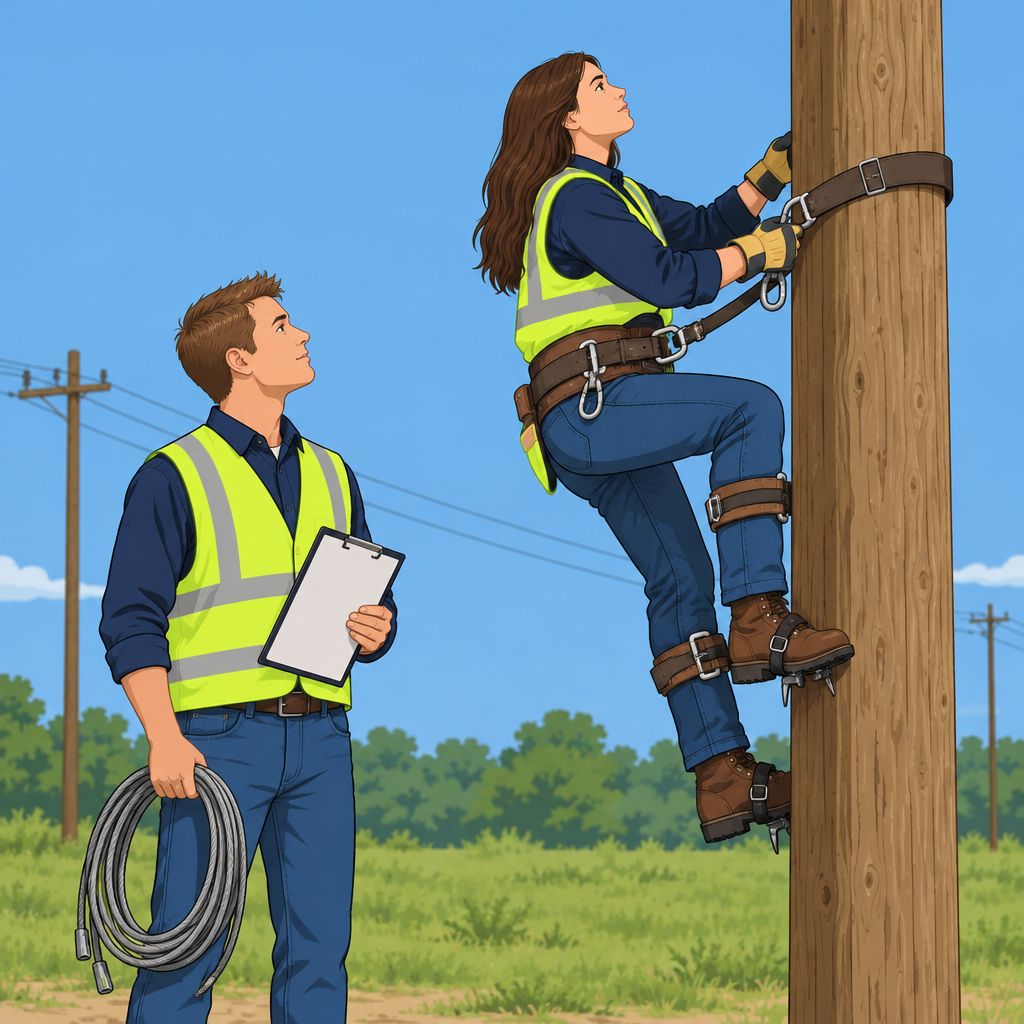
Significance of Industry Certifications
Certifications validate a worker’s skills and knowledge.
They also demonstrate commitment to safety and professionalism.
Moreover, relevant credentials can improve employment prospects and earning potential.
- Industry certifications validate your skills and knowledge in the field.
- Certifications demonstrate your commitment to safety and professionalism.
- Relevant certifications can open more job opportunities and support higher pay.
- Credentials provide a competitive edge and distinguish you from other candidates.
- Employers often prefer certified candidates because credentials reflect industry standards.
Obtaining and Maintaining Industry Certifications
Workers should research certification requirements and eligibility before choosing a credential.
Accredited training programs and workshops can help candidates prepare for certification exams.
Continuing education helps professionals maintain current credentials.
- Research the specific certification requirements and eligibility criteria.
- Enroll in accredited training programs or workshops before taking certification exams.
- Study diligently and review industry best practices and regulations.
- Take the certification exam and achieve the required passing score.
- Attend workshops, seminars, and continuing education sessions regularly.
- Renew your certification by fulfilling continuing education requirements.
- Network with professionals to learn about industry changes and advancements.
Relevant certifications can enhance a power line worker’s skills and demonstrate professional expertise.
They can also increase employment prospects in the power line industry.
Maintaining these credentials requires ongoing learning and attention to industry expectations.
Find Out More: Essential Tools and Equipment for Miners
Job Outlook and Salary Potential
- Job outlook for power line workers remains positive, with projected growth of 8% from 2020-2030.
- Aging infrastructure and new construction projects should increase demand for power line workers.
- Entry-level power line workers can expect a median United States salary of around $45,000 annually.
- As workers gain experience and expertise, they can earn an average salary exceeding $70,000 annually.
- Additionally, specialized skills or supervisory roles can help experienced workers earn more than $100,000 annually.
Explore Further: How to Maintain and Care for Machinist Tools
Testimonials and Success Stories
- Former power line worker Sarah credits her training program with developing skills for career success.
- Additionally, Sarah says hands-on experience and safety protocols provided invaluable preparation.
- Another graduate, John, completed training and now leads a crew of power line workers.
- Meanwhile, John emphasizes teamwork and communication skills as essential field practices.
- These success stories demonstrate how training programs support aspiring power line workers.
- Furthermore, problem-solving, attention to detail, and physical fitness support success in this field.
- Former students also highlight adaptability and a strong work ethic within the power line industry.
- Training programs emphasize safety procedures and regulations to help workers prevent accidents.
- Successful power line workers often bring passion for the trade and dedication to continuous learning.
- Ultimately, training programs give aspiring power line workers a solid foundation for their careers.
Choosing a Power Line Worker Training Program
Selecting the right training program requires careful comparison and personal reflection.
Your choice should support your career goals, learning preferences, and financial circumstances.
Therefore, research each option thoroughly before making a decision.
Defining Your Career Goals
First, identify the career goals you want to pursue in power line work.
Consider which specific skills you want to develop through training.
Also, decide which type of work environment interests you most.
Researching Available Programs
Next, research the training programs available to aspiring power line workers.
Look for programs with accreditation and strong industry reputations.
Additionally, compare each program’s length, cost, and curriculum.
Matching Your Learning Style
Your preferred learning style should influence your training program choice.
Some programs emphasize hands-on instruction, while others focus more heavily on classroom learning.
Choose an approach that supports your learning preferences and development.
Evaluating Program Resources
Examine the resources and facilities available through each training program.
Up-to-date equipment and experienced instructors can strengthen your training experience.
Furthermore, real-world training opportunities can support practical skill development.
Learning From Current and Former Students
Speak with current and former students before selecting a program.
Ask them which aspects they valued and which areas they disliked.
Their experiences can show how effectively the program prepared them for power line work.
Reviewing Job Placement Rates
Review each program’s job placement rate for graduating students.
Programs with strong industry connections may provide greater employment support.
Consequently, job placement information can help you compare potential career opportunities.
Exploring Financial Aid Options
Finally, evaluate the financial requirements for each training program.
Check whether programs offer financial aid, scholarships, or payment plans.
Compare program costs with the potential benefits and career opportunities.
Making an Informed Training Decision
Thorough research can help you select a program that fits your aspirations.
Take time to ask questions and compare each program’s features.
Ultimately, choose training that addresses your individual needs and career goals.
Training Programs Support Career Readiness
Training programs shape aspiring power line workers for challenging and rewarding careers.
They provide the skills, knowledge, and hands-on experience needed for success.
Transform Your Career Today
Unlock a personalized career strategy that drives real results. Get tailored advice and a roadmap designed just for you.
Start NowParticipants learn technical methods for working with power lines.
They also study safety protocols that protect themselves and their team members.
Additionally, hands-on practice helps participants master essential field skills.
These experiences build confidence and competence in their abilities.
As a result, training programs prepare aspiring workers for dynamic, challenging environments.
Interested readers should explore available options and enroll in reputable training programs.
This step can begin a fulfilling career with personal growth and professional development opportunities.


