




Differences Between Concrete Finishers and Masons
A concrete finisher adds texture and finishing touches to concrete surfaces.
Meanwhile, a mason constructs structures using bricks, stones, and concrete blocks.
Therefore, understanding these professions helps employers select the right person for each job.
Job Responsibilities of a Concrete Finisher
- Smoothing and finishing freshly poured concrete.
- Using tools such as trowels, screeds, and floats.
- Ensuring that concrete remains level and free of imperfections.
Concrete finishers play a crucial role in construction by creating smooth, level, and visually appealing concrete surfaces.
They need skill, precision, and attention to detail to produce surfaces that meet required standards.
First, finishers smooth and finish freshly poured concrete.
They use trowels, screeds, and floats to shape an even surface.
By working carefully, finishers help the concrete set properly and achieve the desired finish.
They also inspect surfaces for bumps, lumps, and other irregularities.
Then, they correct imperfections and confirm that the concrete remains level.
Their work supports durable concrete structures and completes an essential part of construction.
Skills and Training Required for Concrete Finishers
Concrete finishers need specialized skills and training to produce durable, attractive surfaces.
These capabilities differ from masonry skills because finishers focus on concrete surface quality.
Several abilities help finishers meet project expectations while maintaining safe work practices.
- Knowledge of different concrete finishes
- Ability to work quickly and efficiently
- Training in safe concrete tool and equipment handling
Knowledge of Concrete Finishes
Concrete finishers must understand several surface treatments, including broom, exposed aggregate, and stamped finishes.
Each finish uses different techniques and tools to achieve its intended appearance.
This knowledge helps finishers produce quality results that match client expectations.
Efficient Work During Time-Sensitive Projects
Concrete finishing requires careful timing because workers must complete tasks before the material changes.
Finishers must work quickly while preserving accuracy and surface quality.
Strong attention to detail and hand-eye coordination support efficient performance.
Safe Handling of Tools and Equipment
Concrete finishers use trowels, floats, edgers, and power screeds during their work.
Proper training teaches workers to operate these tools safely and effectively.
Safe handling helps protect finishers and their colleagues on the job site.
Technical knowledge, physical dexterity, and attention to detail strengthen a finisher’s performance.
Continuous training helps workers refine their skills and maintain consistent quality.
These abilities support durable surfaces and enhance the appearance of concrete structures.
See Related Content: The Future of Roofing: Trends and Innovations
Mason Job Responsibilities
- Masons build structures using bricks, stones, or concrete blocks.
- Masons read blueprints and follow construction plans.
- Masons repair and maintain masonry structures.
This work requires skill and precision to produce sturdy, durable structures.
Masons also read blueprints and interpret construction plans.
They study diagrams and measurements to construct structures accurately.
Furthermore, they follow plans carefully so finished work meets specifications.
Masons repair and maintain existing masonry structures.
They replace damaged bricks or stones, repoint mortar joints, and reinforce weakened areas.
These tasks help prevent further deterioration.
Attention to detail and craftsmanship support structural integrity during repairs.
Masons work on residential, commercial, and industrial construction projects.
They build houses, buildings, walls, and walkways.
Additionally, they adapt to different environments and work with various materials.
Technical skills, creativity, and physical strength help Masons perform their duties.
Their masonry expertise helps bring architectural designs to life and creates lasting structures.
Transform Your Career Today
Unlock a personalized career strategy that drives real results. Get tailored advice and a roadmap designed just for you.
Start NowLearn More: Essential Tools and Equipment for Miners
Skills and Training Required for Masons
- Expertise in using bricks, stones, and mortar
- Knowledge of different masonry techniques
- Experience laying and aligning bricks and stones accurately
Successful masons need practical skills and focused training to work safely and accurately.
Expertise in using various materials: Masons need a deep understanding of bricks, stones, and mortar.
They must mix these materials correctly to create strong and durable structures.
Knowledge of different masonry techniques: Masons should understand bricklaying, stonemasonry, and tuckpointing.
Each technique requires different skills and tools, so broad knowledge remains essential.
Experience in laying and aligning bricks and stones accurately: Precision remains essential in masonry work.
Even small errors can create structural issues later.
Therefore, masons must lay bricks and stones neatly while maintaining accurate alignment.
This approach supports the strength and longevity of each finished structure.
Masons also need dedication, attention to detail, and willingness to learn new techniques.
Discover More: How to Maintain and Care for Machinist Tools
How These Construction Roles Differ
Concrete finishers and masons contribute different skills to construction projects.
Finishers improve concrete surfaces, while masons construct structures with several building materials.
Their training, work positions, and daily responsibilities reflect these distinct roles.
- Concrete finishers focus on completing smooth, level concrete surfaces.
- Masons build walls, chimneys, archways, and other vertical structures.
- Finishers primarily work on flat areas, while masons build upward.
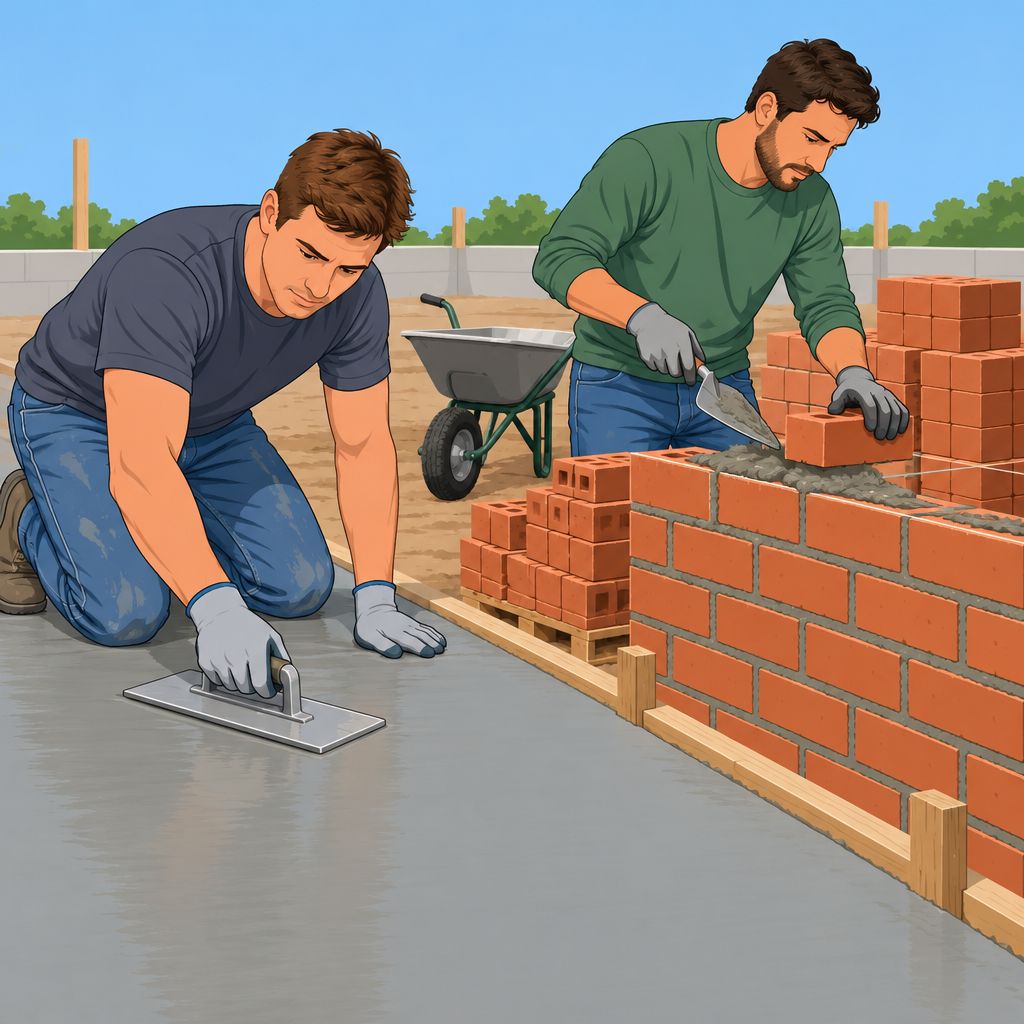
Work Performed by Concrete Finishers
Concrete finishers prepare surfaces that require a smooth and level appearance.
They apply final concrete layers and shape them with trowels and floats.
Additionally, they may create decorative effects using stamps or stains.
Their projects can include sidewalks, driveways, floors, and foundations.
Because concrete work often occurs outdoors, finishers may face changing weather conditions.
They also follow safety procedures when handling concrete and operating equipment.
Work Performed by Masons
Masons construct structures from materials such as bricks, stones, and concrete blocks.
They arrange these materials in planned patterns and secure them together.
Careful alignment helps masons produce stable and visually pleasing structures.
Their projects may include walls, chimneys, and archways.
Depending on the project, masons can work indoors or outdoors.
They adapt to different environments while maintaining accurate construction practices.
Distinct Contributions to Construction Projects
Both trades demand precision, attention to detail, and strong craftsmanship.
Concrete finishers concentrate on surface quality and the appearance of completed concrete.
Meanwhile, masons concentrate on assembling durable structures from separate building materials.
Each profession therefore supports construction through a different type of specialized work.
See Related Content: Top 5 Challenges Faced by Factory Workers Today
Similarities Between Concrete Finishers and Masons
Both professions demand physical strength and steady stamina throughout demanding construction tasks.
Workers in both roles often perform their duties outdoors under changing weather conditions.
Furthermore, both occupations support successful construction projects through specialized hands-on work.
- Both professions require physical strength and stamina.
- Both roles involve working outdoors in various weather conditions.
- Both professions play crucial roles in the construction industry.
Differences Between Concrete Finishers and Masons
Concrete finishers and masons contribute different types of skilled labor to construction projects.
Finishers concentrate on concrete surfaces, while masons assemble structures from masonry materials.
Consequently, their tools, training, and responsibilities reflect their distinct construction specialties.
Concrete Finishing and Masonry Work
Concrete finishers manage concrete after workers pour it into the intended area.
Masons instead assemble walls and other structures with bricks, stones, or concrete blocks.
Transform Your Career Today
Unlock a personalized career strategy that drives real results. Get tailored advice and a roadmap designed just for you.
Start NowThus, finishers refine surfaces, whereas masons create structural forms from individual units.
- Concrete finishers pour, smooth, and finish concrete surfaces.
- Masons build structures primarily with bricks, stones, and concrete blocks.
Tools Used in Each Trade
Each trade uses equipment designed for its materials and required results.
Finishers use surface tools that help create smooth and even concrete.
Meanwhile, masons use alignment tools to position bricks, stones, and blocks accurately.
- Concrete finishers use trowels, screeds, and floats.
- Masons use trowels, levels, and saws.
Specialized Areas of Work
Concrete finishers develop expertise in producing consistent concrete surfaces.
Masons develop expertise in assembling durable structures from separate masonry pieces.
These specializations require workers to apply different techniques during construction.
- Concrete finishers specialize in smooth and even concrete surfaces.
- Masons specialize in structures made from bricks, stones, and concrete blocks.
Training and Practical Experience
Both professions require workers to learn specialized methods through training or apprenticeships.
Concrete finishers learn techniques that support consistent concrete finishing.
Masons learn methods for constructing structures with masonry materials.
- Concrete finishers typically train in concrete finishing techniques.
- Masons often complete masonry education or apprenticeships.
Responsibilities on Construction Sites
Concrete finishers focus on the final quality of concrete surfaces.
Masons handle structural work involving walls, columns, and other masonry features.
Therefore, each trade supports a different stage and purpose within construction work.
- Concrete finishers ensure concrete surfaces remain smooth and level.
- Masons build walls, columns, and other structures.
Professional Pathways in Concrete Finishing and Masonry
Concrete finishers create smooth, visually appealing surfaces on freshly poured concrete.
Masons build structures with brick, stone, or other materials.
Each profession requires unique skills and specialized expertise.
Concrete finishers need attention to detail and strong hand dexterity.
Masons need material knowledge and an understanding of structural integrity.
People entering either field should pursue proper training and education.
Apprenticeships, vocational schools, and on-the-job training provide valuable preparation.
These pathways provide a solid foundation for successful careers.


