




Machinist Tool Care and Storage
Regular maintenance keeps machinist tools accurate and extends their useful life.
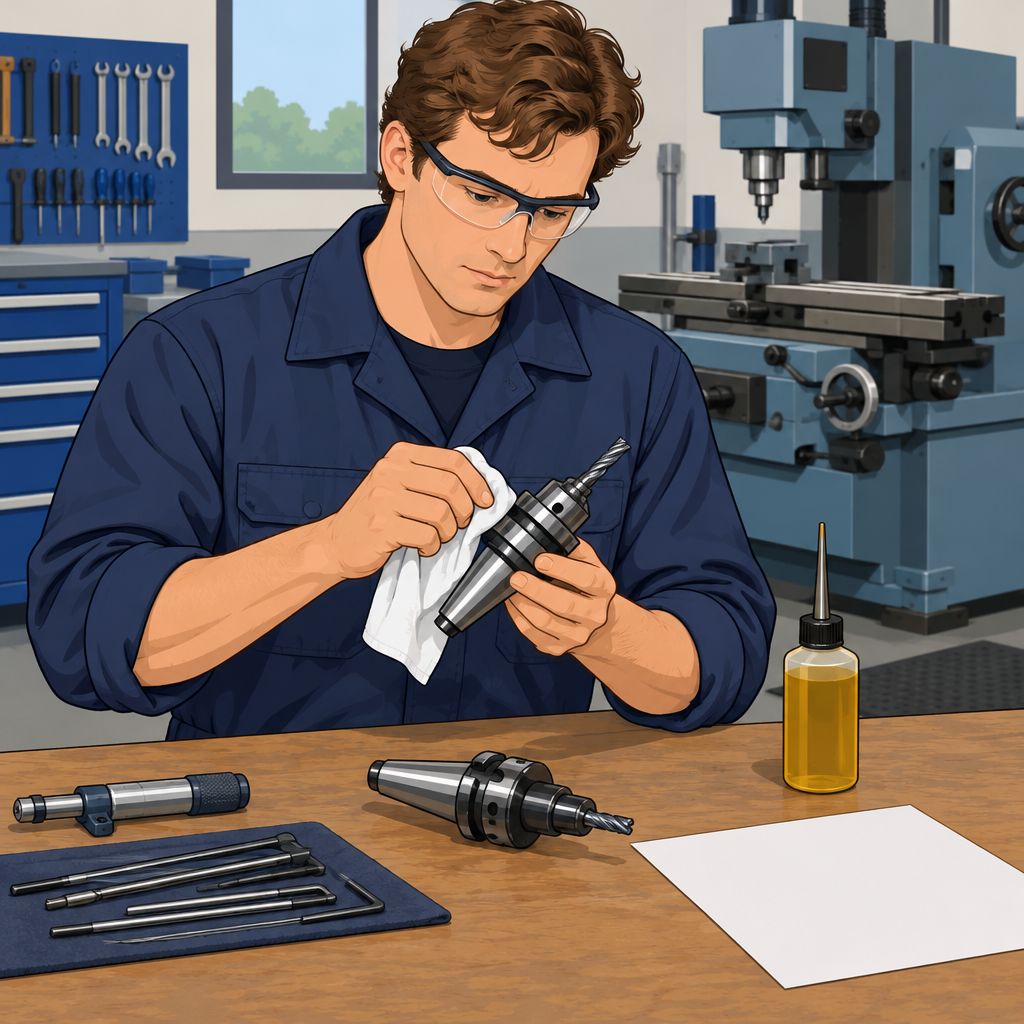
Clean each tool regularly with a soft cloth to remove dirt, grease, and debris.
Store tools in a dry toolbox or cabinet to prevent rust and corrosion and maintain organization.
Lubrication and Condition Checks
Apply a thin layer of oil or lubricant to metal surfaces to reduce friction and wear.
Inspect tools regularly for chips, cracks, dull edges, and other damage.
Sharpen cutting edges with appropriate tools, and calibrate measuring tools regularly to preserve accuracy.
Safe Use and Replacement Practices
Handle tools carefully, avoid dropping them, and use each tool only for its intended purpose.
Train staff in proper tool handling and maintenance practices to support tool longevity.
Replace tools when wear or damage prevents repair, and invest in quality tools designed for longevity.
Regular Cleaning of Machinist Tools
Regular cleaning helps machinist tools maintain reliable performance during repeated use.
Removing contaminants promptly also reduces unnecessary wear on working surfaces.
Furthermore, consistent cleaning helps protect tools from moisture and corrosion.
- Remove dirt, debris, and metal shavings from tools.
- Use brushes, compressed air, or suitable cleaning solutions.
- Clean tools regularly to help prevent damage and rusting.
Removing Contaminants from Tool Surfaces
Dirt, debris, and metal shavings can collect on machinist tools during operation.
These particles can create friction that affects tool accuracy and performance.
Therefore, removing contaminants helps preserve smooth operation and dependable results.
Effective Methods for Cleaning Tools
A brush can remove loose dirt and debris from accessible tool surfaces.
Choose stiff bristles when particles remain attached to the tool.
Compressed air can clear debris from narrow spaces and difficult crevices.
Wear protective goggles and a mask when using compressed air.
For deeper cleaning, apply a solution designed for machinist tools.
Follow the manufacturer’s instructions when using any cleaning solution.
Preventing Tool Damage and Rust
Metal shavings can scratch tool surfaces and reduce their effectiveness.
Cleaning removes abrasive particles before they cause additional surface wear.
Moisture and contaminants can also encourage rust formation.
Regular cleaning removes these corrosive elements before they compromise tool function.
This preventive practice helps tools remain accurate and usable for longer.
Proper Tool Storage
- Store tools in a dry, clean environment to preserve their quality.
- Moisture can cause rust and gradually deteriorate tools.
- Proper storage extends tool life and keeps tools ready for use.
Dry and Clean Storage Conditions
- Moisture causes rust and corrosion that can damage tool cutting edges.
- Therefore, a dry environment helps keep tools in good condition.
- A clean storage area prevents dirt and debris from increasing wear.
Organized Tool Storage
- Sort tools by type or size so you can find them quickly.
- Use foam inserts or shadow boards to assign each tool a specific space.
- Additionally, label drawers or compartments to support easy retrieval.
Accessible and Protected Tools
- Organized storage reduces damage caused by improper handling or placement.
- Designated spaces make missing tools easier to identify and prevent misplacement.
- As a result, accessible tools save time and effort during tasks.
Gain More Insights: Top 5 Challenges Faced by Factory Workers Today
Lubrication of Machinist Tools
Proper lubrication of machinist tools supports consistent movement and reliable performance.
It reduces friction between moving parts, which limits wear during repeated operation.
Moreover, lubrication helps tools operate smoothly and maintain accuracy.
- Importance of lubricating moving tool parts
- Suitable lubricants for different tool types
- Reduced friction and wear through proper lubrication
Different tools require lubricants suited to their materials, functions, and working conditions.
For example, cutting tools may require high-temperature grease during hot machining processes.
Delicate precision tools may instead need light oil for smooth movement.
Regular lubrication can extend tool life and improve operating efficiency.
It also creates a protective barrier that helps limit rust and corrosion in damp environments.
Follow manufacturer recommendations because excessive lubricant can attract dust and debris.
Remove dirt before applying lubricant so contaminants do not reduce its effectiveness.
Thus, a suitable lubrication routine helps keep machinist tools functional for years.
Uncover the Details: Innovative Tools and Equipment for Modern Fence Erectors
Maintaining machinist tools requires a clear inspection and maintenance schedule.
Transform Your Career Today
Unlock a personalized career strategy that drives real results. Get tailored advice and a roadmap designed just for you.
Start NowA consistent routine helps workers identify problems before they interrupt work.
Importance of Regularly Inspecting Tools
- Regular inspections help identify damage or wear on machinist tools.
- Furthermore, proactive checks can prevent potential issues during work.
- Therefore, tools in good condition can perform reliably and last longer.
Tips for Creating a Maintenance Schedule
- First, follow the manufacturer’s recommendations for inspection intervals.
- Next, consider how often workers use each tool when scheduling maintenance tasks.
- Finally, use a calendar or digital tool to track inspection and servicing dates.
How Regular Maintenance Can Prevent Major Damage
- Early issue detection through regular maintenance can prevent major damage.
- Moreover, fixing small problems early usually costs less than replacing damaged tools.
- As a result, regular care keeps tools ready and reduces downtime.
A routine inspection and maintenance schedule can improve tool performance and extend useful life.
It can also help prevent costly repairs or replacements in the future.
Find Out More: How to Paint a Room in One Day: Time-Saving Tips
Sharpening and Regrinding Tools
Sharp cutting edges support efficient and accurate tool performance.
Precision cutting also helps machinists produce consistent results during machining operations.
Therefore, machinists should include sharpening and regrinding in their tool care practices.
Importance of Keeping Cutting Edges Sharp
Dull edges can reduce cutting efficiency and accuracy.
Sharp edges help tools perform their intended cutting tasks.
Regular sharpening preserves the integrity of each cutting edge.
- Sharp edges help tools work efficiently and accurately.
- Precision cutting supports reliable results in machining applications.
- Regular sharpening helps maintain cutting edge integrity.
Methods for Sharpening Tools
Machinists can use a grinder to sharpen cutting tools quickly.
A honing stone provides a more precise method for creating a finer edge.
The tool type and desired sharpness should guide the selected method.
- Use a grinder when the task requires quick sharpening.
- Use a honing stone when the task requires a finer edge.
- Choose the sharpening method according to the tool and desired result.
Benefits of Regular Sharpening
Regular sharpening improves cutting performance and supports better machining results.
It also helps tools remain useful for a longer period.
Consequently, extending tool life can reduce replacement costs.
- Sharp tools cut more effectively and produce better results.
- Regular maintenance and sharpening can extend tool life.
- Longer tool life can reduce spending on replacements.
Regular sharpening helps machinists maintain effective tools and support successful machining operations.
Gain More Insights: Boilermaker Resume Tips: Stand Out to Employers
Proper Tool Handling and Usage
- Intended Tool Usage
Using each tool for its designated task supports effective performance and longer service life. - Careful Tool Handling
Additionally, handle every tool carefully to limit damage during work. - Effects of Improper Handling
However, incorrect or rough use can accelerate wear and shorten a tool’s service life.
Training and Education for Tool Maintenance
Machinists need education on proper tool maintenance practices.
This knowledge helps them protect tool life and preserve reliable performance.
Training should explain how daily care supports effective tool use.
- Cleaning lessons should explain how machinists remove dirt, grease, and debris.
- Lubrication lessons should explain how machinists apply suitable lubrication methods.
- Storage lessons should explain how machinists protect tools between uses.
The Importance of Maintenance Education
Education makes maintenance expectations clear for every machinist.
Furthermore, informed machinists can apply care practices more consistently.
As a result, proper instruction supports tools that remain in optimal condition.
Training Programs and Learning Resources
Tool manufacturers can provide training programs that explain appropriate care procedures.
Trade schools can also teach maintenance principles through structured instruction.
Online platforms can offer accessible lessons for machinists who need flexible learning options.
- Instructional videos can demonstrate cleaning and lubrication techniques.
- Workshops can give machinists opportunities to practice recommended maintenance methods.
- User manuals can provide specific guidance for individual tools.
Effects of Proper Maintenance Training
Proper training can improve the longevity of machinist tools.
Additionally, trained machinists can help prevent damage and reduce unnecessary wear.
Consequently, well-maintained tools can support productivity, cost savings, and improved work quality.
Maintaining Machinist Tools
Consistent care helps machinists preserve tool function and support dependable workshop results.
First, remove accumulated debris so each tool operates without unnecessary obstruction.
Next, inspect components for wear or damage, then address problems promptly.
Additionally, keep tools in clean, dry surroundings to limit rust and corrosion.
Use lubrication when needed to support smooth movement and dependable operation.
Finally, sharpen cutting edges and replace damaged parts to maintain effective performance.
Sustained Tool Performance
Keeping every tool ready helps machinists maintain strong workshop performance.
Therefore, regular care helps tools perform well and remain useful longer.
Apply these practices consistently to strengthen tool longevity and machining performance.
Additional Resources
Google search results for How to Maintain and Care for Machinist Tools Construction and Manual Labor
Transform Your Career Today
Unlock a personalized career strategy that drives real results. Get tailored advice and a roadmap designed just for you.
Start NowBing search results for How to Maintain and Care for Machinist Tools Construction and Manual Labor


