




Plant Pathology Tools and Equipment
Plant pathologists study plant diseases and their causes.
Their work helps protect crops and support food security.
Therefore, specialized tools help them diagnose, monitor, and manage plant diseases.
Microscopes for Plant Disease Diagnosis
Microscopes let pathologists examine plant samples at the cellular level.
They help identify fungi, bacteria, and viruses.
Consequently, microscopic observations support pathogen diagnosis.
Molecular Biology Kits for Genetic Analysis
Molecular biology kits extract DNA and RNA from plant samples.
These materials support genetic analysis.
As a result, pathologists can identify disease-causing agents.
Data Loggers for Environmental Monitoring
Data loggers monitor temperature and humidity.
These environmental conditions can influence disease development.
Thus, recorded conditions help pathologists assess factors linked to disease.
PCR Machines for Pathogen Detection
PCR machines amplify DNA samples.
The amplified material supports genetic testing.
Accordingly, this process helps detect and identify plant pathogens accurately.
Sterilization Equipment for Sample Protection
Autoclaves and sterilizers disinfect tools and equipment.
This cleaning step helps prevent cross-contamination between plant samples.
Meanwhile, sterilized equipment supports consistent sample handling.
Plant Disease Testing Kits for Rapid Diagnosis
Plant disease testing kits provide rapid diagnostic tests.
They help identify common plant pathogens quickly.
Therefore, pathologists can pursue timely treatments and control measures.
Field Cameras for Symptom Monitoring
Field cameras capture images of plant symptoms.
Those images aid disease diagnosis.
In addition, the images support disease monitoring in the field.
Weather Stations for Disease Forecasting
Weather stations provide real-time weather data.
Pathologists use these conditions to predict disease outbreaks.
They also use the information to optimize control strategies.
Drones for Aerial Crop Surveillance
Drones support aerial surveillance across large crop fields.
They help monitor plant health and detect disease outbreaks.
Additionally, drones can survey remote areas.
Microscopes in Plant Pathology
Plant pathologists use microscopes to examine plant tissues and disease-causing organisms.
These instruments support disease diagnosis, pathogen characterization, and laboratory research.
Different microscope types reveal structures that researchers cannot observe without magnification.
- Types of microscopes used in plant pathology
- Importance of microscopes in identifying plant pathogens
- Specific microscope features for plant pathology research
Microscope Types in Plant Pathology
Light microscopes, also called optical microscopes, provide practical views of plant tissues and pathogens.
They support initial screening and help researchers identify visible disease features.
Electron microscopes provide higher magnification and greater resolution than light microscopes.
Transmission electron microscopes reveal pathogen ultrastructure through detailed internal views.
Scanning electron microscopes show detailed external morphology and surface features.
Microscopes for Identifying Plant Pathogens
Microscopes help plant pathologists identify and characterize pathogens accurately.
Researchers examine spore size, shape, and structure during microscopic analysis.
Transform Your Career Today
Unlock a personalized career strategy that drives real results. Get tailored advice and a roadmap designed just for you.
Start NowThese observations support disease diagnosis and clarify pathogen life cycles.
Microscopy also reveals interactions between pathogens and their plant hosts.
Distinct microscopic features help researchers differentiate fungi, bacteria, viruses, and nematodes.
This information supports disease management strategies and helps prevent disease spread.
Important Microscope Features for Plant Pathology Research
A high-quality lens system provides clear views of plant tissues and pathogens.
Variable magnification levels allow researchers to examine features at different scales.
An effective illumination system creates bright and uniform viewing conditions.
LED or halogen lighting can support consistent microscopic observation.
A digital imaging system allows researchers to capture pathogen images efficiently.
Advanced software helps researchers analyze and document microscopic findings.
Digital documentation also supports efficient collaboration with colleagues.
Ergonomic features, including adjustable height and focus controls, improve working comfort.
Therefore, suitable microscopes help plant pathologists study pathogens with greater clarity and precision.
Digital Cameras for Plant Disease Documentation
Plant pathologists use digital cameras to document plant diseases.
Clear, high-quality images support accurate disease diagnosis.
Field techniques help them capture useful images in varied conditions.
- Ensure proper lighting: Natural light or additional lighting sources can enhance image quality.
- Focus on the affected area: Capture close-up shots to highlight disease symptoms and signs.
- Use macro mode: This feature captures detailed images of small lesions or pests on plants.
- Maintain stability: Use a tripod or steady your hands to avoid blurry images.
- Adjust settings: Modify the aperture, ISO, and shutter speed for optimal results.
- Take multiple shots: Capture different angles and views to cover the plant disease thoroughly.
- Label images: Record the plant species, location, and date for reference during analysis.
- Protect equipment: Shield cameras from moisture, dust, and other damaging elements.
Following these guidelines helps plant pathologists diagnose and manage plant diseases efficiently.
Digital cameras support field documentation and research involving various plant pathogens.
Uncover the Details: Top Tools and Technologies for Pest Control Advisors
Plant Disease Testing Kits
Plant disease testing kits support research and diagnosis in plant pathology.
Researchers use these kits to identify pathogens and disease-causing agents in plant samples.
Different kits serve specific purposes during disease investigation and management.
Types of Testing Kits for Plant Pathology Research
Plant pathology researchers can choose from several testing kit categories.
Molecular diagnostic kits help identify specific pathogens in plant material.
Immunological kits help detect particular disease-causing agents.
- Molecular diagnostic kits support pathogen identification.
- Immunological kits detect specific disease-causing agents.
Rapid Plant Disease Identification
Testing kits help pathologists detect pathogens in plant samples quickly.
Rapid results allow researchers to respond promptly to disease detection.
Early identification supports efforts to control disease spread among plants.
Steps for Using a Plant Disease Testing Kit
Users should collect suitable plant samples before starting the test.
Next, they should prepare the samples according to the kit instructions.
They must then perform the test using the recommended procedure.
Finally, users should interpret the results carefully and correctly.
Proper handling and storage help maintain the testing kit’s efficiency.
Supporting Plant Disease Management
Testing kits provide valuable support for plant disease research and diagnosis.
Pathologists can use test results to select appropriate management strategies.
These strategies help protect crops and plants from further disease damage.
Learn More: How Entomologists Protect Crops from Insect Damage
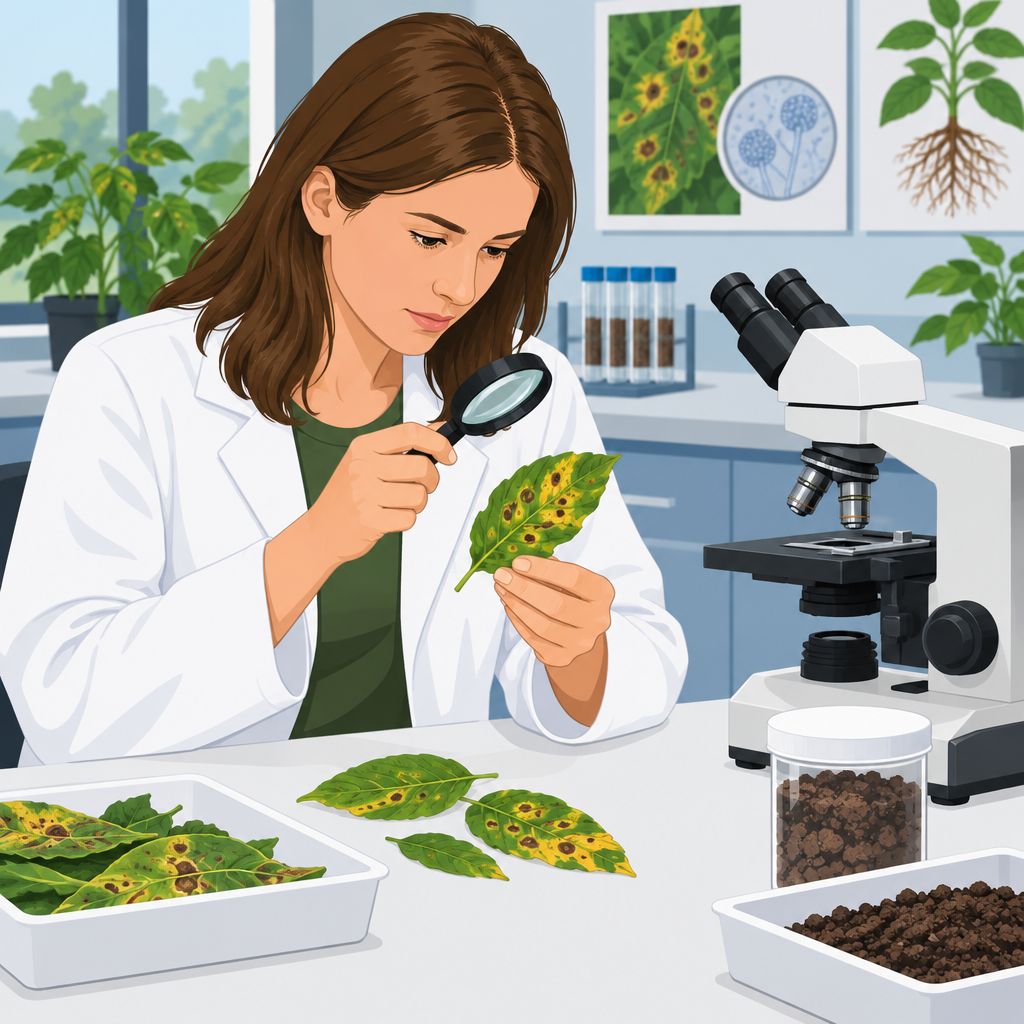
Soil Testing Equipment
Soil testing helps plant pathologists identify disease-causing organisms in soil.
These results help pathologists investigate plant diseases and select suitable management strategies.
Testing also reveals soil conditions that may influence pathogen activity and plant health.
Transform Your Career Today
Unlock a personalized career strategy that drives real results. Get tailored advice and a roadmap designed just for you.
Start NowImportance of Soil Testing in Diagnosing Plant Diseases
Plant pathologists use soil testing to determine whether soil contains organisms that cause plant diseases.
The findings help them connect soil conditions with disease symptoms.
Therefore, soil test results support the development of effective disease management strategies.
Types of Soil Testing Equipment Used by Plant Pathologists
Plant pathologists use several tools to collect and examine soil samples.
Each device provides information about soil conditions or potential pathogens.
These tools work together during soil-based plant disease investigations.
- Soil sampling tools include soil augers and spades for collecting samples.
- pH meters measure soil acidity or alkalinity, which can affect pathogen development.
- Moisture meters monitor soil moisture levels and help identify disease-prone areas.
- Microscopes help pathologists examine soil samples for fungal spores, nematodes, and other pathogens.
- DNA extraction kits help detect specific pathogens through DNA analysis.
Interpreting Soil Test Results for Plant Disease Management
Pathologists examine pH levels to identify soil conditions that may support particular pathogens.
They also assess nutrient levels because imbalances can weaken plants and increase disease susceptibility.
Finally, they review pathogen findings when selecting suitable disease management practices.
- Review soil pH to determine whether acidity or alkalinity may influence pathogens.
- Assess nutrient levels to identify imbalances that may affect plant health.
- Check test results for harmful organisms associated with plant diseases.
- Consult plant pathologists for help interpreting results and selecting management strategies.
Using Soil Testing to Protect Plant Health
Soil testing equipment helps pathologists understand soil conditions and identify potential disease risks.
The resulting information supports informed decisions about plant disease management.
By applying these tools, pathologists can better protect plant health.
Learn More: Understanding Soil Management: Tips from Agronomists
Weather Stations
Weather stations help monitor environmental conditions that affect plant diseases.
They provide real-time data about temperature, humidity, rainfall, and other important factors.
This information helps plant pathologists identify conditions that support disease development.
Monitoring Environmental Conditions
- Weather stations continuously measure environmental factors that influence plant health.
- They track temperature, humidity, rainfall, wind speed, and other disease-related conditions.
- Plant pathologists analyze these measurements to predict disease outbreaks and plan preventive measures.
Features for Plant Pathology Research
- Choose a weather station that provides precise and reliable data for accurate analysis.
- Select a station that records data frequently enough to capture sudden environmental changes.
- Consider wireless connectivity for convenient, real-time data transmission and monitoring.
Predicting Disease Outbreaks
- Weather data reveals patterns and trends that may lead to plant disease outbreaks.
- Historical weather records help pathologists estimate disease risks under specific conditions.
- Pathologists can use these insights to implement timely control measures against disease outbreaks.
Weather stations give plant pathologists valuable information for monitoring environmental conditions and predicting disease outbreaks.
By selecting suitable equipment and analyzing its data, pathologists can protect plants from diseases more proactively.
Uncover the Details: Education Path to Become a Dairy Scientist
Protective Gear
Protective gear helps plant pathologists avoid exposure to harmful pathogens.
It also supports safer handling of infected plant material.
Therefore, plant pathologists use several protective items during pathogen-related work.
Importance of Protective Gear
Protective gear reduces direct contact with harmful plant pathogens.
Additionally, it helps protect plant pathologists during pathogen handling.
Using suitable gear promotes safer work with infected plant material.
Types of Protective Gear
Plant pathologists select protective items according to the potential exposure.
For example, gloves protect the hands from direct pathogen contact.
Meanwhile, goggles, lab coats, and face masks protect other areas.
- Gloves protect hands from direct contact with pathogens.
- Goggles shield eyes from splashes of infected plant material.
- Lab coats cover clothing and help prevent contamination.
- Face masks filter airborne pathogens during handling.
Cleaning and Maintaining Protective Gear
Proper cleaning helps prevent contamination after protective gear use.
Furthermore, regular maintenance keeps each item ready for future handling.
Plant pathologists should clean, launder, replace, or dispose of gear appropriately.
- Wash gloves with soap and water after each use.
- Clean goggles regularly with disinfectant wipes.
- Launder lab coats with hot water and bleach.
- Replace face masks regularly and dispose of them properly.
DNA Sequencing in Plant Disease Research
DNA sequencing machines help plant pathologists identify and understand pathogens affecting plants.
These tools reveal pathogen genetic material and support effective disease management strategies.
Furthermore, sequencing technology strengthens molecular diagnostics within plant pathology research.
DNA Sequencing in Molecular Diagnostics
- DNA sequencing machines analyze pathogen genetic material from plant tissues, soil, or water samples.
- Additionally, sequencing reveals genes associated with pathogen pathogenicity and virulence.
- Consequently, plant pathologists can diagnose diseases, track pathogen spread, and apply targeted control measures.
Benefits of DNA Sequencing for Pathogen Identification
- DNA sequencing accurately identifies pathogen species and strains.
- Moreover, sequencing reveals pathogen genetic diversity, helping researchers study evolution and adaptability.
- By comparing samples, plant pathologists can trace outbreak origins and monitor pathogen populations over time.
Challenges in Plant Pathology Sequencing
- However, equipment, reagents, and data analysis create substantial costs for DNA sequencing projects.
- Interpreting complex sequencing data also requires specialized bioinformatics expertise.
- Some pathogens contain variable genomes or complex structures that complicate accurate sequencing and analysis.
Despite these challenges, DNA sequencing machines have transformed plant pathology research.
They provide valuable insights into the molecular mechanisms underlying plant diseases.
As technology advances, plant pathologists can develop innovative pathogen management and control strategies.
Data Analysis Software for Plant Disease Research
Plant pathologists use data analysis software to examine complex disease data efficiently.
These tools help researchers understand disease patterns and trends.
Researchers can then develop effective disease control and management strategies.
Transform Your Career Today
Unlock a personalized career strategy that drives real results. Get tailored advice and a roadmap designed just for you.
Start NowTypes of Software for Plant Disease Data
Several software programs support different plant disease data analysis tasks.
Each program offers distinct features and analytical capabilities.
Plant pathologists often combine these tools for more comprehensive insights.
- R
- SAS
- SPSS
- Excel
- GraphPad Prism
Importance of Data Analysis in Disease Research
Data analysis helps plant pathologists interpret information from disease surveys and experiments.
Moreover, analysis can reveal patterns, trends, and correlations that visual inspection may miss.
These findings help researchers identify factors associated with disease outbreaks.
Researchers can also use disease trends to predict future outbreaks.
Furthermore, analysis supports the development of effective disease control measures.
It also helps researchers evaluate management strategies and identify areas for improvement.
Effective Use of Data Analysis Software
Plant pathologists should follow several practices when using analysis software for research.
First, researchers should select software that matches their research questions and data.
They should also learn the software’s basic functions and available features.
Before analysis, researchers must collect accurate, complete, and well-organized data.
Next, they should choose statistical methods and visualizations that address their research questions.
Researchers must interpret results carefully while considering bias, limitations, and confounding factors.
Finally, clear communication helps others understand the findings and their significance.
- Choose software that suits the research needs and analysis tasks.
- Learn the software’s basic functions and features.
- Collect and organize accurate, complete, and well-structured data.
- Select suitable statistical analyses and data visualization tools.
- Interpret results while considering bias, limitations, and confounding factors.
- Present findings clearly with appropriate visual aids.
- Seek colleague feedback to improve analytical accuracy and reliability.
Microscopes for Cellular Examination
Microscopes let plant pathologists inspect plant samples at cellular scale.
They reveal structures that support pathogen identification during laboratory examinations.
Consequently, these instruments help researchers interpret disease-related changes in plant tissues.
Molecular Diagnostic Tools
PCR machines and DNA sequencers support precise pathogen identification in plant tissues.
These tools help researchers distinguish specific pathogens during diagnostic investigations.
Therefore, molecular testing strengthens laboratory research and disease assessment.
Rapid Disease Detection Kits
Rapid test kits provide quick checks for diseases caused by bacteria, fungi, or viruses.
Researchers can use them during field or laboratory investigations.
Thus, these kits support timely examination of affected plant samples.
Drones and Imaging Tools
Drones use cameras and sensors to monitor plant health across fields.
They help plant pathologists identify areas that may contain concentrated disease problems.
Furthermore, aerial monitoring supports broader field assessments during disease investigations.
Data Analysis Software
Specialized software helps researchers examine large amounts of collected information.
It supports the organization and interpretation of data from research and fieldwork.
As a result, researchers can evaluate findings more efficiently.
Greenhouses and Growth Chambers
Greenhouses and growth chambers provide controlled environments for plant disease research.
Researchers study plant-pathogen interactions under different environmental conditions.
These facilities make controlled investigations possible during laboratory studies.
Autoclaves and Sterilization Equipment
Autoclaves sterilize tools and materials used during plant pathology research.
Sterilization helps researchers prevent cross-contamination between samples and work areas.
Therefore, this equipment supports cleaner and more reliable laboratory procedures.
Integrated Tools for Disease Management
Plant pathologists combine these tools to investigate plant diseases more effectively.
Each instrument supports a different stage of diagnosis, monitoring, or research.
Staying informed about new technologies helps researchers improve disease diagnosis and control.
Transform Your Career Today
Unlock a personalized career strategy that drives real results. Get tailored advice and a roadmap designed just for you.
Start NowAdditional Resources
Google search results for Tools and Equipment Used by Plant Pathologists Agricultural
Bing search results for Tools and Equipment Used by Plant Pathologists Agricultural


