




Defining Irrigation Efficiency
Irrigation efficiency compares water that supports plant growth with total applied water.
This ratio shows how much supplied water benefits crops.
Farmers can use this measure to evaluate irrigation performance.
Importance of Irrigation Efficiency in Agriculture
Efficient irrigation helps farmers increase productivity.
It also reduces operational costs.
Additionally, it promotes sustainable farming practices.
Challenges of Improving Irrigation Efficiency on a Budget
Advanced irrigation technologies can require high upfront costs.
That expense can make infrastructure upgrades difficult on a limited budget.
Furthermore, limited technical knowledge and resources can hinder efficient practices.
Tips and Strategies to Improve Irrigation Efficiency on a Budget
Farmers can improve irrigation efficiency through practical, lower-cost measures.
First, a water audit can reveal improvement areas and help prioritize upgrades.
Meanwhile, simple moisture-saving practices can reduce unnecessary water use.
- Conduct a thorough water audit to identify improvement areas and prioritize upgrades.
- Choose a cost-effective drip irrigation system to deliver water directly to plant roots.
- Implement soil moisture sensors to monitor water levels and irrigate only when necessary.
- Use mulch to retain soil moisture and reduce evaporation over time.
- Harvest rainwater to supplement irrigation water and reduce reliance on external sources.
These measures help farmers enhance irrigation efficiency without breaking the bank.
Water Audit
- Assess current water usage and identify areas of inefficiency.
- Use flow meters and soil moisture sensors to measure water usage.
- Determine the effectiveness of current irrigation systems.
A water audit provides a crucial step toward improving irrigation efficiency.
By assessing current usage, you can identify where water is being wasted.
Additionally, flow meters and soil moisture sensors can measure water usage accurately.
These measurements show where the water goes and help identify inefficiencies.
Plant and Soil Watering Requirements
Create a watering schedule that matches each plant’s specific needs and the soil’s water retention.
First, identify plants needing frequent watering and those requiring less frequent irrigation.
This approach helps prevent overwatering, underwatering, and unnecessary water use.
Sandy soil drains quickly, so plants growing there may need more frequent watering.
Clay soil holds water longer, so it may require less frequent irrigation.
Seasonal Adjustments and Targeted Irrigation
Adjust watering routines as weather conditions change throughout the year.
During heavy rainfall, reduce watering frequency to avoid wasting water.
However, increase watering during hot, dry weather when plants need additional moisture.
Check the weather forecast regularly and revise the schedule when conditions change.
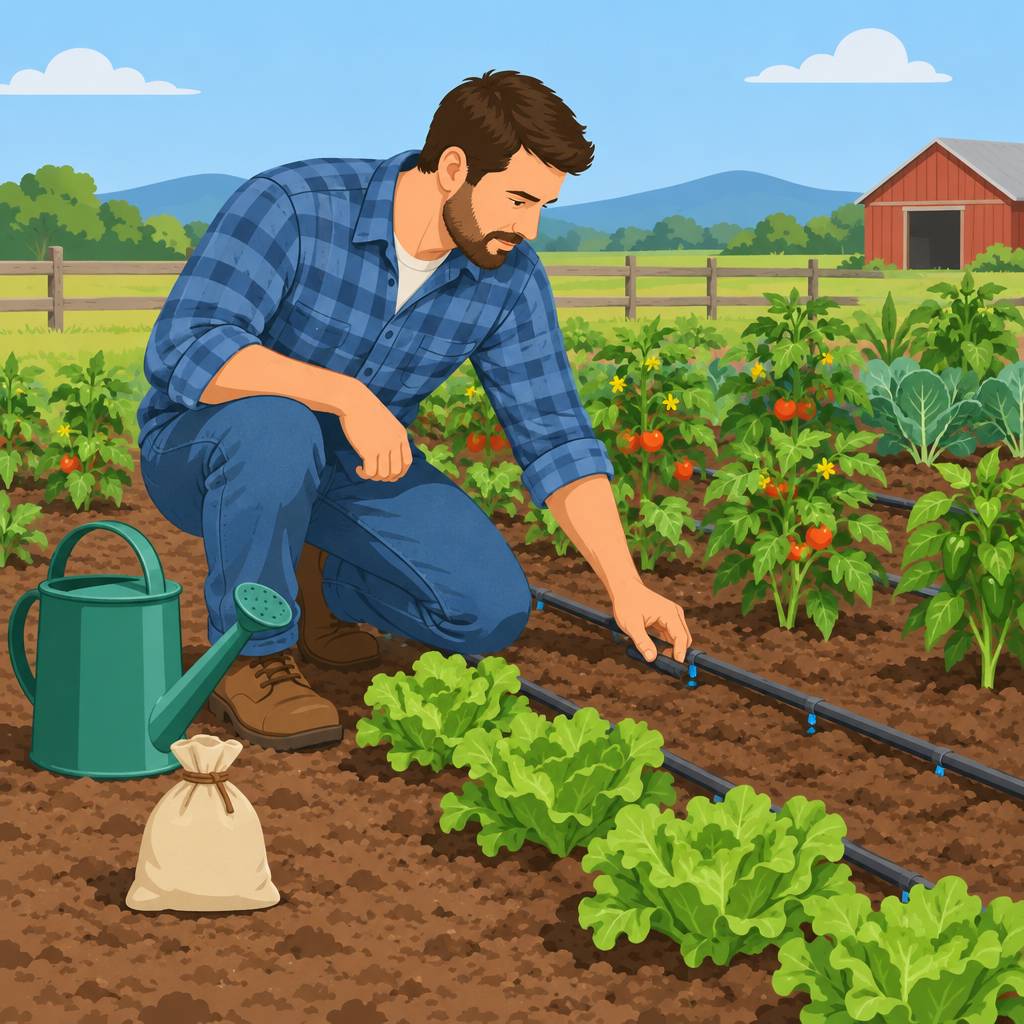
Consider drip irrigation or soaker hoses for more targeted watering.
These methods deliver water near plant bases while reducing evaporation and runoff.
Drip systems can deliver precise amounts at scheduled times.
This targeted approach helps plants receive the water they need.
These choices can improve irrigation efficiency without requiring expensive equipment.
Therefore, targeted irrigation can conserve water and reduce costs.
Find Out More: Extension Agent Resources for Small Farms
Strategic Irrigation Improvements
Improving irrigation efficiency on a budget requires a strategic approach.
The goal is to maximize useful water application while minimizing waste.
Therefore, focus on practical system improvements that support efficient watering.
Irrigation System Layout
Assess the current layout to identify inefficient water distribution.
Then confirm that each landscape area receives adequate water for healthy growth.
This review can reveal places where the system design needs adjustment.
Leaks and System Malfunctions
Inspect irrigation components regularly for leaks and malfunctions.
Transform Your Career Today
Unlock a personalized career strategy that drives real results. Get tailored advice and a roadmap designed just for you.
Start NowFurthermore, fix broken parts promptly to prevent unnecessary water loss.
These repairs help the system deliver water more efficiently.
Rain Sensors and Smart Controllers
Consider adding a rain sensor or smart irrigation controller.
These devices adjust watering schedules according to weather conditions.
As a result, the landscape receives appropriate water at suitable times.
Together, these improvements can increase water efficiency without requiring a large investment.
Evaluate the system, complete necessary repairs, and consider smart technology for efficient watering.
Explore Further: Environmental Impact of Pest Control Methods
- Apply mulch around plants to retain moisture and reduce evaporation.
- Amend soil with organic matter to improve water retention and drainage.
- Monitor soil moisture levels regularly to prevent overwatering.
One of the most effective ways to improve irrigation efficiency on a budget is through proper mulch and soil management.
These practices conserve water, reduce waste, and promote healthier plant growth.
Mulch Application
Applying mulch around plants provides a simple way to conserve water in the garden.
Mulch creates a barrier that slows evaporation and retains moisture in the soil.
This benefit becomes especially valuable during hot and dry seasons.
Organic mulch options include straw, bark, leaves, and compost.
These materials retain moisture, suppress weeds, regulate soil temperature, and improve soil structure.
Soil Amendment
Soil amendment also plays an important role in improving water efficiency.
Adding compost, manure, or peat moss can improve water retention and drainage.
Improved soil structure helps prevent runoff and supplies plants with adequate water.
Mix organic matter thoroughly into the soil to distribute it evenly.
This process creates a healthy environment that supports plant growth and water absorption.
Monitoring Soil Moisture
Regularly checking soil moisture helps prevent overwatering and unnecessary water waste.
Excessive watering can also damage plants.
Use a soil moisture meter or check the soil with your finger.
These methods indicate when plants need water.
Consequently, moisture checks help you adjust the irrigation schedule.
They can reduce water usage, lower water bills, and support healthier plant growth.
Applying mulch and managing soil can improve irrigation efficiency without requiring expensive equipment.
These practices conserve water while helping gardens maintain healthy growth.
See Related Content: Dairy Science Certifications and Licensing
Efficient Irrigation Methods for Budget-Conscious Water Use
Efficient irrigation practices can improve water usage on a budget.
These methods can save both water and money over time.
They reduce losses by directing water carefully and scheduling applications wisely.
- Furrow irrigation directs water through small channels toward plant roots.
- Subsurface drip irrigation delivers water directly to plant roots and reduces evaporation.
- Avoid watering during windy or hot conditions to reduce evaporation.
- Group plants with similar water needs together to prevent overwatering.
Furrow and Subsurface Drip Irrigation
- Furrow irrigation involves creating small channels to direct water to plant roots.
- Subsurface drip irrigation delivers water directly to the roots, reducing evaporation.
These methods help ensure that plants receive adequate water without wasting it through runoff or evaporation.
Furrow irrigation and subsurface drip irrigation provide cost-effective options for various agricultural settings.
Both techniques support targeted watering while limiting unnecessary water loss.
Watering During Favorable Weather Conditions
- Watering during windy conditions can cause losses through overspray and evaporation.
- Hot conditions can evaporate water before it reaches plant roots.
Windy conditions can carry water away from its intended location.
Similarly, hot weather can remove moisture before plants can use it.
Scheduling irrigation during calm, cool periods helps water reach plants effectively.
Grouping Plants by Water Requirements
- Plants with similar water requirements should share watering areas.
- This arrangement prevents overwatering some plants while underwatering others.
Grouping plants by water needs allows each area to receive appropriate irrigation.
Additionally, tailored schedules can conserve water and support healthier plant growth.
Transform Your Career Today
Unlock a personalized career strategy that drives real results. Get tailored advice and a roadmap designed just for you.
Start NowThis targeted approach improves irrigation effectiveness without requiring unnecessary water use.
These strategies can optimize water usage and enhance irrigation system effectiveness.
Furrow irrigation, suitable timing, and plant grouping provide practical budget-conscious options.
Delve into the Subject: Key Differences Between Vet Tech and Vet Nurse
Practice Water-Saving Habits
Water-saving habits can improve irrigation efficiency while keeping spending manageable.
These practices help gardeners use available water more carefully.
They also support environmental conservation efforts.
Rainwater Collection for Irrigation
Rain barrels or cisterns can collect rainwater for plant irrigation.
Stored rainwater can reduce reliance on other water supplies and lower water bills.
It also gives plants natural, untreated water.
Slow and Deep Watering
Slow, deep watering helps water penetrate the soil and reach plant roots.
This approach can reduce runoff in garden beds and lawns.
Therefore, gardeners should avoid quick, shallow watering that leaves water near the surface.
Regular Plant Maintenance
Regular pruning and weeding help maintain plant health.
Healthy plants require less water.
As a result, consistent maintenance can reduce plant water needs and improve irrigation efficiency.
By adopting these habits, gardeners can save water and manage irrigation costs more effectively.
Sustainable Irrigation Supports Long-Term Farm Resilience
Cost-effective irrigation strategies can improve water use while supporting productive farms.
Drip systems and mulch reduce waste, while regular equipment maintenance preserves performance.
Additionally, rainwater harvesting and greywater recycling can supplement available supplies and reduce costs.
Farmers can schedule irrigation during cooler hours and adjust watering when weather conditions change.
Sustainable water management helps agriculture address water scarcity and protect long-term viability.
Therefore, small changes in daily water use can support resource conservation and improve farm practices.
Farmers should apply these strategies according to their farms’ needs and available resources.
Together, efficient irrigation practices can strengthen agriculture’s future.
Additional Resources
Google search results for How to Improve Irrigation Efficiency on a Budget Agricultural
Bing search results for How to Improve Irrigation Efficiency on a Budget Agricultural


