




Introduction
Secret Service agents play a crucial role in protecting the President of the United States.
They help ensure the President’s safety and security.
Moreover, their work supports protection for other key officials.
Responsibilities of Secret Service Agents
These highly trained individuals protect the President.
They also protect the Vice President and other key officials.
Additionally, agents use specialized skills to fulfill these responsibilities.
Methods Used to Protect the President
Secret Service agents use several tactics to protect the President.
For example, they provide physical protection and gather intelligence.
They also assess threats to support the President’s security.
Secret Service Origins and Changing Responsibilities
The Secret Service began in Washington, D.C., in 1865.
Initially, the agency focused on combating counterfeit money.
Over time, its responsibilities expanded to protect the President and other high-ranking officials.
After President William McKinley was assassinated in 1901, the agency gained protective duties.
Since then, agents have safeguarded the President’s life.
Consequently, the agency shifted from investigating counterfeit currency to presidential protection.
Secret Service Agent Training and Qualifications
Applicants must meet strict criteria before becoming Secret Service agents.
For example, they undergo background investigations and satisfy physical fitness requirements.
Their training covers firearms proficiency, defensive tactics, emergency medical procedures, and protective driving techniques.
In addition, agents complete extensive mental and physical preparation for high-stress situations.
Planning and Preparation
Secret Service agents protect the President of the United States and ensure the President’s safety at all times.
This responsibility requires meticulous planning and preparation to anticipate and mitigate potential security threats.
Agents organize their work around advance efforts, risk assessments, security measures, and coordination.
Advance Work
- Before each visit or event, agents conduct advance work to gather intelligence and assess potential risks.
- They study the venue, identify vulnerabilities, and develop a detailed security plan to address them.
- Additionally, agents coordinate with local law enforcement and other agencies for a seamless security operation.
Risk Assessment and Security Measures
- Secret Service agents conduct comprehensive risk assessments to identify potential threats to the President’s safety.
- Based on those assessments, they implement physical barriers, surveillance, and armed protection.
- They also secure the President’s residence and transportation through personal security measures.
Coordination with Local Law Enforcement
- Close coordination with local law enforcement supports a coordinated and effective security response.
- Agents share intelligence with local authorities and work together to address potential security threats.
- Local agencies provide traffic control and crowd management support during the President’s visit.
Integrated Presidential Security Operations
Secret Service agents use meticulous planning and preparation to address potential security threats.
Their advance work and risk assessments guide protective measures for the President.
Furthermore, coordination with local law enforcement helps agents maintain the President’s safety during visits and events.
Learn More: School Resource Officer: Building Trust with Students
Physical Protection
Secret Service agents receive intensive training in close protection details for the President.
They use varied techniques to shield the President from potential threats.
Their preparation supports rapid protective responses during public activities.
Close Protection Details for the President
Agents surround the President in a tight formation.
They constantly scan nearby areas for signs of danger.
The formation keeps agents close to the President at all times.
Additionally, agents train in hand-to-hand combat and defensive driving techniques.
Rigorous physical training helps agents react swiftly when necessary.
Techniques Used to Shield the President from Potential Threats
Agents combine physical barriers and human shields to protect the President.
They position themselves strategically to create buffers around the President.
Before public appearances, agents conduct thorough security sweeps.
They examine venues and surrounding areas for possible threats.
Technology and Weaponry in Presidential Protection
Agents use surveillance cameras and communication devices to monitor security conditions.
They coordinate protective measures through advanced communication technology.
Transform Your Career Today
Unlock a personalized career strategy that drives real results. Get tailored advice and a roadmap designed just for you.
Start NowHigh-tech earpieces help agents remain connected throughout their assignments.
Agents also carry concealed firearms and non-lethal weapons.
They train extensively in firearms handling and marksmanship.
These skills help agents respond effectively during dangerous situations.
These measures combine close protection, advanced technology, and weaponry to support the President’s safety.
Explore Further: Role of DEA Agents in Cyber Investigations
Countermeasures and Response
- Secret Service agents constantly scan their surroundings for potential threats.
- Additionally, they use advanced surveillance techniques to monitor suspicious activity nearby.
- Agents also use drones and security cameras to strengthen their surveillance capabilities.
- When agents perceive a threat, they react quickly and neutralize it precisely.
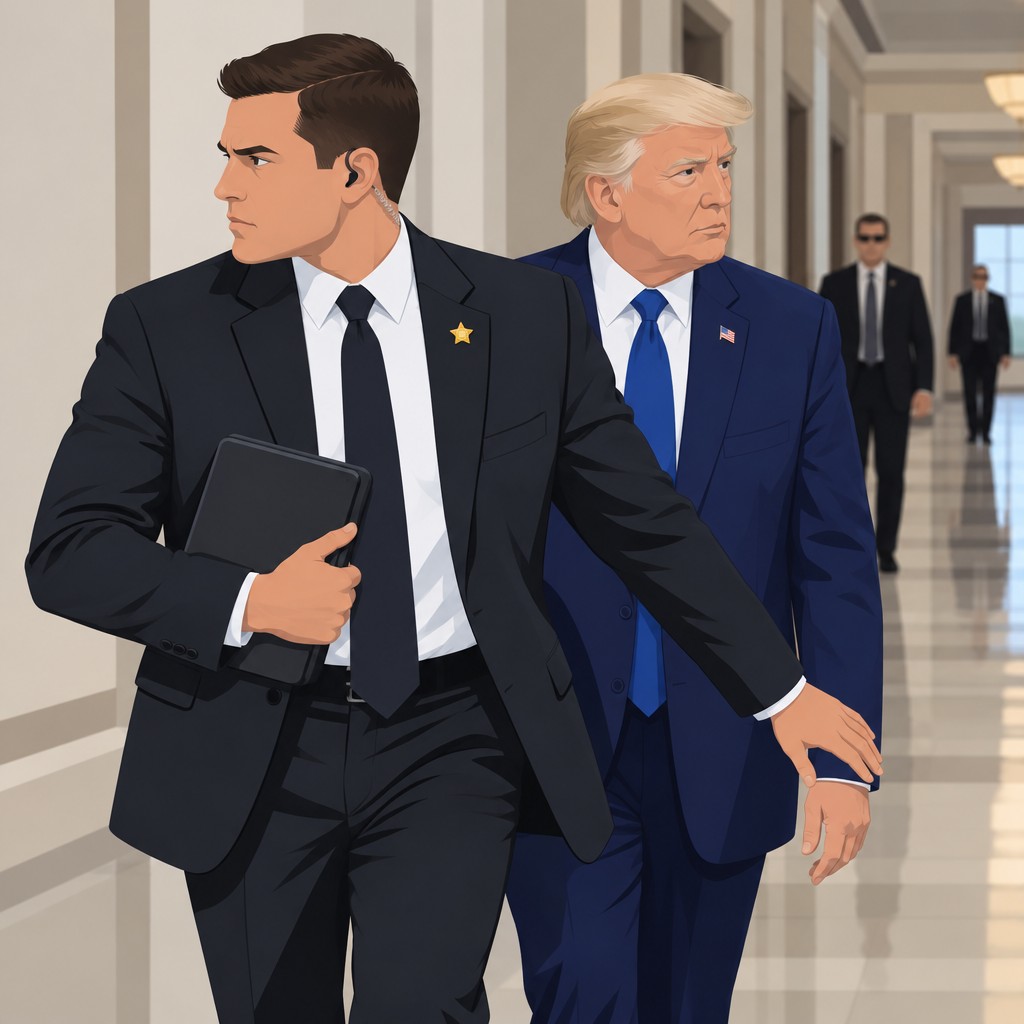
Strategies for Detecting and Neutralizing Potential Threats
- Secret Service agents undergo rigorous training in threat detection and risk assessment.
- During training, they analyze behavioral patterns and identify potential threats to the President.
- Agents also work with law enforcement agencies to gather intelligence and track potential threats.
- Furthermore, they use psychological profiling to identify individuals who may intend harm toward the President.
Emergency Protocols During an Attack
- Secret Service agents maintain established protocols for responding swiftly during an attack.
- They prioritize the President’s safety while acting decisively against threats.
- Meanwhile, agents coordinate with local law enforcement for a rapid response.
- Regular drills and simulations help agents prepare for various emergency situations.
Coordination with Intelligence Agencies for Threat Assessment
- Secret Service agents collaborate with intelligence agencies to assess potential threats to the President.
- They share crucial intelligence to stay ahead of emerging threats.
- Intelligence analysts help agents assess each threat’s credibility and severity.
- Together, they develop comprehensive threat assessments and response strategies.
Uncover the Details: TSA Officer's Role in Handling Emergency Situations
Public Events and Interactions
Agents protect the President during public events and interactions.
They assess potential threats before and during public appearances.
Meanwhile, agents stay vigilant while the President engages with the public.
- Agents discreetly scan the crowd for suspicious activity.
- They maintain a close perimeter around the President.
- Agents communicate with one another to strengthen security.
- They prepare to respond quickly during emergencies.
Balancing Security with Public Interaction
Agents balance protective measures with the President’s need to engage the public.
This responsibility requires careful planning and precise execution.
Therefore, agents protect access without unnecessarily limiting public interaction.
- Agents conduct thorough risk assessments before public appearances.
- They apply security protocols without compromising the President’s accessibility.
- Agents coordinate with event organizers to create secure environments.
- They adjust security measures according to perceived threats.
Protecting Crowds During Public Appearances
Agents also prioritize the safety of people attending public events.
They monitor the crowd and respond to possible dangers.
Additionally, agents coordinate with local authorities to maintain an orderly environment.
- Agents work with local law enforcement to secure the perimeter.
- They monitor crowd behavior for signs of potential danger.
- Agents respond to emergencies involving the crowd.
- They coordinate crowd control measures to maintain order.
Protecting the President in Open Environments
Open and accessible environments create distinctive challenges for protective agents.
Agents must address potential threats while keeping the President visible and engaged.
Consequently, they combine technology, preparation, and situational awareness.
- Agents use advanced technology to monitor surrounding areas.
- They conduct background checks on people attending events.
- Agents use tactical strategies to reduce risks in open environments.
- They maintain strong situational awareness at all times.
Explore Further: Work Environment of Forensic Scientists
Travel Security
Secret Service agents help protect the President during domestic and international travel.
Their primary objective involves guarding the President against potential threats.
Meanwhile, agents maintain a low profile to avoid attracting unwanted attention.
Protocols for Securing Presidential Transportation
The Secret Service follows strict protocols when securing transportation for the President.
Agents conduct thorough security checks on every vehicle used to transport the President.
These vehicles include advanced security features that help prevent unauthorized access.
Security for Air Travel and Motorcades
Agents treat air travel as a top priority because flying presents unique security challenges.
They work closely with aviation security officials during presidential flights.
Motorcades require meticulous planning and coordination because convoys carry the President and entourage.
Challenges During Domestic and International Travel
Protecting the President during travel creates many challenges for Secret Service agents.
Agents navigate unfamiliar territories and coordinate with local law enforcement agencies.
Additionally, they adapt to foreign security protocols while responding to changing threats.
Protective Responsibilities of Secret Service Agents
They protect the Commander-in-Chief from various threats as highly trained professionals.
Their vigilance and quick responses help keep the President safe in various situations.
Additional Resources
Google search results for How Secret Service Agents Protect the President Protective Services
Bing search results for How Secret Service Agents Protect the President Protective Services


