




Introduction
School Resource Officers help maintain safety and security within schools.
They respond to incidents and provide a sense of security.
They also build positive relationships with students.
Strategies for SROs to Build Trust With Students
Trust between SROs and students supports a safe and supportive learning environment.
SROs can build trust through consistent responses and positive student engagement.
Respectful interactions can strengthen relationships between SROs and students.
Understanding the Role of School Resource Officers
School Resource Officers, or SROs, serve in schools as safety professionals and supportive community members.
They combine law enforcement responsibilities with mentoring, guidance, and collaboration.
Their varied duties help schools address safety concerns while supporting student well-being.
- Understanding SRO responsibilities within schools
- Recognizing how SROs support safety and constructive student relationships
Responsibilities of School Resource Officers
SROs help protect students, faculty, and staff throughout school facilities.
They also prevent and respond to violence, drug activity, and other criminal behavior.
Additionally, SROs guide students as mentors and role models who encourage responsible decisions.
- SROs support safety across school facilities and help protect the school community.
- SROs address violence, drugs, and other criminal activities within schools.
- SROs mentor students and encourage choices that reflect responsibility.
Supporting Safety and Positive Relationships
SROs can remain visible on school grounds while engaging students respectfully.
They can work with administrators, teachers, and mental health professionals when students need assistance.
Educational presentations can help students understand emergencies and make informed decisions.
- SROs combine regular patrols with respectful interactions throughout the school community.
- SROs collaborate with school personnel and mental health professionals to support students in crisis.
- SROs provide presentations and training that address emergencies and responsible decision-making.
SROs must balance law enforcement duties with approachability and student support.
This balance allows them to address concerns while remaining accessible to students.
Understanding their multifaceted role clarifies how SROs contribute to school safety and student well-being.
Positive Interactions That Build Rapport
SROs build rapport with students through consistent, respectful, and positive interactions.
These interactions help students feel connected to their school community.
As trust grows, students may approach SROs for help, guidance, or support.
Importance of Positive Student Interactions
Positive conversations help SROs establish meaningful connections with students.
They also create a stronger sense of belonging within the school community.
Furthermore, caring interactions show students that SROs recognize and respect their emotions.
- Positive interactions help SROs establish rapport with students.
- They create a sense of belonging and community within the school.
- Students become more likely to approach SROs for help or guidance.
- These interactions demonstrate care and empathy toward students.
Strategies for Friendly Student Engagement
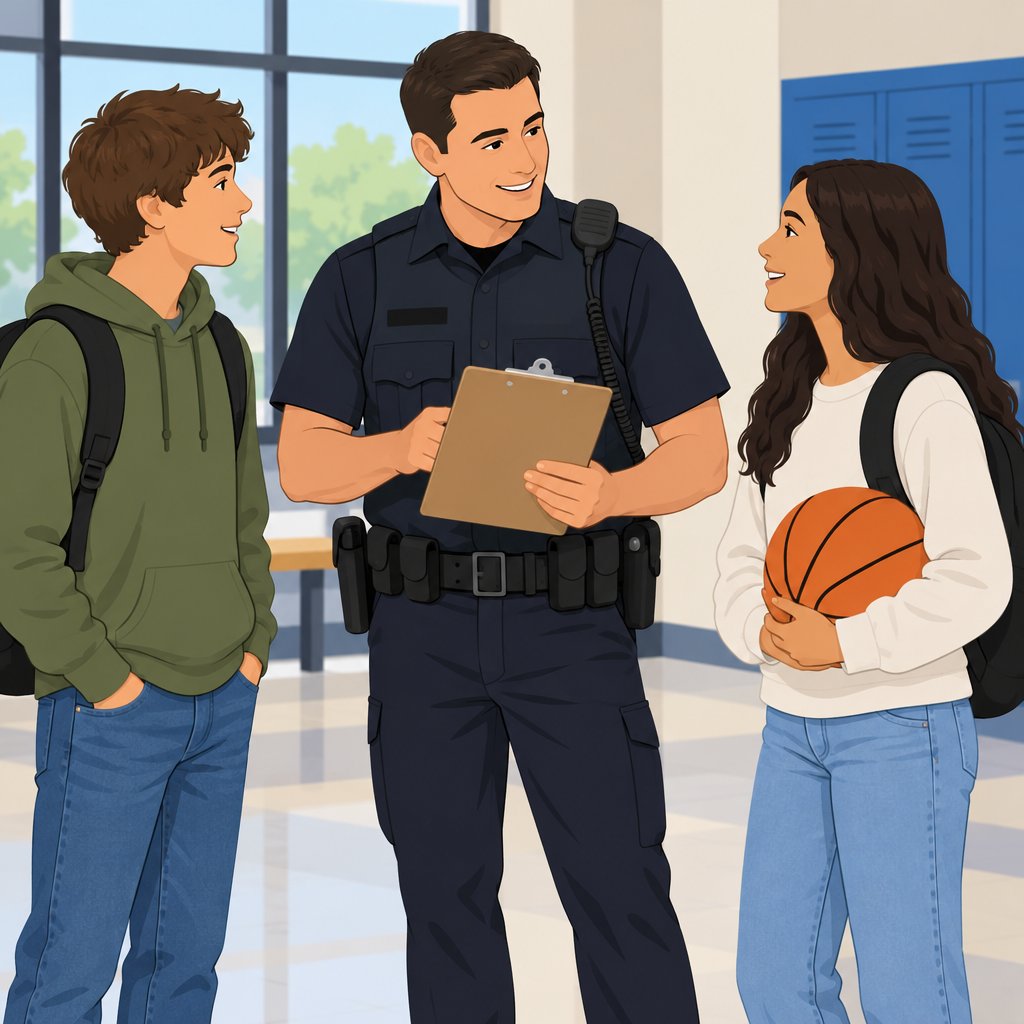
SROs can create a welcoming atmosphere by greeting students warmly and using their names.
Casual conversations allow SROs to learn about students and build familiar connections.
Additionally, active listening helps SROs understand concerns and respond with empathy.
- SROs can smile and greet students by name.
- They can use casual conversations to learn about students personally.
- Participating in school activities shows support for students.
- Active listening helps SROs respond thoughtfully to student concerns.
- Offering guidance helps SROs develop supportive relationships.
Examples of Trust-Building Interactions
Shared activities give SROs and students opportunities to connect in relaxed settings.
School events and clubs also allow SROs to demonstrate support and involvement.
Moreover, mentorship and outreach can encourage students to participate in positive activities.
- Playing basketball with students during recess can foster camaraderie.
- Attending school clubs and events demonstrates support for students.
- Teaching a self-defense workshop can empower students and strengthen trust.
- Organizing outreach programs can involve students in positive activities.
- Providing mentorship can guide at-risk students toward a better path.
Through positive engagement, SROs can strengthen trust and encourage a supportive school community.
Find Out More: Role of DEA Agents in Cyber Investigations
Addressing Misconceptions and Building Transparency
Building trust requires SROs to address misconceptions and communicate transparently.
Students need clear information about SRO responsibilities and intentions within their school.
This approach presents SROs as partners in creating a safe and supportive learning environment.
Common Misconceptions About SROs and Law Enforcement
Some students may misunderstand the purpose of SROs because of their law enforcement background.
- Students may view SROs as officials who only enforce discipline and punish students.
- Students may feel intimidated or afraid because SROs have law enforcement backgrounds.
- Some students may believe that SROs unfairly target particular student groups.
These beliefs can weaken trust and discourage students from communicating openly with SROs.
Therefore, SROs should explain how their work supports safety and student well-being.
Transparent Communication With Students
Transparency helps students understand the purpose and responsibilities of SROs.
- Clear communication can foster trust and encourage open dialogue between students and SROs.
- Students need accurate explanations of SRO roles within their schools.
- Direct conversations can dispel misunderstandings and reduce students’ concerns.
Moreover, honest explanations allow students to ask questions about SRO responsibilities.
Transform Your Career Today
Unlock a personalized career strategy that drives real results. Get tailored advice and a roadmap designed just for you.
Start NowBy communicating clearly, SROs can develop relationships based on trust and mutual respect.
Educating Students About the SRO Role
SROs can educate students by explaining their role through accessible school activities.
- SROs can organize informational sessions or workshops about their responsibilities.
- They can invite students to discuss questions and concerns openly.
- They can collaborate with administrators and counselors to explain their role fully.
These activities give students opportunities to learn directly about SRO purposes.
Additionally, open dialogue helps SROs respond to student questions and concerns.
Through collaboration, SROs can help students understand their role in supporting a safe learning environment.
Uncover the Details: TSA Officer's Role in Handling Emergency Situations
Benefits of Restorative Justice Practices
Restorative justice practices offer numerous benefits for schools.
These approaches focus on healing and accountability rather than punishment.
They create a more supportive and inclusive environment for students.
- Enhanced Communication: Restorative justice encourages open dialogue and active listening.
- Empowerment: Including all parties empowers students to accept responsibility and make amends.
- Improved Conflict Resolution Skills: Students learn constructive ways to address conflicts.
- Supportive Community: Restorative justice promotes belonging, empathy, and understanding.
Collaboration Between SROs and School Staff
Collaboration between SROs and school staff supports successful restorative justice implementation.
SROs can contribute to restorative practices within schools.
Together, SROs and staff can foster a restorative school culture.
- Training and Education: SROs can teach staff restorative justice principles and techniques.
- Facilitation and Mediation: SROs can guide discussions and ensure that all parties receive attention.
- Building Trust: SROs can create safe spaces for honest dialogue.
- Follow-Up and Support: SROs can help uphold agreements and repair relationships.
Examples of Restorative Justice With SRO Involvement
Schools have successfully used restorative justice practices with SRO involvement.
These scenarios demonstrate the impact of restorative approaches.
They also highlight several ways SROs can participate.
- Conflict Resolution Circle: An SRO facilitates dialogue between students addressing a conflict.
- Restorative Conference: School staff and an SRO help a student accept responsibility and repair harm.
- Community Building Circle: An SRO and school staff promote empathy, understanding, and peer connection.
Find Out More: Work Environment of Forensic Scientists
Providing Support and Mentorship
Building trust with students requires more than enforcing the law.
School Resource Officers can mentor students and serve as positive role models.
Through support and guidance, SROs can help students succeed personally and academically.
Mentorship and Positive Role Modeling
SROs can establish relationships with students through trust and mutual respect.
As mentors, they can guide students toward positive choices.
By modeling appropriate behavior, SROs give students a positive example to follow.
- SROs can establish positive relationships with students based on trust and respect.
- Mentors can guide students as they make positive choices.
- Role models can demonstrate behavior that students may follow.
Support Beyond Law Enforcement Duties
SROs can support students in several ways beyond their law enforcement responsibilities.
They can listen when students need someone to hear their concerns.
Additionally, SROs can connect students with resources during challenges or crises.
- SROs can offer a listening ear to students who need someone to talk with.
- They can provide resources or referrals to students facing challenges or crises.
- SROs can organize workshops or activities that support personal development and well-being.
Mentorship and Student Support Programs
Schools can create programs that strengthen mentorship and support from SROs.
These initiatives can help SROs understand student needs and respond appropriately.
Collaboration with school staff can also support students more holistically.
- Peer mentoring programs can connect older and younger students under SRO guidance.
- Regular check-ins can help SROs assess student needs and offer support.
- Collaboration with counselors and support staff can provide holistic student support.
Supportive mentorship can foster a stronger sense of community within the school.
Furthermore, SRO guidance can empower students to pursue personal and academic growth.
Delve into the Subject: Correctional Officer Inmate Management
Collaborating with School Staff and Community Partners
SROs, school staff, and community partners bring different perspectives, expertise, and resources.
They can address issues affecting student well-being and academic success.
Their shared work supports a safe and supportive learning environment.
Importance of Collaboration
Collaboration connects the efforts of SROs, school staff, and community partners.
These stakeholders can address student needs through coordinated support.
Together, they strengthen the school environment and promote student well-being.
Enhancing Trust Through Teamwork
When students see adults working toward a common goal, they receive a message of unity.
Shared efforts can help SROs, staff, and partners build trust with students.
Each stakeholder contributes a distinct perspective, skill set, or resource.
Transform Your Career Today
Unlock a personalized career strategy that drives real results. Get tailored advice and a roadmap designed just for you.
Start NowSupporting Student Success
Teamwork can provide students with holistic academic, social, and emotional support.
Aligned efforts create a comprehensive network of care and resources.
This network can help students thrive and reach their full potential.
Examples of Successful Partnerships
An SRO, school counselor, and local mental health organization partnered to provide mental health first aid training.
The training equipped students with valuable skills.
It also fostered trust and communication between students and adult mentors.
Another partnership joined an SRO, school administration, and local law enforcement agencies.
They implemented a restorative justice program focused on dialogue and accountability.
The program supported a more inclusive and supportive school culture.
Training and Professional Development for SROs
Training helps SROs build trust with students.
Ongoing learning keeps their knowledge current and strengthens their effectiveness.
Therefore, SROs should practice trust-building skills throughout their professional development.
The Importance of Ongoing Training for SROs
Training gives SROs skills and knowledge for effective student engagement.
It also keeps them current on best practices, policies, and youth relationship strategies.
As a result, regular instruction supports respectful and informed interactions with students.
Strategies for Incorporating Trust-Building Skills into SRO Training Programs
Training programs should cover communication, conflict resolution, cultural competency, and de-escalation techniques.
Additionally, role-playing and scenario-based exercises let SROs practice these skills in realistic situations.
These activities can prepare them to respond thoughtfully during challenging interactions.
The Impact of Continuous Learning on SRO Effectiveness
Continuous learning helps SROs adapt to changing school dynamics and challenges.
By studying youth behavior and community issues, they can better understand student needs.
Consequently, ongoing development can strengthen support, trust, and relationship-building.
Strengthening Student Trust Through Proactive Engagement
School Resource Officers can build student trust through proactive, respectful relationship-building.
These efforts can support a safe and supportive school environment.
Consistent engagement helps officers connect with students beyond enforcement activities.
Core Trust-Building Strategies
Several practical strategies can help officers strengthen relationships with students.
These approaches give students more opportunities to interact with officers.
They also encourage communication, guidance, and support within the school community.
- Engage with students regularly through activities that do not involve enforcement.
- Offer mentorship and support to students who need guidance.
- Maintain open communication and remain approachable.
Trust as a Foundation for School Safety
Trust supports collaboration and problem-solving between officers and students.
It can also contribute to school safety and student well-being.
Therefore, officers should make relationship-building a conscious priority in their daily role.
Officers must recognize trust’s significance within their responsibilities.
By investing time and effort, they can positively influence school safety and student well-being.
Additional Resources
Google search results for School Resource Officer: Building Trust with Students Protective Services
Bing search results for School Resource Officer: Building Trust with Students Protective Services


