




Introduction
Unsolved crimes can become cold cases when time causes investigations to go dormant.
These cases leave victims and families without closure.
Solving cold cases helps deliver justice, hold perpetrators accountable, and provide closure for families.
Meanwhile, crime scene investigators play a pivotal role by carefully analyzing evidence from crime scenes.
Gathering and Analyzing Evidence
- Crime scene investigators meticulously collect physical evidence from the crime scene.
- They handle and package evidence carefully to preserve its integrity.
- Furthermore, investigators document the exact location of every evidence item.
- This documentation includes photographs, sketches, and detailed notes.
Collecting Physical Evidence
- First, crime scene investigators secure the scene to prevent contamination or tampering.
- They use gloves, tweezers, and containers to collect evidence.
- Evidence can include biological samples, fibers, weapons, and fingerprints.
- Finally, each item receives the collector’s date, time, and initials.
Preserving and Documenting Evidence
- Preserving evidence ensures its admissibility in court as proof of a crime.
- Accurate documentation helps investigators reconstruct the sequence of events.
- It also helps link suspects to the crime scene through DNA or other evidence.
- Therefore, proper documentation supports a strong case against the perpetrator.
Using Technology in Evidence Analysis
- Crime scene investigators use DNA analysis to identify suspects.
- Additionally, forensic software analyzes fingerprints, ballistics, and other evidence.
- Advanced tools like Luminol detect blood traces invisible to the naked eye.
- Finally, digital imaging techniques improve evidence visualization and analysis.
When investigators solve cold cases, they rely heavily on interviews with witnesses and suspects.
Importance of Questioning Individuals Involved in the Case
Interviews give investigators firsthand accounts of events surrounding the crime.
Witnesses and suspects may have seen or heard details that help advance the investigation.
Their testimony can corroborate evidence and establish a timeline of events.
Strategies for Obtaining Crucial Information During Interviews
Investigators use several strategies to obtain crucial information during interviews.
They adjust their approach according to each interviewee’s responses.
These methods can reveal details, inconsistencies, and gaps in an account.
- Investigators build rapport to encourage honest and detailed responses.
- They ask open-ended questions that require more than simple yes or no answers.
- Investigators practice active listening to identify verbal and nonverbal cues.
- They probe vague or unclear responses to obtain additional details.
Using Interrogation Techniques to Gather Valuable Insights
Investigators may use interrogation techniques when witnesses or suspects withhold information.
These techniques can encourage cooperation and reveal valuable insights.
Investigators should connect each approach to the information they need.
- One investigator adopts a harsh demeanor while another uses a sympathetic approach.
- Investigators mirror body language and speech patterns to establish rapport.
- They confront interviewees with evidence that contradicts their statements.
- Investigators apply psychological pressure by creating urgency or discomfort.
Using these strategies can increase investigators’ chances of solving cold cases.
Learn More: Tips for New Crime Scene Investigators Starting Out
Revisiting Case Files and Reviewing Evidence
Crime scene investigators often revisit cold case files and review every piece of collected evidence.
They examine reports, witness statements, and other documents from the original investigation.
By comparing these records carefully, investigators may uncover leads or insights that earlier reviews missed.
They also search for discrepancies and overlooked details that could clarify the case.
Reanalyzing Evidence with Modern Technology and Techniques
Investigators also reanalyze physical evidence with modern technology and forensic techniques.
Advances in forensic science now allow experts to extract more information from older evidence.
For example, DNA analysis, fingerprint technology, and digital forensics can reveal new investigative leads.
These tools may also identify potential suspects who could not be identified during the original investigation.
Collaborating with Forensic Experts for Fresh Perspectives
Furthermore, crime scene investigators collaborate with forensic experts to gain fresh perspectives on cold cases.
Ballistics, entomology, and anthropology experts can contribute specialized knowledge to the review.
Each specialist may identify crucial information that investigators previously overlooked.
By combining their expertise, investigators can develop a more comprehensive profile of the crime and perpetrator.
Together, these strategies support a multidisciplinary approach to solving cold cases.
This approach can help investigators bring closure to families and justice to victims years after crimes occur.
See Related Content: Mental Health and Well-Being for DEA Agents
Forensic Techniques for Cold Case Investigations
Forensic science gives investigators structured methods for examining evidence in dormant cases.
These methods can reveal links that earlier investigations could not establish.
Moreover, analysts compare physical evidence with records and reference databases.
- Fingerprint analysis compares crime scene prints with database records to identify potential suspects.
- Ballistics analysis examines bullets, cartridge cases, and firearms to connect evidence with crimes or suspects.
- Toolmark analysis studies marks to determine the tool type and potentially identify the perpetrator.
- Trace evidence analysis examines fibers, hair, soil, and other microscopic materials for useful connections.
DNA Analysis in Cold Case Solving
DNA analysis has transformed investigations involving cases that once seemed impossible to solve.
Investigators can test biological evidence against DNA databases and known individuals.
Additionally, DNA results can support identification, exclusion, and relationship analysis.
- DNA evidence can connect suspects with crime scenes through database comparisons.
- DNA testing can exonerate people who received wrongful convictions.
- DNA analysis can establish relationships between individuals during complex investigations.
- DNA testing can identify remains and provide answers to families of missing persons.
Cold Cases Resolved Through Forensic Science
Several notable cases demonstrate how forensic science can change long-running investigations.
In each example, forensic findings helped investigators identify suspects or correct earlier conclusions.
These investigations also show how DNA analysis can revisit evidence from older cases.
Transform Your Career Today
Unlock a personalized career strategy that drives real results. Get tailored advice and a roadmap designed just for you.
Start Now- DNA analysis identified Joseph James DeAngelo as the Golden State Killer.
- DNA evidence linked Wayne Williams to murders investigated during the Atlanta Child Murders case.
- DNA analysis exonerated Christopher Tapp and helped identify Brian Dripps in Angie Dodge’s murder.
- Forensic genealogy has renewed efforts to identify suspects in the Zodiac Killer case.
As technology advances, investigators can apply newer methods to evidence from unresolved cases.
These techniques can uncover information that earlier testing could not reveal.
Forensic science therefore remains an important resource for pursuing answers in complex investigations.
Find Out More: Top Certifications for Security Consultants
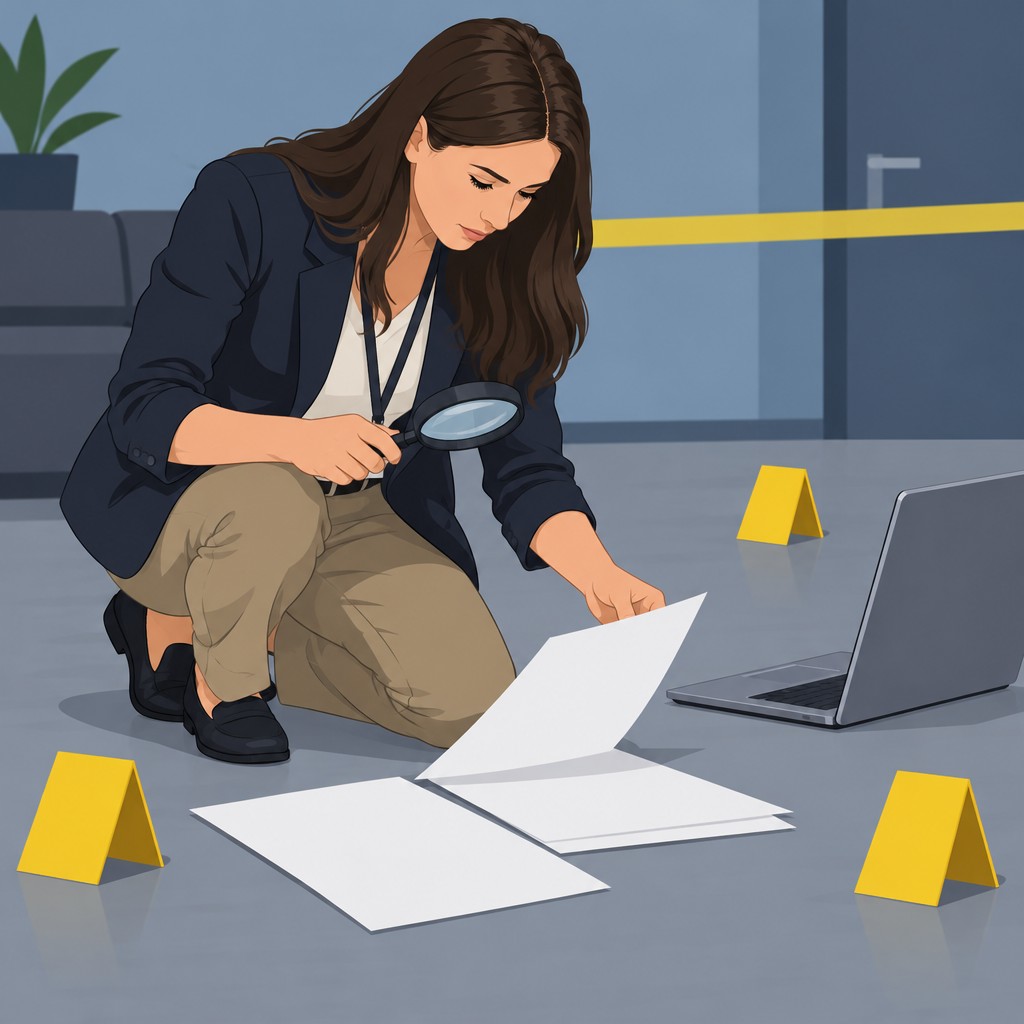
Reconstructing Events at a Crime Scene
Crime scene reconstruction helps investigators establish how events unfolded in cold cases.
Physical evidence allows them to arrange actions into a logical timeline.
This timeline clarifies relationships among locations, objects, and reported events.
Linking Evidence to Potential Suspects
Investigators examine fingerprints, footprints, DNA, and other material that may connect people with the scene.
They compare these findings with available information to narrow potential suspects.
Additionally, circumstantial evidence can support or challenge interpretations drawn from physical evidence.
Building a Sequence of Events
After reviewing the evidence, investigators arrange observations into a proposed sequence of actions.
They test that sequence against witness accounts and other case information.
Meanwhile, inconsistencies can reveal gaps that require further examination.
Using Specialized Expertise
Forensic scientists, pathologists, and ballistics experts can examine questions within their specialties.
These specialists may clarify how specific evidence fits the reconstructed events.
Investigators then incorporate those findings while keeping the broader reconstruction consistent.
Refining the Reconstruction
As the case develops, investigators reassess earlier interpretations when new evidence emerges.
They compare competing explanations and look for connections that support a coherent account.
This iterative review can produce new leads in cases that remained unresolved for years.
Pursuing Justice Through Reconstruction
Crime scene reconstruction supports efforts to uncover what happened and identify responsible individuals.
Careful reasoning helps investigators address complex cases without relying on one isolated clue.
Through persistence and attention to detail, they work toward justice for victims and their families.
Delve into the Subject: How Secret Service Agents Protect the President
Collaboration Among Law Enforcement Agencies
Crime scene investigators collaborate with law enforcement agencies to advance unresolved investigations.
They share resources and information that can reveal connections between cases.
Detectives, prosecutors, and other CSI teams each contribute specialized knowledge.
- Detectives provide insights that help CSI teams understand each case.
- Prosecutors analyze evidence and develop legal strategies for prosecuting identified suspects.
- Other CSI teams exchange best practices and techniques for resolving cases.
Shared Resources and Information
Effective communication helps investigators resolve difficult cases more efficiently.
Shared systems let investigators compare evidence and leads across ongoing investigations.
Furthermore, centralized information gives team members quicker access to important case materials.
- Investigators use databases to cross-reference evidence and leads with other investigations.
- Case management systems store files centrally for convenient access by team members.
- Teams share forensic reports and findings with relevant agencies and specialized experts.
Teamwork in Cold Case Investigations
Teamwork brings different expertise and perspectives into complex investigations.
Members coordinate their efforts so investigators do not overlook crucial details.
Additionally, mutual support helps teams manage challenging moments during investigations.
- Team members collaborate while collecting and analyzing evidence.
- Brainstorming sessions generate new ideas and case theories.
- Colleagues support and encourage one another throughout difficult investigations.
The Importance of Resolving Cold Cases
Solving cold cases brings justice to victims and closure to their families.
Crime scene investigators analyze evidence and follow leads that can advance these investigations.
Furthermore, public support helps law enforcement resolve cold cases and ensure justice for affected families.
Additional Resources
Google search results for How Crime Scene Investigators Solve Cold Cases Protective Services
Bing search results for How Crime Scene Investigators Solve Cold Cases Protective Services


