




Introduction
Emergency Management Directors help protect public safety during emergencies.
They prepare communities for disasters through organized planning and coordinated action.
They also guide response efforts before, during, and after emergencies.
Coordination and Planning
Emergency Management Directors coordinate response efforts across relevant departments and agencies.
They develop emergency plans that guide actions during disasters.
Furthermore, planning helps organize responsibilities before emergencies occur.
Training and Education
These directors provide emergency training to staff members.
They educate the public about appropriate emergency procedures.
Consequently, training improves understanding of preparedness responsibilities.
Resource Management
Directors allocate personnel, equipment, and supplies during emergencies.
They manage available resources according to response needs.
Effective allocation supports organized emergency operations.
Communication
Emergency Management Directors communicate with government agencies during emergencies.
They also share information with media organizations and the public.
Clear communication helps disseminate important emergency information.
Emergency Response
Emergency Management Directors oversee response operations during disasters.
They coordinate activities to support effective emergency management.
During response operations, directors monitor activities and maintain direction.
Continuous Improvement
Directors evaluate emergency response efforts after operations conclude.
They identify lessons learned from those response efforts.
They then update emergency plans using that information.
Collaboration
Emergency Management Directors work with other agencies and departments.
They build partnerships that strengthen emergency preparedness.
Through collaboration, participating organizations improve coordinated planning.
Community Engagement
Directors engage community stakeholders in emergency preparedness activities.
They encourage communities to understand emergency procedures.
This engagement helps ensure that everyone receives preparedness guidance.
Monitoring and Evaluation
Emergency Management Directors monitor potential threats.
They evaluate whether preparedness measures work effectively.
Regular evaluation helps directors identify areas requiring improvement.
Incident Command
Emergency Management Directors may serve as Incident Commanders during major emergencies.
In that role, they oversee emergency response operations.
They help direct activities to ensure an effective response.
Responsibilities of an Emergency Management Director
Emergency Management Directors help protect communities during times of crisis.
They manage responsibilities that support disaster preparedness and emergency response.
Their work combines planning, coordination, communication, and leadership.
Creating Emergency Response Plans
Emergency Management Directors develop plans for natural disasters, pandemics, and terrorist attacks.
They assess community risks and vulnerabilities before establishing emergency procedures.
They also revise plans after reviewing previous incidents and changing circumstances.
- Develop detailed emergency response plans for various types of disasters.
- Assess community risks and vulnerabilities to create effective emergency plans.
- Establish protocols for communication, evacuation, sheltering, and resource allocation.
- Update emergency response plans using lessons learned from previous incidents.
Training Staff and Coordinating Emergency Drills
Directors organize training sessions for emergency response teams.
Transform Your Career Today
Unlock a personalized career strategy that drives real results. Get tailored advice and a roadmap designed just for you.
Start NowThey conduct drills that simulate emergencies and test response protocols.
They evaluate staff performance and identify opportunities for improvement.
- Organize training sessions for emergency response teams.
- Conduct regular drills and exercises that simulate emergency situations.
- Evaluate staff performance during drills and provide improvement feedback.
- Coordinate joint exercises with local emergency services and agencies.
Collaborating with Government Agencies and Community Organizations
Directors work with government agencies to exchange information, resources, and emergency support.
They participate in planning committees and task forces that promote coordinated disaster management.
They engage community groups and critical infrastructure providers to strengthen response capabilities.
- Work with local, state, and federal agencies during emergencies.
- Participate in emergency planning committees and task forces.
- Engage nonprofit groups and volunteer networks to mobilize assistance.
- Establish partnerships with businesses, schools, hospitals, and infrastructure providers.
These duties require strategic planning, clear communication, and effective leadership.
By fulfilling these responsibilities, directors help safeguard lives and property during crises.
Monitoring and Analyzing Potential Threats
Emergency management directors monitor and analyze potential threats to their communities.
They stay informed about factors that could affect residents’ safety and well-being.
- Weather Patterns and Disaster Trends: Directors monitor weather patterns, upcoming events, and historical disaster data to prepare for emergencies.
- Community Vulnerabilities: Directors assess population density, infrastructure, and natural hazards to identify areas at risk during emergencies.
- Risk Assessment Reports: Directors develop reports that explain community risks and inform emergency planning and response efforts.
Discover More: Effective Problem-Solving for Security Consultants
Managing and Allocating Resources
- The director secures funding for emergency preparedness initiatives.
- The director procures necessary equipment and supplies.
- The director ensures proper resource utilization during emergencies.
Securing Funding for Emergency Preparedness Initiatives
An Emergency Management Director secures adequate funding for emergency preparedness initiatives.
This work involves developing and presenting budget proposals to relevant stakeholders.
These stakeholders include government agencies, private organizations, and community groups.
Additionally, directors seek grants and other funding opportunities for their programs.
They use financial planning and management skills to allocate resources efficiently.
Procuring Necessary Equipment and Supplies
Emergency Management Directors procure equipment and supplies for effective emergency response.
They maintain inventories of essential resources for emergency operations.
These resources include medical supplies, communication devices, and emergency response vehicles.
Furthermore, directors build relationships with vendors and suppliers.
They negotiate contracts to obtain the best possible prices.
Directors also track new technologies and tools that improve response capabilities.
Ensuring Proper Resource Utilization During Emergencies
During emergencies, the director oversees resource utilization throughout response efforts.
This oversight helps maximize the effectiveness of emergency operations.
The director coordinates personnel, equipment, and supplies across affected areas.
Strong organizational and logistical skills support efficient resource management.
Directors prioritize tasks according to the emergency’s severity and scope.
As a result, they support a swift and coordinated response.
Uncover the Details: Wildlife Conservation by Fish and Game Wardens
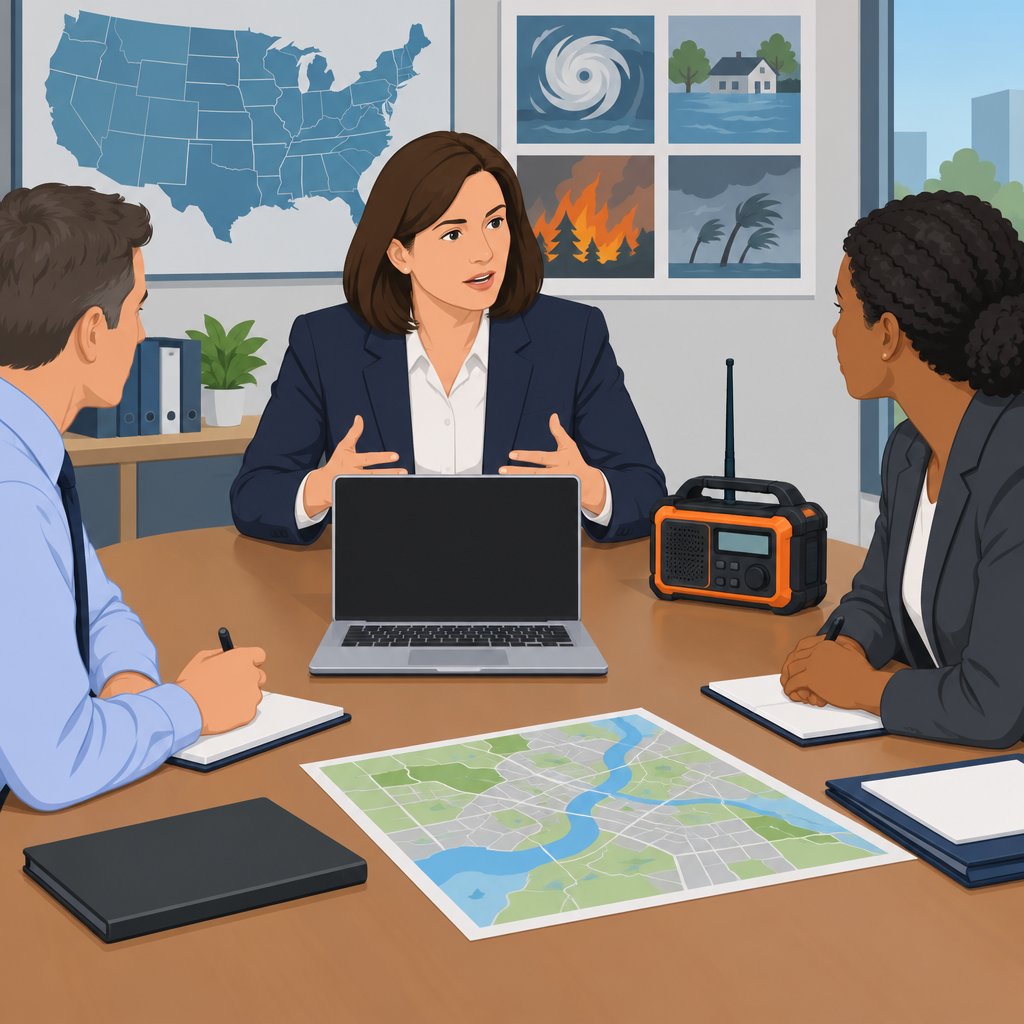
Communication and Coordination
Effective communication remains a crucial part of an Emergency Management Director’s daily duties.
It connects emergency services, informs the public, and supports coordinated disaster responses.
Moreover, clear coordination helps agencies and volunteers work toward a unified response.
- Establishing communication channels with other emergency services.
- Issuing warnings and advisories to the public.
- Coordinating response efforts during disasters.
Establishing Communication Channels
Emergency Management Directors establish strong communication channels with other emergency services.
These services include fire departments, police departments, and medical services.
As a result, agencies can support a coordinated and efficient response during emergencies.
Issuing Warnings and Advisories
Emergency Management Directors issue timely warnings and advisories to the public.
These messages can address severe weather, natural disasters, and other potential hazards.
Therefore, clear public information helps communicate risks during emergency situations.
Coordinating Response Efforts
During disasters, the Emergency Management Director coordinates response efforts.
This work involves various agencies, organizations, and volunteers.
Together, these groups support a unified and effective response to emergency situations.
Transform Your Career Today
Unlock a personalized career strategy that drives real results. Get tailored advice and a roadmap designed just for you.
Start NowUncover the Details: U.S. Marshal Badges: Meaning and Significance
Leading Emergency Response Efforts
Emergency management directors lead response efforts when disasters strike.
They coordinate agencies and actions to protect residents.
During a disaster, the director serves as incident commander.
- This role requires strategic decisions, agency coordination, and clear information sharing.
- The director assesses conditions quickly and selects actions that protect lives and property.
- The director implements evacuation plans and provides emergency shelter for residents.
- The director coordinates search and rescue operations during emergencies.
Strong leadership and quick thinking help the director manage changing conditions.
Timely decisions can minimize disaster impacts and protect the community.
Uncover the Details: Interview Tips for Aspiring Probation Officers
Evaluating and Updating Emergency Plans
- Emergency management directors play a crucial role in evaluating and updating emergency plans.
- They conduct after-action reviews to improve future emergency responses.
- Additionally, they identify areas that require improvement during the evaluation process.
- They update response plans using lessons learned to strengthen preparedness.
Conducting After-Action Reviews of Response Efforts
- After an emergency or disaster, emergency management directors conduct reviews to support learning and growth.
- These reviews assess which response actions worked well and which areas need improvement.
- They reveal gaps in emergency response efforts and support improvement strategies.
- Emergency management directors lead the review process to improve future emergency outcomes.
Identifying Areas for Improvement
- Emergency management directors actively seek weaknesses within emergency plans.
- They make necessary adjustments after identifying weaknesses in current plans.
- Furthermore, they analyze the strengths and weaknesses of existing emergency plans.
- Addressing gaps and vulnerabilities creates a stronger emergency management strategy.
Updating Response Plans Based on Lessons Learned
- Lessons from past emergencies provide valuable insights for updating response plans.
- Emergency management directors use feedback to refine and improve existing strategies.
- As a result, updated plans remain current, relevant, and aligned with best practices.
- Incorporating lessons learned helps directors adapt plans to evolving threats and risks.
Training Supports Emergency Readiness
Emergency Management Directors play a vital role in community safety.
They also support community preparedness through their responsibilities.
Therefore, continuous training helps these directors handle emergencies effectively.
Additional Resources
Google search results for Daily Duties of an Emergency Management Director Protective Services
Bing search results for Daily Duties of an Emergency Management Director Protective Services


