




Introduction
Dairy scientists play a crucial role in the agricultural industry.
Animal genetics research also supports advancements in dairy production and breeding practices.
These advancements continue to influence modern dairy production and animal breeding.
Overview of Dairy Science
Dairy science studies milk production, composition, quality, and safety.
This agricultural field examines practices that support nutritious dairy products.
It also evaluates methods that improve efficiency and sustainability in dairy farming.
Responsibilities of Dairy Scientists
- Dairy scientists develop breeding strategies that enhance milk yield and quality.
- They analyze milk composition against industry standards and nutritional requirements.
- Additionally, they study animal behavior and nutrition to improve feed formulations.
Core Areas of Dairy Science
- Nutrition: Scientists formulate balanced diets that support higher milk production.
- Reproduction: Researchers study reproductive physiology to improve cattle breeding practices.
- Disease Prevention: Specialists develop vaccination programs and herd management practices.
Research Priorities in Dairy Science
- Research develops technologies and practices that improve dairy farming efficiency and sustainability.
- It addresses climate change, animal welfare, and food safety challenges within the dairy industry.
- Furthermore, ongoing research helps the industry adapt to market demands and consumer preferences.
Dairy Science and Product Quality
Dairy science combines multiple disciplines to support sustainable dairy production.
Its research strengthens milk quality, nutrition, and disease prevention practices.
These efforts help maintain safe and nutritious dairy products for consumers.
Importance of Animal Genetics Research
Animal genetics research supports breeding programs.
It helps breeders select traits and preserve genetic diversity.
Additionally, genetic research helps identify animals with disease resistance.
- Animal genetics research supports breeding programs.
- Breeders use it to select traits and improve genetic diversity.
- Researchers use it to identify disease-resistant animals.
Significance in Breeding Programs
Breeding programs use genetics research to select suitable mating pairs.
By examining genetic makeup, breeders can predict offspring traits.
They can then select desirable characteristics for future generations.
This process improves animal populations and supports traits such as disease resistance, heat tolerance, and productivity.
Improving Animal Health, Productivity, and Sustainability
Genetics research can improve animal health, productivity, and sustainability.
Researchers identify genes associated with diseases or undesirable traits.
Breeders can then develop strategies that reduce these problems.
For example, dairy scientists bred cows producing more milk while requiring fewer resources.
This approach increases productivity and supports sustainability by reducing environmental impact.
Breeding Programs Enhanced by Genetics Research
Several breeding programs demonstrate how genetics research supports practical improvements.
Holstein Association USA provides sire summaries for breeding decisions.
Poultry programs improve meat quality and disease resistance through selective breeding.
Similarly, sheep breeders select animals for wool quality and quantity.
- Holstein Association USA’s sire summaries.
- Poultry breeding programs that improve meat quality and disease resistance.
- Selective sheep breeding for wool quality and quantity.
Gain More Insights: How to Advance Your Career in Biotechnology
Dairy Scientists and Geneticists in Breeding Programs
Dairy scientists collaborate with geneticists to identify desirable traits in dairy animals.
They analyze genetic data to estimate trait heritability and select suitable animals for breeding.
Thus, their partnership grounds breeding programs in sound genetic principles.
Genetic Data and Informed Breeding Decisions
Furthermore, dairy scientists use advanced genetic technologies to examine dairy animal data.
They identify genes associated with desirable traits in dairy animals.
These findings guide breeding decisions that improve herd genetic potential and productivity.
They also evaluate genetic diversity to support healthy breeding programs and prevent inbreeding.
Dairy Science and Animal Genetics as Interdisciplinary Research
Dairy science integrates genetics, nutrition, reproduction, and health to optimize dairy production and animal welfare.
Meanwhile, animal genetics research examines factors influencing milk production and disease resistance.
This integration connects genetic research with practical dairy production and animal care.
Collaboration between both fields advances dairy genetics and supports dairy industry sustainability.
See Related Content: How to Develop Effective Livestock Feed Programs
Recent Advancements in Dairy Science and Genetics Research
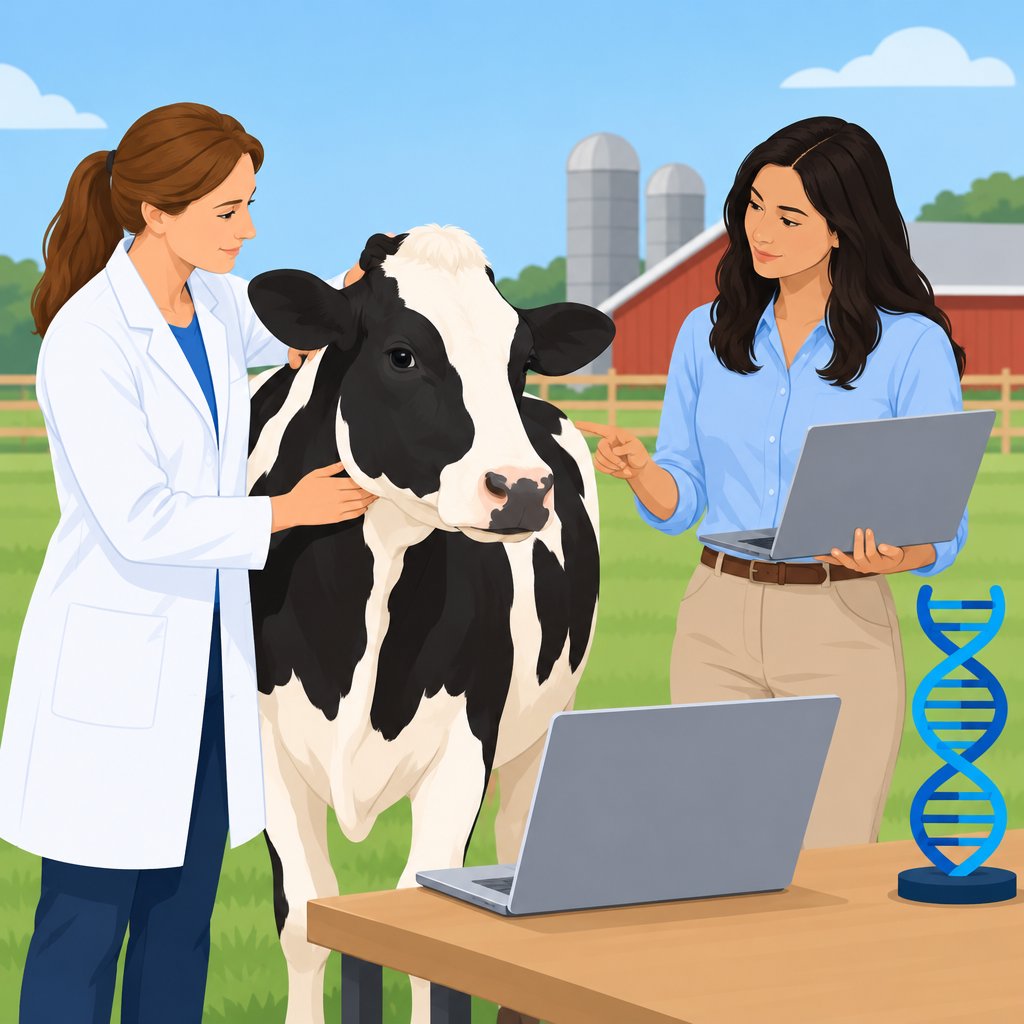
- Dairy scientists now use advanced genetic tools.
- These tools identify genes associated with desirable milk production traits.
- Additionally, breeders select animals with specific genetic markers.
- This precision breeding targets high milk yield and disease resistance.
Impact of Genetic Advancements
- Consequently, farmers can breed animals with superior genetics for higher milk production.
- Precision breeding emphasizes genes that enhance animal health and immunity.
- Therefore, healthier livestock can result from these breeding choices.
- Furthermore, better feed efficiency and lower methane emissions can reduce the industry’s environmental footprint.
Potential for Future Advancements
- CRISPR technology may precisely alter animal genomes for desired traits.
- For example, researchers may target disease resistance through genetic editing.
- Meanwhile, scientists are exploring milk with higher levels of beneficial nutrients.
- Future research may breed dairy animals with reduced water and feed requirements.
- These sustainability measures could promote more sustainable dairy production.
Learn More: The Role of Food Scientists in Beverage Development
Challenges Facing Dairy Scientists and Geneticists
Dairy scientists and geneticists face several obstacles during research.
Transform Your Career Today
Unlock a personalized career strategy that drives real results. Get tailored advice and a roadmap designed just for you.
Start NowLimited funding can restrict the scope of research projects.
Moreover, researchers must manage complex data and ethical questions carefully.
- Limited funding for research projects
- Difficulty accessing and analyzing large-scale genetic data
- Balancing ethical considerations in gene editing technologies
- Addressing resistance to new breeding practices
Opportunities for Innovation and Collaboration
Researchers can strengthen dairy science through broader collaboration and improved research strategies.
Additionally, big data analytics can help researchers improve genetic research outcomes.
Stakeholder engagement can also support policies that advance genetic research.
- Collaborating with other scientific disciplines for holistic solutions
- Leveraging big data analytics to improve genetic research outcomes
- Developing public-private partnerships for research funding
- Engaging stakeholders to support policy changes for genetic research
Integrating New Technologies into Dairy Farming
New technologies could expand the precision of dairy farming and breeding practices.
For example, CRISPR gene editing could target specific traits in dairy cattle.
Furthermore, precise genetic changes could support production efficiency and environmental goals.
- Improving disease resistance in dairy cattle through gene editing
- Enhancing milk production efficiency through genetic modification
- Selectively breeding desirable traits with precision gene editing tools
- Minimizing environmental impact by reducing methane emissions in cattle
Gain More Insights: Extension Agents: Promoting Food Security
Career Opportunities in Dairy Science and Animal Genetics
Dairy scientists research dairy products and improve farming practices.
Animal geneticists develop breeding strategies that improve animal health, productivity, and sustainability.
Research scientists study dairy cows, genetics, nutrition, and disease prevention.
- University professors teach dairy science and animal genetics while conducting academic research.
- Farm consultants advise farmers about herd management, genetics, breeding programs, and nutrition.
Demand for Skilled Dairy Professionals
Global demand for dairy products continues to create opportunities for dairy scientists and geneticists.
Moreover, agriculture employers seek expertise that strengthens animal breeding programs.
Research institutions and dairy companies actively recruit professionals with advanced dairy science degrees.
- Sustainable agriculture creates opportunities to address environmental issues in dairy farming.
- Skilled professionals support future food production and animal health.
Career Growth and Specialization
Professionals entering these fields can build rewarding careers with opportunities for advancement.
As technology advances, specialists can pursue work in genomics and precision farming.
Experience and further education can support leadership roles in research, academia, or industry.
- Networking helps professionals learn about opportunities and advance their careers.
- Continuing education and certifications can strengthen professional qualifications.
Resources for Career Preparation
Industry associations provide opportunities to connect with professionals in dairy science and genetics.
Conferences, seminars, and workshops introduce current research trends and support professional networking.
Internships and research assistant positions provide practical experience in dairy science and genetics research.
- Mentors can offer guidance and support during career development.
- Industry publications and scientific journals help professionals follow research advancements.
- Online resources can help individuals stay informed about dairy science and genetics research.
The Continuing Impact of Dairy Research
Dairy scientists and animal genetics researchers advance agriculture by improving dairy products, animal well-being, and milk production efficiency.
Their contributions also shape farming practices and support sustainable food production.
Therefore, people can better understand global food challenges by following developments in these fields.
These fields offer opportunities for people who want to develop innovative agricultural solutions.
Such solutions can benefit the agricultural sector and society.
Continued support for dairy science and genetics research can help create a sustainable future for agriculture.
Additional Resources
Google search results for Dairy Scientists and Animal Genetics Research Agricultural
Bing search results for Dairy Scientists and Animal Genetics Research Agricultural


