




Work Environment of a Dairy Scientist
A dairy scientist conducts research, analyzes data, and improves dairy products.
The work environment strongly influences each scientist’s productivity and success.
Therefore, supportive conditions help dairy scientists produce higher-quality work.
Collaborative Atmosphere
Dairy scientists often work in teams to address complex research problems.
Team members share ideas and insights throughout the research process.
This collaboration encourages creativity and supports innovative dairy research solutions.
Laboratory Settings
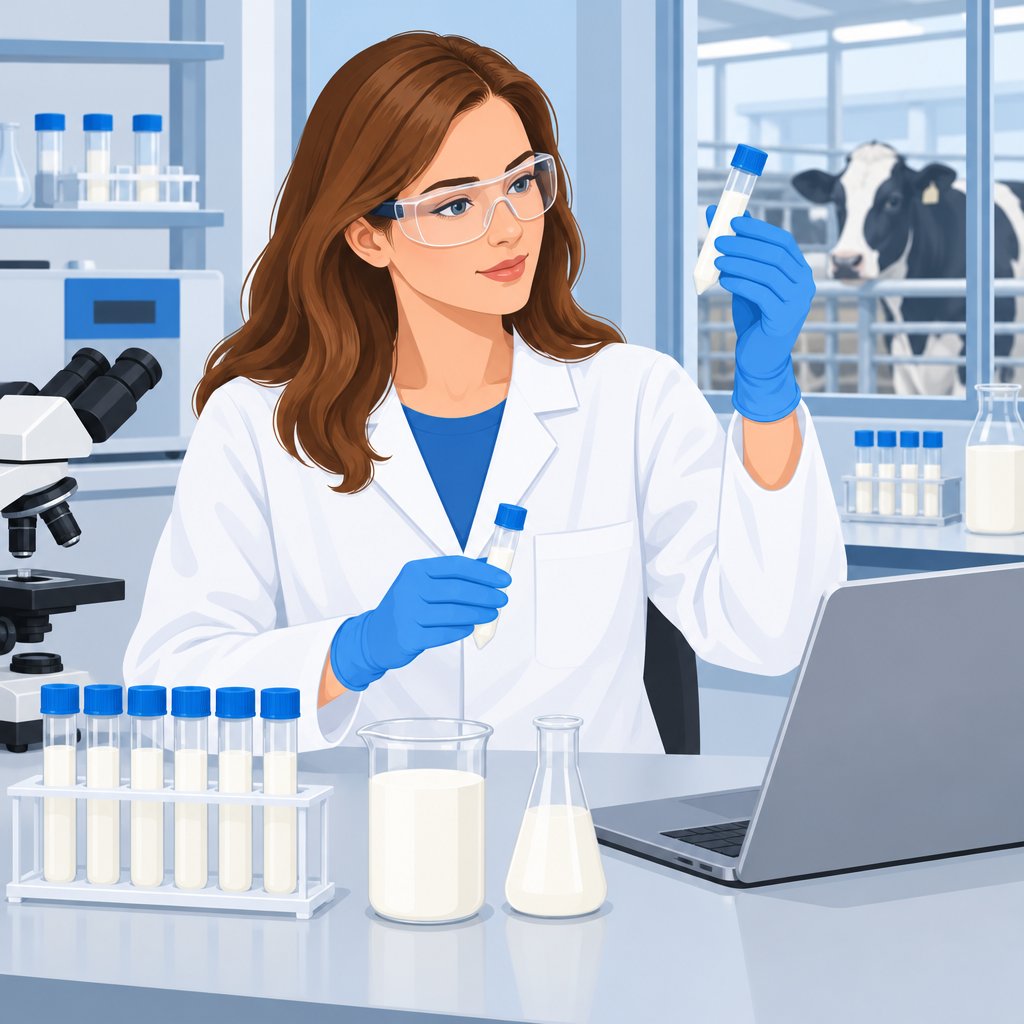
Dairy scientists spend significant time conducting experiments and tests in laboratories.
Well-equipped laboratories support accurate data collection and careful analysis.
Additionally, safe laboratory conditions help scientists conduct their work effectively.
Field Work
Some dairy scientists visit farms and dairy production facilities during fieldwork.
These visits allow scientists to observe real-world dairy practices directly.
They also gather relevant data to support their research.
Continuous Learning
The dairy science work environment encourages ongoing learning and professional development.
Scientists use resources, training programs, and conferences to expand their knowledge.
As a result, they stay informed about changing industry trends.
Work-Life Balance
A healthy work environment supports the well-being of dairy scientists.
Flexible schedules can help scientists manage their professional responsibilities effectively.
Moreover, a supportive workplace culture contributes to better work-life balance.
Conditions That Support Career Success
The work environment affects dairy scientists’ work quality and job satisfaction.
Providing suitable resources and consistent support helps scientists thrive professionally.
These conditions strengthen their ability to contribute effectively throughout their careers.
Education and Training for Dairy Scientists
Dairy scientists need strong academic preparation to support research and product development.
Professional training also helps them address production, processing, and quality requirements.
Furthermore, continuous learning keeps their knowledge aligned with industry advances.
- A bachelor’s degree in dairy science or a related field
- Additional certifications or specialized training
- Continuous learning and professional development
Bachelor’s Degree in Dairy Science
A bachelor’s degree in dairy science or a related field typically provides the minimum educational foundation.
Students learn about dairy production, processing, and quality control through comprehensive coursework.
Moreover, programs may address animal nutrition, genetics, microbiology, and food safety.
Additional Certifications and Specialized Training
Additional certifications can strengthen a dairy scientist’s knowledge in specialized areas.
For example, quality control and food safety training can develop valuable professional skills.
These credentials also demonstrate a commitment to professional development and continued learning.
Continuous Learning and Professional Development
The dairy industry continues to evolve as new technologies and research influence production and consumption.
Therefore, dairy scientists should attend conferences, workshops, and seminars to maintain current knowledge.
They may also pursue advanced degrees or certifications to remain competitive and support organizational success.
Work Setting
- Laboratories, research facilities, or on farms
- Interaction with other scientists, farmers, and industry professionals
- Importance of understanding different work environments and adapting as needed
Dairy scientists work in laboratories, research facilities, and farms.
They interact with scientists, farmers, and industry professionals.
Therefore, they must understand different environments and adapt their approaches.
Laboratories, Research Facilities, or on Farms
Dairy scientists work in laboratories, research facilities, and directly on farms.
In laboratories, they conduct experiments and analyze data.
They use this work to develop methods and techniques for dairy production.
Research facilities provide space for collaboration with other scientists.
Transform Your Career Today
Unlock a personalized career strategy that drives real results. Get tailored advice and a roadmap designed just for you.
Start NowScientists also conduct detailed studies on dairy products and processes there.
Meanwhile, farm work helps dairy scientists observe practical dairy farming activities.
These activities include animal health, nutrition, and breeding practices.
Interaction with Other Scientists, Farmers, and Industry Professionals
Collaboration helps dairy scientists follow current research and industry trends.
They share knowledge and exchange ideas with other scientists.
They also work on collective projects that benefit the dairy industry.
Communication with farmers provides valuable insights into dairy farming challenges.
Farmers also share information about opportunities within dairy farming.
Additionally, industry professionals explain market demands and consumer preferences.
They also help scientists understand regulatory requirements.
Importance of Understanding Different Work Environments and Adapting as Needed
Flexibility helps dairy scientists navigate different work environments effectively.
Each setting presents unique challenges and requirements.
As a result, scientists must adapt their skills and knowledge.
Understanding laboratories, research facilities, and farms supports better planning.
Scientists can then tailor their approaches and strategies to each setting.
This approach helps them pursue optimal results across different environments.
By adapting, dairy scientists can contribute significantly to the dairy industry’s advancement.
Delve into the Subject: Understanding Pesticide Regulations
Daily Responsibilities
- As a dairy scientist, a typical day involves conducting research and experiments in the lab.
- This work also includes analyzing data carefully and interpreting results to draw meaningful conclusions.
- Additionally, dairy scientists develop new dairy products or improve existing ones.
Conducting Research and Experiments
Dairy scientists design and execute experiments to study various aspects of dairy production.
They investigate milk composition, processing techniques, and product shelf life.
Through these experiments, they seek to improve dairy product efficiency and quality.
Analyzing Data and Interpreting Results
After completing experiments, dairy scientists analyze the resulting data.
They use statistical tools and software to identify patterns and trends.
Consequently, they interpret results to guide process improvements and product innovation.
Developing New Dairy Products or Improving Existing Ones
Dairy scientists help create new products and improve existing dairy offerings.
They develop formulations, test prototypes, and conduct sensory evaluations for consumer acceptance.
Furthermore, they seek to enhance the nutritional value or shelf life of existing products.
This work requires scientific knowledge, technical skills, and creativity.
Together, these abilities support continued advancements in the dairy industry.
Discover More: Role of Extension Agents in Modern Agriculture
Equipment and Tools
- Dairy scientists use specialized laboratory equipment to analyze milk content and quality.
- They use industry-specific technology to innovate dairy production processes.
- Furthermore, they maintain and calibrate equipment to support accurate results and reliable data interpretation.
Specialized Laboratory Equipment
Dairy scientists rely on specialized laboratory equipment during research and dairy product analysis.
These tools measure milk components, including fat content, protein levels, and microbial presence.
Therefore, scientists use this equipment to assess milk quality and develop new dairy products.
Industry-Specific Technology
Dairy scientists also stay current with technology designed for the dairy industry.
This technology includes software for data analysis and monitoring equipment for production processes.
By using these tools, scientists streamline their work, increase efficiency, and improve dairy product quality.
Maintenance and Calibration
Dairy scientists manage equipment maintenance and calibration to support dependable research findings.
Regular maintenance keeps equipment functioning properly and helps produce accurate results.
Moreover, calibration verifies measurement accuracy and maintains consistency during data analysis.
Consequently, reliable equipment data helps scientists make informed decisions about dairy products and processes.
Transform Your Career Today
Unlock a personalized career strategy that drives real results. Get tailored advice and a roadmap designed just for you.
Start NowGain More Insights: Top Innovations in Food Science and Technology
Safety Considerations
- Dairy scientists often handle potentially hazardous chemicals or substances daily.
- They must follow strict safety protocols to prevent accidents or injuries.
- Proper training helps dairy scientists handle chemicals safely.
- Protective gear, including gloves, goggles, and lab coats, minimizes risks.
- Regular safety audits and inspections help maintain a safe work environment.
- Emergency response plans guide teams during accidents or chemical spills.
- Properly disposing of hazardous waste supports workplace safety.
- Continuous education reinforces safety procedures for dairy scientists.
- Teams should promote safety awareness throughout the workplace.
- Staff should report and investigate incidents or near misses to prevent recurrence.
Delve into the Subject: Veterinary Technician Salary: What to Expect
Team Collaboration
Team collaboration supports successful dairy research and production.
Dairy scientists work with diverse professionals to address shared goals.
Moreover, strong cooperation helps teams combine expertise and resources effectively.
- Working with other dairy scientists, technicians, and support staff
- Collaborating with external partners, including farmers, manufacturers, and government agencies
- Using effective communication and teamwork to achieve shared goals
Collaboration Within Dairy Teams
Dairy scientists share expertise, ideas, and resources with their colleagues.
This cooperation supports problem-solving, innovation, and improvement across dairy science.
Technicians conduct experiments, collect data, and keep laboratory equipment functioning properly.
Additionally, support staff maintain records and organize research projects.
When teams coordinate their efforts, they improve productivity and efficiency.
Partnerships Across the Dairy Industry
External partnerships connect dairy research with practical applications.
Farmers provide insights into on-farm practices, animal health, and production systems.
Manufacturers contribute knowledge about processing techniques, product development, and market trends.
Government agencies regulate industry standards and support policy development.
They also provide funding opportunities for relevant research.
Consequently, these partnerships help researchers address real-world dairy challenges.
Communication and Teamwork
Effective communication helps internal teams and external partners pursue common goals.
Clear communication ensures that everyone understands expectations and responsibilities.
Furthermore, teamwork combines individual strengths, diverse perspectives, and specialized skills.
These qualities help dairy scientists address complex challenges.
A collaborative environment built on trust and respect supports stronger research efforts.
Through collaboration, dairy scientists can advance innovation and contribute meaningfully to the dairy industry.
Work-Life Balance
Dairy scientists may work long hours during busy seasons or research projects.
Therefore, self-care and time management support their overall well-being.
The following strategies can help dairy scientists maintain a healthy work-life balance.
- Set Boundaries: Establish clear boundaries between work and personal time to help prevent burnout.
- Prioritize Tasks: Create a to-do list and rank tasks by urgency and importance.
- Delegate: Assign suitable tasks to others to reduce your workload and prevent overwhelm.
- Take Breaks: Schedule regular breaks to refresh your mind and prevent fatigue.
- Practice Self-Care: Exercise, meditate, or enjoy hobbies to promote relaxation and reduce stress.
- Unplug: Disconnect from work emails and calls during non-working hours to recharge.
- Seek Support: Contact colleagues, friends, or professionals when you need support.
- Set Realistic Goals: Choose achievable goals instead of creating unrealistic expectations.
- Stay Organized: Keep your workspace organized to improve productivity and reduce stress.
Conditions That Support Dairy Science Success
A supportive work environment directly influences dairy scientists’ productivity and job satisfaction.
Access to state-of-the-art facilities gives scientists resources that support effective research.
Supportive colleagues also encourage collaboration and innovation across the dairy industry.
Furthermore, a healthy work-life balance helps scientists sustain strong performance over time.
These conditions can improve dairy scientists’ performance and encourage new ideas.
Consequently, positive workplaces strengthen collaboration throughout the industry.
Aspiring dairy scientists should evaluate these factors when selecting a work setting.
That choice can support their professional growth and success.
Additional Resources
Google search results for Work Environment of a Dairy Scientist Agricultural
Bing search results for Work Environment of a Dairy Scientist Agricultural


