




Extension Agents in Agriculture
Extension agents are agricultural professionals who work closely with farmers.
They provide technical assistance, training, and resources.
Farmers receive practical support through these professional relationships.
Extension Agents and Agricultural Development
Extension agents disseminate agricultural information to farmers.
They help implement new technologies and improve farming practices.
Consequently, their work supports agricultural development.
Extension Agents in Modern Agriculture
In modern agriculture, extension agents facilitate sustainable farming practices.
They educate farmers and provide ongoing agricultural support.
Additionally, they help farmers adopt innovative techniques.
They guide pest and disease management while promoting healthier soils.
These efforts can increase crop yields and support environmental conservation.
Moreover, extension agents help farmers adapt to changing climate conditions.
By supporting sustainable practices, they contribute to food security.
They also help improve farmers’ livelihoods.
History of Extension Services
- Extension services have existed since the late 19th century.
- They originated in the United States after lawmakers passed the Hatch Act in 1887.
- The act funded agricultural experiment stations and extension work.
- Furthermore, extension agents delivered research-based knowledge to farmers.
Evolution of Agricultural Extension Services
- Extension services once emphasized production practices.
- Today, they address soil health, pest management, and sustainable practices.
- Additionally, these services help farmers improve efficiency, productivity, and environmental sustainability.
- They continue adapting to agriculture’s changing needs.
Important Milestones in Extension Service Development
- In 1914, the Smith-Lever Act formalized the United States cooperative extension system.
- The act created partnerships among land-grant universities, the USDA, and local governments.
- Later, programs expanded into nutrition, youth development, and rural community development.
- Moreover, online resources and webinars now help services reach more farmers.
Impact of Extension Services on Agricultural Practices
- Extension services disseminate research-based information to farmers.
- They also support technology adoption and improved farming practices.
- As a result, farmers can increase yields and profitability.
- Through training and support, these services help farmers make informed operational decisions.
Responsibilities of Extension Agents
- Providing technical advice to farmers
- Conducting training and workshops
- Facilitating access to resources and technology
- Collaborating with research institutions and government agencies
Extension agents support modern agriculture through several important responsibilities.
They connect farmers with current knowledge, practical guidance, and agricultural developments.
Consequently, their work helps farmers make informed decisions about agricultural production.
Providing Technical Advice to Farmers
Extension agents provide farmers with valuable insights into agricultural best practices.
They advise farmers on crop management, soil health, pest control, and other farming concerns.
This guidance helps farmers make informed decisions and improve farm productivity.
Conducting Training and Workshops
Extension agents organize training sessions and workshops for farmers.
These activities introduce new technologies, sustainable methods, and innovative production techniques.
Through hands-on instruction, agents help farmers adopt practices that improve agricultural efficiency.
Facilitating Access to Resources and Technology
Extension agents connect farmers with essential resources and agricultural technologies.
They help farmers access quality seeds, fertilizers, modern equipment, and other farming inputs.
As a result, farmers can improve production practices, crop quality, and profitability.
Collaborating with Research Institutions and Government Agencies
Extension agents collaborate with research institutions and government agencies.
This cooperation keeps them informed about agricultural innovations and recent developments.
They then share relevant research findings and technologies with farmers.
Find Out More: Top Innovations in Food Science and Technology
Extension agents promote sustainable agriculture by teaching farmers practical methods that protect resources and support responsible production.
Education in Sustainable Farming Techniques
Extension agents teach farmers methods that improve soil health and support sustainable crop production.
They provide practical training through workshops and field days that demonstrate these techniques.
Farmers learn to reduce chemical inputs by using organic fertilizers and pesticides appropriately.
- Farmers learn about crop rotation, soil conservation, and integrated pest management.
- Training explains how organic fertilizers and pesticides can reduce chemical inputs.
- Workshops and field days demonstrate sustainable farming practices in action.
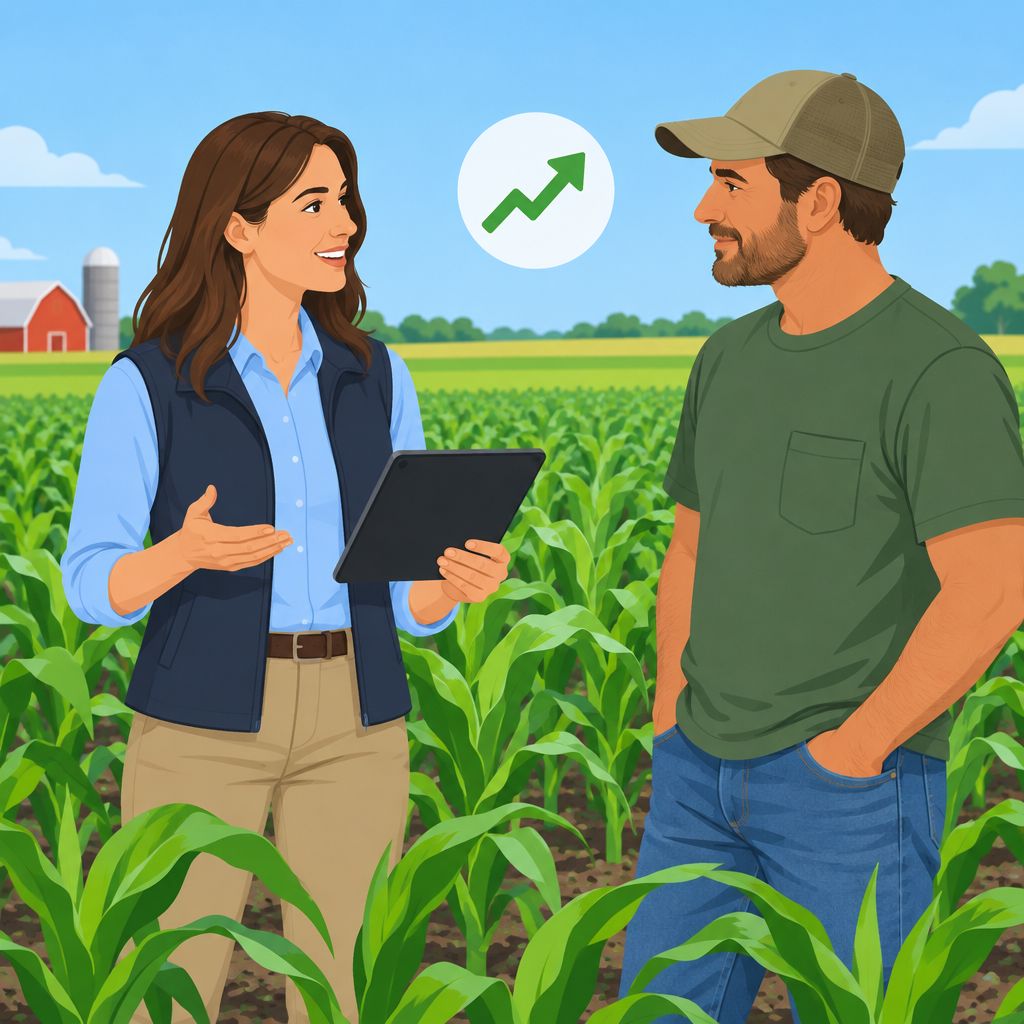
Environmentally Friendly Farming Practices
Extension agents encourage farmers to adopt practices that protect soil, water, and the surrounding environment.
They explain how efficient methods can conserve resources while supporting agricultural production.
Farmers also receive guidance on reducing greenhouse gas emissions through sustainable farming methods.
- Cover crops help prevent soil erosion and improve soil health.
- Drip irrigation provides a water-saving approach to crop production.
- Sustainable farming methods can help reduce greenhouse gas emissions.
Conservation of Natural Resources
Extension agents help farmers understand how conservation supports ecological balance on and around farms.
They promote practices that preserve biodiversity, improve soil fertility, and protect essential water sources.
These efforts connect agricultural production with the responsible management of natural resources.
Transform Your Career Today
Unlock a personalized career strategy that drives real results. Get tailored advice and a roadmap designed just for you.
Start Now- Habitat restoration helps preserve biodiversity on farms.
- Agroforestry improves soil fertility and provides shade for crops.
- Protecting water sources and wetlands helps maintain ecological balance.
Uncover the Details: Veterinary Technician Salary: What to Expect
Extension Agents and Agricultural Productivity
Extension agents help farmers improve productivity through practical guidance and timely access to agricultural information.
They connect farming decisions with modern tools, crop management practices, and field evaluation.
Consequently, farmers can receive support for improving productivity and sustainability.
Helping Farmers Adopt New Technologies
First, extension agents introduce farmers to the latest advancements in agricultural technology.
They provide training that helps farmers use these technologies effectively.
Through this guidance, farmers gain practical support when adopting new tools.
Supporting Crop Management and Pest Control
Next, extension agents help farmers manage crops efficiently to support maximum yield.
They advise farmers about pest control methods that can minimize crop damage.
Additionally, their field guidance helps farmers respond to crop management needs.
Monitoring and Evaluating Farming Practices
Extension agents monitor farming practices after farmers implement them in the field.
They evaluate how effectively those practices work under field conditions.
Then, they give farmers feedback about areas that require improvement.
Practical Support for Farm Improvement
Extension agents give farmers access to information and resources.
Their hands-on support connects advice with day-to-day agricultural decisions.
As a result, farmers can pursue greater productivity and sustainability.
You Might Also Like: Notable Contributions of Biotechnology Specialists
Relationships That Strengthen Rural Communities
Extension agents connect farmers with resources, information, and new technologies.
They also build relationships with local organizations to understand community needs and challenges.
Through regular interactions and site visits, agents provide personalized guidance for improved agricultural practices.
This support can help farmers increase productivity.
Support for Community Development
Extension agents support community projects that improve rural socioeconomic conditions.
They help communities identify needs and create action plans.
Furthermore, agents collaborate with government agencies, NGOs, and private organizations.
These partnerships combine resources and expertise for sustainable projects benefiting entire communities.
Entrepreneurship and Income Generation
Extension agents promote entrepreneurship and income-generating activities among farmers.
They provide training and technical assistance for diversified income sources and new business opportunities.
By encouraging innovation and creativity, agents help farmers address economic challenges.
Consequently, stronger livelihoods contribute to rural development and prosperity.
Stronger Rural Economies
These efforts strengthen rural communities through relationships, development projects, and entrepreneurship.
They also support resilience and sustainability within rural economies.
As a result, farmers and society can benefit from stronger rural communities.
See Related Content: Entomology Journals: Top Publications to Follow
Challenges Faced by Extension Agents
Extension agents play a crucial role in modern agriculture.
They provide farmers with information, training, and support that can improve practices and increase productivity.
However, these professionals face numerous challenges in their daily work.
- Limited resources and funding
- Resistance to change from farmers
- Lack of training and capacity-building opportunities
Limited Resources and Funding
Extension agents often work in resource-constrained environments.
Consequently, they may lack tools, equipment, and funding for their duties.
This shortage limits their reach and reduces assistance for farmers.
Resistance to Change from Farmers
Some farmers resist recommendations to adopt unfamiliar practices or technologies.
Transform Your Career Today
Unlock a personalized career strategy that drives real results. Get tailored advice and a roadmap designed just for you.
Start NowTraditional beliefs, limited awareness, and fear of failure can discourage change.
Therefore, agents need patience, clear communication, and trust within farming communities.
Lack of Training and Capacity-Building Opportunities
Agriculture continues to evolve through new technologies and practices.
Meanwhile, many agents lack ongoing training and capacity-building opportunities.
Without regular learning, they may struggle to provide current guidance to farmers.
Government agencies, nonprofit organizations, and agricultural communities must work together to address these challenges.
Such collaboration can provide resources, support, and training for extension agents.
Future Support for Agricultural Extension Services
Extension agents play a crucial role in advancing modern agriculture through information, training, and practical farmer support.
By connecting research with field application, they help farmers improve productivity and strengthen sustainable practices.
Therefore, continued support for extension services can help farmers access the knowledge and resources required to compete effectively.
Looking ahead, investment in agent training and appropriate technology can improve responses to changing agricultural challenges.
Additional Resources
Google search results for Role of Extension Agents in Modern Agriculture Agricultural
Bing search results for Role of Extension Agents in Modern Agriculture Agricultural


