




Importance of Food Science and Technology
Food science and technology help ensure food safety and quality.
They support controlled approaches to food production and processing.
They also influence how people consume and understand food.
Revolutionizing Food Production and Consumption
Innovations have changed how producers grow and process food.
They have also changed how people enjoy food.
These developments connect technology with efficiency, sustainability, and new food experiences.
Top Innovations in Food Science and Technology
Several technologies now influence food production, processing, packaging, and consumption.
These approaches address changing needs across the food industry.
They also demonstrate how science supports more efficient and innovative food systems.
Plant-Based Meat Alternatives
Companies like Beyond Meat and Impossible Foods have developed plant-based meat alternatives.
These products mimic the taste and texture of conventional meat.
As a result, consumers can explore meat alternatives designed to resemble familiar foods.
Precision Agriculture
Precision agriculture uses technology to optimize crop production.
Farmers can use these approaches to reduce waste during production.
Furthermore, precision agriculture supports more sustainable farming practices.
Food Packaging Innovations
New packaging technologies improve food safety and reduce waste.
Biodegradable packaging provides an alternative approach to food packaging.
Smart labels can monitor freshness and provide useful food information.
Biotechnology in Food Production
Biotechnology includes genetically modified crops and organisms.
These technologies can enhance crop yields and resilience.
They can also improve the nutritional value of food crops.
Nanotechnology in Food Science
Nanotechnology uses nanoparticles in food science applications.
These particles can improve food texture and flavor.
They can also support improved nutrient delivery.
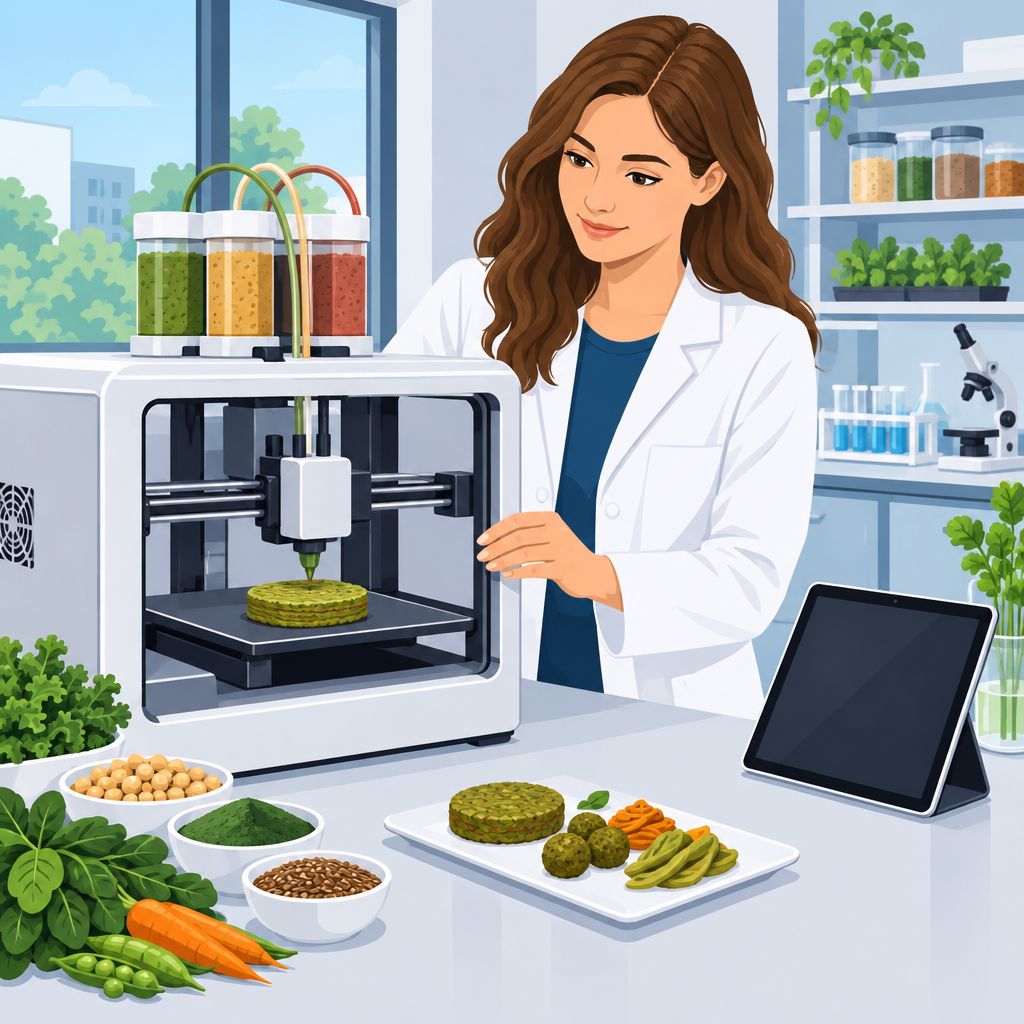
3D Food Printing
3D food printing enables the creation of customized food designs.
This technology can produce intricate shapes and patterns.
Consequently, food producers can explore customized presentation possibilities.
Artificial Intelligence in Food Processing
Artificial intelligence helps optimize food processing operations.
It supports quality control throughout food processing.
AI also assists with food safety protocols.
Plant-Based Meat Alternatives
Concerns about sustainability and ethics have fueled the rise of plant-based meat alternatives.
These alternatives provide options for consumers seeking different approaches to traditional meat products.
As interest grows, more consumers seek sustainable and ethical food choices.
Technology and Processes
Manufacturers use innovative technologies and processes to mimic traditional meat’s taste, texture, and appearance.
They isolate plant proteins such as soy, pea, or wheat before combining them with fats and flavorings.
Next, extrusion, fermentation, and 3D printing help create the final meat-like products.
Popular Plant-Based Companies
Several companies lead the plant-based meat industry with products designed for consumers seeking meat alternatives.
These companies continually improve their products to appeal to a growing consumer audience.
Their offerings include burgers, sausages, ground alternatives, hot dogs, and deli slices.
- Beyond Meat offers burgers, sausages, and ground “beef” made from plant-based ingredients.
- Impossible Foods is known for its Impossible Burger, which closely resembles real beef.
- Lightlife offers burgers, hot dogs, sausages, and deli slices made from soy and pea protein.
Beyond Meat, Impossible Foods, and Lightlife continue shaping the plant-based meat market.
Transform Your Career Today
Unlock a personalized career strategy that drives real results. Get tailored advice and a roadmap designed just for you.
Start NowFood Packaging Innovations
Food packaging preserves food quality and safety.
Technology has introduced innovative solutions for diverse needs across the food industry.
These solutions support longer shelf life, safer handling, and more sustainable packaging practices.
Overview of Innovative Food Packaging Solutions
Manufacturers use advanced materials and techniques to prolong freshness.
This approach reduces food waste and improves consumer satisfaction.
Additionally, innovative designs create barriers against external contaminants.
They also help maintain hygienic conditions throughout the supply chain.
Examples of Smart Packaging Technologies
Smart packaging technologies have changed how manufacturers package and distribute food products.
For example, embedded sensors can monitor freshness by detecting temperature, moisture, and gas changes.
Moreover, temperature indicators alert consumers and retailers about possible spoilage from improper storage.
These indicators help prevent foodborne illnesses and protect product quality.
Impact of Sustainable Packaging Materials
The food industry increasingly uses sustainable materials to reduce packaging’s environmental impact.
Biodegradable and compostable options decompose naturally and minimize waste accumulation in landfills.
Furthermore, recyclable materials include paper, cardboard, and plant-based plastics.
These materials reduce the carbon footprint associated with food packaging.
Food packaging innovations continue to improve safety, shelf life, and environmental performance.
Smart technologies provide greater control over product conditions during distribution and storage.
Meanwhile, sustainable materials support more efficient and environmentally responsible packaging practices.
Gain More Insights: Veterinary Technician Salary: What to Expect
Precision Agriculture and Farming Technology
Precision agriculture transforms traditional farming practices by using technology to optimize crop production and increase yields.
Through data-driven insights, farmers make informed decisions that improve efficiency and sustainability.
This approach demonstrates how technology continues transforming the future of farming.
Technology Used in Precision Agriculture
Technology helps farmers monitor and manage their fields more efficiently.
Drones represent one of the key technologies used in precision agriculture.
Equipped with cameras and sensors, drones capture high-resolution crop images.
These images reveal crop health, irrigation needs, and pest infestations.
Consequently, real-time data helps farmers address problems before they escalate.
Artificial intelligence also transforms precision agriculture by analyzing extensive operational data.
AI algorithms examine information from IoT devices, drones, and other sensors.
They provide predictive insights about crop yields, soil health, and weather patterns.
By applying AI, farmers make data-driven decisions that maximize productivity and optimize resource usage.
Benefits of Precision Agriculture
Precision agriculture offers several benefits for sustainability and food production.
Farmers can minimize environmental impacts by optimizing their use of essential resources.
These techniques reduce water, fertilizer, and pesticide use, supporting more sustainable farming practices.
Additionally, precision agriculture can increase crop yields and overall productivity.
Technology helps farmers monitor crop health, soil conditions, and weather patterns.
They can then implement targeted interventions that maximize yields and improve harvests.
Higher production can also strengthen the economic viability of farming operations.
Moreover, accurate real-time data supports better-informed decisions across farm operations.
By combining information from drones, IoT devices, and AI algorithms, farmers gain valuable operational insights.
Transform Your Career Today
Unlock a personalized career strategy that drives real results. Get tailored advice and a roadmap designed just for you.
Start NowThese insights help farmers identify trends, patterns, and areas for improvement.
A data-driven approach strengthens decision-making and supports more efficient farming practices.
Drones, AI, IoT devices, and data analytics continue advancing agricultural management.
Together, these technologies can drive efficiency, productivity, and profitability in farming operations.
As technology advances, precision agriculture can support a more sustainable and food-secure future.
Discover More: Notable Contributions of Biotechnology Specialists
3D Food Printing
3D food printing is a cutting-edge technology that changes how people create and consume food.
This technology enables customized and unique food creations that were previously difficult to imagine.
It also introduces new possibilities for chefs, restaurants, and food manufacturers.
Introduction to 3D Food Printing
Imagine designing food layer by layer with remarkable precision and accuracy.
The process builds edible creations through controlled additive manufacturing.
Meanwhile, specialized printers transform ingredients into finished food products.
Examples of 3D Printed Foods
Popular examples of 3D printed foods include chocolate, pasta, and pizza.
These foods demonstrate the precision that printing technology brings to food preparation.
Furthermore, chefs and food artists can create shapes that hand techniques cannot easily produce.
Potential Future Applications
As the technology advances, restaurants and food manufacturers may explore broader applications.
These applications could address nutrition, taste, sustainability, design, and production efficiency.
The following possibilities show how printing may influence future food creation.
- Food can match individual nutritional requirements, supporting health and wellness.
- Restaurants could create personalized menus based on each customer’s preferences.
- Printers can use necessary ingredients, helping reduce food waste and environmental impact.
- Chefs can develop visually striking dishes that combine artistic design with food preparation.
- Manufacturers can streamline production and create intricate products with minimal waste.
3D food printing creates customized, sustainable, and distinctive food items.
As the technology evolves, chefs and manufacturers may develop even more innovative food applications.
These developments could influence how people produce, design, and experience food.
Learn More: Entomology Journals: Top Publications to Follow
Food Safety Technologies
Ensuring food safety remains a top priority for the food industry.
The industry uses advanced technologies to strengthen safeguards against contamination.
These tools identify pathogens and trace products throughout food supply chains.
- Advanced Technologies: The food industry uses advanced technologies to enhance food safety measures.
- DNA Sequencing: DNA sequencing helps identify pathogens in food products.
- Blockchain Technology: Blockchain technology enables traceability throughout the food supply chain.
Importance of Food Safety
Food safety measures protect public health and support consumer trust.
In addition, these measures help prevent foodborne illnesses and outbreaks.
Regulatory bodies require food safety standards that protect consumers.
- Public Health: Food safety technologies help prevent foodborne illnesses and outbreaks.
- Consumer Trust: Consumers rely on safety protocols to ensure product quality.
- Regulatory Compliance: Businesses must follow food safety standards established by regulatory bodies.
Learn More: Precision Agriculture: Benefits for Large-Scale Farms
Cultured Meat Production
- Laboratories produce cultured meat from cells, eliminating the need for animal slaughter.
- Cultured meat can improve animal welfare, reduce environmental impact, and strengthen food security.
- However, high costs, scaling difficulties, and consumer acceptance create significant challenges.
- Despite these challenges, cultured meat could become a mainstream food source in the future.
Nutrigenomics and Personalized Nutrition
Nutrigenomics examines how nutrients interact with genes.
This field explores how diet influences genetic expression and health.
It connects food choices with molecular processes within the body.
Understanding Nutrigenomics
Nutrients in food can interact with genetic information.
Researchers study these interactions to understand how food affects health.
Consequently, nutrigenomics provides insights into the relationship between diet and genetic expression.
Personalized Nutrition Plans
Personalized nutrition plans use genetic information and individual health goals.
Researchers can tailor dietary recommendations to address specific nutritional needs.
As a result, individuals can receive nutrition guidance suited to their genetic makeup.
Nutrigenomics in Preventative Healthcare
Nutrigenomics can identify genetic predispositions to certain health conditions.
Healthcare professionals can use these insights to recommend targeted dietary interventions.
Transform Your Career Today
Unlock a personalized career strategy that drives real results. Get tailored advice and a roadmap designed just for you.
Start NowThis proactive approach may help people reduce health risks through informed choices.
Personalized Diet Recommendations
Healthcare practitioners can consider genetic profiles when developing diet recommendations.
They can also align dietary guidance with each persons health goals.
Therefore, personalized nutrition can improve the focus of dietary interventions.
Future Directions in Nutrigenomics
Continued research may advance personalized nutrition strategies.
These developments could strengthen preventative healthcare measures.
Ultimately, nutrigenomics may support health guidance tailored to genetic makeup and personal goals.
Emerging Technologies in Food Production
Genetic engineering helps crops resist pests and diseases, supporting higher yields and stronger food security.
Meanwhile, nanotechnology can improve flavor, texture, and nutritional content in food products.
These applications can help producers develop foods that balance quality with nutritional value.
Blockchain technology strengthens traceability, helping consumers trust information about the food they buy.
Furthermore, clear information helps consumers evaluate new food technologies with greater confidence.
Consumers can support sustainable innovation by staying informed and considering emerging choices with open minds.
These choices may contribute to a more resilient food system for future generations.
Additional Resources
Google search results for Top Innovations in Food Science and Technology Agricultural
Bing search results for Top Innovations in Food Science and Technology Agricultural


