




Urban and Transportation Planning
Urban and transportation planners design and manage cities and transportation infrastructure.
They aim to improve residents’ quality of life through sustainable, efficient, and livable environments.
Collaboration brings government agencies, community groups, transportation authorities, and private sectors together around shared objectives.
By combining perspectives and expertise, stakeholders develop more holistic and innovative planning solutions.
This collective approach addresses complex challenges, including traffic congestion, air pollution, and limited accessibility.
Furthermore, collaboration ensures planners consider stakeholders’ interests and needs during the planning process.
Consequently, planning outcomes become more inclusive and equitable.
It also improves coordination among efforts, resources, and policies.
As a result, cities can develop more effective urban and transportation infrastructure.
Collaboration supports sustainable development, enhances mobility, and helps create healthier, more resilient cities.
It also shapes urban environments while improving residents’ quality of life.
The Role of Stakeholders in Collaboration
Stakeholders are individuals, groups, or organizations with interests in planning decisions and outcomes.
They include residents, businesses, government agencies, nonprofit organizations, advocacy groups, and other affected or influential entities.
Planners involve diverse stakeholders to create comprehensive solutions that address varied needs and concerns.
Different perspectives, expertise, and interests help planners develop informed and equitable plans.
These plans can gain stronger support and become easier to implement.
- In addition, diverse participation increases transparency and accountability, which can build community trust and support.
- Moreover, varied knowledge and experience can produce innovative solutions for broader needs and priorities.
- Active participation encourages stakeholders to support and advocate for resulting plans.
- Furthermore, inclusive collaboration helps distribute planning benefits and burdens more equitably among different groups.
- Finally, broad engagement strengthens public participation and supports more representative decisions.
Benefits of Collaboration in Planning
Collaboration creates more inclusive, resilient, and sustainable urban environments.
It connects different perspectives, resources, and priorities throughout the planning process.
As a result, communities can develop projects that better serve long-term public needs.
Improved Decision-Making Processes
Collaboration strengthens decision-making by bringing diverse perspectives into planning discussions.
Government agencies, private businesses, and community members can provide valuable insights.
These contributions help planners make more balanced and informed decisions.
Additionally, shared participation gives stakeholders a stronger sense of ownership.
That ownership can build trust and transparency during complex planning initiatives.
Increased Public Participation and Support
Collaboration encourages residents and other stakeholders to participate from the beginning.
Early involvement increases support for projects and encourages communities to champion them.
Planners can gather public input through town halls, public forums, and online surveys.
These activities help planners understand community needs and priorities.
Consequently, projects can gain broader acceptance and stronger public support.
Enhanced Project Outcomes and Longevity
Collaboration can improve project outcomes and extend the useful life of planning initiatives.
Different organizations can contribute expertise and resources to develop innovative solutions.
Moreover, planners can address social, economic, and environmental sustainability during implementation.
Considering varied interests helps projects respond more effectively to future challenges.
Ultimately, collaborative planning supports projects that align with a community’s long-term goals.
See Related Content: Workplace Culture for Dock Workers in Logistics
Case Studies Showcasing Successful Collaboration
Cities can achieve sustainable urban and transportation development through collaboration.
Successful examples show how governments and partners can coordinate practical improvements.
These cases also identify lessons for future planning efforts.
- Several cities have connected collaboration with sustainable urban and transportation development.
- These success stories offer practical lessons for future projects.
City A and Collaborative Sustainable Development
City A demonstrates successful collaboration in urban and transportation planning.
The city government worked with community groups, businesses, and transportation authorities.
Transform Your Career Today
Unlock a personalized career strategy that drives real results. Get tailored advice and a roadmap designed just for you.
Start NowTogether, they developed a comprehensive plan for sustainable development.
City A created a multi-stakeholder task force for urban and transportation planning.
The task force gathered diverse perspectives and supported innovative solutions.
These solutions addressed the needs of residents across the city.
The collaboration prioritized public transit initiatives, pedestrian infrastructure, and cycling infrastructure.
It also supported mixed-use development projects.
These efforts improved residents’ quality of life.
They also reduced traffic congestion and greenhouse gas emissions.
Lessons from City A’s Collaborative Approach
- Strong leadership and clear communication support effective collaboration.
- Inclusive decisions can produce more sustainable and equitable outcomes.
- Public transit, walking, and cycling infrastructure can improve mobility.
- These transportation choices can also reduce environmental impacts.
- Monitoring and evaluation support continued success and improvement.
City B and Collaborative Urban Transformation
City B offers another example of collaboration in urban and transportation planning.
Government agencies, nonprofit organizations, and private sector partners worked together.
Their partnership produced transformative projects that revitalized urban areas.
City B converted a former industrial area into a vibrant mixed-use neighborhood.
City officials, developers, and environmental groups collaborated on the project.
They incorporated sustainable design principles and green spaces into the development.
City B also expanded public transportation options.
The city introduced bus rapid transit and bike-sharing programs.
These investments reduced car dependency and promoted active transportation.
Lessons from City B’s Innovative Partnerships
- Diverse partnerships can produce innovative solutions and transformative urban development.
- Sustainable design and green spaces can improve urban livability and attractiveness.
- Public transportation and active transportation can reduce congestion.
- These transportation modes can also improve air quality.
- New technologies and data can improve planning efficiency and effectiveness.
Collaboration Supports Sustainable Communities
City A and City B demonstrate the value of collaboration in sustainable development.
Stakeholders can combine their perspectives, resources, and priorities through coordinated action.
Such cooperation can create more livable, resilient, and equitable communities.
Find Out More: Designing Urban Spaces for Efficient Transportation
Challenges in Collaboration
- Communication barriers between stakeholders: Stakeholders often communicate differently, causing misunderstandings and conflicts.
- Conflicts of interest and competing priorities: Developers may prioritize profit, while residents may emphasize environmental sustainability.
Negotiation and compromise can resolve these competing interests. - Balancing short-term and long-term goals: Planners must balance immediate needs, such as congestion relief, with long-term sustainability and equity.
Finding a middle ground remains difficult.
Stakeholders can address these challenges through open communication, compromise, and shared support for sustainable urban development.
This approach can help them create vibrant, inclusive, and resilient cities for future generations.
Find Out More: Understanding the Hierarchy in Dock Worker Teams
Effective collaboration helps planners create sustainable and inclusive cities.
Several strategies support successful collaboration in urban and transportation planning.
Establishing Clear Goals and Objectives
First, all parties should establish clear goals and objectives.
These goals help participants align their efforts and resources.
Consequently, stakeholders can work toward a common vision.
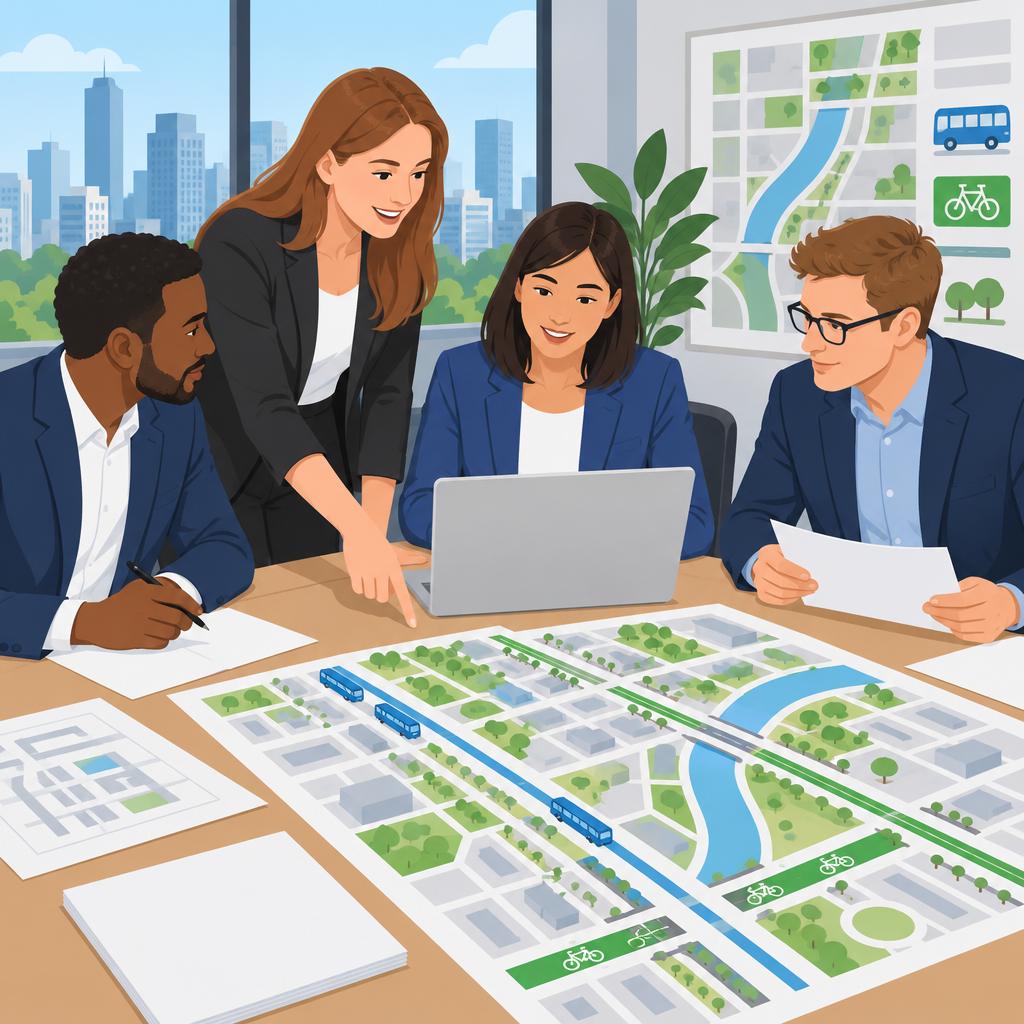
Creating Inclusive and Transparent Decision-Making Processes
Transparent decision-making builds trust among participating stakeholders.
Inclusive processes bring diverse perspectives into planning discussions.
As a result, participants can develop better outcomes and solutions.
Fostering Partnerships and Alliances
Collaboration grows through partnerships among organizations, government agencies, and community groups.
These alliances also connect other stakeholders involved in planning.
Furthermore, partners can leverage resources, share expertise, and pool knowledge.
By applying these strategies, planners can support effective and sustainable collaboration.
You Might Also Like: Freight Agent Strategies for Peak Season
Technology’s Role in Enhancing Collaboration
Technology facilitates collaboration in urban and transportation planning.
It streamlines data sharing and analysis for planning professionals.
These capabilities support more effective decision-making processes.
Transform Your Career Today
Unlock a personalized career strategy that drives real results. Get tailored advice and a roadmap designed just for you.
Start NowDigital Tools for Data Sharing and Analysis
Digital tools help professionals share information and analyze planning data.
They also improve access to documents, datasets, and project communications.
Consequently, teams can coordinate information more efficiently during planning activities.
- Google Drive and Dropbox allow team members to share documents and data in real time.
- Tableau and Power BI help professionals analyze complex datasets more efficiently.
- Slack and Microsoft Teams support communication and project management among collaborators.
Virtual Meetings and Workshops for Remote Collaboration
Virtual meetings allow stakeholders to participate without sharing a physical location.
Online workshops create opportunities for knowledge exchange and collaborative brainstorming.
Therefore, remote tools help connect stakeholders during planning discussions.
- Zoom and Skype facilitate virtual meetings with stakeholders worldwide.
- GoToWebinar and Webex host interactive workshops for knowledge exchange.
- These platforms support brainstorming sessions among remote participants.
GIS Technology for Mapping and Visualization
GIS technology helps planners examine spatial information and communicate geographic patterns.
Interactive maps make planning information easier for stakeholders to understand.
Furthermore, GIS supports informed decisions about transportation, land use, and environmental conditions.
- ArcGIS and QGIS support spatial data analysis and urban mapping.
- Interactive GIS maps improve communication among planners and stakeholders.
- GIS tools visualize transportation networks, land use patterns, and environmental data.
Technology integration gives planning professionals efficient ways to share data and communicate remotely.
It also makes spatial information clearer during collaborative planning processes.
By using these tools, professionals can address complex urban challenges and support sustainable transportation systems.
Embracing New Technologies and Methodologies
Collaboration in planning continues to evolve as cities adopt new technologies and methodologies.
Rapid urbanization, traffic congestion, and environmental concerns demand more effective planning tools.
Advanced data analytics reveal transportation patterns, land use dynamics, and infrastructure needs.
Simulation models and digital mapping tools help planners test options and make informed decisions.
These methods support cities that better serve residents’ changing needs.
Addressing Emerging Challenges
Climate change exposes cities to increasingly frequent and severe extreme weather events.
Planners, engineers, scientists, and policymakers can develop solutions that reduce emissions and improve air quality.
They can also strengthen urban resilience through coordinated planning.
Meanwhile, equitable transportation access and affordable housing require input from communities, advocacy groups, and agencies.
Prioritizing equity and sustainability helps cities create inclusive environments for all residents.
Potential for Interdisciplinary Collaboration and Innovation
Interdisciplinary collaboration can generate innovative responses to complex urban challenges.
Urban designers, engineers, sociologists, economists, and public health experts contribute different forms of expertise.
Their combined perspectives encourage creative thinking about how cities operate and grow.
Moreover, collaborative innovation can produce vibrant, sustainable, and livable urban spaces.
By coordinating diverse expertise, cities can build resilient communities that support residents’ well-being.
Collaboration’s Role in Future City Planning
Collaboration strengthens urban and transportation planning.
It aligns stakeholders around shared goals.
Moreover, it supports inclusive decisions by incorporating diverse community perspectives and needs.
This approach creates sustainable solutions for current challenges and future growth.
Continued collaboration can strengthen relationships among government agencies, the private sector, and the public.
As a result, collaboration can make planning initiatives more effective and efficient.
Collaborative planning also supports livable, resilient, and connected cities.
It can expand equitable access to transportation services.
Additionally, collaboration can reduce congestion and improve residents’ quality of life.
Therefore, planners should prioritize collaboration in future urban and transportation initiatives.
Working together can create vibrant, sustainable, and inclusive communities that benefit everyone.
Additional Resources
Transform Your Career Today
Unlock a personalized career strategy that drives real results. Get tailored advice and a roadmap designed just for you.
Start Now


