




Introduction
Designing urban spaces for efficient transportation supports smooth mobility within cities.
By optimizing transport systems, cities can reduce congestion and decrease pollution.
Efficient transportation shapes urban environments and creates sustainable communities.
Current Transportation Challenges in Urban Areas
Urban transportation strongly affects residents’ quality of life and city efficiency.
Several recurring challenges make daily travel difficult in many cities.
These challenges include congestion, limited public transit, and vehicle-related pollution.
- Traffic congestion causes delays, longer travel times, and frustration among commuters.
- Limited public transportation makes daily commuting difficult for many residents.
- Cars and other vehicles contribute significantly to urban air pollution.
Impacts on Residents and the Urban Economy
These transportation problems affect residents, businesses, and public health.
Consequently, they can limit urban growth and sustainability.
The effects appear through stress, inefficiency, health concerns, and restricted development.
- Traffic congestion and long commutes increase stress and reduce residents’ quality of life.
- Businesses experience inefficiencies, reduced productivity, and higher operating costs.
- Transportation pollution contributes to respiratory problems and other public health concerns.
- These challenges hinder urban growth, development, economic prosperity, and sustainability.
Urban planners must prioritize accessibility, sustainability, and connectivity when designing city spaces.
Strategic planning and infrastructure investment can address transportation challenges.
These efforts can help create a resilient and vibrant urban environment.
Importance of Integrating Multiple Modes of Transportation
A diverse transportation system includes walking, cycling, public transit, and car-sharing.
It offers numerous benefits for urban spaces.
- Enhanced accessibility: Integrating different transportation modes improves access to various parts of the city.
- Reduced congestion: Transportation options can reduce road traffic and support smoother commutes.
- Improved air quality: Walking, cycling, and public transit can reduce air pollution and greenhouse gas emissions.
- Enhanced health and well-being: Walking and cycling provide active transportation that supports physical health.
- Cost-effective travel: Residents can choose affordable transportation options for their specific needs.
Therefore, multiple transportation modes create efficient urban spaces that prioritize accessibility, sustainability, and resident well-being.
Delve into the Subject: Understanding the Hierarchy in Dock Worker Teams
Designing Pedestrian-Friendly Spaces
- Creating walkable neighborhoods with well-designed sidewalks
- Implementing crosswalks and public spaces for pedestrians
Developing pedestrian-friendly environments helps urban planners strengthen transportation systems within cities.
By prioritizing pedestrians, cities can create safer, healthier, and more sustainable places.
These spaces also support convenient movement and encourage residents to engage with their surroundings.
Importance of Walkable Neighborhoods
Walkable neighborhoods promote active transportation and reduce residents’ reliance on cars.
Well-designed sidewalks give pedestrians safe and convenient pathways through their communities.
As a result, people can walk, run, or bike for short-distance trips.
This activity supports healthier and more sustainable lifestyles.
Benefits of Pedestrian-Friendly Environments
- Improved health and well-being for residents
- Enhanced safety for pedestrians
- Greater community engagement and social interaction
Pedestrian-friendly spaces can improve residents’ physical and mental health.
Regular walking may reduce chronic disease risks and improve cardiovascular health.
It can also strengthen overall well-being.
Additionally, well-designed sidewalks and crosswalks improve pedestrian safety.
These features can reduce the likelihood of accidents and injuries.
Public spaces within neighborhoods also encourage community engagement and social interaction.
Parks, plazas, and green spaces give residents places to gather, relax, and connect.
These communal areas foster belonging and promote stronger community bonds.
Pedestrian-focused urban design supports efficient transportation systems and vibrant communities.
By prioritizing walkability and safety, cities can create healthier and more sustainable environments.
Learn More: Freight Agent Strategies for Peak Season
Cycling as a Sustainable Transportation Option
Cycling offers urban residents a sustainable transportation option.
It reduces pollution and traffic congestion while supporting healthier daily routines.
Additionally, cycling promotes physical activity without requiring separate exercise sessions.
- Reducing pollution and traffic congestion
- Promoting physical activity
Benefits of Cycling in Urban Areas
Cycling significantly reduces pollution because it emits no harmful gases like cars do.
This improvement in air quality helps create a healthier urban environment for everyone.
Furthermore, cycling decreases congestion on busy urban streets.
Transform Your Career Today
Unlock a personalized career strategy that drives real results. Get tailored advice and a roadmap designed just for you.
Start NowWhen people cycle instead of drive, fewer vehicles occupy the roads.
Consequently, traffic flows more easily and commute times can decrease.
Moreover, cycling encourages urban residents to include physical activity in their daily routines.
This activity improves physical health and supports mental well-being.
Exercise can also boost mood and reduce stress levels.
Infrastructure That Supports Urban Cycling
Dedicated bike lanes improve cyclist safety and convenience in urban areas.
They separate cyclists from vehicle traffic and reduce the risk of accidents.
As a result, safer road designs can encourage more people to cycle.
Bike-sharing programs provide access to bicycles without requiring personal ownership.
Therefore, residents can choose cycling for short trips or daily commutes.
Secure bike storage facilities give cyclists safe places to park and lock their bicycles.
These facilities also reduce the likelihood of theft and damage.
Together, these investments help cities create efficient and environmentally friendly transportation systems.
Explore Further: Rail Yard Engineer Job Growth Predictions
Improving public transportation helps cities create efficient spaces that meet residents’ travel needs.
Efficient and Reliable Public Transportation Options
Investing in buses, subways, and light rail gives residents reliable and convenient travel alternatives.
- Public transportation gives residents a cost-effective commute and reduces dependence on personal vehicles.
- Moreover, multiple options encourage transit use and reduce traffic congestion on roads.
- Efficient transit lowers emissions and improves air quality in urban areas.
- Reliable services improve access for residents with disabilities or limited mobility.
- Transit networks connect neighborhoods and business districts across the city.
Advantages of Investing in Public Transit
Allocating resources to public transportation creates vibrant and efficient urban spaces.
- Enhanced transit alleviates congestion by offering residents an alternative to driving.
- Public transportation lowers vehicle numbers, greenhouse gas emissions, and air pollution.
- Transit investment improves access to amenities, services, and job opportunities throughout the city.
- Efficient networks support local businesses by increasing foot traffic and attracting customers.
- Reliable transit improves quality of life by offering flexibility and reducing commuting stress.
Prioritizing public transportation helps cities create sustainable, inclusive, and efficient spaces for all residents.
Delve into the Subject: Tips for Managing International Logistics Consulting
Smart technologies help cities manage traffic and improve urban mobility.
These tools support transportation planning through timely information and connected services.
Therefore, urban designers can use technology to improve movement across city spaces.
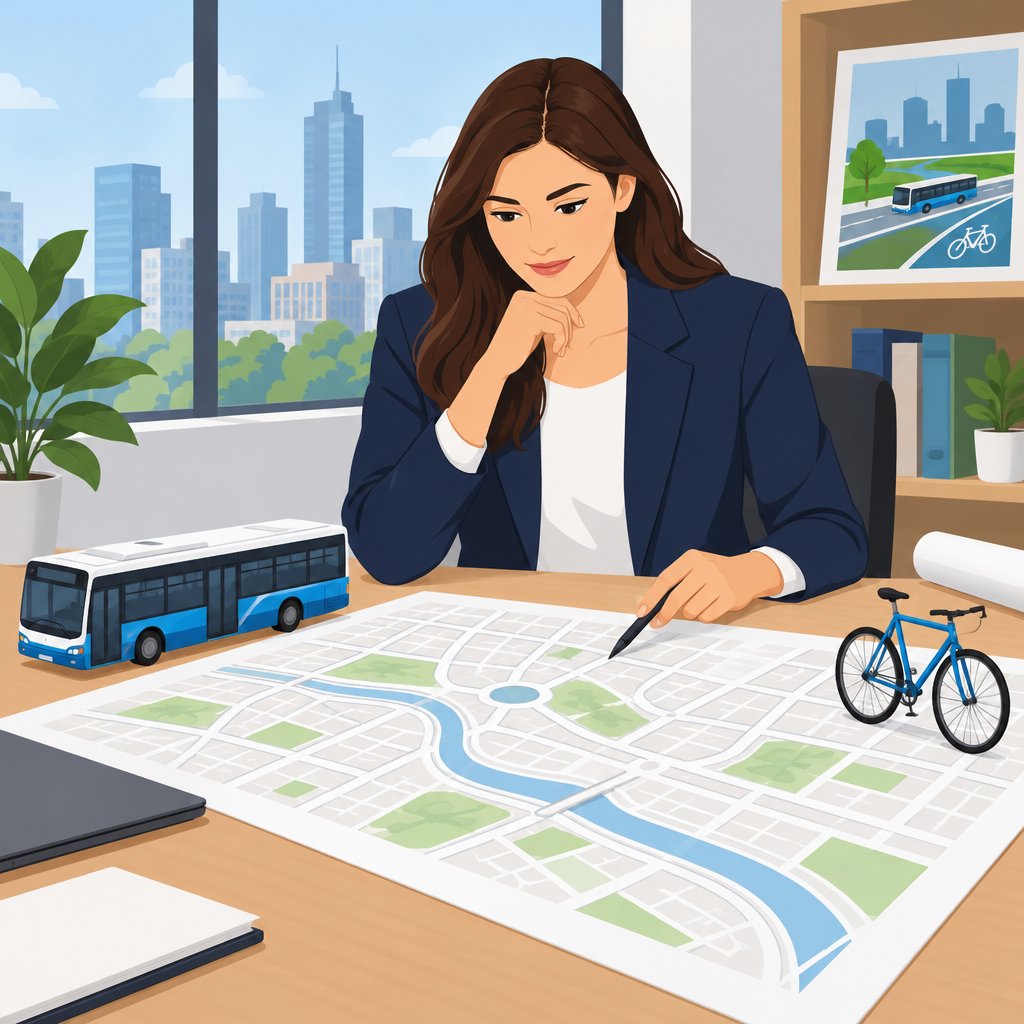
Technology for More Efficient Transportation
Real-time data helps cities understand traffic conditions and respond to changing transportation needs.
Additionally, connected systems can reduce delays and help residents choose convenient travel options.
As a result, technology can improve transportation efficiency without replacing essential urban services.
- Sensors and cameras track traffic patterns, helping authorities manage congestion and respond quickly.
- Smart parking sensors guide drivers toward available spaces and reduce unnecessary searching.
- Ride-sharing apps match riders with drivers, creating efficient and cost-effective travel options.
City Examples of Smart Transportation Technology
Several cities demonstrate how smart transportation tools can improve daily travel.
These approaches combine data, tracking, automation, and lower-emission transportation services.
Consequently, cities can apply different technologies according to local transportation priorities.
- Los Angeles uses data analytics to optimize traffic signals and reduce congestion.
- Singapore provides real-time bus tracking and automated fare collection.
- Barcelona uses parking sensors to share real-time availability information with drivers.
- Portland supports sustainable travel through electric buses and bike-sharing programs.
- Tokyo uses AI-powered traffic prediction algorithms to support smooth traffic flow.
These examples show how cities use technology to improve transportation services and urban mobility.
As urban populations grow, cities need innovative solutions for managing transportation demands.
Smart technologies can help planners prioritize efficiency, accessibility, and sustainability.
Engaging Communities in Transportation Planning
Community engagement plays a crucial role in designing efficient transportation systems.
Residents, businesses, and other stakeholders can shape decisions affecting their communities.
Their participation supports sustainable, inclusive, and functional urban spaces.
Community Participation in Decision-Making
Planners can address community needs more effectively when they invite stakeholders into the process.
Additionally, diverse perspectives can produce comprehensive and inclusive transportation solutions.
Early participation also helps communities and decision-makers identify challenges before projects advance.
- Community input ensures that planners consider local needs and concerns.
- Stakeholders contribute diverse perspectives to transportation planning discussions.
- Shared decision-making builds trust between communities and project leaders.
- Early discussions support proactive problem-solving and risk mitigation.
- Transparent decisions promote informed and equitable transportation outcomes.
Building Support for Transportation Initiatives
Effective engagement creates shared goals among community members and transportation project teams.
Moreover, public involvement strengthens project credibility by showing that leaders considered community concerns.
Continued communication helps participants understand project goals and support intended outcomes.
Transform Your Career Today
Unlock a personalized career strategy that drives real results. Get tailored advice and a roadmap designed just for you.
Start Now- Shared visions can increase community support for transportation projects.
- Public input can demonstrate alignment between projects and community priorities.
- Visible support can help projects secure funding and necessary resources.
- Active participation can foster community pride and project ownership.
- Feedback loops maintain communication between developers and community members.
Transportation projects benefit when planners involve stakeholders from the beginning.
Inclusive engagement can improve project support while addressing different community perspectives.
Consequently, ongoing collaboration can strengthen urban transportation planning and community relationships.
Benefits of Efficient Urban Transportation Design
Designing urban spaces for efficient transportation creates sustainable and livable cities.
Prioritizing public transportation, pedestrian-friendly areas, and bike lanes can reduce traffic congestion and air pollution.
This approach benefits the environment and improves residents’ quality of life.
It improves accessibility, promotes physical activity, and fosters a sense of community.
Ultimately, efficient transportation design can create more inclusive, vibrant, and enjoyable cities for everyone.
Urban planners must prioritize these principles to support a better future for future generations.


