




Climate Change: A Brief Overview
Climate change alters long-term temperatures in specific regions.
It also changes typical weather patterns in those regions.
Human activities largely drive this phenomenon.
Burning fossil fuels and deforestation release greenhouse gases.
The Importance of Agriculture in Society
Agriculture provides the primary source of food worldwide.
It also supplies nutrition for the global population.
Furthermore, farming sustains human life.
It supports economic development and strengthens food security for nations.
Climate Change Effects on Agriculture
Climate change affects agriculture by shifting weather patterns and intensifying extreme events.
These changes can alter crop yields, trigger pest outbreaks, and weaken soil health.
Rising temperatures can change planting and harvesting schedules.
They can also cause heat stress, which reduces plant growth and productivity.
Meanwhile, shifting rainfall patterns can create droughts or intense precipitation.
Both conditions can disrupt irrigation and cause crop failures.
Higher atmospheric carbon dioxide may stimulate plant growth.
However, it can also reduce the nutritional quality of some crops.
Extreme events can damage fields, farm infrastructure, and harvests.
Consequently, farmers may face economic losses while consumers experience food shortages.
Extreme Weather Threats to Crops
Several weather hazards can damage crops in different ways.
Their effects can reduce yields, quality, and farm income.
Therefore, farmers may need adaptive strategies to manage changing risks.
- Flooding can drown crops, wash away topsoil, and spread plant diseases.
- Droughts can limit irrigation water, stunt plant growth, and reduce crop yields.
- Heatwaves can cause wilting, reduce photosynthesis, and lower crop quality.
- Hailstorms can shred leaves, bruise fruits, and break plant stems.
- Warmer temperatures can support pest and disease outbreaks that devastate crops.
Temperature and Rainfall Changes in Agriculture
Climate change is reshaping temperature and precipitation patterns across agricultural regions.
These shifts affect crop yields and farm productivity.
Farmers must adapt their practices as weather conditions become less predictable.
- Rising temperatures can reduce crop yields.
- Unpredictable rainfall can disrupt agricultural production.
Effects of Rising Temperatures on Crop Yields
Rising temperatures can reduce crop yields in many regions.
Higher heat can disrupt crop growth and development.
Staple crops such as wheat, rice, and maize face particular risks.
Extreme heat can also increase drought frequency.
Droughts can damage crops and soil, making recovery more difficult.
Warmer conditions can also support pests and crop diseases.
The corn borer and tomato hornworm can thrive in warmer climates.
These pests can damage crops and reduce harvests.
Effects of Unpredictable Rainfall on Agricultural Production
Unpredictable rainfall can produce both droughts and floods.
These conditions can damage crops and farm infrastructure.
Erratic rainfall can create water shortages for irrigation.
Farmers may struggle to sustain crops during extended dry periods.
Crop failures can cause significant financial losses for farming households.
Heavy rainfall can saturate soil and cause waterlogging.
Floods can wash away seeds and drown growing plants.
Flooding can also erode topsoil and reduce future productivity.
Transform Your Career Today
Unlock a personalized career strategy that drives real results. Get tailored advice and a roadmap designed just for you.
Start NowFarmers therefore need adaptive practices to manage changing weather conditions.
Find Out More: Agricultural Economics: Role in Environmental Sustainability
Shifts in Growing Seasons and Pest Patterns
Climate change is shifting growing seasons and pest patterns across agricultural regions.
These shifts influence when farmers plant and harvest crops.
They also affect how frequently pests damage crops.
Changes Affecting Planting and Harvesting
Rising temperatures and erratic weather disrupt traditional crop growing seasons.
Farmers must adjust planting and harvesting schedules to match changing conditions.
Some regions experience earlier or later growing seasons, making planting decisions harder.
- These changes can lower crop yields, reduce quality, and increase exposure to extreme weather.
- Farmers can adapt by diversifying crops and improving water management.
Increasing Pest Infestations in Warmer Conditions
Warmer temperatures create favorable conditions for pests to survive and reproduce.
Milder winters and longer summers can expand pest ranges and populations.
Consequently, farmers may face greater crop damage and increased pesticide use.
- Insects, fungi, and weeds can thrive under warmer conditions.
- Previously uncommon pests may become significant agricultural threats.
- Farmers can reduce pest impacts through integrated pest management strategies.
- Sustainable control methods can limit reliance on chemical pesticides.
Farmers face serious challenges as growing seasons and pest patterns continue changing.
Policymakers, researchers, and agricultural practitioners must develop resilient solutions for food security.
Gain More Insights: Top Challenges Faced by Farm Managers Today
Water Availability for Irrigation
Water scarcity and irrigation issues create major challenges for farmers facing climate change.
Rising temperatures and changing rainfall patterns reduce reliable water supplies.
Droughts further intensify these irrigation challenges in agricultural regions.
- Rising temperatures increase evaporation from soil and reduce water availability for crops.
- Changing rainfall patterns create irregular and unpredictable irrigation supplies.
- More frequent and intense droughts worsen water scarcity across agricultural regions.
Strategies for Adapting to Water Shortages
Farmers can conserve water by improving irrigation methods and selecting suitable crops.
They can also retain soil moisture and store water for dry periods.
Additionally, community programs can encourage sustainable water use in agriculture.
- Farmers can install drip irrigation and sprinkler systems to conserve water.
- Drought-resistant crop varieties require less water during growth and development.
- Rainwater harvesting captures and stores water for irrigation during dry spells.
- Mulching and cover cropping reduce evaporation and improve soil water retention.
- Water management programs promote sustainable water use across agricultural communities.
Combining efficient technology, sustainable practices, and community involvement can strengthen agricultural resilience during water shortages.
Discover More: Artificial Insemination and Animal Welfare Concerns
Livestock Health, Productivity, and Food Security
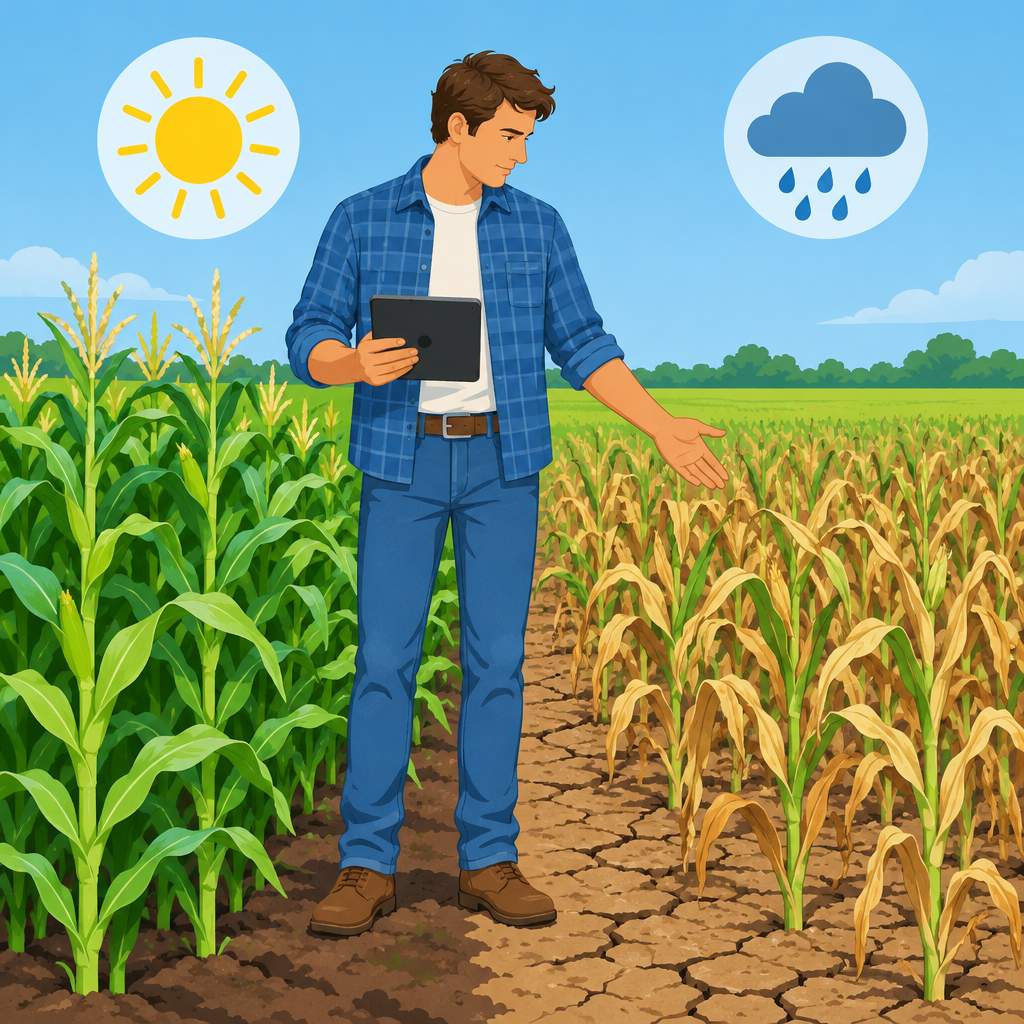
Climate change threatens livestock health, productivity, and food security.
Rising environmental pressures can disrupt animal production and reduce access to nutritious food.
These impacts require sustainable practices and climate-resilient agricultural strategies.
Climate Effects on Livestock Health and Productivity
Livestock face several climate-related pressures that can reduce their wellbeing and output.
These pressures affect animals directly and also limit the resources farmers provide.
As conditions change, producers may struggle to maintain reliable feed and water supplies.
- Rising temperatures increase livestock heat stress, harming health and reducing productivity.
- Changing rainfall patterns reduce water and grazing supplies, which weakens livestock nutrition.
- Furthermore, hurricanes and floods can injure livestock, spread disease, and cause deaths.
- Climate shifts also expand pest and disease threats affecting livestock health.
- Heatwaves and droughts reduce feed quality and quantity, limiting available livestock feed.
Food Security and Access to Nutritious Food
Climate-related livestock losses can weaken food security and household access to nutrition.
Reduced animal production affects both food supplies and the prices consumers face.
Vulnerable populations may experience the greatest effects when protein sources become less available.
- Climate disruptions can reduce supplies of meat, dairy, and other animal products.
- Consequently, lower supplies can raise prices and restrict access for vulnerable populations.
- Livestock diseases and deaths can reduce dietary protein and nutritional quality.
- Moreover, lower livestock production can worsen hunger and malnutrition in vulnerable regions.
- These effects can ripple through the food supply chain and reduce overall availability.
Climate-Resilient Livestock Systems
Sustainable practices can help agriculture respond to climate pressures affecting livestock.
Climate-resilient strategies can support a more secure and nutritious food supply.
Therefore, adaptation remains essential for future livestock production and food security.
Uncover the Details: Innovative Programs Led by 4-H Youth Agents
Solutions and Adaptation Strategies
- Implementation of sustainable agriculture practices
- Utilization of technology to improve crop resilience
Climate change has significantly impacted agriculture, causing erratic weather, water scarcity, and more pest and disease outbreaks.
Farmers need practical strategies that protect production while conserving natural resources.
Sustainable practices and technology can help farms respond to changing conditions.
Implementation of Sustainable Agriculture Practices
Sustainable agriculture focuses on long-term viability, environmental protection, resource conservation, and economic profitability.
Farmers can use crop rotation, cover cropping, and integrated pest management.
Transform Your Career Today
Unlock a personalized career strategy that drives real results. Get tailored advice and a roadmap designed just for you.
Start NowThese methods minimize environmental impacts, preserve resources, and support economic profitability.
Sustainable practices improve soil health, conserve water, and reduce carbon emissions.
They also enhance biodiversity, climate resilience, and overall ecosystem health.
Furthermore, these practices support food security through stable yields and sustainable farmer livelihoods.
Conservation agriculture, agroforestry, and organic farming help farmers adapt to changing climatic conditions.
These approaches can also improve overall productivity while supporting healthier agricultural ecosystems.
Utilization of Technology to Improve Crop Resilience
Technological advances offer innovative ways to address climate change impacts on agriculture.
Precision agriculture, drones, and satellite imagery help farmers monitor crop health and optimize irrigation.
These tools can also improve productivity and support more efficient farm management.
Biotechnology helps researchers develop crop varieties with greater climate resilience.
These varieties can tolerate drought, resist pests, and produce high yields.
Researchers have also developed genetically modified organisms for challenging environmental conditions.
Digital tools and data analytics provide timely information about weather, markets, and pest outbreaks.
Farmers can use this information to make informed decisions and reduce potential losses.
This proactive approach strengthens crop management and improves overall farm efficiency.
Together, sustainable practices and technological innovations can strengthen crop resilience and support food security.
Farmers can use these strategies to promote sustainable development under changing environmental conditions.
Policy Interventions and Global Cooperation in Agriculture
Policy interventions help agriculture address climate change impacts.
Governments, organizations, and individuals must cooperate to meet these challenges.
Collective action can support resilient agriculture and protect future food supplies.
International Collaboration for Climate-Resilient Agriculture
International collaboration helps countries address climate change effects on agriculture.
Because climate change crosses borders, countries need coordinated responses.
Through cooperation, countries can share knowledge, resources, and agricultural technologies.
They can also develop joint strategies that promote sustainable agricultural practices.
Furthermore, research partnerships can coordinate efforts against agricultural climate challenges.
Government Support for Sustainable Agriculture Initiatives
Governments create policies that support sustainable agriculture and climate adaptation.
They can provide incentives, subsidies, and assistance for climate-smart farming techniques.
These measures encourage farmers to adopt practices that withstand changing conditions.
Moreover, governments can fund research that improves agricultural productivity.
Researchers can develop drought-resistant crops and promote water conservation practices.
Governments can also invest in sustainable infrastructure for agricultural communities.
Such support helps farmers adapt while protecting food security for future generations.
Building a Resilient Agricultural Future
Climate change profoundly affects agriculture through rising temperatures, shifting precipitation patterns, and extreme weather events.
These pressures place immense strain on food production systems.
Consequently, crop yields decline, while pests and diseases spread across farming regions.
Farmers therefore face unprecedented challenges.
These disruptions threaten food security and create economic consequences for farmers and the broader economy.
Individuals can support sustainable farming practices to mitigate agriculture’s climate impact.
For example, people can promote regenerative agriculture, reduce food waste, and support local farmers.
They can also advocate for policies that prioritize sustainability.
Transform Your Career Today
Unlock a personalized career strategy that drives real results. Get tailored advice and a roadmap designed just for you.
Start NowFurthermore, local action can strengthen a resilient food system.
Such a system can withstand climate change challenges more effectively.
Each person can make informed choices that support sustainable agriculture and protect the planet’s future.
Additional Resources
Google search results for Impact of Climate Change on Agriculture Explained Agricultural
Bing search results for Impact of Climate Change on Agriculture Explained Agricultural


