




Introduction
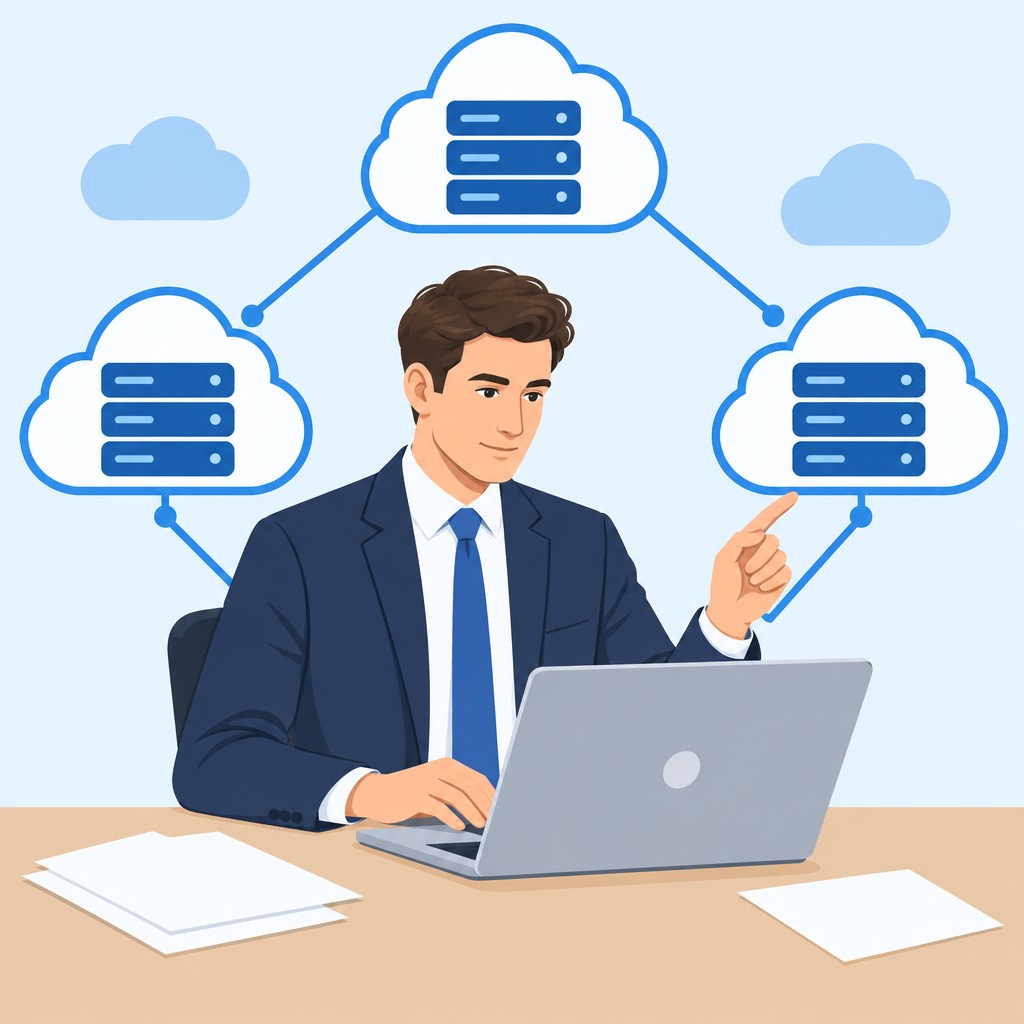
Multicloud environments use multiple cloud computing services within one architecture.
Additionally, multicloud environments improve flexibility and resilience.
Therefore, effective management protects data security and optimizes performance.
Assess Your Current Infrastructure
Begin by evaluating your current cloud providers and services.
Next, identify gaps and redundancies within your multicloud setup.
Finally, determine the resources needed to manage multiple clouds effectively.
- Evaluate your current cloud providers and services.
- Identify gaps and redundancies within your multicloud setup.
- Determine the resources and capabilities required for effective management.
Understanding Your Current Cloud Providers
First, document each provider and the services it supplies.
Then, compare each provider’s strengths, weaknesses, and available features.
This assessment clarifies how each provider supports your operational requirements.
Identifying Gaps and Redundancies
Afterward, analyze your existing cloud services for missing capabilities.
Also, locate overlapping applications and services across different providers.
Consolidating unnecessary overlaps can streamline operations and reduce resource waste.
Determining Necessary Resources and Capabilities
Next, define the resources required for reliable multicloud management.
Consider monitoring tools, automation processes, and security measures.
Investing in suitable capabilities early can reduce future effort.
Implement Comprehensive Monitoring and Management Tools
Centralized tools provide visibility across all cloud providers.
Management platforms support resource allocation, scaling, and cost optimization.
Automation also improves consistency during provisioning, orchestration, and deployment.
- Adopt centralized monitoring across all cloud providers.
- Use management tools for allocation, scaling, and cost optimization.
- Automate provisioning, orchestration, and deployment processes.
Centralized Monitoring Solution
Implement a centralized solution to monitor performance across every provider.
Track availability and security in real time through the same system.
This approach helps teams identify issues promptly and maintain reliable operations.
Utilizing Management Tools
Use management tools to allocate resources efficiently across cloud environments.
These tools also support application scaling and cost optimization.
Consequently, teams can make informed decisions and improve application performance.
Automation for Provisioning and Orchestration
Automate provisioning, orchestration, and deployment wherever practical.
Automation reduces manual intervention and promotes consistent resource management.
It also helps teams respond faster when operational demands change.
Establish Clear Governance and Security Policies
Define governance policies that establish accountability across all cloud providers.
Protect data and applications with robust security controls.
Finally, educate employees and enforce strict access permissions.
- Define governance standards for compliance and accountability.
- Implement security measures that protect data and applications.
- Educate employees and enforce strict access controls.
Developing a Governance Framework
Create a governance framework that defines policies, procedures, and responsibilities.
Apply consistent standards for compliance, accountability, and risk management.
This framework helps teams maintain control over diverse cloud resources.
Enhancing Security Measures
Protect distributed resources with encryption, access controls, and threat detection.
Monitor security protocols regularly to identify emerging threats and vulnerabilities.
Update those protocols as necessary to preserve data and application protection.
Employee Education and Access Controls
Train employees on security awareness, data protection, and compliance requirements.
Explain each employee’s responsibilities when using cloud services.
Additionally, restrict permissions to reduce unauthorized access and security risks.
Establish a Clear Governance Model
A clear governance model gives multicloud management structure, accountability, and security.
Transform Your Career Today
Unlock a personalized career strategy that drives real results. Get tailored advice and a roadmap designed just for you.
Start NowFirst, define organizational roles and responsibilities for managing multicloud environments.
Next, establish policies for provisioning, monitoring, and optimizing cloud resources.
- Define roles and responsibilities for multicloud management.
- Develop procedures for provisioning, monitoring, and optimizing cloud resources.
- Implement security measures that protect data and support compliance across cloud platforms.
These defined roles help teams delegate tasks effectively and maintain accountability.
Clear procedures guide resource allocation, performance tracking, and cost optimization.
Therefore, organizations can maximize the benefits of multicloud deployment through consistent resource management.
Security teams should protect sensitive data across every cloud platform.
Encryption, access controls, and regular security audits help identify and address vulnerabilities.
Ultimately, strong governance helps organizations use multicloud infrastructure efficiently while reducing operational risks.
Explore Further: Freelance vs. In-house CRM Developer: Pros and Cons
Utilize Automation Tools
- Automation tools streamline provisioning, monitoring, and management tasks.
- Orchestration tools automate workflows and ensure consistency across different cloud providers.
- Additionally, performance metrics and alerts help address multicloud issues proactively.
Discover More: Role of an Information Security Analyst in Incident Response
Implement Cross-Cloud Integration
Interconnecting cloud environments helps organizations manage multicloud operations more effectively.
Organizations select providers according to specific needs, yet separate environments can create management challenges.
Therefore, a cohesive integration strategy connects those environments and supports consistent operations.
- Connect cloud platforms to support seamless data transfer and communication.
- Use APIs and middleware to link applications and services across multiple clouds.
- Maintain compatibility and interoperability to reduce dependence on one cloud provider.
Cross-cloud integration enables organizations to transfer data between providers with fewer barriers.
It also helps applications and services communicate across separate cloud environments.
As a result, integrated systems can streamline processes and improve operational efficiency.
APIs provide defined pathways for communication and data exchange between cloud platforms.
By using APIs, teams can connect services and automate workflows across clouds.
These connections can improve productivity and increase organizational agility.
Middleware bridges applications and services that operate with different cloud providers.
Meanwhile, middleware harmonizes data flow and reduces integration complexity.
Compatibility allows applications and services to function cohesively across various platforms.
Interoperability gives organizations greater flexibility when managing their multicloud strategy.
Consequently, organizations can reduce vendor lock-in while preserving connections between cloud environments.
A robust integration strategy maximizes the benefits of using multiple cloud providers.
It also supports seamless data transfer, efficient communication, and stronger operational effectiveness.
Delve into the Subject: Essential Tools for ERP Consultants
Monitoring Resource Usage and Cloud Costs
Track resource usage and associated costs across every cloud provider.
This process reveals inefficiencies and identifies potential savings.
Moreover, regular monitoring supports effective cost management across the multicloud environment.
Cost Management Strategies
Match cloud resources to actual needs through rightsizing, and avoid over-provisioning.
Use reserved instances for predictable workloads to achieve significant cost savings.
Meanwhile, spot instances can reduce expenses further, but interruptions remain a risk.
Continuous Multicloud Cost Optimization
Review the multicloud environment continuously to minimize expenses and maximize performance.
Fine-tune resource allocation and configurations whenever necessary.
Consequently, balanced spending and performance can improve business efficiency.
Find Out More: How to Prioritize Features as a Tech Product Manager
Enhance Security Measures
In a multicloud environment, organizations must strengthen security to safeguard sensitive data and applications.
Cloud-native security solutions help organizations protect their assets from potential threats and vulnerabilities.
Additionally, these solutions support consistent protection across multiple cloud platforms.
Transform Your Career Today
Unlock a personalized career strategy that drives real results. Get tailored advice and a roadmap designed just for you.
Start Now- Implement cloud-native security solutions to protect data and applications in multicloud environments.
- Encrypt data in transit and at rest to prevent unauthorized access.
- Implement identity and access management controls to ensure authorized resource access.
Organizations should encrypt data in transit and at rest to prevent unauthorized access.
This approach keeps confidential information secure and private during transmission and storage.
Furthermore, encryption protects data when unauthorized parties intercept transmissions or access cloud servers.
Identity and access management controls also strengthen multicloud security.
Strict permissions ensure that only authorized users can access cloud resources.
Consequently, these measures help preserve data integrity and confidentiality across multicloud environments.
By prioritizing security, organizations can mitigate risks from cyber threats and unauthorized access.
Foster Collaboration and Communication
- Encourage collaboration between teams managing different cloud platforms.
- Establish communication channels for sharing multicloud best practices, lessons learned, and updates.
- Foster knowledge sharing and continuous improvement throughout the organization.
Effective collaboration and communication support successful multicloud management.
Teams managing different cloud platforms can align their work through regular collaboration.
This approach helps teams share expertise, resources, and operational insights.
Furthermore, collaboration promotes teamwork and reinforces shared organizational goals.
Teams can also address challenges more effectively when they exchange knowledge.
Communication channels help teams share best practices, lessons learned, and multicloud updates.
Regular meetings, reports, and documentation can keep team members informed.
These practices help teams remain aligned with the organization’s multicloud strategy.
Moreover, knowledge sharing encourages teams to learn from one another.
Continuous improvement helps teams strengthen decision-making and problem-solving.
Consequently, organizations can improve their management processes and cloud operations.
Strategic Multicloud Management for Business Success
Strategic planning and proactive monitoring help organizations manage multicloud environments effectively.
Effective multicloud management optimizes performance and supports cost efficiency.
Furthermore, businesses can reach their goals more efficiently by applying proven management practices and strategies.
Organizations must continuously evaluate and adjust their multicloud strategy as business needs change.
Therefore, businesses should prioritize effective multicloud management to support business success.
Additional Resources
Google search results for How to Manage Multicloud Environments Information Technology
Bing search results for How to Manage Multicloud Environments Information Technology


