




Introduction
Media often glamorizes crime scene investigation.
This portrayal significantly shapes public perception.
Fictional portrayals of crime scene investigation often differ from reality, affecting public perception.
Television’s Dramatic CSI Methods
Popular programs such as CSI present crime scene investigators as highly skilled detectives.
They often resolve complex cases within hours, creating a fast-paced picture of investigative work.
These portrayals emphasize drama and suspense more than routine evidence collection and analysis.
- Television investigators frequently display exceptional skills, intuition, and intelligence while solving difficult cases.
- High-tech gadgets appear frequently, although they may not match tools used during real investigations.
- Characters often appear larger-than-life, giving viewers an unusually dramatic image of forensic work.
- Fictional investigators usually reach conclusions faster than real investigative teams can.
Common CSI Tropes and Inaccuracies
Many crime dramas rely on technology that creates exciting but unrealistic discoveries.
They also combine investigative responsibilities that different law enforcement professionals usually handle separately.
As a result, fictional crime scenes often appear cleaner and more controlled than real scenes.
- Shows may enhance blurry images to reveal evidence that real technology could not recover.
- Crime scene investigators sometimes interrogate suspects and make arrests, despite their evidence-focused responsibilities.
- Fictional scenes often look pristine, whereas actual scenes can remain chaotic and difficult to process.
Real-Life Crime Scene Investigation Procedures
Real investigators follow a methodical process that requires careful documentation and evidence preservation.
They collaborate with forensic experts, detectives, and other law enforcement officials throughout the investigation.
Depending on the case, evidence collection and analysis may continue for weeks or months.
- Investigators carefully document crime scenes before collecting relevant evidence.
- Team members examine different evidence while contributing to a broader investigative process.
- Complex cases require patience because investigators cannot always reach quick resolutions.
CSI Entertainment and Public Understanding
Television programs have increased public awareness of forensic experts and the value of physical evidence.
However, viewers should distinguish entertainment techniques from established investigative procedures.
Real-life cases and professional explanations provide a more accurate understanding of CSI work.
Media Influence on Crime Scene Investigation
Media coverage of crime scene investigation influences how audiences interpret forensic work and criminal justice procedures.
These portrayals also shape expectations about evidence, investigators, and courtroom decision-making.
However, entertainment frequently presents forensic investigation more simply than real cases allow.
- Media representations influence public perceptions of criminal justice systems.
- Forensic portrayals affect jury expectations during court cases.
- Fiction and reality often appear indistinguishable in crime investigation stories.
Public Perceptions of the Criminal Justice System
Many people learn about forensic science through television programs and films.
Consequently, audiences may view scientific evidence as the central answer to most criminal investigations.
Real investigators often face complicated procedures, limited resources, and evidence that requires careful evaluation.
Public Expectations of Forensic Capabilities
Media stories can make advanced forensic techniques seem consistently available to law enforcement agencies.
Viewers may therefore expect investigators to identify suspects through a single piece of evidence.
In practice, forensic findings require interpretation and may not provide a complete explanation.
Jury Expectations and Courtroom Evidence
The CSI effect describes how fictional portrayals can influence jurors’ expectations about courtroom evidence.
Jurors may expect DNA testing or other advanced analysis in cases where such evidence lacks relevance.
Moreover, they might question a case when prosecutors do not present familiar forensic techniques.
Attorneys must explain why certain evidence exists, remains unavailable, or does not apply.
Clear explanations can help jurors assess evidence according to the facts presented in court.
Otherwise, unrealistic expectations may influence decisions through the presence or absence of forensic material.
Differences Between Fiction and Reality
Entertainment productions often simplify investigative procedures to support accessible storytelling.
They may also present forensic specialists as having broader capabilities than real investigations permit.
As a result, viewers can confuse fictional methods with standard investigative practice.
Recognizing this distinction helps audiences develop more realistic views of forensic science.
It also encourages a more informed understanding of how evidence supports criminal investigations.
See Related Content: How Crime Scene Investigators Solve Cold Cases
Ethical Concerns in Media Portrayals of Crime Scene Investigation
Sensationalized crime scene investigations raise ethical concerns about how audiences understand forensic work.
Dramatic portrayals can distort public perceptions and minimize harm experienced by victims and families.
Moreover, inaccurate depictions may encourage jurors to overvalue forensic findings during real criminal proceedings.
- Sensationalized investigations create ethical concerns for media audiences.
- Misleading portrayals can harm public understanding of criminal justice.
- Inaccurate forensic representations may contribute to miscarriages of justice.
Potential Harm from Inaccurate Forensic Representations
Television shows and movies often exaggerate what crime scene investigators can accomplish.
Transform Your Career Today
Unlock a personalized career strategy that drives real results. Get tailored advice and a roadmap designed just for you.
Start NowConsequently, viewers may misunderstand forensic evidence and expect investigators to solve cases quickly.
These expectations can create disappointment and mistrust when real investigations remain unresolved.
Inaccurate portrayals may also suggest that forensic evidence always produces conclusive answers.
Therefore, audiences may overlook the complexity and uncertainty involved in forensic analysis.
Responsible Media Practices for Forensic Storytelling
Media creators should portray crime scene investigation accurately and responsibly.
Although entertainment matters, creators should balance dramatic storytelling with factual representation.
Consulting real-life forensic experts can help creators present investigative work more authentically.
Accurate portrayals can educate audiences about forensic science and professional challenges.
They can also strengthen public understanding of criminal justice and forensic evidence.
Discover More: Tips for New Crime Scene Investigators Starting Out
Case Studies of Real-Life Crime Scene Investigations
Real-life investigations demonstrate how crime scene work supports major criminal cases.
The JonBenet Ramsey case shows the importance of examining a crime scene carefully.
Similarly, forensic evidence played a key role during the O.J. Simpson trial.
- The JonBenet Ramsey case required careful crime scene investigation.
- Forensic evidence played a key role in the O.J. Simpson trial.
High-Profile Cases Involving Crime Scene Investigation
Several high-profile cases depended on detailed examination of crime scenes and forensic evidence.
The Casey Anthony case provides another example of critical crime scene investigation.
Meanwhile, investigators relied heavily on crime scene work during the Zodiac Killer case.
- Crime scene investigation was critical in the Casey Anthony case.
- The Zodiac Killer case relied heavily on crime scene investigation.
Differences Between Real Investigations and Fictional Portrayals
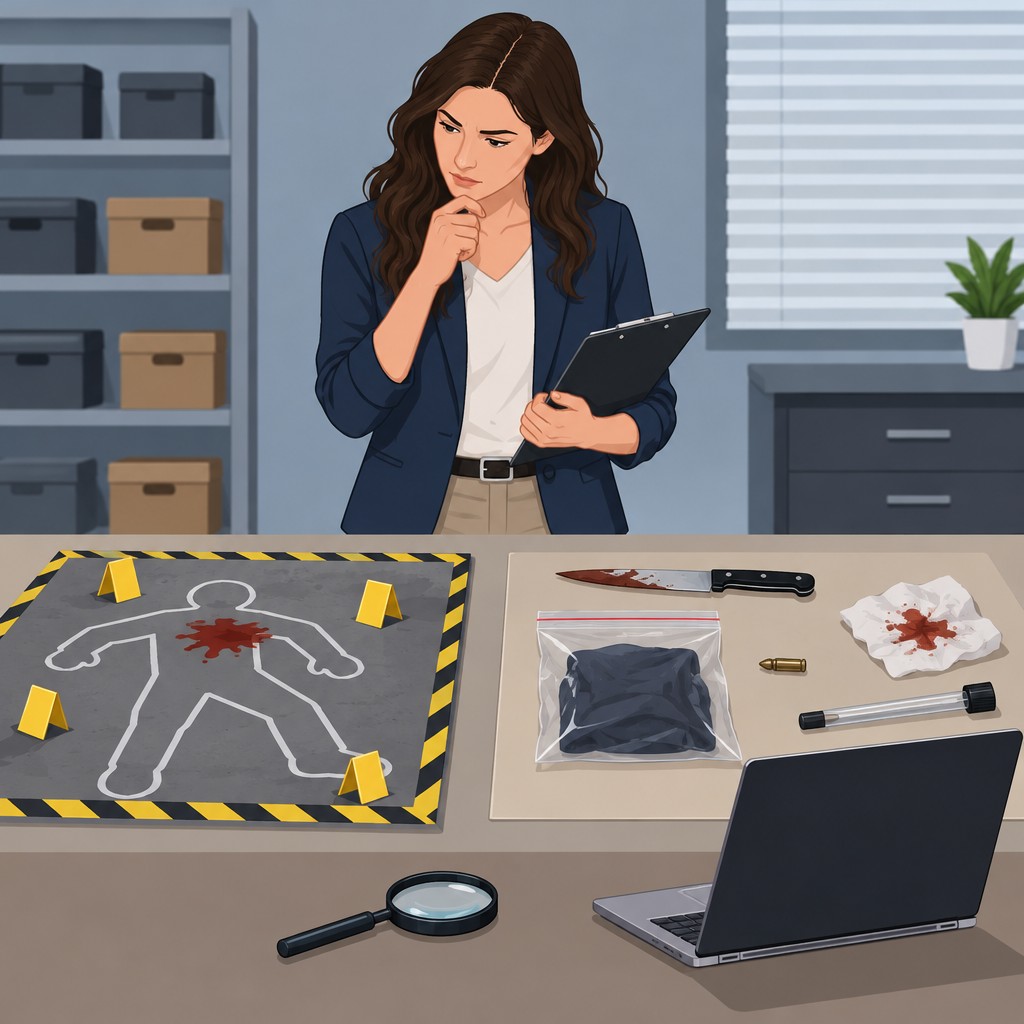
Real investigations usually require more meticulous work than fictional portrayals suggest.
Investigators often spend considerable time examining evidence and documenting crime scenes.
Moreover, multiple experts collaborate in real cases, while fiction often simplifies that process.
- Real investigations are often meticulous and time-consuming.
- Multiple experts commonly collaborate during real investigations.
The Importance of Accurate Forensic Evidence
Accurate forensic evidence helps investigators connect suspects with crimes.
It can also support convictions when the evidence clearly links suspects to criminal activity.
Furthermore, reliable forensic evidence can exonerate innocent people and prevent wrongful convictions.
- Forensic evidence can link suspects to crimes and support convictions.
- Forensic evidence can also protect innocent people from wrongful convictions.
You Might Also Like: Mental Health and Well-Being for DEA Agents
Common Misconceptions About Crime Scene Investigation
Crime scene investigation requires cooperation among several professionals.
CSI technicians work with law enforcement officers, forensic scientists, and other specialists.
Therefore, no single technician usually solves an entire case.
Real investigations also require patience because evidence processing can take days or weeks.
Technicians must analyze samples, conduct tests, and interpret results carefully.
They cannot reliably produce complete findings within a few hours.
Crime laboratories do not always have unlimited equipment or funding.
Budget limits, restricted resources, and case backlogs can affect laboratory work.
As a result, technicians must prioritize cases according to available resources.
Investigators also cannot expect every crime scene to provide decisive evidence.
Evidence may remain ambiguous, inconclusive, or misleading.
Consequently, technicians must examine multiple explanations before interpreting their findings.
CSI technicians generally focus on collecting and analyzing physical evidence.
Law enforcement officers usually handle suspect interviews, interrogations, and arrests.
CSI personnel instead provide scientific support during criminal investigations.
The Real Crime Scene Investigation Process
Investigators first secure the scene to protect evidence from contamination or loss.
They establish boundaries and control access to the area.
Transform Your Career Today
Unlock a personalized career strategy that drives real results. Get tailored advice and a roadmap designed just for you.
Start NowThey also record conditions through notes, sketches, and photographs.
Next, technicians collect physical evidence using suitable equipment and procedures.
They work carefully to reduce contamination during collection.
Technicians document each item’s location, condition, and packaging.
This documentation supports the chain of custody and courtroom admissibility.
After collection, personnel send evidence to a crime laboratory for examination.
Forensic scientists conduct tests, analyze samples, and interpret the results.
Those examinations may include DNA analysis, fingerprint comparison, and ballistics testing.
They may also include toxicology screening and other specialized techniques.
CSI technicians then use evidence to reconstruct events at the scene.
They may develop a timeline and sequence of events.
This reconstruction helps investigators understand the crime and identify possible suspects or motives.
Finally, technicians prepare detailed reports describing their findings and methods.
They present those reports to law enforcement officers, prosecutors, and other stakeholders.
Technicians may also testify in court as expert witnesses.
Differences Between Forensic Practice and Fiction
Fiction often compresses complex forensic work into short, dramatic sequences.
Real CSI depends on methodical procedures, technical expertise, and careful documentation.
Forensic professionals must assess evidence without assuming that one clue proves guilt.
They also communicate limitations when findings remain uncertain or incomplete.
This careful approach supports accurate investigations and informed criminal justice decisions.
See Related Content: Top Certifications for Security Consultants
Impact of Technology on Crime Scene Investigation
- Technology has revolutionized crime scene investigations.
- It enables investigators to gather evidence efficiently.
- Moreover, DNA analysis has strengthened criminal cases.
Technology’s Role in Modern Crime Scene Investigations
- Technology now plays a crucial role in modern crime investigations.
- Forensic tools help investigators analyze evidence accurately and quickly.
- Additionally, these tools help identify suspects and connect them to crimes.
Forensic Advances in Crime Solving
- Forensic science has significantly changed how investigators solve crimes.
- New techniques have improved the accuracy of crime-solving efforts.
- Furthermore, forensic evidence now holds a pivotal position in court trials.
Technology in Real-Life Investigations and Media
- In real life, technology supports investigations through careful, often subtle work.
- By contrast, media often exaggerates forensic technology’s capabilities.
- Real-life investigations therefore emphasize meticulous analysis and thoughtful interpretation.
Media Portrayals and Forensic Reality
Media often portrays crime scene investigation inaccurately to create dramatic effects.
These portrayals frequently simplify and glamorize forensic investigation.
By contrast, real investigations require meticulous attention to detail and scientific precision.
Public Value of Accurate Forensic Representation
Accurate CSI portrayals can educate the public about forensic science’s complexities and challenges.
They can also clarify the careful processes investigators follow when examining evidence.
Misleading depictions may perpetuate myths and misconceptions about the field.
Critical Viewing of Fictional CSI
Viewers should approach fictional CSI depictions with a critical eye.
Comparing dramatic stories with reliable information helps separate fact from fiction.
Therefore, seeking trustworthy forensic science information supports a clearer understanding of crime scene investigation.
Additional Resources
Bing search results for Fiction vs. Reality: Crime Scene Investigation in Media Protective Services


