




Campus Fire Alarm Response
Campus security officers help keep students and staff safe on campus.
Fire alarm situations require calm, timely, and organized responses.
Effective preparation helps officers reduce confusion during emergencies.
Understanding the Fire Alarm System
Officers must understand campus fire alarm systems before emergencies occur.
They should identify alarm types, locations, and activation methods.
This knowledge supports faster assessment and better coordination.
Responding to Fire Alarms
When an alarm sounds, the security officer must respond immediately.
The officer should assess the situation and determine the alarm location.
They can coordinate a response team when necessary.
Evacuation Procedures
Security officers must understand the campus evacuation procedures.
They should know evacuation routes and designated assembly points.
Officers must help ensure that occupants leave buildings safely.
Assisting Occupants
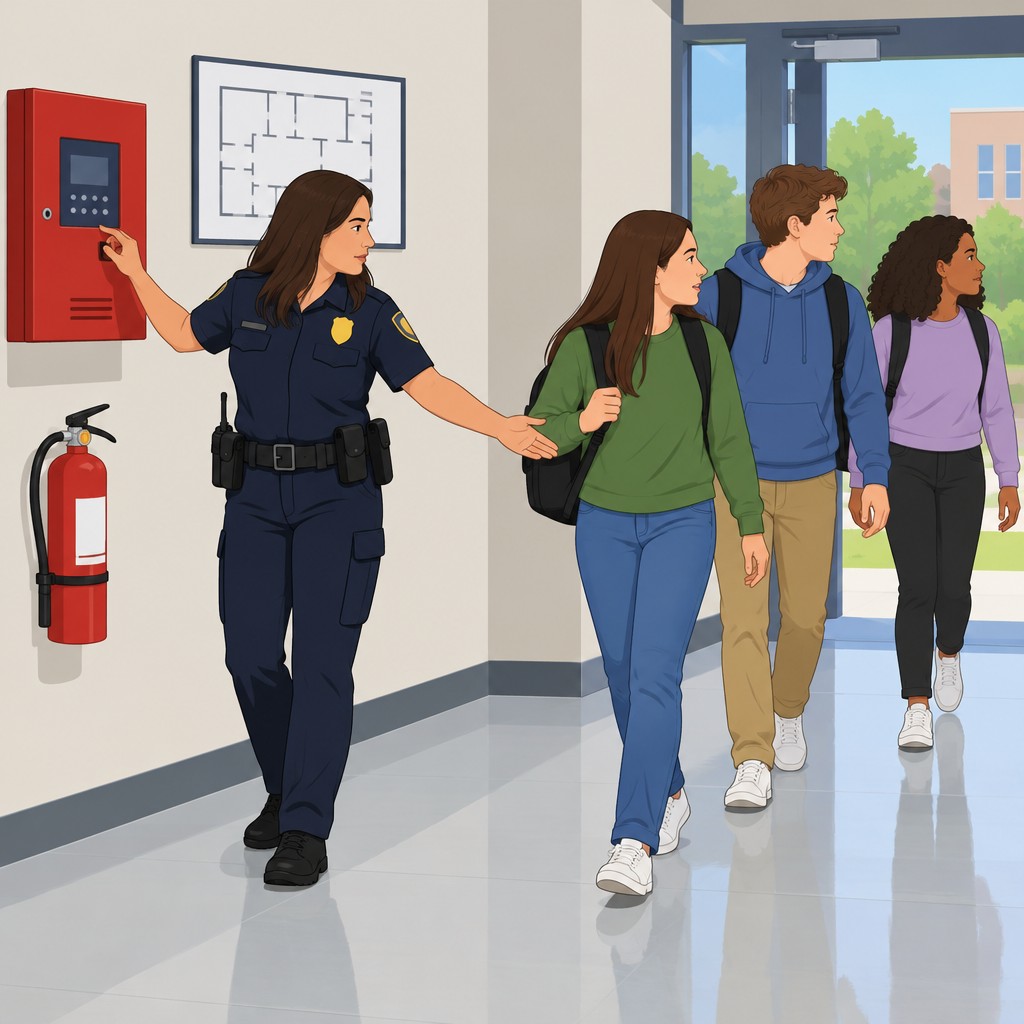
During an alarm, officers should guide occupants toward safe exits.
Clear reassurance can help people remain calm while leaving.
Officers must assist individuals with disabilities or special needs.
Coordinating with Emergency Services
Serious situations may require coordination with emergency services.
Security officers should communicate clearly with the fire department.
Quick action supports a swift and effective alarm response.
Post-Evacuation Procedures
After evacuation, the security officer should conduct a thorough building sweep.
This sweep helps confirm that everyone has left the premises.
Officers should work with maintenance staff to reset the alarm and investigate its cause.
Importance of Fire Alarms
Fire alarms give campus occupants an early warning about possible fires.
They provide valuable time for people to leave buildings safely.
Therefore, functioning and maintained alarms support faster awareness during emergencies.
- Fire alarms alert individuals to potential fires.
- They provide an early warning before conditions become more dangerous.
- Without alarms, occupants might discover fires too late.
- Regular maintenance helps keep fire alarms functional.
Campus Security Responsibilities
Campus security officers respond promptly when an alarm activates.
They assess conditions and select appropriate actions for the situation.
Additionally, officers need training that supports swift and decisive responses.
- Officers respond quickly to fire alarm activations.
- They evaluate the situation before taking appropriate action.
- Officers coordinate building evacuations during alarm situations.
- They cooperate with fire departments during emergency responses.
Organized Building Evacuations
When an alarm sounds, occupants should begin evacuation procedures immediately.
Calm movement helps people leave safely and reduces confusion.
Meanwhile, clear directions help officers organize building evacuations.
- Occupants should follow evacuation procedures without delay.
- People should remain calm while moving toward safety.
- Security officers direct occupants during the evacuation.
- Clear communication supports an orderly evacuation process.
Protection of Everyone on Campus
Security officers prioritize the safety of students, faculty, staff, and visitors.
They may assist individuals with disabilities or special needs during evacuations.
Furthermore, reassurance can reduce panic and confusion during an alarm.
- Officers protect everyone on campus during fire alarm situations.
- They consider the needs of students, faculty, staff, and visitors.
- Officers assist people who need additional evacuation support.
- Reassuring communication helps maintain calm during emergencies.
Training and Preparation
- Fire safety protocols and procedures require regular officer training.
Training helps campus security officers respond effectively during fire alarm situations.
Officers should understand the campus layout, alarm locations, and evacuation routes.
They should also learn how to use fire extinguishers and other firefighting equipment when necessary.
Regular training sessions refresh essential skills and support continued emergency readiness.
Drills and Simulations
Regular drills allow officers to practice responses to different fire alarm scenarios.
These exercises can reveal gaps in knowledge, communication, or established procedures.
Simulations strengthen decision-making and communication during stressful emergency conditions.
Transform Your Career Today
Unlock a personalized career strategy that drives real results. Get tailored advice and a roadmap designed just for you.
Start NowConsequently, repeated practice supports a coordinated response when officers face an actual emergency.
Discover More: Correctional Officer Peer Support Programs
Communication and Coordination
- Clear communication connects security officers, students, and staff during fire alarm situations.
- Security officers should inform all occupants and guide them toward safety during an alarm.
- Additionally, officers can use intercoms, radios, or alarms to communicate across campus.
- Regular communication exercises help officers follow emergency protocols efficiently.
Campus Security Coordination
- Campus security officers coordinate with local fire departments and emergency services.
- When an alarm activates, officers must immediately contact local emergency services.
- Meanwhile, officers work with firefighters and paramedics to identify the emergency location and nature.
- Providing accurate information helps emergency services respond promptly and appropriately.
- Furthermore, officers should stay current with procedures for working alongside external agencies.
You Might Also Like: School Resource Officer Programs Across the USA
Evacuation Procedures
When the fire alarm sounds, notify students and staff immediately.
Walk through the building to confirm that every room is clear.
Check stairwells and exits for obstructions or other evacuation hazards.
- Notify students and staff immediately upon hearing the fire alarm to evacuate the building.
- Walk through the building to ensure all rooms are clear of occupants before leaving.
- Check stairwells and exits for any obstructions or hazards that may impede evacuation.
- Escort individuals who require assistance, including those with mobility issues or disabilities, to safety.
Guiding Students and Staff During Evacuation
Designate assembly points outside the building for everyone to use.
Account for students and staff to identify anyone left inside.
Provide reassurance and guidance to reduce panic and confusion.
- Designate specific assembly points outside the building where everyone should gather after evacuating.
- Account for all students and staff to ensure no one remains inside the building.
- Conduct headcounts to verify that everyone safely evacuated and reached the assembly point.
- Provide reassurance and guidance to students and staff during the evacuation process.
These procedures help campus security officers guide students and staff safely.
They also support orderly movement toward designated assembly points.
Find Out More: Common Misconceptions About ICE Agents
Assessing the Situation
- Campus security officers must quickly assess a fire alarm’s severity.
- First, determine whether the alarm signals a drill, false alarm, or actual emergency.
- Next, look for smoke, fire, or other hazards that could threaten people.
- Then, check the alarm panel for information about the alarm location.
- Finally, consider whether classes are occurring or fewer people remain after hours.
Maintaining Calm and Focus
- Remaining calm helps officers think clearly and make rational decisions under pressure.
- Staying focused allows officers to prioritize tasks and respond effectively.
- Keeping emotions controlled prevents panic and supports efficient alarm management.
- Clear communication helps personnel coordinate their responses during emergencies.
- Regular training and drills help officers maintain composure and preparedness.
Discover More: Emergency Preparedness Tips from Disaster Coordinators
Importance of Assisting Vulnerable Individuals
Campus security officers must support vulnerable individuals during fire alarm evacuations.
People with mobility, sensory, or cognitive disabilities may face unique evacuation challenges.
Therefore, officers should identify individual needs before emergencies occur.
Role of Campus Security Officers
Officers should assess campus areas and identify individuals who may need additional assistance.
They should create individualized evacuation plans and coordinate support with disability services.
During evacuations, officers must provide clear guidance and help people reach accessible exits.
- Assess campus areas to identify vulnerable individuals and their specific needs.
- Develop individualized evacuation plans for people requiring special assistance.
- Coordinate with campus disability services to arrange appropriate support.
- Provide clear communication during fire alarm drills and actual evacuations.
- Assist individuals while they navigate emergency exits and evacuation routes.
Training and Preparedness
Specialized training helps officers assist vulnerable individuals more effectively during fire alarm situations.
Officers should understand how different disabilities can affect evacuation procedures.
Regular practice also improves communication, coordination, and response effectiveness.
- Understand how different disabilities may affect evacuation procedures.
- Practice communication techniques that provide clear instructions and guidance.
- Learn how assistive devices and tools can support evacuation assistance.
- Participate in regular drills and exercises to improve response effectiveness.
Support and Accommodations
Officers should work closely with disability services to maintain suitable emergency accommodations.
Accessible routes and designated assistance personnel can make evacuations more manageable.
Alternative communication methods can also support people with hearing or speech impairments.
- Provide designated evacuation personnel for individuals requiring special assistance.
- Keep emergency evacuation routes accessible and well-maintained.
- Offer alternative communication methods for people with hearing or speech impairments.
- Establish designated assembly points for individuals requiring assistance.
Empathy and Empowerment
Empathy helps officers respond respectfully when vulnerable individuals need evacuation assistance.
Officers should respect each person’s autonomy, dignity, needs, and preferences.
They should also support inclusive emergency preparedness policies and procedures.
- Approach each individual with understanding and compassion.
- Respect the autonomy and dignity of people requiring assistance.
- Encourage individuals to communicate their needs and preferences.
- Advocate for inclusive emergency preparedness policies and procedures.
Prioritizing vulnerable individuals helps campus security officers create safer and more supportive evacuations.
Through preparation, coordination, and compassion, officers can better support people during emergencies.
Post-Evacuation Responsibilities
After resolving the alarm, campus security officers help maintain campus safety.
They follow post-evacuation procedures before occupants return to the building.
Additionally, officers coordinate inspections and emergency assessments after evacuation.
- Conduct building inspections to ensure that all areas remain clear of hazards or threats.
- Secure the premises by locking doors and windows against unauthorized access.
- Check for fire or smoke before allowing occupants to re-enter the building.
- Coordinate with emergency response teams to assess the situation and determine the alarm’s cause.
Incident Documentation
Officers should document each fire alarm incident after completing immediate safety tasks.
This record supports future reference and investigation.
Furthermore, documentation helps staff evaluate procedures and identify recurring concerns.
- Provide a record of the event for future reference and investigation.
- Help identify trends or recurring issues that require attention.
- Assist staff in determining the response and evacuation procedures’ effectiveness.
Witness Statements
Witnesses can provide important details about the incident and evacuation actions.
Officers should gather these accounts while reviewing the event.
Moreover, documented statements can support comparisons between different reports.
- Interview witnesses about the incident and actions taken during evacuation.
- Document witness statements to create a complete account of the event.
- Use statements to corroborate information and identify discrepancies in reports.
Staff Debriefing
Staff debriefings give responders an opportunity to review their actions.
Transform Your Career Today
Unlock a personalized career strategy that drives real results. Get tailored advice and a roadmap designed just for you.
Start NowThey can discuss successful steps and challenges that affected the response.
Consequently, feedback can strengthen future evacuation efforts.
- Conduct a debriefing session with staff involved in the response.
- Discuss successful actions and identify areas for improvement.
- Review evacuation procedures and address related challenges.
- Provide performance feedback and suggestions for future response efforts.
These post-evacuation procedures help officers protect the campus community after an alarm.
Incident records, witness statements, and staff discussions can improve response efforts.
They also help officers address issues that could affect future emergencies.
Maintaining Campus Safety Through Vigilant Response
Campus security officers protect the campus community by managing fire alarm situations effectively.
Because they remain prepared, officers help maintain safety and security during emergencies.
Officers should know fire safety protocols and respond swiftly when an alarm sounds.
That prompt action can limit potential disasters and save lives.
Furthermore, regular updates keep officers informed about changing fire safety procedures.
These updates equip them to address different fire alarm scenarios.
A culture of vigilance and preparedness helps maintain a secure environment for everyone on campus.
Ultimately, well-trained officers can reduce risks and support the well-being of students, faculty, and staff.
Additional Resources
Bing search results for Campus Security Officer: Handling Fire Alarm Situations Protective Services


