




Historical Development of the Border Patrol Agency
The Border Patrol Agency serves as a key federal law enforcement agency.
Its history shows how the agency adapted to changing national priorities.
Understanding that evolution provides context for its current role and challenges.
Establishment and Early Border Security
The Border Patrol was established in 1924 to combat illegal immigration.
Initially, the agency operated with a small force focused primarily on border security.
This early mission established the foundation for its later responsibilities.
Expansion During Prohibition
During the Prohibition era, smugglers created significant challenges for the Border Patrol.
Consequently, the agency expanded its efforts beyond illegal immigration enforcement.
It also assumed responsibility for preventing narcotics trafficking across the border.
Modernization After World War II
After World War II, the Border Patrol underwent significant modernization.
The agency adopted advanced technology to strengthen its border security efforts.
It also developed new strategies to address evolving enforcement demands.
Expanded Homeland Security Responsibilities
Following the 9/11 attacks, the Border Patrol expanded its responsibilities.
The agency began supporting counterterrorism efforts as part of its broader mission.
It became a crucial component of the Department of Homeland Security.
Contemporary Enforcement and Modernization
In recent years, the Border Patrol has faced increased scrutiny over its enforcement practices.
That scrutiny has shaped discussions about the agency’s current operations.
Meanwhile, officials have pursued modernization through training and technology upgrades.
Continuing Evolution of the Agency
The Border Patrol’s history reflects steady growth and adaptation over time.
Its responsibilities expanded from border security to include narcotics prevention and counterterrorism.
Examining this development helps clarify the agency’s present role and ongoing challenges.
Creation of the Border Patrol Agency
In 1924, the Immigration Bureau created the Border Patrol Agency.
The agency focused on monitoring and enforcing immigration laws at the border.
Its creation established an important foundation for modern border enforcement in the United States.
Initial Responsibilities and Duties
The agency worked to prevent unauthorized individuals from crossing the border.
Agents monitored border areas and responded to suspected violations of immigration laws.
They also supported emergency responses and coordinated security efforts with other law enforcement agencies.
- Agents prevented unauthorized border crossings.
- They conducted patrols to identify suspicious activities and attempted illegal entries.
- They enforced immigration laws and detained individuals who violated those laws.
- Agents assisted with search and rescue operations for people in distress along the border.
- The agency collaborated with other law enforcement organizations to share information and coordinate security efforts.
Early Growth in Manpower and Resources
The agency expanded its manpower and resources during its early years.
It steadily increased the number of agents deployed along the border.
New stations and outposts strengthened its presence and coverage.
- The agency introduced vehicles and communication tools to support border security.
- Expanded training programs prepared agents to perform their duties effectively.
Responsibilities During Major Historical Events
During Prohibition, agents helped prevent illegal alcohol smuggling across the border.
During World War II, the agency shifted attention toward national security.
Agents patrolled the border and protected critical infrastructure and transportation hubs.
- Agents worked to prevent enemy infiltration during wartime.
- The agency coordinated with other law enforcement agencies to safeguard the nation.
- These responsibilities supported the agency’s continued adaptation to changing border challenges.
Delve into the Subject: Public Safety Officer: Navigating Emergency Situations
The 1950s Shift Toward Immigration Control
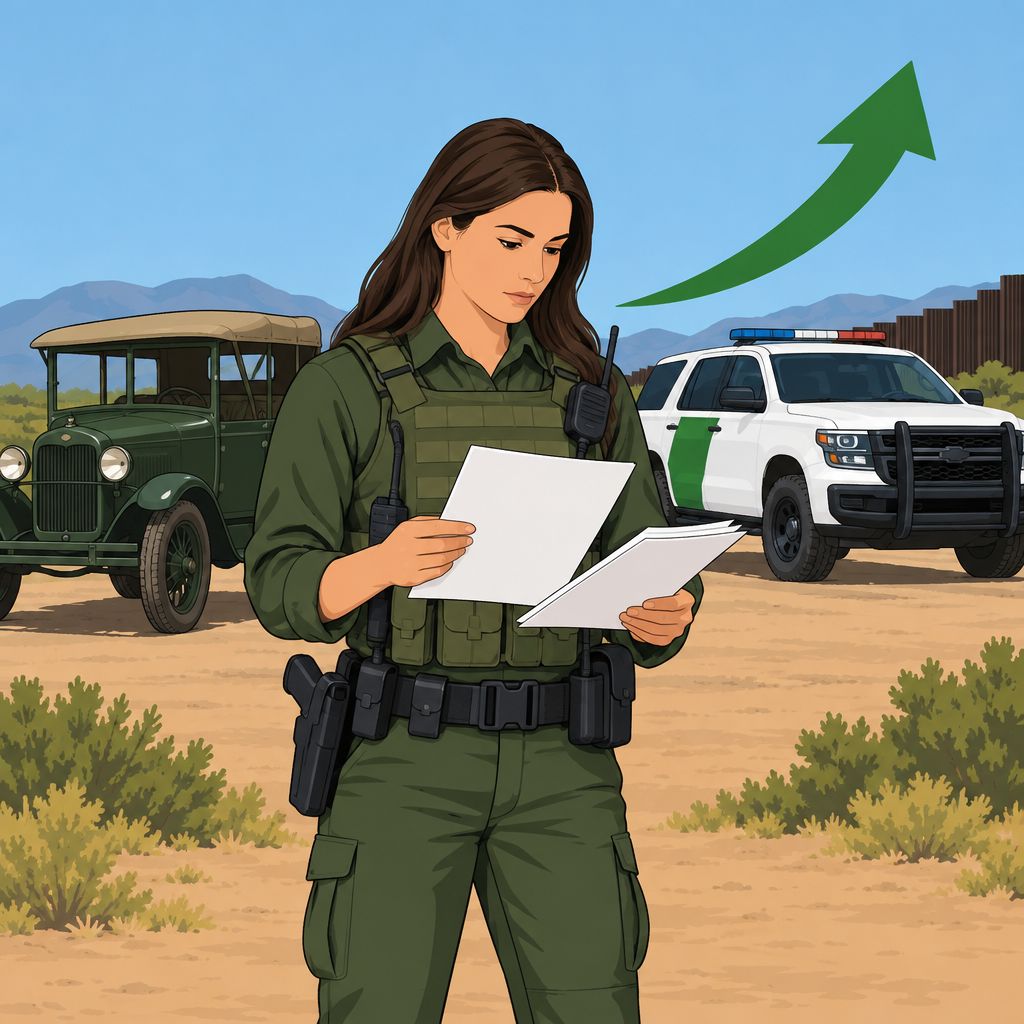
In the 1950s, the Border Patrol Agency shifted its focus from Prohibition to immigration control.
This change required the agency to adapt its enforcement approach.
As immigration patterns changed, officials developed strategies for addressing increased arrivals.
- The agency increased border security measures to reduce illegal crossings.
- Agents developed new strategies and tactics for immigration enforcement.
- Specialized training prepared agents to address different border threats.
- The agency collaborated with other law enforcement organizations to strengthen security.
Technology and Tactics in Later Decades
Later decades brought modern technology and tactics that changed Border Patrol operations.
Drones and surveillance cameras expanded the agency’s monitoring capabilities.
Improved communication systems helped agents coordinate more effectively.
Transform Your Career Today
Unlock a personalized career strategy that drives real results. Get tailored advice and a roadmap designed just for you.
Start Now- Biometric identification tools enabled faster and more accurate processing.
- Vehicle barriers and sensors helped prevent illegal border crossings.
- Checkpoints and fences supported the agency’s border control efforts.
- These changes continue to influence the agency’s operations today.
Learn More: Highway Patrol Officer Safety Tips and Protocols
Controversies and Criticisms
The Border Patrol Agency has faced controversy over its operations and enforcement practices.
Reports have questioned how agents treat migrants and immigrant communities.
These concerns have increased calls for accountability, transparency, and policy reform.
Accusations of Human Rights Violations
Reports accuse some Border Patrol agents of using excessive force against migrants.
Additionally, documented cases describe physical abuse, denied medical care, and deaths in custody.
Human rights organizations therefore continue demanding accountability and transparency throughout agency operations.
- Reports describe excessive force against migrants.
- Some documented cases involve physical abuse.
- Some migrants reportedly lacked access to medical care.
- Deaths in custody have raised serious concerns.
- Advocates continue requesting stronger agency oversight.
Concerns About Racial Profiling
Critics say Border Patrol enforcement tactics can target people because of race or ethnicity.
Various reports describe profiling that affects Latino, Hispanic, and other minority groups.
These allegations have prompted condemnation, legal challenges, and debate about civil rights protections.
- Critics accuse agents of using race during enforcement decisions.
- Reports identify Latino and Hispanic communities among affected groups.
- Other minority groups have also reported profiling concerns.
- Legal challenges have opposed alleged discriminatory practices.
- Critics say profiling weakens trust in law enforcement.
Effects on Immigrant Communities and Public Perception
Border Patrol actions have strongly affected immigrant communities along the border.
Aggressive tactics have increased fear and mistrust among undocumented immigrants.
Reports of misconduct, family separation, and detention have also damaged public confidence.
- Immigrant communities report greater fear of law enforcement.
- Undocumented immigrants may distrust officers because of aggressive tactics.
- Reports of misconduct have influenced public opinion.
- Family separations have prompted outrage from advocacy groups.
- Detentions have intensified debates about immigration policy.
Accountability and Trust in Border Enforcement
These controversies show why immigration enforcement requires meaningful accountability and transparent procedures.
Addressing alleged rights violations and racial profiling could help rebuild trust among affected communities.
Stronger oversight can also support lawful and responsible border enforcement.
Uncover the Details: Sheriff vs. Deputy Sheriff: Roles and Differences
Border Security Post-9/11
Following the September 11, 2001, attacks, the United States Border Patrol Agency changed its operations and priorities.
The attacks highlighted border security’s importance in preventing terrorist entry and domestic violence.
- Heightened Security Measures
In response, the Border Patrol Agency introduced measures that strengthened border security.
It increased personnel, improved surveillance technology, and strengthened partnerships with law enforcement agencies.
- Cooperation with Other Agencies
Additionally, the agency expanded cooperation with federal, state, and local law enforcement agencies.
Partners shared intelligence, conducted joint operations, and coordinated efforts to secure the borders.
As a result, the Border Patrol Agency assumed a broader homeland security role.
It continued preventing illegal entry by individuals seeking employment.
Moreover, it worked to stop potential threats to national security.
You Might Also Like: CBP Officer Participation in Public Awareness Programs
Border Patrol Agency Responsibilities
The Border Patrol Agency plays a crucial role in safeguarding the nation’s borders.
Its duties combine enforcement, monitoring, emergency response, and humanitarian assistance.
The agency collaborates with other federal agencies to enhance national security and help ensure the country’s safety.
- Preventing illegal immigration and human trafficking
- Seizing illegal drugs and contraband
- Enforcing immigration laws
- Patrolling and monitoring border areas
- Responding to emergencies and providing humanitarian aid
Technology and Training Advancements
During the 21st century, the agency has advanced its technology and training programs.
These efforts support more efficient operations and improve coordination across border activities.
Advancements have significantly boosted the agency’s capabilities in detecting and preventing criminal activities along the borders.
- Implementing advanced surveillance systems
- Using drones and remote sensors to monitor border areas
- Enhancing communication systems for better coordination
- Providing training focused on de-escalation and community relations
- Integrating cutting-edge technology for efficient operations
The agency continues to adapt and evolve while meeting the challenges of safeguarding the nation’s borders.
International Relations and Collaborations
The United States Border Patrol Agency maintains partnerships with its counterparts in Mexico and Canada.
These partnerships support intelligence sharing, coordinated operations, and joint training along shared borders.
They also help address common security challenges and protect national interests.
Addressing Transnational Crime and Drug Trafficking
The agency combats transnational crimes, including drug trafficking, human smuggling, and arms trafficking.
It works closely with international partners to disrupt criminal networks and intercept illegal activities.
These efforts help secure border areas and support safer cross-border movement.
- Mexican and Canadian authorities exchange information about criminal activities, suspects, and emerging threats.
- Border Patrol agents coordinate with counterparts to disrupt smuggling routes, apprehend suspects, and seize contraband.
- The agency shares surveillance drones, sensor technology, and other resources with international partners.
- It provides training and capacity-building support to strengthen partner agencies’ abilities against transnational crime.
International collaboration strengthens the agency’s ability to secure borders and protect national interests.
Future Outlook
The Border Patrol Agency will face changing security conditions in the coming years.
Meanwhile, technological advances and globalization will create new operational demands.
Policy changes, environmental pressures, and partnerships will also influence the agency’s future direction.
Transform Your Career Today
Unlock a personalized career strategy that drives real results. Get tailored advice and a roadmap designed just for you.
Start NowChallenges and Opportunities for the Border Patrol Agency
- The agency must keep pace with new surveillance methods as technology advances.
- Furthermore, globalization may produce more sophisticated smuggling techniques and new border security challenges.
- Climate change and natural disasters may create sudden migrant influxes that test response capacity.
- Additionally, immigration policy debates could influence the agency’s resources and priorities.
- Collaboration with law enforcement agencies and international partners can strengthen border security measures.
- Investing in training and development can improve agents’ operational efficiency and effectiveness.
- Embracing diversity and cultural sensitivity can build trust with varied border communities.
- Finally, data analytics and predictive modeling can help the agency anticipate security threats.
Predictions for the Agency’s Evolution
- The agency will likely adapt its strategies and tactics to address evolving security challenges.
- Advanced technologies, including drones, artificial intelligence, and biometrics, will become more prevalent.
- Moreover, the agency may strengthen coordination with neighboring countries’ border agencies.
- Enhanced training and professional development could create a more skilled workforce.
- Community engagement and public relations may improve the agency’s public image.
- Accountability, transparency, and human rights standards will remain vital to agency credibility.
- The agency may develop private-sector partnerships to address border security challenges.
- Finally, legislative and policy reforms may reshape its structure, mandate, and operations.
The Border Patrol Agency’s Continuing National Role
The agency continues adapting as immigration trends and national security concerns change.
Its expanded jurisdiction, advanced technologies, and collaborative strategies have strengthened border operations.
These developments help the agency respond to evolving demands.
The agency works to prevent illegal crossings, drug trafficking, and other illicit activities.
Despite continuing criticism, the agency remains significant to national security efforts.
Its mission combines border protection with enforcement of immigration laws.
Therefore, continued adaptation will shape its ability to protect the nation’s borders.
This role remains important to the security and prosperity of the United States.
Additional Resources
Google search results for Historical Evolution of the Border Patrol Agency Protective Services
Bing search results for Historical Evolution of the Border Patrol Agency Protective Services


