




Agricultural quality control inspectors play a crucial role in monitoring and enforcing quality standards.
They ensure that crops, livestock, and other agricultural products meet specific quality criteria.
Additionally, inspectors conduct inspections and test samples to identify potential food safety issues or risks.
Their work maintains the agriculture industry’s quality and reputation.
Through these efforts, inspectors prevent substandard products from reaching the market.
They also uphold consumer confidence in the safety and quality of agricultural goods.
Without their work, contaminated or low-quality products could more easily enter the market.
Their role safeguards public health and promotes sustainable agriculture.
Agricultural Quality Control Inspectors
Agricultural Quality Control Inspectors evaluate fruits, vegetables, and other farm products.
They help agricultural producers follow regulations and guidelines for producing high-quality products.
Additionally, their evaluations support consistent quality throughout the agricultural industry.
Quality Assessment Responsibilities
Inspectors perform several activities that support reliable agricultural quality control.
They gather evidence, assess conditions, and provide practical guidance to farmers.
Key responsibilities include the following activities.
- Inspect farms for compliance with quality control standards.
- Test soil and water samples to assess agricultural product quality.
- Analyze data to identify quality-related trends and patterns.
- Recommend methods that help farmers improve product quality.
- Enforce agricultural regulations and guidelines that maintain quality standards.
Benefits for Consumers and Producers
Quality control inspectors help protect consumers from harmful substances in agricultural products.
Moreover, consistent standards support sustainability across the agriculture industry.
Producers can also strengthen their market position by delivering products that meet consumer demands.
Agricultural Quality Control Inspection
Agricultural quality control inspectors help ensure that products meet required quality standards and regulations.
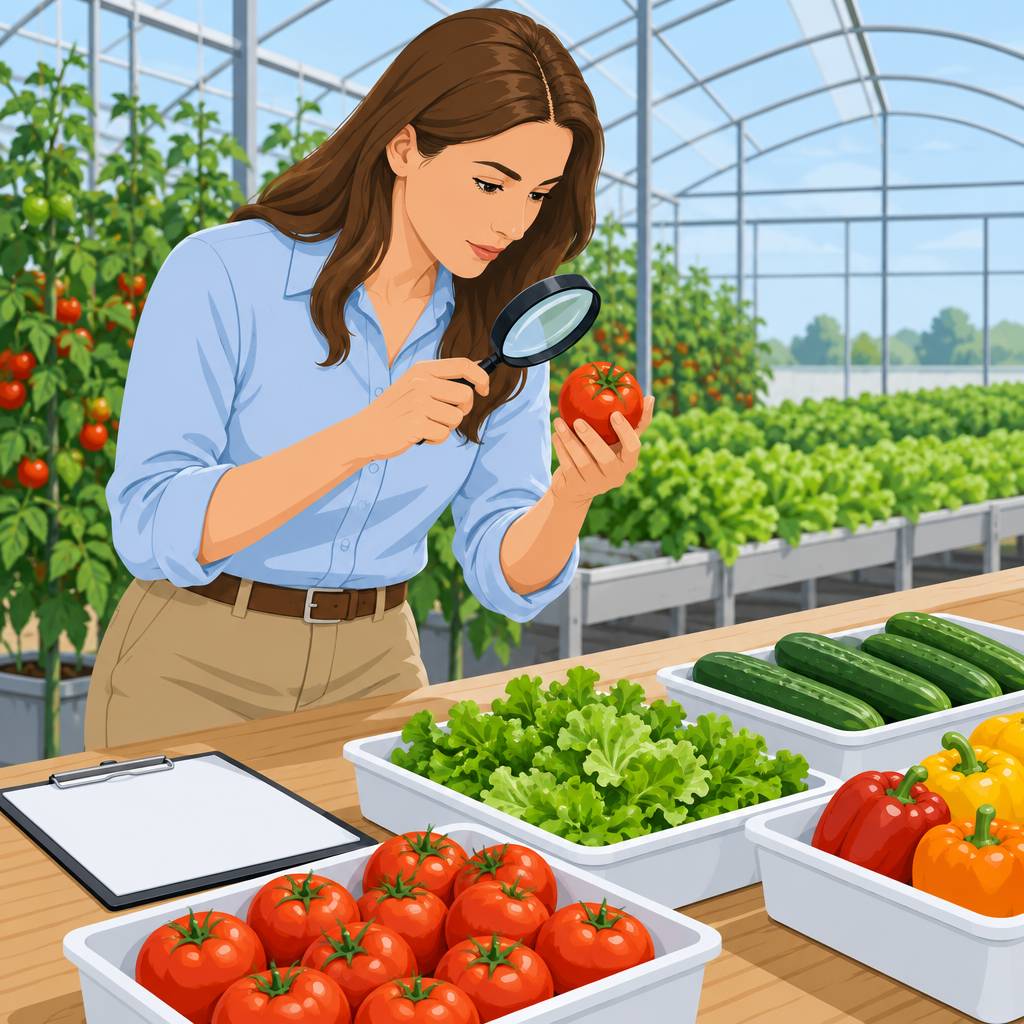
They visually examine products for defects, abnormalities, and other issues affecting safety or compliance.
Through careful inspections, these professionals help protect consumers from unsafe or compromised agricultural products.
During visual inspections, inspectors assess each product’s appearance, condition, labeling, and potential contamination.
- They examine the appearance and condition of agricultural products.
- They check for damage, spoilage, or contamination.
- They ensure that products carry correct labels.
Additionally, inspectors compare products with established quality criteria and document any non-compliance issues.
- They conduct inspections using specific quality criteria.
- They compare products against established standards.
- They document issues that show non-compliance.
Furthermore, inspectors identify defects that could reduce product quality or create risks for consumers.
- They inspect products for signs of pest infestation.
- They check for mold, rot, and other deterioration.
- They verify that products remain within acceptable freshness parameters.
These inspections help prevent compromised products from reaching the market and support consumer confidence.
See Related Content: Agricultural Technician Professional Associations
Testing Agricultural Products
Inspectors conduct tests on agricultural products for quality control purposes.
These tests assess product quality and determine compliance with required standards.
- Inspectors conduct various tests on agricultural products.
- They assess whether products meet required quality standards.
- The results support effective agricultural quality control.
Using Specialized Equipment
Inspectors use specialized equipment to measure quality parameters accurately.
These tools help inspectors assess different quality aspects of agricultural products.
- Moisture meters measure moisture levels in agricultural products.
- pH meters assess acidity levels accurately.
- Spectrophotometers help evaluate product quality parameters.
- Inspectors require training to use this equipment effectively.
Reporting Test Results
Inspectors compile and document test results in a timely manner.
Accurate reporting supports efficient quality control.
- Reports include detailed information about tested quality parameters.
- Inspectors record results accurately and efficiently.
- These reports help evaluate the overall quality of agricultural products.
Inspectors help maintain quality and safety standards for agricultural products.
Their work supports the delivery of high-quality agricultural products to consumers.
Find Out More: Tools and Equipment Used by Plant Pathologists
Record Keeping and Documentation
Inspectors maintain accurate records of inspection and testing procedures for future reference.
They record each activity’s date, time, location, and results.
This documentation helps track agricultural product quality and identify areas for improvement.
- Keeping detailed records of inspection and testing procedures
- Documenting issues or non-compliance with quality standards
- Providing reports to management and regulatory agencies when needed
Inspectors also document issues and non-compliance with established quality standards.
They note deviations from established protocols or regulations.
They also record product defects or failures.
Transform Your Career Today
Unlock a personalized career strategy that drives real results. Get tailored advice and a roadmap designed just for you.
Start NowInspectors provide reports to management and regulatory agencies when needed.
These reports summarize inspection findings and recommend corrective actions.
They also provide updates on quality control measures.
Accurate documentation supports agricultural product safety and quality.
Detailed reports identify improvement areas, help prevent product recalls, and support industry compliance.
Gain More Insights: Top Tools and Technologies for Pest Control Advisors
Compliance Monitoring
- Ensuring that agricultural products meet regulatory requirements
- Keeping up-to-date with industry standards and regulations
- Providing recommendations for improvements to maintain compliance
Compliance monitoring helps inspectors verify that agricultural products satisfy requirements established by governing bodies.
Inspectors meticulously check products against applicable rules and guidelines.
Furthermore, they track industry standards and regulatory updates that may affect inspections.
Inspectors also recommend improvements that help businesses maintain compliance.
For example, they may suggest changes to production processes, storage methods, or handling procedures.
These recommendations help businesses strengthen quality control measures and produce better products for consumers.
Therefore, compliance monitoring supports the quality and safety of agricultural products.
Delve into the Subject: How Entomologists Protect Crops from Insect Damage
Communication with Stakeholders
Agricultural quality control inspectors communicate with stakeholders throughout the agricultural supply chain.
They build cooperation by discussing practices, quality concerns, and improvement opportunities.
Consequently, clear communication helps stakeholders align with quality standards and support better agricultural practices.
Collaboration Across the Agricultural Supply Chain
Inspectors engage farmers to understand their practices and challenges.
They also work with suppliers to support the quality of agricultural inputs.
Additionally, inspectors coordinate with industry professionals to remain informed about current best practices.
- Inspectors engage with farmers to understand their practices and challenges.
- They work closely with suppliers to support input quality.
- They coordinate with industry professionals to stay updated on best practices.
Feedback on Product Quality and Needed Improvements
Inspectors conduct thorough inspections to identify product quality issues.
They document their findings and provide detailed feedback to relevant stakeholders.
Furthermore, inspectors suggest improvements that can strengthen overall product quality.
- Inspectors conduct thorough inspections to identify quality issues.
- They document findings and provide detailed feedback to relevant parties.
- They suggest improvements to enhance overall product quality.
Communication Within Inspection Teams
Inspectors share inspection results with team members and supervisors.
They collaborate on action plans to address identified quality concerns efficiently.
Meanwhile, inspectors update supervisors about progress and challenges.
- Inspectors share inspection results and collaborate on action plans.
- They update supervisors about progress and challenges.
- They collaborate with team members to address quality concerns efficiently.
Agricultural Quality Control Inspection Activities
Inspectors examine crops, livestock, and agricultural products for compliance with quality standards.
They collect samples for laboratory testing to identify pests, diseases, and contaminants.
Additionally, inspectors monitor pesticide, fertilizer, and other chemical use under applicable regulations.
They also audit farm operations and evaluate their quality control practices.
Based on inspection findings, inspectors recommend improvements to farmers and agricultural businesses.
Finally, they document inspection results and maintain accurate quality control records.
Protecting Food Quality and Public Health
Agricultural quality control inspectors help maintain standards throughout the agriculture industry.
Consequently, their work supports the delivery of safe, high-quality food products to consumers.
By monitoring agricultural practices, they help protect public health and well-being.
Additional Resources
Google search results for Key Duties of Agricultural Quality Control Inspectors Agricultural
Bing search results for Key Duties of Agricultural Quality Control Inspectors Agricultural


