




Introduction
Food science plays a crucial role in ensuring the safety of our food supply.
It involves the study of biology, chemistry, and nutrition.
Food scientists use these disciplines to understand food composition, structure, and properties.
Importance of Food Safety
Food safety helps prevent foodborne illnesses caused by contaminated or spoiled food.
Strict safety standards and regulations protect consumers from harmful pathogens and chemical hazards.
These practices also maintain the nutritional value and freshness of food products.
They ensure that food remains safe for consumption.
Understanding Food Science
- Food science examines food and its components, including production, processing, and preservation.
- Moreover, its branches include food chemistry, microbiology, engineering, and sensory evaluation.
- Scientists analyze food properties such as texture, color, flavor, and nutritional content.
- Understanding food composition and structure helps professionals maintain safety and quality.
- By studying chemical and microbial changes, scientists identify hazards and develop effective controls.
Importance of Food Safety
- Food safety prevents foodborne illnesses and protects consumer well-being.
- However, poor handling or contamination can cause food poisoning and infections.
- Safe practices also strengthen consumer trust throughout the food supply chain.
- Regulatory bodies establish standards that protect public health and encourage responsible practices.
- Proper handling, processing, storage, and distribution reduce contamination risks.
Food Science and Safer Food Systems
- Food scientists identify hazards across the food supply chain.
- Through research and analysis, they develop methods that control or eliminate pathogens and contaminants.
- They also improve processing techniques to limit contamination and spoilage.
- Furthermore, scientists create technologies that detect contaminants and verify product safety.
- Food science educates consumers about safe handling and appropriate storage methods.
Innovations in Food Safety Technology
- Technological advances have transformed food safety monitoring and regulation.
- For example, DNA testing and rapid detection methods support faster safety assessments.
- Blockchain technology tracks products throughout the supply chain and improves transparency.
- Meanwhile, sensors detect contaminants in real time and support rapid responses.
- Big data analytics reveal food safety trends and support proactive risk management.
Future Directions in Food Safety and Food Science
- Food science continues evolving as new challenges and opportunities emerge.
- Current research addresses emerging pathogens, antimicrobial resistance, and environmental sustainability.
- Consumer demand for safe, healthy products encourages further scientific innovation.
- Collaboration among scientists, industry stakeholders, and regulators advances food safety practices.
- Finally, ongoing education helps professionals follow changing safety standards and regulations.
Importance of Food Safety
- Foodborne illnesses significantly affect public health.
- Government agencies establish regulations and guidelines to promote food safety.
Food safety protects public health when harmful bacteria or pathogens contaminate food.
Such contamination can cause illnesses with serious effects for individuals and communities.
Every year, millions of people around the world experience foodborne illnesses.
These illnesses range from mild food poisoning to severe, life-threatening conditions.
Beyond physical harm, foodborne illnesses create economic costs through healthcare expenses and lost productivity.
To address these risks, government agencies establish regulations and guidelines for the food industry.
These rules guide food production, handling, and preparation to reduce contamination risks.
The FDA in the United States and EFSA in Europe have established strict food safety standards.
Those standards cover the food supply chain from farms to consumers.
Furthermore, agencies enforce rules for food labeling, packaging, handling, and storage.
Food scientists also improve safety by studying food’s chemical, physical, and biological properties.
Their research helps explain how contamination occurs and how producers can prevent it.
Through innovation, scientists develop technologies and methods that reduce foodborne illness risks.
These advances include improved packaging, stronger sanitation practices, and innovative processing techniques.
By working together, agencies, scientists, and food businesses can create a safer food supply.
See Related Content: Veterinary Technician Safety Protocols
Food Scientists and Food Safety
Food scientists help protect consumers by supporting safety throughout the food supply chain.
They investigate hazards, control contamination, and evaluate food handling practices.
Additionally, they support safe production through research, testing, and collaboration.
Responsibilities in Food Safety
They first research potential hazards that may arise during food production.
Next, they create safety protocols that help prevent contamination.
They also analyze samples, review packaging, and work with regulatory agencies.
- Researching potential hazards in food production
- Developing and implementing protocols that prevent contamination
- Analyzing food samples for harmful pathogens
- Collaborating with regulatory agencies to support safety compliance
- Evaluating packaging materials to prevent harmful chemical leaching
Preventing Contamination and Food Spoilage
Food scientists also address contamination and spoilage during processing and storage.
They use detection technologies, careful handling, and suitable packaging methods.
Furthermore, they assess risks and collaborate with manufacturers on processing improvements.
- Using advanced technologies to detect contaminants in food products
- Implementing storage and handling procedures that maintain freshness
- Developing packaging methods that extend the shelf life of perishable foods
- Conducting risk assessments to identify contamination sources
- Collaborating with manufacturers to improve processing techniques
Uncover the Details: Daily Responsibilities of a 4-H Youth Agent
Techniques Used in Food Science
Food scientists use several techniques to improve food safety.
These methods target harmful bacteria and pathogens.
They also help prevent foodborne illnesses and protect public health.
- Pasteurization: This process heats food to a specific temperature for a set time.
It kills harmful bacteria in milk, juices, and other beverages. - Sterilization: This method uses heat or chemicals to kill all microorganisms in food.
It commonly supports canning and food preservation by preventing bacterial growth. - Irradiation: This technique uses ionizing radiation to kill bacteria and pathogens.
It extends the shelf life of some fruits, vegetables, and spices.
Together, these techniques reduce harmful contaminants during food production and processing.
As a result, food scientists help keep food safe for consumers.
Gain More Insights: Agronomist vs. Horticulturist: What's the Difference?
Advancements in Food Safety
Technology has played a crucial role in enhancing food safety.
Transform Your Career Today
Unlock a personalized career strategy that drives real results. Get tailored advice and a roadmap designed just for you.
Start NowFood safety now uses digital records and biological analysis.
These tools support traceability and authenticity throughout the food supply chain.
- Blockchain technology and DNA sequencing support modern food safety practices.
- These advancements improve traceability and authenticity for food products.
Blockchain Technology
Blockchain technology provides an immutable and transparent ledger for the food industry.
This shared record documents food movements and supports reliable information exchange.
Consequently, producers and consumers can review important details about food products.
Benefits of Blockchain in Food Safety
Blockchain offers several benefits for traceability, transparency, and incident response.
These benefits help producers manage product information more effectively.
They also help consumers understand a product’s journey and authenticity.
- Consumers can track food journeys from farms to tables.
- Producers can provide proof of authenticity and quality.
- Blockchain enables swift identification and recall of contaminated products.
DNA Sequencing
DNA sequencing is transforming approaches to food safety.
DNA analysis can examine food samples and verify product information.
Furthermore, this technology supports authenticity, pathogen detection, and quality control.
Applications of DNA Sequencing in Food Safety
DNA sequencing supports several important food safety applications.
It helps analysts evaluate food origins, microorganisms, purity, and quality.
Therefore, DNA analysis strengthens efforts to protect food authenticity and safety.
- DNA analysis can confirm the origin and authenticity of food items.
- DNA sequencing allows rapid identification of harmful microorganisms in food samples.
- DNA analysis helps ensure the purity and quality of food products.
Gain More Insights: Building Resilient Farm Ecosystems
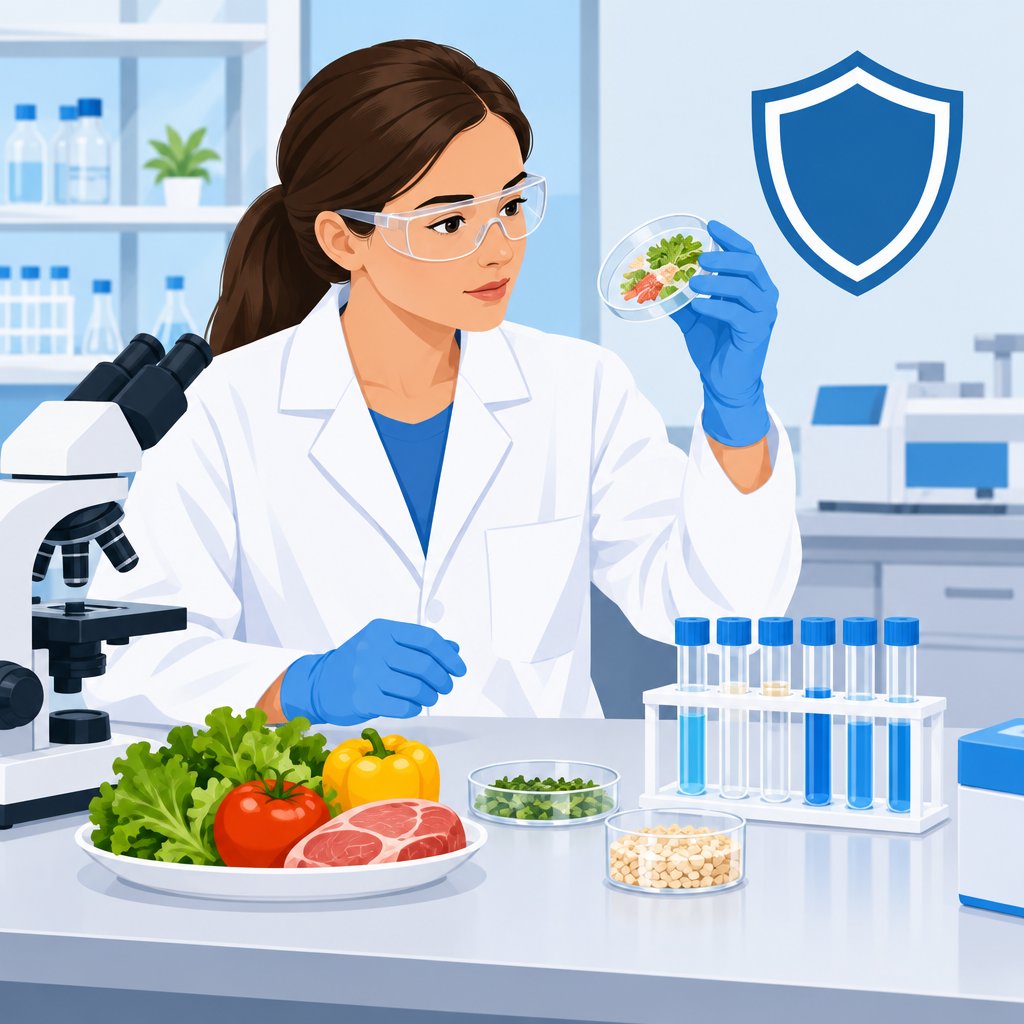
Challenges in Ensuring Food Safety
Globalization, climate change, and food fraud create complex challenges for food safety.
These pressures can increase contamination risks throughout food production and distribution.
Food scientists develop practical safeguards to protect consumers and maintain reliable food supplies.
Globalization and Food Safety Risks
Globalization has created a more complex food supply chain.
Consequently, regulators face greater difficulty tracing food sources and identifying responsibility.
Imported foods may fail to meet domestic safety standards and increase contamination risks.
Moreover, foodborne illnesses can cross borders quickly and challenge public health responses.
Climate Change and Food Safety Challenges
Climate change alters growing conditions and creates new contamination concerns.
Extreme weather can disrupt food production and distribution systems.
These disruptions may increase the likelihood of food safety problems.
Therefore, food scientists adapt safety measures to changing climate patterns.
Food Fraud and Consumer Safety
Food fraud includes mislabeling and adulteration that undermine consumer trust.
Fraudulent practices can also weaken established safety standards.
Furthermore, harmful substances may enter the food supply through fraudulent practices.
Food scientists use advanced technologies to detect fraud and protect product safety.
Strategies for Addressing Food Safety Risks
Stricter regulations and stronger oversight can reduce risks linked to globalization.
Enhanced traceability can improve accountability across the food supply chain.
Greater transparency helps stakeholders identify safety concerns more effectively.
Finally, food scientists, regulators, and industry stakeholders must collaborate.
Protecting the Food Supply Through Innovation
Food scientists address emerging risks through research, testing, and safety planning.
They help the food industry respond to environmental and supply chain changes.
By applying innovative solutions, they strengthen food safety and protect public health.
Consumer Awareness and Education
Consumer awareness and education strengthen food safety.
Consumers need label knowledge and safe handling skills to make informed food choices.
Food scientists communicate with the public to support food safety awareness.
Transform Your Career Today
Unlock a personalized career strategy that drives real results. Get tailored advice and a roadmap designed just for you.
Start Now- Consumer education explains food labels and safe food handling practices.
- Food scientists communicate with the public to promote food safety awareness.
Understanding Food Labels and Safe Handling
Consumer education helps individuals understand the information presented on food labels.
Consumers can review nutritional content, ingredients, and allergen information before choosing foods.
This knowledge supports healthier choices and helps consumers avoid risks linked to allergies or intolerances.
Safe food handling education helps prevent foodborne illnesses.
Proper hygiene practices reduce contamination risks during food preparation.
Storage guidelines and cooking instructions also help consumers prepare safer food.
Public Communication About Food Safety
Food scientists use several communication strategies to engage the public.
They use social media platforms to share food safety information.
They also conduct educational workshops and collaborate with public health authorities.
Public campaigns and outreach programs explain important food safety practices.
Clear and concise messaging helps audiences understand complex scientific concepts.
These efforts empower consumers to make informed decisions about their food choices.
Food Safety Responsibilities Across the Food System
Food science enhances food safety through proper handling, storage, and processing techniques.
It also helps identify potential hazards and develop preventive measures that reduce risks.
As consumers, we must monitor expiration dates, cooking temperatures, and storage guidelines.
The food industry must follow strict regulations and standards to maintain product safety and quality.
Together, awareness and education can reduce foodborne illnesses and improve public health.
Everyone shares responsibility for ensuring food safety.
A Shared Commitment to Safer Food
Let us embrace food safety practices at home and throughout the food industry.
By staying informed and following guidelines, we can support a safer food environment.
Furthermore, advocating for higher standards can help promote healthier conditions for everyone.
Additional Resources
Google search results for The Role of Food Science in Enhancing Food Safety Agricultural
Bing search results for The Role of Food Science in Enhancing Food Safety Agricultural


