




Agriculture and Horticulture
Agriculture and horticulture are vital fields that contribute to our food supply and environment.
Today, we will explore the distinctions between agronomists and horticulturists.
Additionally, we will examine their roles, responsibilities, and specific areas of focus.
Definition and Scope of Agronomy
Agronomy is the science and practice of soil management and crop production.
It examines efficient and sustainable crop production while considering soil health, climate, and pest control.
Agronomists help farmers maximize crop yields and improve farm profitability.
- Agronomy’s definition and purpose
- Scientific soil management and crop production
- Agronomists’ role in crop yields and profitability
Agronomists analyze soil samples and research crop varieties to guide informed farming decisions.
They also develop sustainable practices that support farmers and protect the environment.
The field covers plant genetics, soil fertility, irrigation, and nutrient management.
Furthermore, agronomists create customized crop plans based on local conditions and market demands.
They promote soil health through crop rotation, cover cropping, and integrated pest management.
These practices help maintain fertile soil and reduce reliance on chemical inputs.
Agronomy supports food security and sustainable agriculture through practical scientific guidance.
Therefore, agronomists help farmers manage modern agricultural challenges and achieve lasting success.
Duties and Responsibilities of Agronomists
- Agronomists identify and analyze soil and crop conditions for optimal growth.
- They work with farmers to develop and implement crop production plans.
- Furthermore, agronomists monitor farming practices and assess their effects on soil health.
- Agronomists conduct field trials to test crop varieties and assess their performance.
- They guide farmers on pest and disease management strategies.
- Additionally, they collaborate with agricultural engineers to improve irrigation and drainage systems.
- Agronomists research sustainable practices that enhance productivity and reduce environmental impact.
- They educate farmers about soil conservation and nutrient management practices.
- Moreover, agronomists conduct training workshops and informational sessions for farmers.
- They stay updated on agronomy advancements and incorporate useful technologies into farming practices.
Agronomists help farmers maximize crop yields while minimizing environmental impact.
They work closely with farmers to develop solutions for specific soil and crop conditions.
Additionally, agronomists provide insights that help farmers optimize production.
Through research and field testing, they support continual improvements in farming practices.
Delve into the Subject: Building Resilient Farm Ecosystems
Definition and Scope of Horticulture
- Understanding horticulture
- Cultivating gardens, landscapes, and ornamental plants
- Beautifying outdoor spaces and supporting environmental sustainability
Horticulture is a branch of agriculture focused on cultivating plants for gardens, landscapes, and ornamental purposes.
It includes activities that improve outdoor beauty while promoting environmental sustainability.
Horticulturists design and maintain attractive gardens and landscapes for residential and public enjoyment.
They select and care for plant species, helping them thrive within harmonious outdoor settings.
Moreover, horticulturists support sustainability by choosing plants suited to local climates and soil conditions.
These choices can reduce water consumption, limit chemical inputs, and support biodiversity.
Their expertise helps create sustainable landscapes that benefit people and the planet.
Uncover the Details: Soft Skills for Agricultural Technician Success
Duties and Responsibilities of Horticulturists
- Research and select suitable plants for landscapes, gardens, and parks.
- Plan and design green-space layouts for aesthetic appeal.
- Manage plant cultivation and maintenance to support optimal growth.
- Use plant biology knowledge to improve plant health and fertility.
- Implement pest and disease control measures to protect plants.
- Manage irrigation systems to provide proper hydration for plants.
- Collaborate with landscape architects to create cohesive outdoor environments.
- Recommend and implement sustainable practices for plant care and land management.
- Educate clients and the public about plant care and maintenance techniques.
Horticulturists play a crucial role in shaping outdoor spaces and maintaining plant health and beauty in various environments.
They manage plant selection, design, cultivation, maintenance, education, and sustainable land practices.
First, horticulturists research and select suitable plant species for landscapes, gardens, and parks.
They consider climate, soil conditions, and aesthetic preferences when choosing plants for specific locations.
Additionally, they plan and design green-space layouts to create visually appealing arrangements of plants, trees, and flowers.
Once plants are established, horticulturists manage their cultivation and maintenance.
They provide watering, fertilizing, pruning, and pest control to promote healthy growth and longevity.
Furthermore, horticulturists use propagation techniques to increase plant populations and maintain genetic diversity.
They may use seeding, grafting, and cuttings to expand green spaces.
Moreover, horticulturists manage landscapes, gardens, and parks through regular maintenance activities.
They oversee mowing, weeding, and mulching to keep plants thriving and landscapes attractive.
Meanwhile, they collaborate with landscape architects and designers to create cohesive outdoor environments.
They provide plant-selection and care expertise that supports the overall design.
Transform Your Career Today
Unlock a personalized career strategy that drives real results. Get tailored advice and a roadmap designed just for you.
Start NowAdditionally, horticulturists recommend sustainable practices for plant care and land management.
They prioritize eco-friendly techniques that conserve resources and minimize environmental impact.
Finally, horticulturists educate clients and the public about plant care and maintenance.
They explain watering schedules, fertilization methods, and pest control strategies.
These lessons help people care for plants effectively.
See Related Content: Creating Effective Conservation Awareness Campaigns
Education and Training Requirements for Agronomists
A bachelor’s degree in agronomy or a related field typically prepares candidates for agronomy careers.
Some employers prefer master’s or doctoral degrees for advanced research positions.
Coursework should cover plant science, soil science, crop management, and agricultural economics.
- Hands-on training develops fieldwork, data analysis, and research skills.
- Internships with agricultural companies provide valuable practical experience.
- Research institutions and government agencies also offer relevant internship opportunities.
- Continuing education through workshops, seminars, and conferences keeps agronomists current.
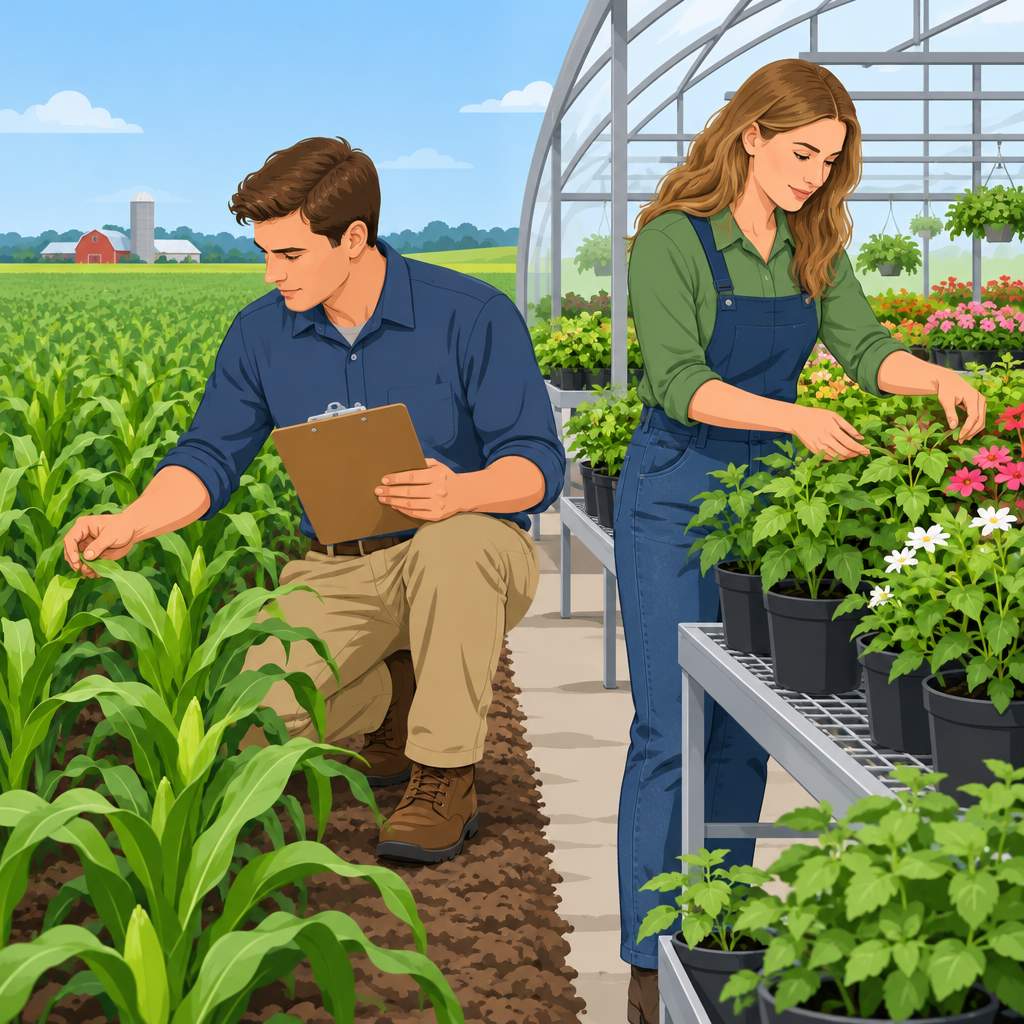
Importance of Hands-on Experience and Internships
Practical experience helps agronomists apply theoretical knowledge to real-world agricultural challenges.
Internships allow participants to work alongside experienced professionals and develop industry-specific skills.
Fieldwork also reveals the complexities of crop production and soil management.
- Hands-on experience strengthens problem-solving and critical thinking abilities.
- Internships may create opportunities for full-time employment.
- Participants can build valuable professional networks within the agricultural industry.
- Professional connections can support long-term career advancement in agronomy.
Potential Career Paths for Agronomists
Agronomists can pursue roles in agriculture, food production, research, and environmental conservation.
Many professionals specialize in crop production and improve yields through sustainable practices.
Others study soil composition, fertility, and nutrient management to support healthy crop growth.
- Agronomists can work in agribusiness, consulting, education, or government agencies.
- Career advancement may lead to leadership, research, or academic positions.
- Precision agriculture offers specialized opportunities within the profession.
- Biosecurity provides another potential niche for agronomy specialists.
Find Out More: Creating an Inclusive Agri-Science Classroom
Education and Training Requirements for Horticulturists
Aspiring horticulturists need education and practical training to develop careers in this field.
Formal study builds knowledge, while hands-on experience strengthens essential workplace skills.
Together, these preparations help horticulturists apply specialized knowledge across varied career paths.
- Academic Qualifications: A bachelor’s degree in horticulture, plant science, or a related field provides foundational knowledge in plant biology, soil management, pest control, and landscape design.
- Training Needed: Internships or apprenticeships provide practical experience in botanical gardens, nurseries, or landscaping companies.
- Specialized Knowledge: Horticulturists need knowledge of plant physiology, breeding methods, disease management, horticultural techniques, and landscaping principles.
- Career Paths: Career options include garden designer, nursery manager, arborist, greenhouse grower, or specialist in urban, ornamental, or sustainable landscaping.
Horticulturists should stay updated on industry trends and technologies.
This continuing development can strengthen their skills and support environmental and community needs.
Salary and Job Outlook for Agronomists
- Agronomists earn different salaries depending on their experience and education.
- Entry-level agronomists typically earn between $40,000 and $50,000 annually.
- Experienced agronomists can earn more than $80,000 to $100,000 each year.
- Additionally, specialists in precision agriculture or biotechnology may earn higher salaries.
- Agronomists find employment across agriculture, research, and government sectors.
- In agriculture, agronomists help farmers improve crop production and soil quality.
- Research institutions employ agronomists to conduct experiments and develop agricultural techniques.
- Meanwhile, government agencies employ agronomists to regulate farming practices and protect food safety.
- The long-term outlook remains positive because food production needs continue growing.
- Agronomists support sustainable agriculture and will likely remain in high demand.
- Furthermore, technological advances require agronomists to implement precision farming techniques.
- This field offers a promising career path for people interested in agricultural science.
Salary and Job Outlook for Horticulturists
Horticulture offers varied career opportunities for people passionate about plants and the environment.
Professionals can work across landscaping, therapy programs, and urban planning departments.
Moreover, sustainability and green infrastructure continue shaping the field’s future.
Average Salary Range for Horticulturists
Horticulturist salaries generally reflect experience, education, and professional responsibilities.
Typical annual earnings fall within a competitive range for this career.
Advanced degrees and substantial experience can support higher annual earnings.
- Horticulturists typically earn between $40,000 and $60,000 per year.
- Experienced horticulturists with advanced degrees can earn more than $80,000 annually.
Job Opportunities in Various Sectors
Horticulturists can apply their plant knowledge in several professional environments.
These roles support landscape design, therapeutic programs, and urban green-space planning.
Additionally, each sector offers distinct ways to improve outdoor environments and community spaces.
- Landscaping companies hire horticulturists to design and maintain outdoor spaces.
- Horticultural therapy programs employ horticulturists for therapeutic work with individuals.
- Urban planning departments may hire horticulturists to design green spaces.
Long-Term Job Outlook for Horticulturists
Horticulture offers promising prospects as communities place greater emphasis on sustainability.
Urban gardening and green infrastructure are increasing the field’s relevance.
Consequently, horticulturists can expect continued demand in environmentally focused roles.
- Demand for horticulturists is expected to grow in the coming years.
- Sustainability and environmental design may increase demand for horticultural expertise.
- Urban gardening and green infrastructure support promising job prospects.
Distinct Contributions of Agronomists and Horticulturists
The main differences between agronomists and horticulturists involve their areas of focus and expertise.
Agronomists primarily manage crop production, soil health, and agricultural sustainability.
Horticulturists specialize in cultivating fruits, vegetables, ornamental plants, and landscapes.
Both professions play crucial roles in agriculture and horticulture.
Agronomists develop sustainable farming practices, improve crop yields, and support food security.
Meanwhile, horticulturists enhance landscapes, promote biodiversity, and advance plant breeding techniques.
People pursuing agriculture or horticulture careers should understand these professions’ unique roles and contributions.
Transform Your Career Today
Unlock a personalized career strategy that drives real results. Get tailored advice and a roadmap designed just for you.
Start NowExploring these opportunities helps individuals make informed career choices and support these crucial industries.
Additional Resources
Google search results for Agronomist vs. Horticulturist: What's the Difference? Agricultural
Bing search results for Agronomist vs. Horticulturist: What's the Difference? Agricultural


