




Building Resilient Farm Ecosystems
Farm ecosystems play a crucial role in ensuring food security and environmental sustainability.
In recent years, climate change and other factors have significantly impacted these ecosystems.
These impacts threaten agricultural stability and productivity.
Additionally, rising temperatures, changing precipitation patterns, and extreme weather events make farming more challenging.
Therefore, farmers must build resilient farm ecosystems that withstand and adapt to these changes.
Farmers can adopt practices that promote resilience in farming.
These practices include crop diversification, soil conservation, water management, and integrated pest management.
They can enhance the stability and sustainability of farm operations.
Moreover, these practices help mitigate climate change impacts while improving soil health and biodiversity.
They also support overall farm productivity.
Understanding Resilient Farm Ecosystems
- Farmers use sustainable practices to promote ecological balance in resilient farm ecosystems.
- These ecosystems feature biodiversity, healthy soil, careful water management, and integrated pest control.
- As a result, they increase productivity, strengthen climate resilience, and reduce environmental impacts.
Crop Rotation and Soil Health
Crop rotation balances nutrient uptake and replenishment across growing seasons.
Different crops also reduce the risk of soil-borne diseases.
As a result, rotation supports healthier soil and more dependable crop growth.
Benefits of Diverse Rotations
Rotating crops disrupts pest and disease cycles, making establishment more difficult.
Some crops naturally repel pests and provide an additional form of control.
Meanwhile, varied root structures can break up compacted soil.
- Legumes add nitrogen and increase soil organic matter.
- Different roots improve soil structure through varied growth patterns.
- Rotation reduces repeated pressure from pests and diseases.
Seasonal Crop Rotation Examples
Spring and summer rotations can begin with corn as a heavy-feeding crop.
Farmers can then follow corn with legumes such as soybeans or clover.
Heat-loving crops, including tomatoes and peppers, provide additional seasonal variety.
- Plant corn during the spring or summer season.
- Follow corn with soybeans or clover.
- Rotate with tomatoes or peppers when conditions support heat-loving crops.
Fall and winter rotations can include cool-season crops such as lettuce and spinach.
Afterward, farmers can plant cover crops such as winter rye.
Root vegetables, including carrots and beets, add further diversity to the rotation.
- Grow lettuce or spinach during cooler seasons.
- Follow cool-season vegetables with winter rye.
- Include carrots or beets to support varied soil benefits.
You Might Also Like: Soft Skills for Agricultural Technician Success
Regenerative Agriculture and Ecosystem Restoration
Regenerative agriculture restores and enhances ecosystem functions rather than simply sustaining them.
It combines soil protection, biodiversity, and integrated animal management within farming systems.
Farmers can gradually adopt these methods to support resilient ecosystems and long-term sustainability.
Core Regenerative Agriculture Practices
- Key principles: Minimize tillage, maximize biodiversity, keep soil covered, and integrate animals into farming systems.
- Soil fertility and water retention: Use cover crops, composting, and varied plantings to improve soil condition and water management.
- Transition steps: Assess soil health, adopt no-till practices, plant cover crops, and reduce chemical inputs.
Benefits of Regenerative Farming
These practices can increase soil organic matter and improve water infiltration and retention.
They can also increase crop productivity while reducing input costs.
As a result, regenerative agriculture strengthens the long-term sustainability of farming systems.
Uncover the Details: Creating Effective Conservation Awareness Campaigns
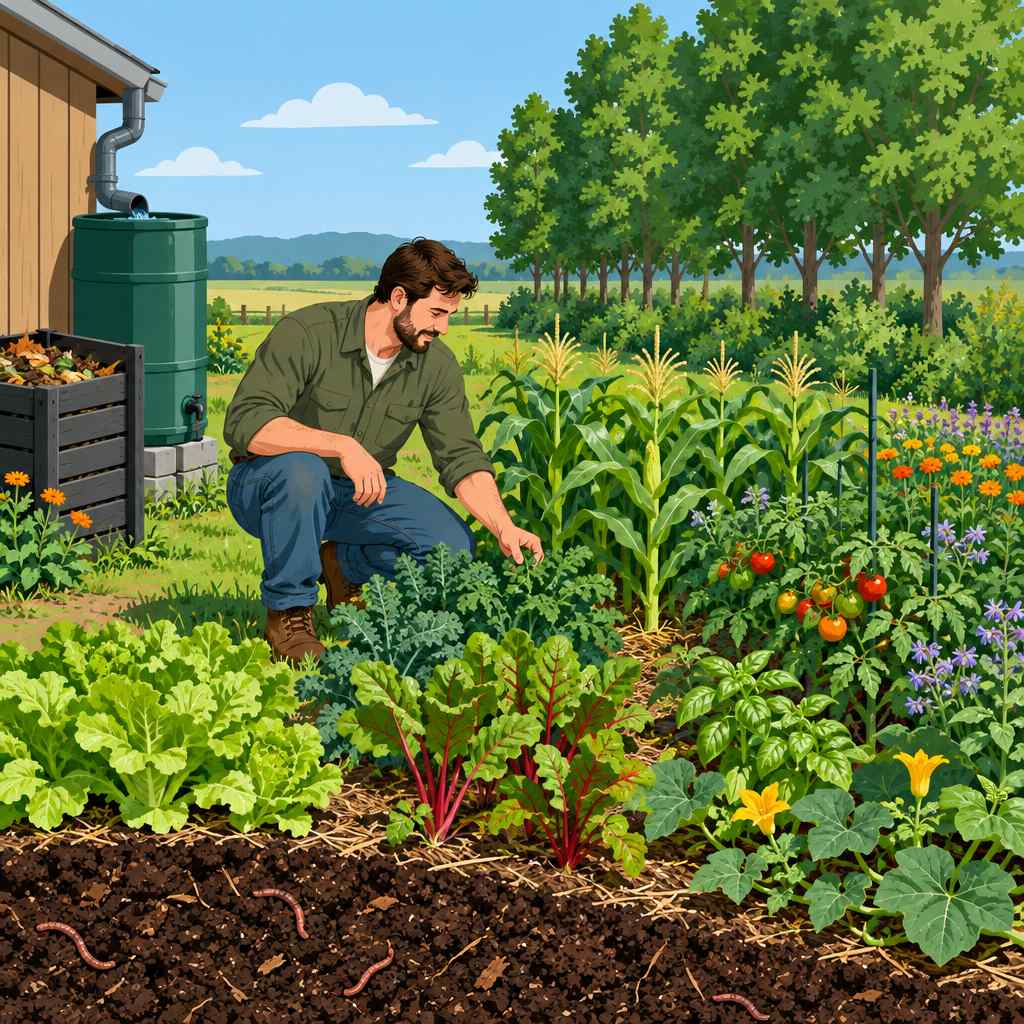
Cover crops help build resilient farm ecosystems by supporting soil health.
Role of Cover Crops
Cover crops strengthen soil structure and support nutrient cycling within farm ecosystems.
Additionally, their roots improve soil aggregation and help reduce compaction.
They also increase organic matter and support microorganisms that improve nutrient availability.
- Cover crops reduce soil compaction by improving soil aggregation.
- They increase organic matter, which enhances soil fertility.
- These crops support beneficial microorganisms that aid nutrient availability.
Benefits of Cover Crops
Cover crops provide several benefits that improve farm ecosystem performance.
For example, they protect soil from erosion during heavy rainfall or strong winds.
They also compete with weeds while helping soil absorb and retain water.
- Cover crops reduce erosion by protecting soil from rainfall and wind.
- They suppress weeds by competing for essential resources.
- Their root systems improve water infiltration, absorption, and retention.
Choosing the Right Cover Crops
Farmers should select cover crops according to their farming systems and local conditions.
First, they should consider the climate and growing conditions of their region.
Next, they should match crop choices with fertility, weed control, or livestock forage goals.
Transform Your Career Today
Unlock a personalized career strategy that drives real results. Get tailored advice and a roadmap designed just for you.
Start Now- Choose crops adapted to the local climate and growing conditions.
- Identify whether fertility, weed suppression, or livestock forage guides the selection.
- Use diverse mixtures to support soil organisms and reduce pest and disease risks.
Careful cover crop selection improves soil health, nutrient cycling, and resilience against environmental stressors.
Gain More Insights: Creating an Inclusive Agri-Science Classroom
Promoting Biodiversity on the Farm
Farm biodiversity strengthens ecological resilience by supporting varied plants, animals, and habitats.
Consequently, diverse farms can better withstand environmental stressors.
Hedgerows provide shelter and food for many wildlife species.
They also offer resources that help maintain healthy ecosystems.
Farmers can create ponds, wetlands, and meadows to expand wildlife habitat.
These spaces attract beneficial insects, birds, and other wildlife.
Those organisms support natural pest control and pollination.
Additionally, native plants can increase biodiversity across farm landscapes.
Because native plants suit local conditions, they often withstand climate variations and pests.
Farmers can also diversify crop varieties and livestock breeds.
Growing varied crops helps prevent soil depletion.
It also reduces crop failure risks caused by pests or diseases.
Furthermore, livestock integration can support nutrient cycling across the farm.
Managing grazing to mimic natural patterns creates diverse wildlife habitats.
Therefore, biodiversity supports sustainable agriculture while strengthening farm ecosystem resilience.
Gain More Insights: Farm Safety Guidelines Every Manager Should Know
Sustainable Water Management Practices
Efficient water use supports reliable farming operations.
Climate change can reduce water availability for agriculture.
Therefore, farmers need practices that conserve water and strengthen farm resilience.
- Install drip irrigation systems to minimize water wastage.
- Collect and store rainwater for irrigation purposes.
- Choose drought-resistant crops that require less water.
- Apply soil conservation practices to retain moisture in the soil.
- Monitor water usage and adjust irrigation schedules accordingly.
- Use water-efficient techniques such as mulching and cover cropping.
- Invest in water-saving technologies, including precision irrigation systems.
- Collaborate with local water authorities to promote sustainable water use.
- Educate farm workers about the importance of water conservation.
- Conduct regular audits to identify opportunities for improving water management.
By adopting these practices, farmers can reduce climate-related water risks and support long-term farm ecosystem resilience.
The Value of Collaboration
Local partnerships connect farmers with communities, organizations, and diverse sources of practical expertise.
These relationships encourage innovation and mutual support across the farming community.
Moreover, collaboration helps farmers adapt to changing conditions and apply sustainable practices effectively.
Benefits of Engaging with Local Communities and Organizations
Community engagement gives farmers access to knowledge about local land, weather patterns, and traditional practices.
Organizations can also provide funding, equipment, training, and other resources that strengthen farm resilience.
Additionally, partnerships create support networks, expand markets, and promote positive social impacts.
- Local knowledge: Communities share insights into land conditions, weather patterns, and traditional farming practices.
- Resource sharing: Organizations provide funding, equipment, training, and other resources that improve farm resilience.
- Support networks: Partnerships help farmers respond to natural disasters and market fluctuations.
- Market expansion: Local relationships help farmers reach new markets and diversify their income sources.
- Social impact: Community engagement builds goodwill and promotes sustainable farming practices.
Examples of Successful Partnerships
Farmers can use several partnership models to improve resilience and strengthen local connections.
These collaborations connect farms with consumers, researchers, environmental groups, agencies, and nonprofit organizations.
As a result, farmers can improve conservation, access innovation, and address community food needs.
- Community Supported Agriculture programs connect farmers directly with consumers and support financial stability.
- Environmental groups can help farms implement conservation practices that improve ecosystems and soil health.
- Universities and research institutions provide access to technology, data, and innovative farming techniques.
- Local government agencies can support policy advocacy and sustainable farming regulations.
- Food security nonprofits help farmers address food access, distribution, and equity.
Strong partnerships extend benefits beyond individual farms and encourage shared responsibility.
Through cooperation, farmers, communities, and organizations can support resilient agriculture and healthier environments.
Monitoring and Adapting to Changing Conditions
Monitoring farm ecosystems for resilience indicators is crucial for sustainability.
Additionally, flexibility and adaptability help farmers respond to unpredictable environmental changes.
- Regularly assess farm systems for signs of stress or vulnerability.
- Implement soil testing, crop rotation, and pest surveys as monitoring tools.
- Observe weather patterns and adjust planting schedules accordingly.
- Stay informed about technologies and practices that can enhance resilience.
Farmers should continuously assess and improve their farm resilience in various ways.
- Participate in workshops, training programs, and conferences to stay updated.
- Network with other farmers to exchange ideas and best practices.
- Seek feedback from agronomists, extension agents, and researchers for expert advice.
- Develop a long-term resilience plan and regularly review and update it.
Strategies for Resilient Farm Ecosystems
Farmers can strengthen sustainable agriculture by building resilient farm ecosystems.
These systems depend on diversification, healthy soil, and careful water management.
Together, these strategies help farmers mitigate risks and adapt to changing conditions.
Therefore, farmers should invest in practices that enhance resilience across their farms.
Transform Your Career Today
Unlock a personalized career strategy that drives real results. Get tailored advice and a roadmap designed just for you.
Start NowSuch action benefits farmers, the environment, and future generations.
By working together, communities can create a more sustainable and resilient agricultural system.
Additional Resources
Google search results for Building Resilient Farm Ecosystems Agricultural
Bing search results for Building Resilient Farm Ecosystems Agricultural


