




Agricultural Environmental Science and Government Support
Agricultural environmental science supports sustainable farming and helps preserve natural resources.
This field examines interactions between agricultural systems and the environment.
It also helps farmers minimize harmful environmental impacts.
Meanwhile, government policies encourage farmers to adopt sustainable practices.
These policies may provide subsidies for environmentally friendly techniques or penalties for excessive pollution.
Government agencies also conduct research and fund agricultural environmental science projects.
By setting standards and promoting research, governments support agriculture’s long-term sustainability.
Overview of Government Funding for Agricultural Environmental Science
Government funding supports agricultural environmental science research and helps address soil degradation, water pollution, and climate change.
Governments allocate funds for sustainable agricultural practices and environmental conservation.
These investments help researchers examine environmental challenges affecting agricultural systems.
Examples of Grants and Research Programs
Several government programs support research that connects agricultural productivity with environmental protection.
These programs address soil health, water conservation, biodiversity, emissions, and ecosystem resilience.
Furthermore, they encourage researchers to integrate environmental considerations into agricultural policies.
- The USDA funds research that improves agricultural practices while reducing environmental impacts.
- USDA grants support studies involving soil health, water conservation, and biodiversity.
- The European Union’s Horizon 2020 program funds sustainable agricultural research and innovation.
- Horizon 2020 projects target greenhouse gas reduction, productivity, and natural resource protection.
- Australia’s National Environmental Science Program supports research addressing agricultural environmental challenges.
- The program funds studies on ecosystem resilience, land management, and agricultural policy integration.
Effects of Government Funding on Scientific Progress
Government funding enables researchers to conduct studies, develop technologies, and implement sustainable agricultural practices.
It also strengthens collaboration among researchers, industry stakeholders, and government agencies.
Additionally, research findings help policymakers create evidence-based agricultural and environmental policies.
- Funding expands opportunities to explore ideas, test solutions, and conduct long-term research.
- Collaborative programs promote knowledge sharing, technology transfer, and practical guidance.
- Research findings inform agricultural practices, environmental regulations, and natural resource management.
- Funding supports precision agriculture, water management, crop rotation, and soil health technologies.
Consequently, government support helps advance sustainable agriculture and environmental conservation.
These efforts also contribute to long-term food security for future generations.
Regulatory Policies and Agricultural Environmental Science
Government regulations shape agricultural environmental science by directing farming practices and environmental safeguards.
Their design influences research priorities, technological development, and resource management.
Effective policies can protect ecosystems while helping agriculture respond to environmental challenges.
Positive Regulatory Contributions
- Regulations establish environmental standards that guide sustainable agricultural practices.
- Eco-friendly incentives encourage researchers and farmers to develop innovative agricultural techniques.
- Common standards create fair competition and discourage resource exploitation.
- Public policies can fund research that advances environmental technologies and farming practices.
- Monitoring and enforcement hold violators accountable for environmental damage.
Negative Regulatory Effects
- Overly strict regulations can burden farmers and restrict productivity or innovation.
- Complex compliance processes can discourage small-scale farmers from meeting environmental requirements.
- Inconsistent enforcement can create loopholes that weaken regulatory effectiveness.
- Regional differences can make standardized agricultural regulations impractical.
- Unintended bureaucracy can delay progress in agricultural environmental science.
Balancing Regulation and Scientific Progress
Well-designed regulations encourage sustainable practices, support innovation, and protect natural resources.
However, excessive requirements can increase costs, reduce productivity, and discourage farmers from adopting sustainable methods.
Policymakers should use evidence-based, transparent, and adaptable rules that reflect farmers’ regional conditions.
Collaboration among agencies, researchers, and agricultural stakeholders can improve regulatory outcomes.
Successful Regulatory Applications in Agriculture
Several governments have used regulations and incentives to connect agricultural production with environmental protection.
These examples address soil health, biodiversity, water quality, habitat protection, and sustainable land management.
Their approaches demonstrate how regional policies can support environmental goals within agricultural systems.
- The European Union’s Common Agricultural Policy promotes crop diversification and agri-environmental schemes, improving soil health, biodiversity, and water quality.
- The United States Conservation Reserve Program incentivizes conservation practices on environmentally sensitive land, protecting habitat and restoring ecosystems.
- Australia’s National Environmental Management Plan for Grazing Lands supports sustainable grazing, reducing erosion and improving pastures and habitats.
- Brazil’s Forest Code requires native vegetation protection, helping reduce agricultural deforestation and encourage sustainable land use.
- China’s Natural Forest Conservation Program restricts logging and supports reforestation, restoring ecosystems and reducing soil erosion.
Delve into the Subject: How Entomologists Study Insect Behavior and Communication
International Agreements Supporting Agricultural Environmental Science
International cooperation helps countries address global environmental challenges in agriculture.
Countries use agreements to promote sustainable practices and protect agricultural environments.
These agreements encourage collaboration on shared problems and goals.
The United Nations Framework Convention on Climate Change addresses agricultural concerns related to climate change.
It establishes a framework for international cooperation on climate change mitigation and adaptation.
This framework supports mitigation and adaptation measures within the agricultural sector.
The Convention on Biological Diversity focuses on biodiversity conservation and sustainable resource use.
It also promotes fair sharing of benefits from genetic resources.
The convention recognizes agriculture’s dependence on biodiversity and encourages sustainable farming practices.
Government Collaboration on Global Agricultural Challenges
Governments cooperate through international agreements, partnerships, and collaborative programs.
These efforts promote sustainable agriculture, reduce environmental degradation, and support future food security.
Transform Your Career Today
Unlock a personalized career strategy that drives real results. Get tailored advice and a roadmap designed just for you.
Start NowFirst, governments share knowledge, expertise, and resources to develop sustainable agricultural practices.
Joint research projects help countries exchange information and evaluate environmentally friendly farming methods.
In addition, governments exchange best practices and provide technical assistance.
Regional and international organizations also help governments coordinate responses to agricultural environmental challenges.
For example, the Food and Agriculture Organization facilitates dialogue and cooperation among countries.
Its work supports sustainable agriculture, food security, and responses to climate change.
Collaborative Initiatives Improving Agricultural Practices
Governments, organizations, and stakeholders have created collaborations that improve agricultural practices.
These initiatives also strengthen environmental sustainability across participating regions.
The Global Soil Partnership brings governments, organizations, and experts together around sustainable soil management.
Through this partnership, countries address soil degradation and promote healthier soils.
They also support sustainable land use and share innovative farming techniques.
These activities raise awareness about soil conservation and help reduce soil erosion.
The Coalition for Climate Resilient Investment connects governments, financial institutions, and nongovernmental organizations.
The coalition promotes investment in climate-resilient agriculture.
Its members mobilize funding for climate-smart projects that help farmers adapt to changing conditions.
They also support efforts to reduce climate change impacts on agriculture.
Together, these collaborations help preserve the environment and support a more sustainable agricultural future.
Explore Further: How to Write a Marketing Plan for Agricultural Products
Government Incentives for Sustainable Agriculture
Government policies play a crucial role in promoting sustainable agriculture practices.
These measures encourage environmentally responsible farming and reduce agriculture’s negative effects on ecosystems.
In addition, incentives help farmers adopt methods that prioritize conservation and environmental protection.
Consequently, sustainable agriculture becomes more economically achievable for participating farmers.
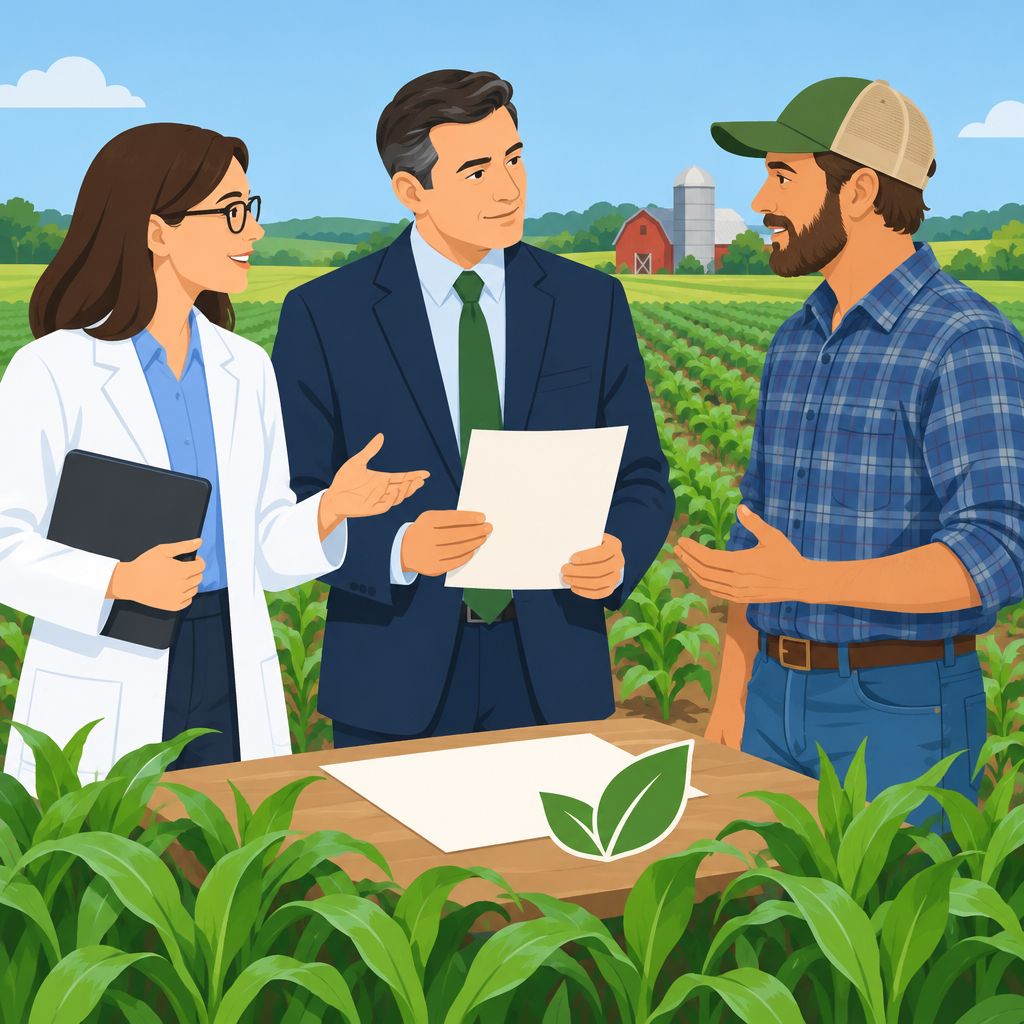
Policy Tools for Environmentally Friendly Farming
Governments use several policies to encourage farmers to adopt environmentally friendly farming methods.
Financial incentives and subsidies can support farmers who implement sustainable practices.
For example, programs may provide tax breaks, grants, or equipment subsidies.
Furthermore, governments may help farmers transition to organic farming methods.
These forms of support make sustainable practices more financially feasible for farmers.
Government Supported Sustainable Agriculture Initiatives
Several governments support sustainable agriculture through targeted environmental initiatives.
These programs reward farmers who protect soil, water, wildlife, and other natural resources.
Their approaches demonstrate how public support can encourage environmental responsibility in agriculture.
United States: The Conservation Stewardship Program provides financial incentives for conservation practices.
Farmers can receive payments for activities that improve soil health, water quality, and wildlife habitats.
European Union: The Common Agricultural Policy provides payments for environmentally friendly farming practices.
Participating farmers may diversify crops, maintain permanent grassland, and establish ecological focus areas.
China: The Ecological Compensation Program rewards practices that protect ecosystems and support environmental sustainability.
Farmers can receive payments for reforestation, wetland restoration, and soil conservation activities.
These initiatives show how governments can connect financial support with sustainable agricultural practices.
Find Out More: Rangeland Manager: Balancing Livestock and Wildlife
Effective evaluation requires attention to several factors in agricultural environmental science programs.
These factors help educators assess how well programs develop relevant knowledge and practical skills.
Transform Your Career Today
Unlock a personalized career strategy that drives real results. Get tailored advice and a roadmap designed just for you.
Start NowThey also show how training prepares students for environmental challenges in agriculture.
Evaluation of Education and Training Programs
- A well-designed curriculum covers essential agricultural environmental science topics and organizes learning effectively.
- Practical training and fieldwork let students apply theoretical knowledge in real-world scenarios.
- Experienced faculty members provide valuable insights and guidance throughout the learning process.
- Industry collaborations offer internships, research projects, and networking opportunities that connect academia with industry.
Review of Government-Funded Initiatives
- Government scholarships and grants help students manage the financial demands of agricultural environmental science education.
- Government research funding supports innovative solutions to environmental challenges in agriculture.
- Infrastructure investments improve laboratories, research facilities, and training workshops for practical learning.
- Skill development programs, workshops, and training sessions prepare individuals for agricultural environmental science careers.
Educational Impacts on Agriculture’s Future
Education and training influence the future of agricultural environmental science and the broader agricultural industry.
- Education and training foster innovation and sustainability by providing current knowledge and skills for agricultural practices.
- Well-trained professionals strengthen the agricultural sector through efficient environmental science applications.
- Training programs support research and development that addresses emerging environmental challenges with sustainable solutions.
- Educated professionals can influence agricultural policies, regulations, and guidelines for sustainable practices.
Government support for education and training strengthens innovation, sustainability, and workforce development in agriculture.
See Related Content: The Science Behind Dairy Product Development
Government Agencies and Agricultural Environmental Science
Government agencies fund research and development projects in agricultural environmental science.
They also establish policies that protect the environment while supporting sustainable agricultural practices.
The USDA and EPA lead many efforts supporting research and development in this field.
These agencies collaborate with researchers to improve agricultural practices and reduce environmental impacts.
Additionally, agencies provide grants and resources for technologies that benefit farmers and the environment.
USDA Support for Agricultural Environmental Science
The USDA supports agricultural environmental science through various programs and initiatives.
For example, Conservation Innovation Grants fund innovative conservation technologies and practices.
Through EQIP, the USDA helps farmers implement practices that protect soil, water, and air quality.
Meanwhile, the NRCS works with farmers to develop conservation plans supporting sustainable agricultural practices.
EPA Involvement in Agricultural Environmental Science
The EPA supports agricultural environmental science through research and development initiatives.
The agency studies agricultural impacts and develops strategies that reduce pollution and conserve natural resources.
It also regulates pesticides and other chemicals to protect human health and the environment.
Furthermore, the EPA partners with universities and research institutions to identify sustainable agricultural solutions.
Collaborative Research in Agricultural Environmental Science
The USDA’s Agricultural Research Service conducts research on environmental issues affecting agriculture.
Its work addresses soil health, water quality, and climate change.
Through partnerships with universities, the ARS advances sustainable agricultural practices.
Similarly, the EPA and NIH study health effects linked to agricultural pollutants.
Their collaboration identifies risks from agricultural chemicals and supports guidelines protecting public health.
These partnerships combine public funding, scientific research, and practical conservation efforts.
Policy Tools for Agricultural Environmental Science
Government policies support agricultural environmental science and encourage sustainable farming practices.
Through grants and subsidies, governments encourage farmers to adopt environmentally friendly methods.
These incentives help farmers reduce agriculture’s harmful effects on the environment.
Meanwhile, government regulations prevent agricultural activities from damaging environmental resources.
Furthermore, public investment in research and development drives sustainable agriculture innovation.
Additionally, government initiatives fund education and training in agricultural environmental science.
Collaboration between governments and agricultural institutions can produce more effective policies.
Therefore, government policies remain essential for advancing agricultural environmental science.
Governments should continue supporting and investing in this critical field of study.
People can urge governments to prioritize agricultural environmental science for a sustainable future.


