




Rangeland Management
Rangeland managers oversee and maintain healthy rangelands.
They monitor grazing activities and implement conservation practices.
They also ensure sustainable use of natural resources.
Balancing Livestock and Wildlife
Managers must balance livestock needs with wildlife needs.
Livestock grazing can help maintain healthy grasslands.
However, overgrazing can degrade the ecosystem.
By managing grazing, rangeland managers help livestock and wildlife thrive.
They also monitor wildlife populations and protect habitat.
This balance supports biodiversity and sustainable land use.
Furthermore, balanced management can prevent conflicts between livestock and wildlife.
Managers must consider carrying capacity, seasonal fluctuations, and habitat requirements.
They use these factors when developing management plans.
Through careful planning, managers can promote coexistence between livestock and wildlife.
Additionally, they use monitoring and adaptive management strategies.
These practices preserve natural habitats and protect endangered species.
Consequently, rangeland managers support healthy, diverse ecosystems for future generations.
Rangeland managers balance livestock needs with wildlife conservation to support sustainable land management.
They oversee grazing, monitor wildlife, and protect natural resources across the land.
This responsibility requires ecological knowledge and careful management decisions.
Managing Sustainable Grazing Activities
First, managers oversee grazing activities across the land.
They set stocking rates, establish rotational grazing schedules, and monitor pasture health.
These practices help prevent overgrazing, soil erosion, vegetation loss, and wildlife habitat degradation.
Monitoring Wildlife Populations
Managers also monitor wildlife populations throughout the managed area.
They conduct surveys, track species populations, and identify habitat requirements for different wildlife species.
These observations clarify ecological balance and guide decisions that support livestock and wildlife.
Implementing Conservation Practices
Managers implement conservation practices that protect and enhance natural resources.
For example, they reseed native vegetation, control invasive species, and restore riparian areas.
These actions improve habitat quality, increase biodiversity, and promote ecosystem health.
Effective management balances livestock use with wildlife needs.
Through this balance, rangeland managers support sustainable land management practices.
Challenges of Balancing Livestock and Wildlife
Rangeland managers face major challenges when balancing livestock needs with wildlife conservation.
This balance supports healthy ecosystems and protects the long-term sustainability of rangeland resources.
However, managers must navigate several competing demands to achieve this goal.
They must consider resource availability, stakeholder interests, and changing environmental conditions.
Competition for Rangeland Resources
Livestock and wildlife often compete for limited water, forage, and space.
This competition can create conflicts and reduce the resources available to both groups.
Therefore, managers must allocate resources carefully to prevent overgrazing.
They must also ensure that livestock and wildlife receive enough resources to thrive.
Conflicts Between Ranchers and Conservationists
Ranchers and conservationists may support different priorities for managing rangelands.
Ranchers often depend on grazing areas and may favor practices that increase production.
Transform Your Career Today
Unlock a personalized career strategy that drives real results. Get tailored advice and a roadmap designed just for you.
Start NowMeanwhile, conservationists often emphasize wildlife habitat and biodiversity protection.
Managers must encourage collaboration and identify shared goals for sustainable resource use.
Climate Change Impacts on Rangelands
Climate change threatens rangeland ecosystems and affects both livestock and wildlife.
Changing temperatures, precipitation patterns, and extreme weather can alter available resources.
These changes can also modify vegetation composition across rangelands.
Managers must adapt their strategies to reduce climate impacts and strengthen ecosystem resilience.
Balancing livestock and wildlife requires careful attention to competing interests and resource availability.
Managers must also respond to environmental changes that influence rangeland productivity and wildlife distribution.
Addressing these challenges can support both livestock and wildlife while protecting rangeland health.
Explore Further: The Science Behind Dairy Product Development
Balancing Livestock and Wildlife on Rangelands
Rangeland managers must balance livestock production with wildlife conservation.
Careful planning supports environmental health and long-term sustainability.
A holistic approach can protect resources while supporting both livestock and wildlife.
Rotational Grazing Practices
Managers can divide grazing areas into smaller paddocks.
They rotate livestock between paddocks to limit overgrazing.
Rest periods allow vegetation to recover, support wildlife habitat, improve soil health, and strengthen water retention.
Wildlife Corridor Protection
Wildlife corridors provide pathways between different habitats.
These routes help wildlife move without encountering livestock fencing or human development.
Preserving natural pathways supports wildlife populations and promotes landscape biodiversity.
Sustainable Land Management
Sustainable land management combines proper grazing management, water conservation, and habitat restoration.
These practices help managers maintain resources for livestock and wildlife.
Consequently, both groups can access the resources they need to thrive.
Delve into the Subject: Education Requirements for Animal Nutritionists
Benefits of Balancing Livestock and Wildlife
Balanced livestock and wildlife management provides several benefits on rangelands.
These benefits support ecosystem health, biodiversity, and sustainable livestock production.
Together, these outcomes help maintain healthy and thriving rangeland ecosystems.
Improved Ecosystem Health
Rangeland managers can improve ecosystem health by managing grazing practices carefully.
Grazing helps control invasive species across managed rangelands.
It also promotes the growth of native vegetation.
Increased Biodiversity
Properly managed livestock and wildlife can increase biodiversity on rangelands.
Different species can thrive when managers maintain a balanced ecosystem.
Consequently, biodiversity creates a more resilient rangeland environment.
Sustainable Livestock Production
Effective livestock and wildlife management supports sustainable livestock production on rangelands.
Managers can prevent overgrazing by monitoring grazing patterns and population levels.
This approach helps maintain healthy livestock populations over time.
Learn More: How to Secure Funding for Conservation Projects
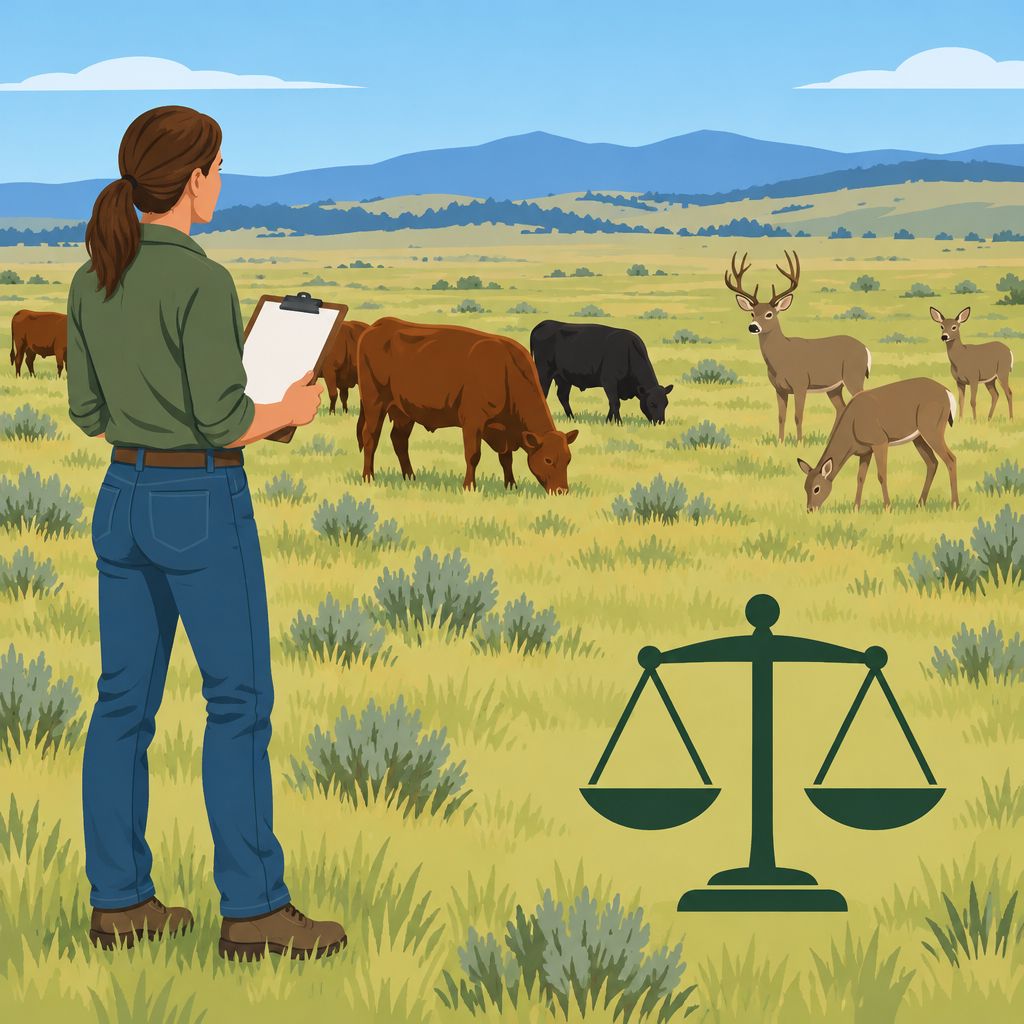
Case Studies of Successful Rangeland Management
These case studies describe practical ways ranchers can support wildlife while maintaining productive rangelands.
They emphasize habitat protection, grazing adjustments, and measurable changes in ecosystem condition.
Together, they connect management decisions with wildlife responses and broader rangeland health.
- One Montana ranch designated areas for wildlife habitat and conservation.
- A Wyoming ranch used rotational grazing to reduce wildlife disturbance and improve rangeland health.
- The examples also examine how wildlife-friendly methods affect rangeland health.
Montana Ranch Case Study
In Montana, a rancher noticed declining wildlife populations linked to grazing practices.
Transform Your Career Today
Unlock a personalized career strategy that drives real results. Get tailored advice and a roadmap designed just for you.
Start NowTherefore, the rancher worked with wildlife biologists to improve grazing methods.
The ranch designated riparian zones and brushy areas as wildlife habitat.
These areas remained ungrazed, giving native species access to undisturbed habitat.
Consequently, wildlife populations began to rebound across the ranch.
Deer, elk, and songbirds appeared more frequently, suggesting a better balance between livestock and wildlife.
Wyoming Ranch Case Study
In Wyoming, a ranch faced rangeland degradation and wildlife displacement from intensive grazing.
To address these problems, the ranch adopted rotational grazing techniques.
The ranch divided its rangeland into smaller paddocks.
Managers then moved livestock frequently to imitate natural grazing patterns.
This approach gave vegetation regular periods for rest and recovery.
Over time, plant diversity increased, and wildlife sightings became more common.
Grassland birds and small mammals returned to the area.
Impact of Wildlife-Friendly Grazing Methods on Rangeland Health
Wildlife-friendly grazing methods have produced positive results in these rangeland case studies.
Conservation practices help ranchers support livestock production while preserving wildlife habitat.
For example, healthier grazing patterns can improve soil condition.
They can also increase water infiltration and strengthen biodiversity.
By protecting habitat, ranchers can support a sustainable ecosystem for wildlife and livestock.
These examples show how coordinated management can sustain ranching operations and surrounding ecosystems.
You Might Also Like: Top Qualities of Successful Agricultural Quality Inspectors
Collaboration between Stakeholders
Effective rangeland management requires cooperation among landowners, government agencies, and conservation groups.
This collaboration addresses complex challenges involving livestock production and wildlife conservation.
Working together helps stakeholders conserve rangeland ecosystems while supporting sustainable resource use.
Working with Landowners, Government Agencies, and Conservation Groups
Landowners play a crucial role because they own most rangeland resources.
Therefore, cooperation with landowners keeps management decisions aligned with their goals.
Government agencies provide resources, research, and support for effective rangeland management.
Additionally, these agencies help stakeholders implement regulations that protect rangeland ecosystems.
Conservation groups advocate for sustainable practices and encourage responsible resource management.
Moreover, partnerships with conservation groups can produce innovative approaches to rangeland management.
Building Partnerships for Sustainable Rangeland Management
Forming partnerships supports long-term sustainability in rangeland management.
Partners can pool resources and expertise to address shared challenges.
As a result, collaboration can improve efficiency when stakeholders manage rangeland resources.
Trust and clear communication create a strong foundation for successful partnerships.
Furthermore, partnerships encourage knowledge sharing and the adoption of effective management practices.
Collaborative efforts can improve conservation outcomes across rangeland ecosystems.
Finally, diverse partnerships address the needs of both livestock and wildlife.
By working together, stakeholders can balance livestock needs with wildlife conservation.
This cooperation helps conserve rangeland ecosystems for future generations.
Future Directions in Rangeland Management
Rangeland management will increasingly combine technology, supportive policies, research, and education.
These developments can improve decisions about wildlife, grazing activities, and resource use.
Meanwhile, continued learning can help managers respond to changing ecosystem conditions.
Transform Your Career Today
Unlock a personalized career strategy that drives real results. Get tailored advice and a roadmap designed just for you.
Start NowEmerging Technologies for Monitoring Wildlife and Grazing Activities
New technologies can make wildlife and grazing monitoring more accurate and efficient.
Drones, satellites, and GPS tracking devices can reveal livestock and wildlife movements in real time.
These tools can provide information about grazing patterns, habitat use, and wildlife population dynamics.
Managers can use this information to make decisions that support livestock and wildlife.
Policies Supporting Sustainable Rangeland Management
Supportive policies can help protect rangeland ecosystems over the long term.
Effective policies can address grazing rights, invasive species control, habitat protection, and water management.
Governments and landowners can use these policies to encourage responsible stewardship.
Furthermore, sound policies can preserve rangeland health and productivity.
Continued Research and Education in Rangeland Management
Continued research can strengthen understanding of changing rangeland ecosystems.
Researchers can examine climate change, land use practices, and invasive species impacts.
Managers can apply current findings and proven practices when making decisions.
Education and outreach can increase awareness of rangeland conservation.
These efforts can also encourage future generations to care for valuable rangeland landscapes.
Sustainable Coexistence on Rangelands
Finding a balance between livestock and wildlife in rangeland management supports ecosystem sustainability.
Managers can promote a healthy environment by carefully managing grazing practices and monitoring wildlife populations.
Both livestock and wildlife play integral roles in rangeland ecosystems.
Therefore, their coexistence remains essential.
Stakeholders share responsibility for protecting the long-term health of these ecosystems.
Collaboration among ranchers, conservationists, government agencies, and other interested parties remains essential.
Together, they can implement sustainable practices and promote biodiversity for livestock and wildlife.
Shared Stewardship of Rangeland Ecosystems
All stakeholders should collaborate in stewarding rangeland ecosystems.
By working together, they can positively affect the environment and support every species that depends on these lands.
Let us preserve the balance between livestock and wildlife for future generations.
Additional Resources
Google search results for Rangeland Manager: Balancing Livestock and Wildlife Agricultural
Bing search results for Rangeland Manager: Balancing Livestock and Wildlife Agricultural


