




Biotechnology Specialists in Plant Disease Management
Biotechnology specialists play a crucial role in combating plant diseases.
Their expertise supports agriculture and food production.
Moreover, they develop innovative solutions to address these challenges.
Understanding Plant Diseases
Plant diseases harm crop health and growth.
They fall into three main categories: fungal, bacterial, and viral diseases.
Common examples include Fusarium wilt, powdery mildew, and bacterial leaf spot.
Strategies for Combating Plant Diseases
Crop rotation and disease-resistant varieties can prevent disease spread.
Additionally, genetic engineering creates plants with built-in resistance to common diseases.
Beneficial microbes can act as biocontrol agents against plant pathogens.
Early Detection and Monitoring
Early detection prevents widespread crop damage.
Remote sensing and drones help specialists monitor plant health and identify diseases sooner.
Therefore, rapid diagnosis enables timely intervention and effective management.
Sustainable Disease Management Practices
Sustainable practices reduce reliance on chemical pesticides.
Integrated pest management combines biological, cultural, and chemical control methods.
These eco-friendly approaches protect the environment and preserve natural ecosystems.
Collaborative Research and Innovation
Plant pathologists, agronomists, and farmers collaborate on innovative disease solutions.
Researchers examine the genetic basis of plant diseases and develop targeted interventions.
These partnerships address emerging diseases and mitigate risks to global food security.
Together, these approaches protect crops, improve productivity, and encourage environmentally friendly agriculture.
Biotechnological Tools for Disease Detection
- Molecular techniques detect plant diseases at an early stage.
- Biotechnology helps identify pathogens that cause plant diseases.
- Biotechnological tools offer important advantages over traditional detection methods.
Early detection helps prevent plant diseases from causing widespread crop damage.
Biotechnology specialists use molecular techniques to identify pathogens responsible for these diseases.
These tools support faster and more reliable disease detection than traditional approaches.
First, biotechnological tools provide high sensitivity and specificity.
They detect pathogens at low levels, which allows farmers to intervene early.
Early intervention can limit disease spread across crops.
In contrast, visual inspection may miss infections during their initial stages.
Additionally, molecular tools identify pathogens rapidly and precisely.
Polymerase Chain Reaction, or PCR, can identify the specific pathogen causing disease.
Next-generation sequencing can provide further information about pathogen identity.
This specificity supports targeted treatment strategies.
Traditional methods often depend mainly on visible symptoms.
Biotechnological tools also reveal the molecular mechanisms behind plant diseases.
Researchers study pathogen genetics to understand how diseases spread and evolve.
This knowledge supports stronger control measures and resistant crop varieties.
Furthermore, some techniques detect multiple pathogens during one test.
For example, multiplex PCR can identify several pathogens simultaneously.
This approach saves time and resources compared with separate pathogen tests.
Consequently, multiplexing improves efficiency during disease outbreak containment.
Biotechnological tools also improve disease progression monitoring.
Quantitative PCR can measure pathogen levels inside infected plants.
Transform Your Career Today
Unlock a personalized career strategy that drives real results. Get tailored advice and a roadmap designed just for you.
Start NowThese measurements help researchers monitor disease severity in real time.
They also help assess control measures and adjust treatment strategies.
Biotechnology has transformed plant disease detection through faster and more comprehensive pathogen identification.
These methods strengthen disease research and support sustainable agricultural practices.
Continued advances may create additional detection tools for farmers, researchers, and the environment.
Explore Further: Understanding Pest Management Strategies
Genetic Modification for Disease Resistance
Biotechnology specialists use genetic modification to strengthen plant disease resistance.
This process adds selected resistance genes to plant genomes.
As a result, modified plants develop mechanisms that combat pathogens more effectively.
Introducing Genes for Disease Resistance
Scientists identify genes that provide resistance to particular diseases in other plant species.
Next, they isolate those genes and insert them into plant DNA using biotechnological techniques.
After successful integration, plants can resist the targeted diseases.
Examples of Genetically Modified Crops
Several genetically modified crops demonstrate traits linked to disease or pest management.
For example, some crops receive bacterial genes that help combat pests.
Other examples address viral threats or nutritional needs through genetic engineering.
- Bt crops receive genes from Bacillus thuringiensis to help corn and cotton combat pests.
- Rainbow papaya contains genetic modifications that provide resistance to the ringspot virus.
- Golden rice contains beta-carotene engineering that addresses vitamin A deficiency and enhances disease resistance.
Discover More: Training Programs for Aspiring Quality Control Inspectors
Developing Biocontrol Agents
Biotechnology uses genetic engineering to create biocontrol agents targeting specific plant pathogens.
These agents disrupt disease-causing mechanisms without harming the plant.
Their targeted design helps minimize effects on beneficial organisms in ecosystems.
Biocontrol agents offer several advantages.
- They are environmentally friendly and leave no harmful residues on crops.
- Their targeted approach minimizes impacts on beneficial organisms in ecosystems.
- They reduce resistance development in plant pathogens compared with chemical pesticides.
Successful examples demonstrate different approaches to plant protection.
- Trichoderma spp. control various plant diseases by outcompeting pathogens for resources.
- Bacillus thuringiensis (Bt) produces proteins toxic to specific insect pests.
- Pseudomonas fluorescens produces compounds that inhibit plant pathogen growth.
See Related Content: Understanding Mastitis: A Dairy Scientist's View
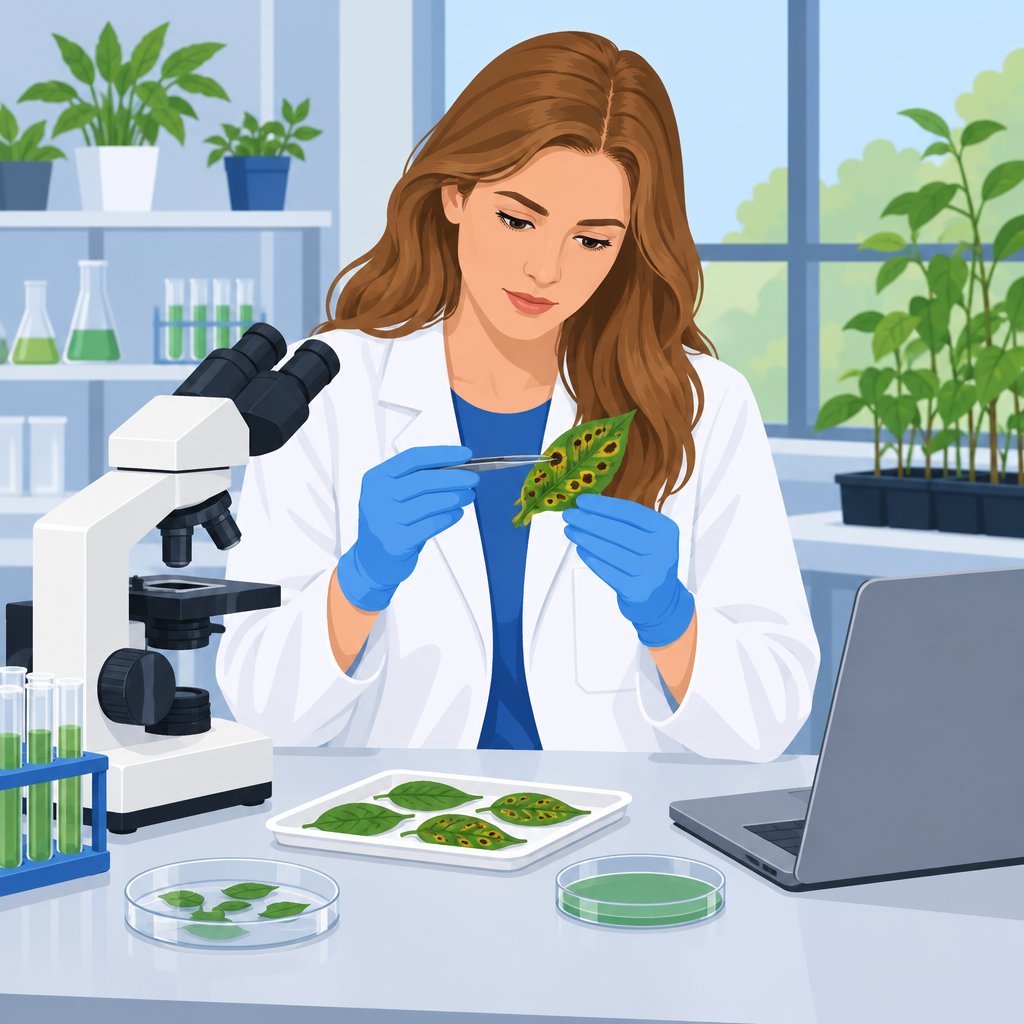
Biotechnology and Soil Health
Biotechnology offers methods that improve soil health and support healthier plant growth.
Healthier soil can help plants withstand disease pressure more effectively.
Researchers use biological processes to improve soil quality and support sustainable crop production.
Phytoremediation and Biofertilizers
Genetic engineering can produce plants that help remediate contaminated soil.
Phytoremediation uses plants to absorb and remove toxins from soil.
This process improves soil conditions and can reduce factors that support disease development.
Biofertilizers contain live, beneficial microorganisms that improve soil fertility and promote plant growth.
Adding biofertilizers can increase nutrient availability and strengthen overall soil health.
Beneficial Microorganisms and Plant Immunity
Beneficial microorganisms support plant growth and help plants resist harmful pathogens.
Biotechnologists introduce these microorganisms into soil or apply them directly to plants.
These organisms can form symbiotic relationships with plant roots.
Mycorrhizae are fungi that associate with plant roots and improve nutrient uptake.
They can also provide protection against certain pathogens.
Increasing mycorrhizae in soil can strengthen plant immunity and reduce disease risks.
Biotechnological Solutions for Soil-Borne Diseases
Biotechnology provides several approaches for managing diseases that persist in soil.
Biopesticides use natural substances derived from microorganisms to control soil pathogens.
These products can reduce disease spread while limiting environmental and health concerns.
Scientists can also develop crops with stronger resistance to soil-borne diseases.
Transform Your Career Today
Unlock a personalized career strategy that drives real results. Get tailored advice and a roadmap designed just for you.
Start NowThey introduce resistance genes from suitable plant species into susceptible crops.
As a result, resistant crops can support higher yields and food security.
Sustainable Soil and Crop Protection
Phytoremediation, biofertilizers, and beneficial microorganisms improve soil conditions through biological processes.
Biopesticides and resistant crops provide additional tools for managing plant diseases.
Together, these approaches support healthier plants and more sustainable agricultural systems.
Delve into the Subject: Reducing Carbon Footprint in Agriculture
Collaborations with Agricultural Experts
Collaboration between biotechnology specialists and agricultural experts remains crucial for combating plant diseases.
Interdisciplinary teams improve disease management strategies.
Moreover, combined expertise produces innovative solutions and supports disease-resistant plant varieties.
- Biotechnology and agricultural expertise support innovative disease management approaches.
- Knowledge sharing helps teams develop disease-resistant plant varieties.
- Resource sharing strengthens collaborative research and development.
Benefits of Interdisciplinary Approaches
Biotechnology specialists and agricultural experts can pool their knowledge and resources.
Biotechnology specialists contribute expertise in gene editing for disease resistance.
Meanwhile, agricultural experts provide insights into plant pathology and field management practices.
- Gene editing expertise can support disease resistance.
- Plant pathology knowledge clarifies disease characteristics and effects.
- Field management insights help teams tailor solutions to specific diseases.
Case Studies of Successful Collaborations
Several collaborations have demonstrated the effectiveness of interdisciplinary approaches in plant disease management.
In one study, biotechnologists developed disease-resistant crop traits with agronomists’ field management guidance.
In another case, geneticists and plant pathologists identified pathogens affecting crop yields.
- Biotechnologists developed disease-resistant traits for crops.
- Agronomists contributed field management practices to the development process.
- Geneticists and plant pathologists targeted specific pathogens affecting crop yields.
These collaborations combine biotechnology and agricultural expertise to develop disease-resistant crop varieties.
They also provide tailored solutions for specific plant diseases.
Molecular Insights into Plant Disease
Biotechnology specialists investigate the molecular mechanisms that shape plant diseases.
They study plant-pathogen interactions to reveal how diseases develop and spread.
Consequently, this knowledge supports targeted strategies for preventing crop disease.
These strategies can control disease spread while supporting healthier crops.
Sustainable Agriculture and Food Security
Biotechnology reduces agriculture’s reliance on chemical pesticides.
Additionally, it can improve crop yield and quality.
These benefits support food security for a growing global population.
Therefore, biotechnology contributes to more sustainable agricultural practices.
Future Research in Plant Health
Further research and innovation will help address future agricultural challenges.
Biotechnology specialists can continue refining approaches that protect plant health.
Such efforts will strengthen sustainable agriculture and food security.
Additional Resources
Google search results for How Biotechnology Specialists Combat Plant Diseases Agricultural
Bing search results for How Biotechnology Specialists Combat Plant Diseases Agricultural


